

By Squid Travel India | Published August 2026
The Honest Answer First
September is not the month most travel guides recommend for the Taj Mahal.
They tell you to go in October, November, or February — when the sky is deep blue, the temperature is perfect, and the marble seems to glow. And they are right. Those months are genuinely easier.
But September is not the disaster they imply either.
Here is the reality. September in Agra means the monsoon is winding down, not in full force. The worst of the rain is July and August. By September, particularly in the final two weeks of the month, the skies begin to clear. Humidity drops. Temperatures pull back from the peak summer heat. The Taj Mahal gardens are at their most vivid green of the entire year. And you share the monument with a fraction of the crowds that arrive in December and January.
If you are visiting India in September 2026 — or if you have a tight schedule and September is your window — this guide tells you exactly what to expect and how to make the most of it.
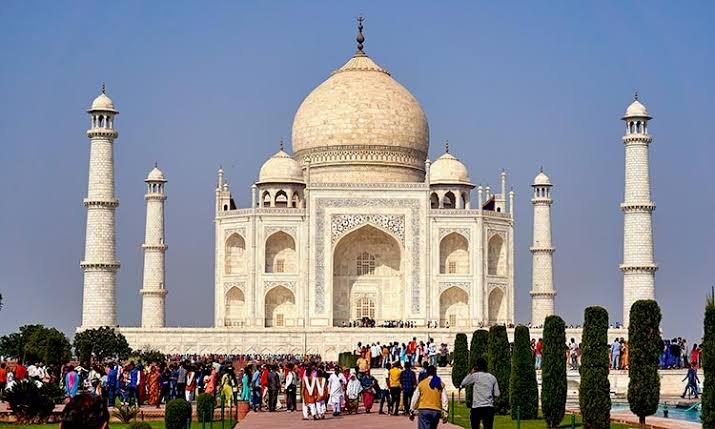
September Weather at the Taj Mahal: What It’s Actually Like
Daytime temperatures in Agra in September typically reach 34°C with very high humidity, falling to around 24°C at night. There are normally 7 hours of sunshine per day — around 59% of daylight hours.
That sounds challenging. And in the middle of the day, it is. But here is what those statistics miss.
There are usually around 4 days with rain in Agra in September, with average monthly rainfall of around 126mm.That means roughly 26 days of the month are dry. And most rain in September Agra arrives in the afternoon — heavy, brief showers followed by clearing skies. The mornings are almost always workable.
The critical distinction in September is between early and late in the month.
Early September (September 1 to 15): The monsoon is still active. Humidity sits at 80% or higher. Morning temperatures around 28°C to 30°C feel warmer than they are because of the moisture in the air. Rain is more frequent. Sightseeing is manageable but requires flexibility — plan everything before 10 AM and rest during afternoon showers.
Late September (September 16 to 30): This is where September becomes genuinely rewarding. The monsoon is retreating. Weather is improving. Prices are low and crowds are minimal. Temperatures begin dropping toward the comfortable range. The sky clears more frequently. The air quality improves dramatically. Late September is one of the most underrated windows on the entire India travel calendar.
September brings the freshness of the post-monsoon season — skies clear, humidity drops, and crowds haven’t fully returned. It’s a great time for photography, especially with fresh greenery and fewer people in the frame.
Is the Taj Mahal Open in September?
Yes. Fully open.
The Taj Mahal operates year-round regardless of weather or season. It opens 30 minutes before sunrise every day of the week — with one exception. The Taj Mahal is closed every Friday. In September 2026, Fridays fall on September 4, 11, 18, and 25. Plan your Agra visit on any other day of the week.
The monsoon season can be a great time to score great prices on airfare and accommodation and will be the least busy time of year. If you are okay with potentially rainy weather, you may luck out with perfect weather in September.
Essential before you go: Taj Mahal Tickets, Timings & Entry Fee 2026 — exact prices, online booking, and what is included.
What the Taj Mahal Actually Looks Like in September
This is the part most travel guides get wrong.
They describe September as “challenging” and move on. What they do not tell you is that the Taj Mahal in September has a specific visual quality that the clear winter months simply cannot replicate.
The Taj Mahal in September is genuinely beautiful — and often photographed differently than at any other time of year. A light mist over the Yamuna River behind the tomb creates an almost ghostly atmosphere that photographers love. The famous white marble looks different under overcast monsoon skies — softer, more ethereal than in the harsh winter light.
The Taj Mahal gardens are at their most lush and green in September. The lawns are perfectly maintained, the flower beds are full. The central reflecting pool is at its fullest. The fountains along the main pathway are running at maximum capacity. The contrast of brilliant white marble against vivid green gardens is at its most striking precisely in September.
When the sun breaks through the clouds — which happens regularly in September mornings — the effect on the marble is extraordinary. Light that has passed through a layer of monsoon cloud before hitting white marble has a soft, diffused quality. It eliminates harsh shadows. It makes the marble’s carved detail visible in ways that harsh direct sunlight obscures.
Many of the finest professional photographs of the Taj Mahal were taken in monsoon and post-monsoon conditions. September is part of that window.
Monsoon brings greenery and dramatic skies, offering a different perspective of the monument. If you arrive expecting the classic clear blue sky postcard — you may need to adjust expectations. If you arrive open to a different and equally valid version of one of the world’s great monuments — you will not be disappointed.
The 5 Real Advantages of Visiting in September
1. The Fewest Crowds of Any Accessible Month
If you seek a time with the fewest tourist numbers, visit the Taj Mahal from April to September — in the low season. Tourist numbers are significantly lower during these months, making it ideal for travelers who prefer quieter visits.
In September, you can stand at the main reflecting pool on a weekday morning with almost no one in your frame. You can walk through the main gateway arch and take a full minute to absorb the view before the next group arrives. You can sit inside the mausoleum in near silence.
That experience simply does not exist in December or January.
2. Hotel Prices Drop 30 to 50%
September is the lowest price point of the accessible travel calendar in Agra. Hotels that charge ₹12,000 per night in December drop to ₹5,000 to ₹7,000. The same mid-range hotel that requires booking two months in advance in peak season has availability the same week in September.
For budget-conscious travellers — or anyone who wants to allocate their India budget toward experiences rather than accommodation — September delivers extraordinary value.
3. The Gardens Are at Peak Beauty
The Taj Mahal gardens are at their most lush and green in September. This is the single most underappreciated fact about visiting the Taj in monsoon season.
The Charbagh — the formal geometric garden that stretches from the main gateway to the mausoleum — is maintained year-round but reaches its fullest, most vivid state in September. The grass is a deep, saturated green. The cypress trees lining the central pathway are at their most vigorous. The flower beds are full and colourful. The reflecting pool is brimming.
In December and January, by contrast, the garden is well-maintained but has a drier, dustier quality. The grass thins. The overall impression is elegant but not lush. In September it is genuinely abundant.
4. The Yamuna River Is at Its Most Beautiful
The Yamuna River behind the Taj Mahal — visible from the terrace of the main mausoleum — swells during monsoon season. In September it is still running high and full, reflecting the dramatic monsoon sky.
The view from the back terrace of the Taj — over the Yamuna to Mehtab Bagh on the opposite bank — is one of the finest views from any monument in the world. In September, with the river full and the sky dramatic, it is at its most powerful.
Mehtab Bagh itself — the garden directly across the river, the finest external viewpoint for photography of the Taj Mahal — is extraordinarily green and beautiful in September. The Yamuna fills the foreground. The Taj rises behind it. The monsoon sky provides a backdrop unlike anything the winter months offer.
5. You Have Agra Largely to Yourself
This extends beyond the Taj Mahal. Agra Fort, Itmad-ud-Daulah (the Baby Taj), and Fatehpur Sikri — the abandoned Mughal capital 40 km away — are all significantly less crowded in September. At Agra Fort in December, the most popular viewpoints looking toward the Taj Mahal are often ten-deep with visitors. In September, you can stand at the same viewpoint in near solitude.
Fatehpur Sikri — one of the most remarkable and underrated sights in all of India — is particularly rewarding in September. The red sandstone complex of the abandoned Mughal capital looks extraordinary against stormy monsoon skies, and you may have the vast courtyards almost entirely to yourself.
The 3 Honest Challenges of September at the Taj Mahal
1. Humidity Is Genuinely Uncomfortable in Early September
July through September is monsoon season. The Taj is still visitable but the humidity is 80% or higher, mosquitoes are aggressive, and the Yamuna River floods occasionally.
This is real. Early September mornings at the Taj Mahal are warm, sticky, and demanding. By 9 AM you will be sweating regardless of what you are wearing. This is manageable — millions of visitors experience it — but do not underestimate it. Drink at least three litres of water during your visit. Wear the lightest, most breathable clothing you own.
The good news: late September humidity drops significantly as the monsoon retreats. By the last two weeks of the month, conditions are noticeably more comfortable.
2. Rain Can Disrupt Afternoon Plans
The rainfall rarely lasts for more than two or three days at a time. You can check the forecast for predicted rainfall timings one day before, so you can plan to avoid the rainfall as much as possible.
The practical strategy is simple: schedule all outdoor monument visits before 10 AM. Use afternoons for indoor activities — hotel rest, air-conditioned cafes, Agra’s excellent handicraft shopping, or the Taj Mahal Museum inside the complex itself. Check a weather app the evening before and adjust accordingly.
3. The Classic Blue Sky Shot Is Not Available
The Taj Mahal experiences cool winters from November to February, warm spring and autumn from March to April and September to October.
If your primary goal is the classic clear blue sky postcard photograph of the Taj Mahal — the white marble against a deep, cloudless blue — September is not your month. October and November will give you that shot.
But if you are open to a more atmospheric, dramatic, and unusual set of photographs — September will surprise you.
Best Time of Day to Visit in September
When it comes to the time of day, make sure to arrive before sunrise. Watching the sunrise at the Taj Mahal is a wonderful experience, and this is also the least crowded time of the day.
This applies in every month — but it is even more critical in September. Here is exactly why.
In September, the window between gate opening and the arrival of the first significant heat and humidity is narrow. Arrive at gate opening (approximately 5:20 AM — 30 minutes before sunrise) and you have roughly 90 minutes of comfortable, uncrowded sightseeing before the conditions start to build.
For the best experience, visit at sunrise (6:00 to 8:00 AM) to avoid crowds and witness the monument in golden morning light.
By 9 AM in early September, the combination of rising temperature and humidity makes extended outdoor walking genuinely tiring. By 10 AM it is uncomfortable for most international visitors. Plan your Taj Mahal visit to be completely finished by 9 AM. Return to your hotel, have a proper breakfast, and rest through the midday hours.
If you miss the early morning window, the next best time is the final two hours before closing — approximately 4:30 PM to sunset. Temperatures drop, the afternoon rain has usually cleared, and the light on the marble in the late afternoon is genuinely beautiful.
Doing a same-day trip from Delhi? Read our Same Day Agra Tour from Delhi guide — early departure is even more critical in September than at any other time.
Entry Fees and Practical Information for September 2026
Entry fees are the same year-round. Foreign nationals pay ₹1,100 for garden access plus ₹200 to enter the main mausoleum (where the tombs are). Indian nationals pay ₹50 for garden access plus ₹200 for the mausoleum. Children under 15 enter free regardless of nationality.
Book tickets online at the official ASI portal before your visit. On the rare days when September rain unexpectedly draws more visitors indoors than usual, the ticket window queues extend. Online tickets let you go straight to the entry gate.
What to bring in September: A compact umbrella or packable rain jacket. Light, quick-dry clothing in breathable fabrics — cotton or linen. Easy-slip shoes that are comfortable to remove (shoes must come off before stepping onto the marble plinth). Sunscreen SPF 50+ even on overcast days — UV radiation is intense through cloud cover. At least two litres of water. Insect repellent — mosquitoes are present in September, particularly in the garden areas near the river.
Wet marble: Rain can make marble slippery, so wear suitable footwear. The steps leading up to the main mausoleum platform can be slick after rain. The shoe covers provided at the plinth entrance actually improve grip on wet marble — use them.
September vs October at the Taj Mahal
This is the most practical comparison for travellers deciding between the two.
Late September (last 10 days) is genuinely close to October in quality. The monsoon has largely retreated. Late September is recommended — the monsoon is retreating, weather is improving, prices are low, and crowds are minimal. Humidity has dropped to manageable levels. The gardens are still at peak lushness. Hotel prices are still 30 to 40% below peak. You have the monument almost entirely to yourself.
October is better for comfort and photography. The sky is clearer and bluer. The humidity is lower. Temperatures are more forgiving during extended outdoor sightseeing. Crowds start building but are still manageable. Prices are 20 to 35% below December peak.
The honest verdict: if you can choose, late September and October both deliver excellent Taj Mahal experiences. Late September costs significantly less and is significantly quieter. October is more comfortable and photogenic. The difference narrows considerably after September 20.
Planning for October? Read our India in October 2026 guide — Diwali on October 20, Ranthambore opening October 1, and everything you need to know.
What Else to Do in Agra in September
Agra Fort
India’s second great monument — a UNESCO World Heritage Site — is at its best in September precisely because it is empty. The red sandstone fort is entirely manageable in September mornings when temperatures are cooler. The ramparts looking toward the Taj Mahal are some of the finest viewpoints in India. Allow two hours.
Itmad-ud-Daulah — The Baby Taj
This small, exquisitely carved white marble tomb across the Yamuna river predates the Taj Mahal and is architecturally extraordinary. Almost always overlooked by tourists, it is near-empty in September and deeply beautiful. The garden surrounding it is at its most vivid green.
Fatehpur Sikri
The abandoned Mughal capital 40 km from Agra is extraordinary year-round but particularly atmospheric in September. The vast red sandstone courtyards — the Diwan-i-Am, the Panch Mahal, the Jodha Bai Palace — are largely covered and manageable even on rainy days. Go on a clear September morning and the light on the sandstone is magnificent.
Mehtab Bagh at Sunset
The garden directly across the Yamuna from the Taj Mahal is the finest external viewpoint for sunset photography. In September, with the river full and reflecting a dramatic monsoon sky, the view of the Taj from Mehtab Bagh is genuinely extraordinary. Arrive by 5 PM and stay until the gates close at sunset.
September at the Taj Mahal and the Golden Triangle
The Golden Triangle — Delhi, Agra, and Jaipur — works well in September, particularly in the second half of the month.
The monuments are extraordinary year-round — the Taj Mahal does not become less beautiful in September. Amber Fort’s sandstone actually photographs better against dramatic monsoon clouds than in flat winter light. Monument crowds are a fraction of peak season. Hotels are 20 to 40% cheaper.
A September Golden Triangle tour costs 30 to 50% less than the same trip in December. The Taj Mahal, Agra Fort, Amber Fort, and Jaipur’s bazaars are all open and operating. The heat is manageable with morning-focused sightseeing. And the lush post-monsoon landscape gives every monument a different and genuinely beautiful setting.
Full Golden Triangle planning: Golden Triangle Tour from Delhi | Golden Triangle Tour Cost 2026
Frequently Asked Questions
Is the Taj Mahal open in September 2026?
Yes. Fully open every day except Friday. In September 2026, Fridays fall on September 4, 11, 18, and 25.
Is September a good time to visit the Taj Mahal?
Late September (September 16 to 30) is genuinely good — the monsoon is retreating, the sky is clearing, and the gardens are at peak beauty. Early September is more humid and requires more careful planning around morning visits.
How hot is it at the Taj Mahal in September?
Daytime temperatures reach around 34°C with high humidity, falling to 24°C at night. Early mornings are the most comfortable window. Plan your entire Taj Mahal visit between gate opening (approximately 5:20 AM) and 9 AM.
Does it rain all day at the Taj Mahal in September?
No. Rain in September Agra typically arrives in brief afternoon showers. Mornings are almost always clear. Plan outdoor visits in the early morning and use afternoons for indoor activities.
How crowded is the Taj Mahal in September?
September is the least crowded accessible month of the year. Weekday mornings in September are near-empty by peak season standards. You may have the main reflecting pool almost to yourself in the first hour after gate opening.
Is the Taj Mahal beautiful in September?
Yes — differently beautiful from the winter months. The gardens are at their most lush and green. The marble has a soft, ethereal quality under monsoon light. The Yamuna river behind the monument is full and reflective. Many photographers specifically seek out monsoon and post-monsoon conditions for the Taj Mahal.
Plan Your September Agra Visit with Squid Travel India
September is one of the best-value months to visit the Taj Mahal and the Golden Triangle. Lower prices, empty monuments, and lush green landscapes for travellers who know how to work with the weather rather than against it.
At Squid Travel India, we arrange September Agra tours that are built around the weather — early morning departures, pre-booked online tickets, licensed guides, and private comfortable transport. You experience the Taj Mahal at its finest, however the sky behaves.
Also worth reading for your September India trip:
- Agra in August 2026 — Monsoon Visit Guide
- Best Time to Visit Agra & Taj Mahal 2026
- Taj Mahal Tickets, Timings & Entry Fee 2026
- India in September 2026
- Golden Triangle Tour from Delhi
📞 Call / WhatsApp: +91 9990812499 📧 Email: Squidtravelindia@gmail.com 🌐 Visit: squidtravelindia.com
1,800+ trips completed | 98% happy clients | TripAdvisor Travelers’ Choice 2024–2025
Last updated: August 2026. Taj Mahal timings and entry fees are subject to change. Always verify at the official ASI portal before your visit.

Comment (1)