

The Taj Mahal is one of those rare places that lives up to every expectation — but only if you visit it at the right time.
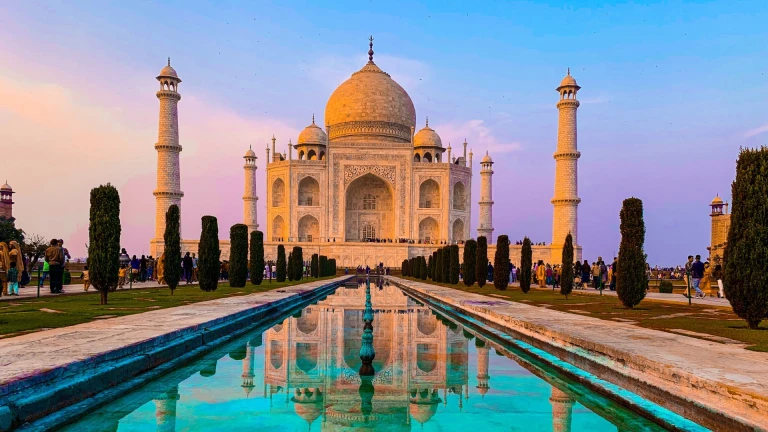
Visit in the wrong month and you are standing in 46°C heat on white marble that burns through your shoes. Visit in the wrong hour and you are shuffling through a crowd of thousands, craning for a photograph between other people’s cameras. Visit at the wrong time of day and you miss the single most extraordinary visual experience the monument has to offer — the Taj Mahal in the first light of dawn, when the marble shifts from gold to rose to dazzling white as the sun climbs.
The difference between a good Taj Mahal visit and an unforgettable one comes down almost entirely to timing.
This guide covers everything: the best months to visit Agra, a complete month-by-month weather breakdown, the best time of day to visit the Taj Mahal, the moonlight viewing experience, entry fees, crowd patterns, and every practical tip you need to plan the perfect visit in 2026.
Quick Answer: Best Time to Visit Agra and the Taj Mahal
The period from October to March is widely considered the best time to visit the Taj Mahal. The weather remains pleasant, skies are mostly clear, and sightseeing is comfortable.
Within that window:
- October and November — Best for photography, comfortable temperatures, moderate crowds
- December and January — Peak season, cooler weather, higher crowds, occasional morning fog
- February and March — Excellent weather, beautiful light, slightly fewer crowds than peak
Month | Temp | Crowd Level | Best For | Rating
Jan | 5–20°C | Very High | Winter experience | ⭐⭐⭐⭐
Feb | 10–25°C | High | Photography | ⭐⭐⭐⭐⭐
Mar | 15–33°C | Moderate | Best overall | ⭐⭐⭐⭐⭐
Apr | 25–40°C | Low | Budget travel | ⭐⭐⭐
May | 35–46°C | Very Low | Avoid | ⭐⭐
Jun | 32–45°C | Very Low | Avoid | ⭐⭐
Jul | 27–35°C | Low | Monsoon mood | ⭐⭐⭐
Aug | 27–35°C | Low | Monsoon mood | ⭐⭐⭐
Sep | 25–35°C | Low | Hidden gem | ⭐⭐⭐
Oct | 17–32°C | Moderate | Excellent | ⭐⭐⭐⭐⭐
Nov | 12–27°C | High | Outstanding | ⭐⭐⭐⭐⭐
Dec | 7–22°C | Very High | Peak season | ⭐⭐⭐⭐
The single best time of day to visit, regardless of season, is at sunrise — the first hour after the gates open.
Now let’s go into every detail you need.
Agra Weather Overview: The Three Seasons
There are three seasons in Agra: the hot season (April to June), the rainy season (July to September), and the mild dry season (October to March).
Understanding these three seasons is the foundation of planning any Agra visit.
Season 1: October to March — The Ideal Window
October to March is the best time period to visit the Taj Mahal weather-wise, when temperatures average from 15 to 27°C. It perfectly avoids the rains and summer heat, and allows you to fully immerse yourself in a dreamy visit.
This is peak season for good reason. The days are clear, the light is extraordinary, the marble of the Taj Mahal gleams without heat haze, and the surrounding gardens are at their most lush and green. Sightseeing at Agra Fort, Fatehpur Sikri, and Itmad-ud-Daulah is genuinely comfortable.
The tradeoff is crowds and cost. December to February are colder and foggier months and tend to attract the busiest tourist numbers. Hotels in Agra — particularly those with Taj Mahal views — fill up weeks in advance during the December–January peak. Book at least 2–3 months ahead for travel in this window.
Season 2: April to June — Hot Season
Summer brings hot temperatures ranging from 35°C to 45°C, with minimal rain.
May and early June are the most extreme months. From May to mid-June, the temperature is very high and humid. Dehydration is quite common. Standing on the white marble forecourt of the Taj Mahal in 45°C heat at midday is not a comfortable experience — the marble reflects the heat back at you from below while the sun beats from above.
However, this season has one significant advantage: if you seek a time with the fewest tourist numbers, visit the Taj Mahal from April to September, and avoid weekends and public holidays. If you are on a tight budget and can handle the heat, scheduling all outdoor sightseeing between 6:00 AM and 9:00 AM makes this period workable. Hotels and tour packages drop 30–40% in price compared to peak season.
Season 3: July to September — Monsoon Season
The monsoon brings humid conditions, with average temperatures between 25°C and 35°C.
The monsoon transforms Agra’s landscape. The gardens around the Taj Mahal turn intensely green, the sky fills with dramatic clouds, and the monument takes on a different, moodier beauty. Monsoon brings greenery and dramatic skies, offering a different perspective of the monument.
The practical challenges are real though. Heavy rain can make outdoor sightseeing uncomfortable, rain can make marble slippery, so wear suitable footwear, and grey overcast skies reduce the Taj’s famous colour-shifting quality. Occasional flooding affects transport. That said, crowds are dramatically lower and prices are at their most attractive.
Month-by-Month Guide to Visiting Agra and the Taj Mahal
January ⭐⭐⭐⭐
Temperature: 5°C – 20°C Crowds: Very high — peak season Photography: Good on clear days, occasional fog in morning
January is deep winter in Agra and the most popular month for international visitors. The weather is cool and pleasant for sightseeing, though early mornings can be genuinely cold — bring a warm jacket for the dawn Taj visit. The main challenge in January is fog. Dense fog sometimes descends on Agra in early morning — particularly in the first two weeks of the month — which can obscure the Taj Mahal from the gardens and delay the famous sunrise light effect. On foggy mornings, the Taj can appear as a ghostly white apparition that is beautiful in its own way, but very different from the postcard image.
Verdict: Excellent month to visit. Book well in advance. Dress warmly for sunrise. Have a backup plan if fog rolls in.
February ⭐⭐⭐⭐⭐
Temperature: 10°C – 25°C Crowds: High but tapering off from January peak Photography: Excellent — clear skies, beautiful light
February is, in many experts’ opinions, the single best month to visit the Taj Mahal. The best months to visit the Taj Mahal are November, December, and February. During these months, the weather in Agra is cool and clear, the marble of the Taj Mahal gleams. Temperatures are comfortable without being cold, the skies are consistently clear, the crowds are slightly lower than January, and the light quality is exceptional for photography.
Holi — India’s most colourful festival — typically falls in late February or March, bringing a vivid and joyful atmosphere to the city and the entire Golden Triangle circuit.
Verdict: The best month overall. If you can only choose one month, choose February.
March ⭐⭐⭐⭐⭐
Temperature: 15°C – 33°C Crowds: Moderate — shoulder season begins Photography: Outstanding — clear skies and warm golden light
March is ideal for photography, with cool weather, clear skies, and fewer crowds. The temperatures are warming but not yet uncomfortable, the skies are reliably clear, and the crowds begin to thin from their January-February peak. Sunrise in March is particularly spectacular — the low angle of the early sun creates warm golden light that catches the Taj’s marble in a way that no other month quite replicates.
If Holi falls in March, you can experience India’s most exuberant festival in one of its most historic settings.
Verdict: Excellent month — one of the best. Combine with Holi if possible.
April ⭐⭐⭐
Temperature: 25°C – 40°C Crowds: Low Photography: Good in early morning only
April marks the beginning of the hot season. Temperatures are climbing sharply and midday visits are uncomfortable. However, the early morning window — arriving at gate opening and leaving by 9:30 AM — is still perfectly viable and far less crowded than peak season. During the day, sunrise is the best time for the most favorable lighting, low crowding, and avoidance of extreme heat.
Verdict: Manageable for early risers on a budget. Plan the entire visit for the first 2–3 hours after sunrise.
May ⭐⭐
Temperature: 35°C – 46°C Crowds: Very low Photography: Early morning only
May is the harshest month in Agra. From May to mid-June, the temperature is very high and humid. Dehydration is quite common. The Taj Mahal at 10:00 AM in May is a genuinely uncomfortable experience — the marble radiates heat and the sun is relentless. The advantage is that the complex is as empty as it ever gets. Early morning visits (6:00–8:30 AM) remain worthwhile. Bring large quantities of water, wear light breathable clothing, and use high-SPF sun protection.
Verdict: Only for budget travellers willing to start sightseeing at dawn. Hotels cost 40–50% less than peak season.
June ⭐⭐
Temperature: 32°C – 45°C Crowds: Very low Photography: Early morning, possible monsoon clouds from late June
The first half of June shares May’s extreme heat. The second half typically sees the monsoon arrive, bringing some relief from the worst temperatures and occasionally dramatic storm clouds that create extraordinary photographic backdrops for the Taj.
Verdict: Same as May for the first half. Late June can offer interesting photography opportunities for experienced travellers.
July ⭐⭐⭐
Temperature: 27°C – 35°C Crowds: Low Photography: Moody and dramatic — overcast skies, lush green gardens
The monsoon is fully established in July and the Agra landscape transforms. The gardens around the Taj Mahal are intensely green, the atmosphere is lush, and the monument against heavy monsoon clouds makes for photographs of a completely different quality to the clear-sky winter shots. Rain is frequent and can come suddenly — rain can make marble slippery, so wear suitable footwear. Despite the weather, July has a romance to it that the crowded peak season months cannot offer.
Verdict: Good for adventurous travellers and photographers seeking something different. Be prepared for rain.
August ⭐⭐⭐
Temperature: 27°C – 35°C Crowds: Low Photography: Similar to July
August mirrors July in weather and crowd patterns. Independence Day (15 August) is a national holiday and brings some additional domestic visitors but nothing like peak season crowds. The monsoon continues through August with regular rainfall.
Verdict: Same as July — comfortable for those who can work around rain.
September ⭐⭐⭐
Temperature: 25°C – 35°C Crowds: Low, beginning to rise toward month end Photography: Improving as monsoon retreats
September marks the retreat of the monsoon. Rainfall eases as the month progresses, humidity drops, and the gardens retain their monsoon greenery while the skies begin to clear. By late September, conditions are approaching the comfort of the October–March window. Bookings for October start arriving, so early September still offers good value.
Verdict: A hidden gem for the savvy traveller. Late September, particularly.
October ⭐⭐⭐⭐⭐
Temperature: 17°C – 32°C Crowds: Moderate, rising as the month progresses Photography: Excellent
October is ideal for photography, with cool weather, clear skies, and fewer crowds compared to December and February. The monsoon has retreated, the gardens are at their most verdant from the rains, the temperatures are comfortable, and the skies are consistently clear. The Taj Mahal in October — green gardens, white marble, blue sky — is as close to perfect as it gets.
Diwali typically falls in October or November, bringing the most atmospheric and colourful festival season to the Golden Triangle. The cities are illuminated and the streets filled with lights and celebration.
Verdict: One of the best months to visit. Lower crowds than winter peak, outstanding conditions.
November ⭐⭐⭐⭐⭐
Temperature: 12°C – 27°C Crowds: Moderate to high — peak season begins Photography: Outstanding
November is the start of peak season and for good reason. Temperatures are near-perfect for outdoor sightseeing, the skies are clear, and the light quality is exceptional. The best months to visit the Taj Mahal are November, December, and February. The monument looks particularly beautiful in November’s slightly cooler, lower-angle sunlight.
Verdict: Excellent month. Book accommodation 6–8 weeks in advance.
December ⭐⭐⭐⭐
Temperature: 7°C – 22°C Crowds: Very high — peak season, Christmas and New Year surge Photography: Good on clear days, fog possible
December is the busiest month of the year in Agra, particularly around Christmas and New Year. International visitors from Europe, the US, and Australia converge on the Golden Triangle during the holiday period, filling hotels and pushing entry queues at the Taj Mahal to their longest. Book everything — hotels, tour packages, even monument tickets — at least 3 months in advance for December travel.
Morning fog in December can be a factor, particularly in the last two weeks of the month and into January. When fog clears, the light is magical. When it persists through the morning, it can obscure the Taj entirely for the first 2–3 hours after opening.
Verdict: Great month for weather and atmosphere but requires the most planning and carries a premium price.
Best Time of Day to Visit the Taj Mahal
This is the most important decision after choosing your month. The Taj Mahal is a completely different monument at different times of day — and the difference is not subtle.
Sunrise (6:00 AM – 8:30 AM) — The Best Time Without Question
Sunrise from 6:00 AM to 8:00 AM is ideal for photography with fewer crowds.
Arriving at the gate at opening — or slightly before, to be in the queue — gives you the Taj Mahal in its most magical light. In the first 30 minutes after sunrise, the low sun catches the white Makrana marble and turns it luminous gold. Over the following hour it shifts through rose, cream, and then pure brilliant white as the sun climbs. The crowds at this hour are a fraction of what they will be by 10:00 AM.
This is also the coolest part of the day, which matters enormously from April through October. And it is the time when the Taj’s reflection pool is at its calmest — before the foot traffic disturbs the surroundings.
Practical tip: Arrive at the East Gate 20–30 minutes before opening. Pre-book your tickets online to use the priority entry queue.
Mid-Morning (8:30 AM – 11:00 AM)
The crowds build rapidly after 9:00 AM. The light is still good — particularly for photographing the inlay detail inside the main gateway and the calligraphy on the mausoleum facade. December and January mornings may have fog, so plan entry post-sunrise on foggy days. Mid-morning is when tour buses from Delhi begin arriving in quantity. Expect the reflecting pool area and the main mausoleum entrance to be most congested between 10:00 and 12:00.
Midday (11:00 AM – 2:00 PM) — Avoid in Summer
From April to October, midday at the Taj Mahal is punishing. The sun is directly overhead, the marble radiates heat, and the light is harsh and flat — the worst possible conditions for both comfort and photography. In winter (October to March) midday is comfortable and perfectly fine for a visit, though crowds remain high.
Sunset (4:30 PM – 6:00 PM)
The Taj Mahal at sunset is beautiful — the white marble turns gold, then deepens to orange and finally dusty rose as the sun drops. Fewer visitors than midday but more than sunrise. If you want to experience the monument twice in one day — sunrise in the morning and sunset in the evening — this is both permitted and deeply rewarding. The Taj looks entirely different in the evening light.
The view of the Taj Mahal at sunset from Mehtab Bagh — the Mughal garden directly across the Yamuna River — is in many ways superior to any view from within the complex itself. Unobstructed, elevated, and far less crowded.
Moonlight Night Viewing — The Rarest Experience
Night viewing of the Taj Mahal is available on five days in a month: on the full moon night and two nights before and two nights after the full moon.
Night viewing timing is 20:00 hours to 23:59 hours in 8 batches of maximum 50 people each. The time duration for each batch is 30 minutes.
Night viewing gives you rare access to view the Taj Mahal shimmering in moonlight — a strictly regulated, peaceful experience meant for small groups. Only designated pathways and garden areas are accessible. You view the Taj from a specific platform at a distance. No loud talking, flash photography, or movement outside the assigned area is allowed. It is a silent, slow-paced experience — ideal for photography lovers, romantic travellers, and heritage enthusiasts.
Night viewing of the Taj Mahal is closed every Friday and during the month of Ramzan.
The total number of visitors is restricted to 400 each night, with only 50 visitors per batch allowed at a time.
Booking: Tickets for night viewing must be booked at least 24 hours in advance directly through the ASI (Archaeological Survey of India) office in Agra. This cannot be done online — book in person or through your tour operator. Squid Travel India arranges full moon night viewing as part of our Agra packages on request.
Pro tip: Book the last slot so that you get to see the best view. It takes some time for the moon to totally rise and shine.
Taj Mahal Entry Fees 2026
| Visitor Type | Garden Entry | Main Mausoleum (extra) |
|---|---|---|
| Foreign nationals | ₹1,300 | ₹200 |
| Indian nationals | ₹50 | ₹200 |
| Children under 15 | Free | Free |
Night viewing: Separate ticket pricing applies — contact the ASI Agra office or your tour operator for current rates. Night viewing is available on 5 nights each month during the full moon period and requires advance booking. Tourhub
Important: Tickets are available at the western and eastern gates from one hour before sunrise up to 45 minutes before sunset. At the southern gate, tickets are available from 8:00 AM to 5:00 PM. On The Go Tours
Book online at the ASI website to skip the ticket queue — especially important during peak season when queues at the gate can be 30–45 minutes long.
Taj Mahal Opening Hours & Closed Days
Daily opening hours: One hour before sunrise to 30 minutes before sunset
Closed: Every Friday (for prayer at the mosque within the complex)
Note: The Friday closure is the single most common planning mistake on the Golden Triangle Tour. If you arrive in Agra on a Thursday evening, your only options are Saturday morning — meaning you either stay an extra night or rearrange your itinerary. Always check the day of the week before finalising your Agra dates. All Squid Travel India itineraries are planned around this automatically.
Practical Tips for Visiting the Taj Mahal
Book tickets online. The online ticket queue at the East Gate is significantly shorter than the walk-up queue. Book at least 48 hours before your visit at the ASI website.
Arrive before the gates open. Being in the queue at gate-opening rather than arriving 30 minutes after means the difference between having the forecourt nearly to yourself and navigating 500 other visitors.
What to wear. Comfortable walking shoes are essential — you will cover significant ground on marble and sandstone. Shoes must be removed or covered with provided booties before entering the main mausoleum. Dress modestly — covered shoulders are appreciated though not strictly required for tourists.
What not to bring. Food and drinks, tobacco products, large bags, tripods, and drones are all prohibited inside the complex. There are free cloakrooms at each gate.
Photography. Standard cameras and mobile phones are freely permitted throughout the complex and gardens. Professional tripods require a permit. No flash photography is allowed inside the mausoleum. Drones are strictly and absolutely prohibited — penalties are severe.
How long to spend. Allow a minimum of 2.5 hours. Three hours is comfortable. If you want to sit quietly in the gardens, visit the interior at leisure, and explore the mosque and rest house on either side of the main mausoleum, 3.5 hours is ideal.
Combine with Mehtab Bagh. After the Taj, cross the Yamuna to Mehtab Bagh for the rear view and sunset photography. The combination of the main complex in the morning and Mehtab Bagh at sunset makes for one of the great single-day photography experiences in India.
Best Time to Visit Agra’s Other Monuments
The Taj Mahal gets all the attention, but Agra has three UNESCO World Heritage Sites and several other extraordinary monuments. Here is when to visit each:
Agra Fort: Same seasonal considerations as the Taj Mahal. October to March is ideal. Unlike the Taj, Agra Fort does not close on Fridays — making it a perfect Monday-to-Friday alternative on days when timing is flexible.
Fatehpur Sikri: 37 km from Agra, this ghost Mughal capital is best visited in the October to March window. The exposed sandstone complex has little shade and becomes very hot in summer. Allow a full morning — 2.5 to 3 hours minimum.
Itmad-ud-Daulah (Baby Taj): Smaller than the main Taj complex, this marble mausoleum is best visited in the mid to late morning after your Taj Mahal sunrise visit. Relatively uncrowded year-round. October to March recommended.
Mehtab Bagh: Best at sunset, any time of year. The unobstructed view of the Taj Mahal from across the Yamuna is one of Agra’s greatest and least-crowded experiences.
How Many Days Do You Need in Agra?
1 day: Taj Mahal + Agra Fort. Tight but doable as a day trip from Delhi. You will need to leave Delhi very early (5:00 AM) and return late.
2 days: The ideal length. Day one: Taj Mahal sunrise + Agra Fort + Mehtab Bagh sunset. Day two: Fatehpur Sikri + Itmad-ud-Daulah + Akbar’s Tomb at Sikandra.
3 days: Allows the full Agra experience at a relaxed pace, with time for Chini Ka Rauza, Jama Masjid, the old bazaars of Kinari Bazaar, and the Bear Rescue Facility at Sur Sarovar. For honeymoon couples, consider adding the full moon night viewing if dates align.
Best Time Summary Table
| Month | Temperature | Crowds | Photography | Overall Rating |
|---|---|---|---|---|
| January | 5–20°C | Very High | Good (fog risk) | ⭐⭐⭐⭐ |
| February | 10–25°C | High | Excellent | ⭐⭐⭐⭐⭐ |
| March | 15–33°C | Moderate | Outstanding | ⭐⭐⭐⭐⭐ |
| April | 25–40°C | Low | Morning only | ⭐⭐⭐ |
| May | 35–46°C | Very Low | Dawn only | ⭐⭐ |
| June | 32–45°C | Very Low | Dawn only | ⭐⭐ |
| July | 27–35°C | Low | Dramatic/moody | ⭐⭐⭐ |
| August | 27–35°C | Low | Dramatic/moody | ⭐⭐⭐ |
| September | 25–35°C | Low | Improving | ⭐⭐⭐ |
| October | 17–32°C | Moderate | Excellent | ⭐⭐⭐⭐⭐ |
| November | 12–27°C | Moderate–High | Outstanding | ⭐⭐⭐⭐⭐ |
| December | 7–22°C | Very High | Good (fog risk) | ⭐⭐⭐⭐ |
Plan Your Agra Visit with Squid Travel India
The Taj Mahal deserves more than a rushed hour between a tour bus departure and a hotel checkout. It deserves the right morning, the right guide, and the right amount of time to simply stand and absorb one of the greatest things human beings have ever built.
At Squid Travel India, every Golden Triangle Tour is planned around the Taj Mahal sunrise — arriving at gate opening, guided through the history and architecture by our expert local guides, and allowing the time and space for the monument to leave the impression it was always meant to leave.
Whether you are planning a 5-day Golden Triangle Tour, a Delhi–Agra day trip, or a full North India itinerary that takes in the Taj Mahal, Agra Fort, and Fatehpur Sikri at a measured and satisfying pace — we build every itinerary with care.
Contact Squid Travel India today to plan your perfect Agra visit.

Comments (16)