

Let’s Be Direct With You
Most “Golden Triangle Tour cost” articles give you a vague number — “starts from ₹15,000” or “$200 per person” — without telling you what is actually included, what will surprise you at the gate, and where the real value lies.
This guide is different.
We have broken down every single cost of a Golden Triangle Tour — Delhi, Agra, and Jaipur — for 2026. Three budget tiers. Every component. Real numbers in rupees and dollars.
No hidden surprises. No vague estimates. Just honest numbers from a team that has completed over 1,800 Golden Triangle trips.
What Is the Golden Triangle Tour?
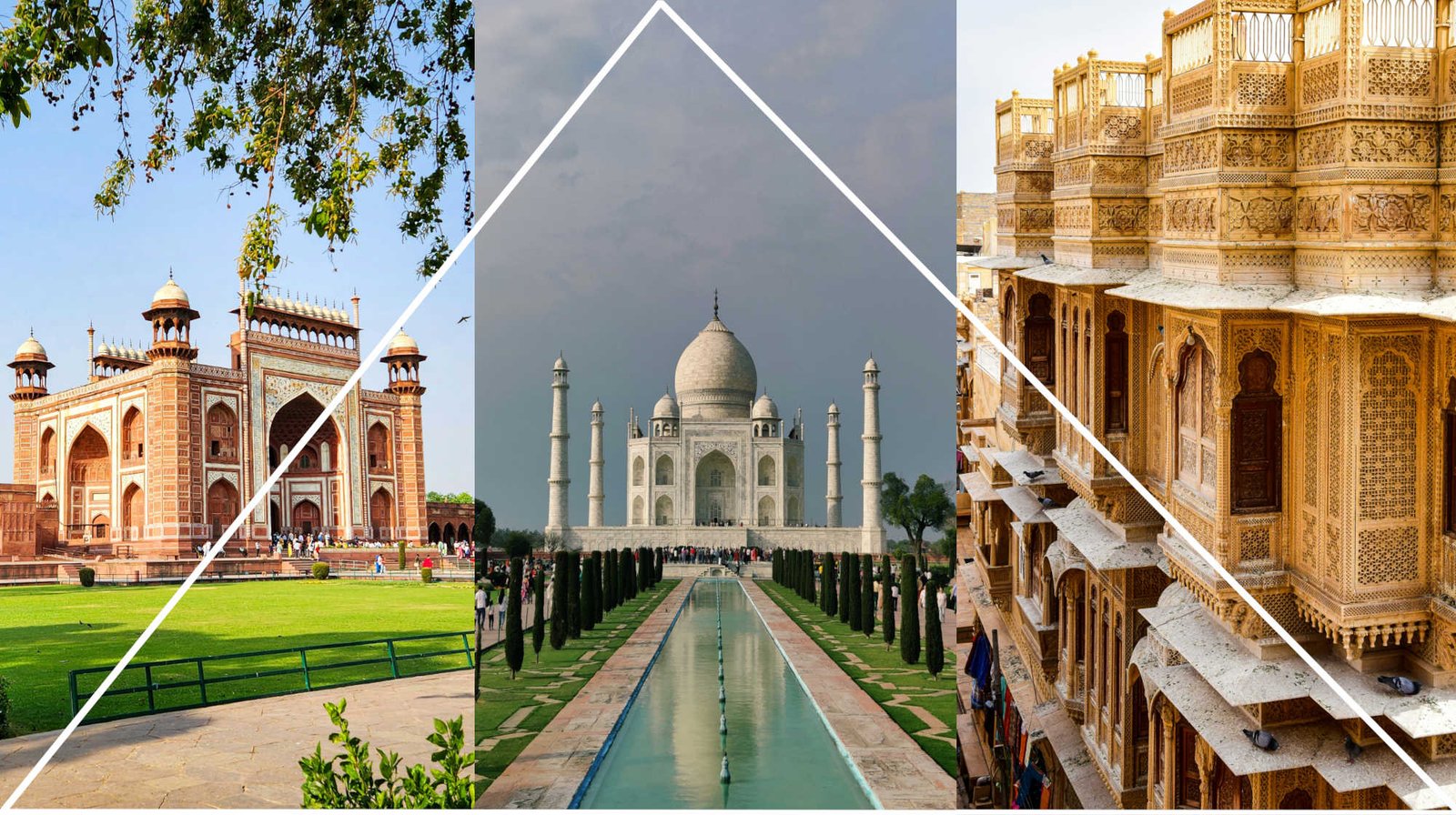
The Golden Triangle is India’s most iconic travel circuit — connecting three of the country’s most historic cities.
Delhi is India’s magnificent, chaotic capital. Agra is home to the Taj Mahal and two other UNESCO World Heritage Sites. Jaipur is the Pink City of Rajasthan — forts, palaces, and some of the finest bazaars in Asia.
The three cities form a rough triangle on the map, each about 230 to 260 kilometres apart. The circuit is perfectly suited to 5 to 7 days and is consistently ranked as the best first-time India itinerary in the world.
New to India? Read our India Travel Guide for First Timers 2026 — everything you need to know before you book.
The Quick Answer: What Does a Golden Triangle Tour Cost?
For a 5-day trip based on two adults travelling together, the honest per-person total (excluding international flights) breaks down as follows.
A budget trip — basic guesthouses, shared or train transport, local food, independent sightseeing — costs approximately ₹35,000 to ₹50,000 per person ($420 to $600 / £330 to £470). This is a genuine entry point for backpackers and budget-conscious travellers.
A standard private tour — 3 to 4 star hotels, private AC car with driver, licensed guides in each city, daily breakfast — costs approximately ₹75,000 to ₹1,00,000 per person ($900 to $1,200 / £700 to £940). This is the sweet spot for most international visitors.
A luxury tour — palace hotels, Oberoi Amarvilas in Agra, Rambagh Palace in Jaipur, full-service private experience — costs approximately ₹2,00,000 to ₹4,00,000+ per person ($2,400 to $4,800+ / £1,900 to £3,800+).
These are complete all-in figures — package, monument fees, food, tips, and local transport. Nothing left out. Now let us go through every component in detail.
1. The Tour Package Itself
A Golden Triangle Tour package from a reputable operator typically includes a private air-conditioned car and driver for all intercity transfers, accommodation at the agreed standard, daily breakfast, English-speaking licensed guides in each city, and airport or hotel pickup and drop-off on arrival and departure.
What a standard package does NOT typically include: monument entry fees (a significant cost for international visitors — more on this below), lunch and dinner, personal shopping, tips for drivers and guides, and 5% GST on the package price. Always ask your operator to confirm exactly what is and is not included before booking.
Budget packages from operators start around ₹12,500 to ₹20,000 per person for a 5-day private tour. This covers basic guesthouses and a private car. A genuine entry point for budget travellers — but the guesthouse quality varies enormously at this price point. Read reviews carefully.
Standard packages run ₹40,000 to ₹70,000 per person for 5 days. This covers solid 3 to 4 star hotels, private AC transport, and licensed guides across all three cities. This is the tier we most commonly recommend for first-time international visitors — the step up from budget in comfort and experience is significant.
Luxury packages start at ₹1,00,000 per person and rise steeply depending on properties chosen. The Oberoi Amarvilas in Agra — with Taj Mahal views from every room — starts at approximately ₹45,000 to ₹75,000 per night in peak season. The Rambagh Palace in Jaipur and The Leela Palace in Delhi are in the same bracket.
At Squid Travel India, our Golden Triangle packages are priced transparently across all three tiers. See our packages here or build your own custom itinerary.
2. Monument Entry Fees — The Biggest Surprise Cost
This is the area that catches most international travellers off guard. Entry fees in India are tiered by nationality, and for foreign visitors, they add up across the Golden Triangle.
In Agra
The Taj Mahal costs ₹1,300 for foreign nationals (₹250 for Indian nationals) for garden access. Entering the main mausoleum — the inner chamber where the tombs of Shah Jahan and Mumtaz Mahal are kept — costs an additional ₹200. Do not skip this. It is the centrepiece of the entire monument and the extra ₹200 is essential.
Agra Fort costs ₹650 for foreign nationals (₹35 for Indians). Fatehpur Sikri — the abandoned Mughal capital 40 km from Agra — costs ₹610. Itmad-ud-Daulah (the Baby Taj) costs ₹310. Mehtab Bagh, the finest sunset viewpoint for the Taj, costs ₹300.
A comprehensive Agra visit — Taj Mahal with mausoleum, Agra Fort, Fatehpur Sikri, and Mehtab Bagh — costs approximately ₹3,100 to ₹3,500 per foreign national.
Online booking saves time: Taj Mahal Tickets, Timings & Entry Fee 2026 — how to book online and avoid the gate queues.
In Jaipur
Amber Fort costs ₹550 for foreign nationals (₹100 for Indians). City Palace is ₹700 (₹200 for Indians). Hawa Mahal is ₹200 (₹50). Jantar Mantar is ₹200 (₹50). Nahargarh Fort is ₹300 (₹50). A comprehensive Jaipur day covering all five major monuments costs approximately ₹1,950 per foreign national.
In Delhi
Red Fort, Qutub Minar, and Humayun’s Tomb each cost ₹600 for foreign nationals (₹35 for Indians). A Delhi day covering all three costs ₹1,800 per foreign national.
The Total Monument Cost
A comprehensive 5-day Golden Triangle Tour for a foreign national — covering the major monuments across all three cities — costs approximately ₹6,500 to ₹8,500 per person in entry fees alone.
Most budget and standard packages list these as extra. Confirm with your operator before booking. At Squid Travel India, we are fully transparent about this — and we handle all ticket bookings in advance so our clients never queue at the gate.
Important family note: Children below 15 years of age enter all ASI-protected monuments free of charge regardless of nationality. This is a significant saving for family groups.
3. Accommodation Costs
Here is what accommodation actually costs per night in 2026, outside of packaged bulk rates.
Delhi
Budget guesthouses and hostels in the tourist areas of Paharganj and Karol Bagh run ₹1,500 to ₹4,000 per night for a private room. Mid-range 3 to 4 star hotels in central Delhi cost ₹5,000 to ₹12,000. Luxury properties — ITC Maurya, The Leela, Taj Mahal Hotel — run ₹18,000 to ₹60,000+ per night.
Agra
Budget guesthouses near Taj Ganj — the main traveller neighbourhood closest to the monument — drop to ₹1,500 to ₹4,000 in shoulder season and rise to ₹4,000 to ₹7,000 in December to February peak. Mid-range hotels like Clarks Shiraz run ₹5,000 to ₹12,000. The Oberoi Amarvilas — India’s most famous hotel, with Taj Mahal views from every room — runs ₹40,000 to ₹90,000+ depending on season.
Jaipur
Budget hotels throughout Jaipur start at ₹1,500 to ₹4,000. Mid-range heritage havelis and 4-star properties run ₹6,000 to ₹15,000. The Rambagh Palace — a former royal residence converted into a luxury hotel — runs ₹35,000 to ₹1,00,000+ per night.
The October to March premium: Peak season (October to March) adds 25 to 40% to accommodation costs across all three cities compared to the April to September shoulder season. For Diwali week specifically (around October 20, 2026), heritage hotels in Jaipur and Udaipur charge an additional premium of 30 to 60% and sell out months in advance.
Best time to visit for value: India in October 2026 offers peak-quality weather at 20 to 35% below December prices. India in November 2026 is the finest overall month.
4. Transport Costs
Intercity transport is included in your package if you book with a tour operator. For independent travellers, here is what to expect.
Delhi to Agra (230 km)
The Gatimaan Express — India’s fastest train on this route — covers Delhi to Agra in approximately 1 hour 40 minutes. A Chair Car ticket costs ₹755 and an Executive Class ticket costs ₹1,505. Book on IRCTC at least two to three weeks in advance. The Shatabdi Express is similarly comfortable at ₹625 to ₹1,175 per person.
A private car and driver for Delhi to Agra costs ₹3,500 to ₹6,000 one way. Budget bus services (UPSRTC Volvo) cost ₹300 to ₹500 per person.
Agra to Jaipur (240 km)
Private car: ₹4,000 to ₹7,000. Train (various services): ₹400 to ₹1,200. Bus: ₹350 to ₹600. Most travellers on a package tour do this drive via Fatehpur Sikri — the abandoned Mughal capital 40 km from Agra — making it a sightseeing stop en route rather than a pure transfer.
Within Cities
Ola and Uber operate across Delhi, Agra, and Jaipur. Typical city rides cost ₹100 to ₹250. Auto-rickshaws are cheaper — agree on a fare before getting in, or insist on the meter. If your package includes a private car, all city transport is covered.
Total independent transport cost for a 5-day Golden Triangle trip: ₹5,000 to ₹15,000 per person depending on your class of travel.
5. Food and Dining Costs
India is extraordinary value for food at every level.
Budget eating — local dhabas, thalis, street food
Breakfast at a local tea stall or dhaba costs ₹100 to ₹200. Lunch at a local restaurant — a full thali with dal, sabzi, roti, and rice — costs ₹200 to ₹400. Dinner similarly. Total per day: ₹600 to ₹1,200 per person. At this level, the food is often excellent — high footfall dhabas have fresher ingredients and more authentic flavours than tourist restaurants charging three times as much.
Mid-range restaurants
Breakfast at a hotel or cafe: ₹300 to ₹600. Lunch: ₹600 to ₹1,200. Dinner at a good restaurant: ₹800 to ₹2,000. Total per day: ₹1,700 to ₹3,800 per person. This bracket covers the best mid-range restaurants in each city — places like Pinch of Spice in Agra, Suvarna Mahal in Jaipur, and Moti Mahal in Delhi.
Fine dining
Dinner alone at a top restaurant can reach ₹2,500 to ₹8,000 per person. Total food budget for 5 days at fine dining level: ₹25,000 to ₹50,000+ per person.
Must-try food experiences on the Golden Triangle:
In Agra: Petha from Panchi Petha — the crystallised ash gourd sweet that Agra is famous for, available from ₹100 to ₹300 per box. Mughlai cuisine at Pinch of Spice for the finest restaurant meal in the city.
In Jaipur: Dal baati churma — Rajasthan’s signature dish of lentil curry, baked wheat balls, and sweet churma. A rooftop dinner with views over the old city is worth every rupee.
In Delhi: Paranthe Wali Gali in Chandni Chowk for stuffed parathas that cost ₹80 to ₹150 each from century-old shops. Old Famous Jalebi Wala for the finest jalebi in the city.
Total food budget for 5 days: ₹3,000 to ₹6,000 for budget travellers. ₹8,500 to ₹19,000 for mid-range. ₹25,000 to ₹50,000+ for fine dining.
6. Guide Costs
A licensed guide transforms the Golden Triangle from a sightseeing checklist into a living story. Most reputable packages include guides. For independent arrangements:
A licensed guide at the Taj Mahal for a three-hour visit costs ₹1,000 to ₹2,000. A half-day city guide in Delhi, Agra, or Jaipur costs ₹1,500 to ₹3,000. A full-day private guide costs ₹2,500 to ₹5,000.
One rule: never use unofficial touts who approach you outside monument gates. Always use a Ministry of Tourism licensed guide or one arranged through your tour operator. The difference in knowledge, accuracy, and experience is enormous.
7. Tips — Budget Generously Here
Tipping is not mandatory in India but is deeply appreciated and forms an important part of guides’ and drivers’ incomes.
For your driver: ₹300 to ₹500 per day. For your city guide: ₹300 to ₹500 per half-day session. For hotel porters: ₹100 per bag. For restaurant waiters: 10% of the bill. Total tipping budget for a 5-day trip: ₹2,000 to ₹4,000 per person. Budget for this from the start rather than as an afterthought.
8. Shopping — Plan This In Advance
The Golden Triangle is one of the world’s great shopping circuits. Budget what you are willing to spend before you arrive and hold that line in the bazaars — they are magnificent and entirely compelling.
Agra marble inlay souvenirs — the famous pietra dura work — range from ₹500 for a small decorative piece to ₹50,000+ for a full inlaid table top. Jaipur block-print fabric and clothing costs ₹500 to ₹5,000. Rajasthani blue pottery runs ₹300 to ₹3,000. Delhi handicrafts at Dilli Haat cost ₹300 to ₹10,000.
One important warning: never buy gemstones or jewellery from shops recommended by your driver or guide without independent verification. This is the most common and most expensive scam on the Golden Triangle. Drivers earn commissions from gem shops. If you want to buy gemstones or jewellery, use government-certified emporia or shops with GIA certification.
The Complete Cost Summary
Here is the honest all-in total for a 5-day Golden Triangle Tour per person, based on two adults sharing, excluding international flights.
Budget traveller: Tour package ₹17,000, monument fees ₹6,500, food ₹5,000, local transport ₹2,000, shopping ₹3,000, tips ₹2,000. Total approximately ₹35,500 ($425 / £330).
Standard private tour: Tour package ₹55,000 (transport included), monument fees ₹7,000, food ₹12,000, shopping ₹8,000, tips ₹3,000. Total approximately ₹85,000 ($1,020 / £800).
Luxury tour: Tour package ₹1,60,000 (all included), monument fees ₹8,000, food ₹30,000, shopping ₹25,000+, tips ₹5,000. Total approximately ₹2,28,000+ ($2,740+ / £2,140+).
These are the honest numbers. Not the numbers designed to make you click “book now.”
What Affects the Price Most
Season is the biggest variable. October to March is peak season. Hotels and tour packages cost 25 to 40% more than April to September. The weather is better, the Taj Mahal is clearer, and the experience is easier. Book two to three months in advance for peak season.
April to June (45°C+ heat) and July to September (monsoon) deliver the lowest prices — 30 to 50% below peak. Crowds are minimal. If you are heat-tolerant or budget-focused, the trade-off is worth considering.
Group size changes the per-person cost significantly. Couples share the private car cost. A group of four shares even more. Solo travellers pay a single supplement — typically 25 to 40% above the twin-share rate. If you are travelling solo, ask operators about their supplement policies before committing.
Duration is the best value lever. A 5-day Golden Triangle Tour is the standard minimum. Adding Ranthambore for a tiger safari (two nights), Varanasi (two nights), or Pushkar for the Camel Fair (one night) adds cost proportionally — but these extensions often deliver the most memorable parts of the entire trip at very good value relative to international travel costs.
Popular extensions: 4-Day Golden Triangle Tour with Ranthambore | Best Time to Visit Agra & Taj Mahal 2026
Is the Golden Triangle Tour Worth the Cost?
Yes — with one condition. Choose quality over the cheapest possible option.
The difference between a ₹15,000 and a ₹50,000 per person Golden Triangle Tour is not luxury. It is the difference between a rushed, stressful experience with unreliable transport and an unlicensed guide, and a smooth, deeply enjoyable trip where everything works exactly as it should.
Done well, the Golden Triangle Tour is one of the best-value extraordinary travel experiences available anywhere in the world. Three UNESCO World Heritage Sites. One of the most iconic monuments ever built. Cities that have been continuously inhabited for thousands of years. And food that will make you reconsider everything you thought you knew about Indian cuisine.
Done cheaply with the wrong operator, it can feel like a rushed conveyor belt from monument to monument.
The difference is rarely price. It is care, knowledge, and the quality of the people showing you the way.
Frequently Asked Questions
What is the minimum cost for a Golden Triangle Tour in 2026?
A genuine private tour including transport, basic accommodation, and breakfast can be arranged from around ₹15,000 to ₹17,000 per person for 5 days. Monument entry fees for foreign nationals add approximately ₹6,500 to ₹8,500 on top. All-in budget total: approximately ₹35,000 per person.
Is the Golden Triangle Tour expensive for international tourists?
By international standards, no. A comfortable standard package runs approximately $800 to $1,200 per person for 5 days including accommodation, private transport, and guides. The equivalent quality of travel in Europe or Australia would cost three to four times as much.
Are monument entry fees included in Golden Triangle Tour packages?
Not always — and this is the most common source of surprise costs. Always confirm with your operator. At Squid Travel India, we are fully transparent about what our packages include and we handle all monument bookings in advance.
How much spending money do I need per day?
Over and above your package cost, budget ₹2,000 to ₹4,000 per person per day for mid-range meals, tips, incidentals, and modest shopping. Luxury travellers should budget significantly more.
What is the best value tier — budget, standard, or luxury?
For first-time visitors, we consistently recommend the standard tier. The step up from budget is significant — particularly in Agra, where a hotel with a Taj Mahal view transforms the entire trip. The difference between standard and luxury is real but more marginal for most travellers.
Can I do the Golden Triangle Tour independently?
Yes. Trains between cities are excellent and affordable. However, the logistical complexity of managing monument timings, city transport, licensed guides, and accommodation — particularly for first-time visitors — means most international travellers find a good tour operator saves time, reduces stress, and actually costs less than doing everything independently once all costs are totalled.
Does Squid Travel India offer customised packages?
Yes. All of our packages can be customised by duration, hotel category, group size, and extensions. Use our Make Your Own Tour page and we will design your itinerary with full cost transparency within 24 hours.
Plan Your Golden Triangle Tour with Squid Travel India
The Golden Triangle Tour is best experienced with people who know it deeply — who know which gate at the Taj Mahal to arrive at before sunrise, which rooftop in Jaipur has the best view of Amber Fort at dusk, and which Agra restaurant will give you the greatest Mughlai meal of your life.
That is what we do at Squid Travel India. 1,800+ trips. 98% happy clients. TripAdvisor Travelers’ Choice 2024–2025.
Every package is built around giving you the right experience at the right pace, with the right people showing you the way. Full cost transparency from the first conversation. No surprises.
Also worth reading as you plan:
- Golden Triangle Tour from Delhi — Complete Guide
- Best Time to Visit Agra & Taj Mahal 2026
- India in October 2026 — Diwali & Peak Season Guide
- India in November 2026 — Festival & Weather Guide
- How Much Does a Trip to India Cost from the UK?
📞 Call / WhatsApp: +91 9990812499 📧 Email: Squidtravelindia@gmail.com 🌐 Visit: squidtravelindia.com
Last updated: August 2026. All prices are based on current 2026 operator rates and ASI entry fees. Prices are subject to change — always verify directly before booking.

Comments (13)