

What Navratri Is — And Why It Matters for Travellers
Nine nights. Nine forms of the goddess. And one of the most visually extraordinary celebrations India produces all year.
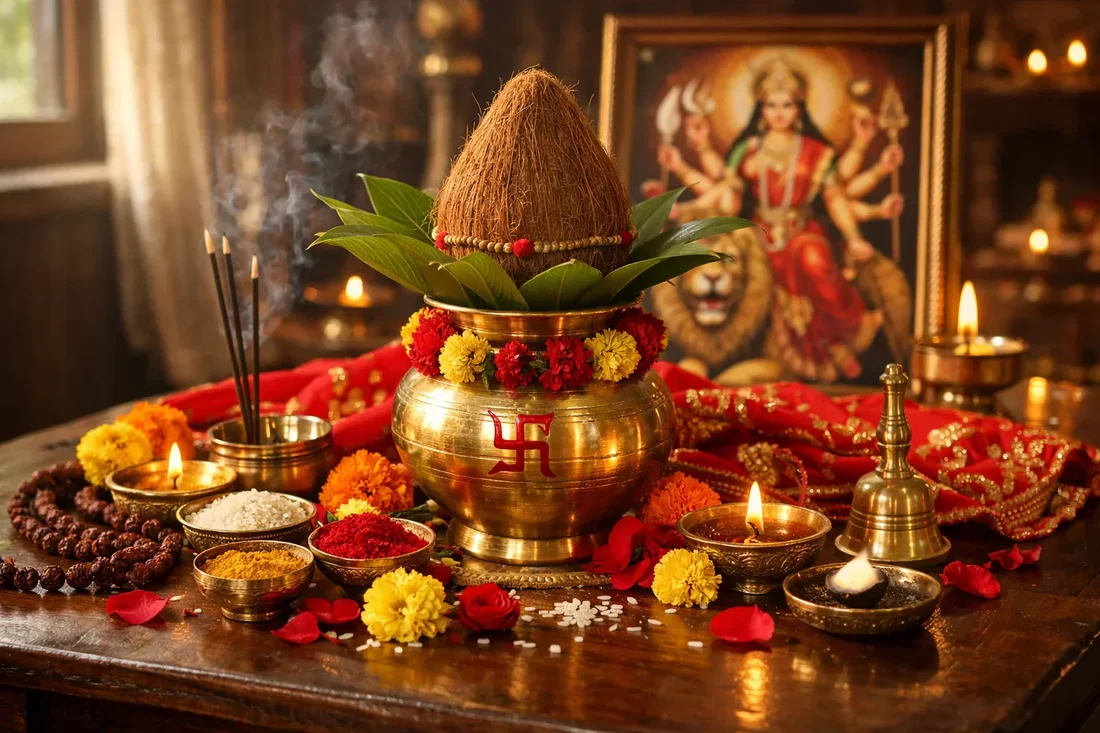
Navratri — from the Sanskrit words “nav” (nine) and “ratri” (nights) — is a Hindu festival dedicated to the nine forms of Goddess Durga. It is celebrated across India, but in ways so different from city to city and region to region that visiting during Navratri feels like seeing several completely different festivals simultaneously.
In Gujarat, Navratri means Garba — tens of thousands of dancers in traditional costumes moving in concentric circles to the rhythm of dhol drums, night after night for nine days. In Kolkata, it means Durga Puja — an extraordinary artistic and cultural competition involving 30,000+ elaborately crafted Durga idols displayed across the city. In Delhi and Jaipur, it means Ramlila — dramatic open-air re-enactments of the Ramayana performed nightly in parks and grounds across North India. In Varanasi, it means all-night temple ceremonies at the ghats.
For international travellers, Navratri is one of the most compelling reasons to visit India in October. It costs nothing to watch. It requires no special access. The celebrations happen in public spaces, temple grounds, and open-air venues that welcome anyone who arrives with respect and curiosity.
This guide covers the exact 2026 dates, what happens in each region, the best cities to visit, and how to include Navratri in a Golden Triangle itinerary.
Navratri 2026: The Exact Dates
There are two main Navratri celebrations each year. For travellers, the one that matters is the Sharad Navratri — the autumn festival that falls in October.
Sharad Navratri 2026 runs from Sunday, October 11 to Monday, October 19, 2026.
The tenth day — Tuesday, October 20 — is Dussehra (Vijayadashami), which celebrates the victory of Lord Ram over the demon king Ravana. The climax of Dussehra in Delhi and North India is the burning of enormous Ravana effigies — some reaching 70 to 80 feet tall — packed with fireworks and set ablaze simultaneously.
Diwali follows on November 8, 2026 — making October and early November 2026 the most festive consecutive period in the India travel calendar.
The nine nights of Navratri 2026 break down as follows:
Day 1 — October 11 (Sunday): Shailaputri. Colour: Orange. Ghatasthapana — the formal beginning of Navratri, when a sacred pot is set up and prayers begin.
Day 2 — October 12 (Monday): Brahmacharini. Colour: White. Fasting intensifies. Night Garba sessions begin in Gujarat.
Day 3 — October 13 (Tuesday): Chandraghanta. Colour: Red.
Day 4 — October 14 (Wednesday): Kushmanda. Colour: Royal Blue. Kolkata’s Durga Puja pandals fully open to the public.
Day 5 — October 15 (Thursday): Skandamata. Colour: Yellow.
Day 6 — October 16 (Friday): Katyayani. Colour: Green.
Day 7 — October 17 (Saturday): Kalaratri. Colour: Grey. Peak Garba night — largest crowds of the festival.
Day 8 — October 18 (Sunday): Mahagauri — Durga Ashtami. Colour: Purple. The most auspicious day of the festival. Kanya Puja — worship of young girls as manifestations of the goddess — is performed across North India.
Day 9 — October 19 (Monday): Siddhidatri — Navami. Colour: Peacock Green. Final night of Navratri. Massive immersion processions begin in Kolkata.
Day 10 — October 20 (Tuesday): Dussehra (Vijayadashami). Ravana effigy burning across North India. Giant processions in Mysore.
The Best Places to Experience Navratri 2026
Ahmedabad and Gujarat — The World’s Finest Garba
For sheer spectacle, nothing in India matches Gujarat’s Navratri Garba.
Garba is a traditional circular folk dance performed specifically during Navratri. Women in swirling chaniya choli (embroidered skirts with mirror work) and men in traditional kurta-dhoti move in concentric circles around a central lamp or idol of the goddess. The rhythm is driven by dhol drums and clapping, with the dance style shifting through the nine nights as the energy builds.
Ahmedabad’s GMDC Ground holds a Guinness World Record for hosting the world’s largest Garba celebration — with more than 50,000 dancers on peak nights. The sight of that many people moving in synchronised circles, all in traditional dress, under stage lighting and open sky, is an experience that has no equivalent anywhere in the world.
The nine nights run October 11 to 19. Each evening begins after dusk and continues until 2 or 3 AM. International visitors are welcomed warmly — dress in traditional Indian clothing (available to rent near every major venue) and you will be invited to join the circles rather than watch from the side. Participating is far more rewarding than observing.
Other Gujarat cities with spectacular Garba: Vadodara, Surat, Rajkot, and Gandhinagar. Each city has its own unique Garba traditions and all nine nights are celebrated with equal intensity across the state.
How to reach Ahmedabad from the Golden Triangle: Ahmedabad is not part of the standard Golden Triangle circuit, but it connects easily by air from Delhi (1.5 hours) or Jaipur (1 hour). Adding two or three nights in Ahmedabad at the start or end of a Golden Triangle trip is entirely feasible.
Kolkata — The World’s Most Spectacular Durga Puja
Kolkata’s Durga Puja is officially recognised by UNESCO as an Intangible Cultural Heritage of Humanity — and once you have seen it, the recognition makes complete sense.
For the five days around Navratri (the peak viewing window is October 14 to 18), Kolkata transforms into the world’s largest outdoor art exhibition. Over 30,000 temporary structures called pandals are erected across the city — each one a uniquely designed, elaborately crafted installation housing an artistic representation of Goddess Durga defeating the demon Mahishasura. Neighbourhoods compete fiercely on artistic merit, with themes ranging from traditional to avant-garde, architectural replicas to surrealist environments.
Walking through Kolkata at night during Durga Puja — from one illuminated pandal to the next, through crowds that are somehow simultaneously enormous and good-humoured, with the sound of dhak drums and devotional songs in every direction — is one of the most extraordinary urban experiences available anywhere in the world.
The Puja concludes with Vijaya Dashami on October 20, when the Durga idols are carried in enormous processions to the city’s lakes and rivers for immersion. The processions last from morning through to the following day, with thousands of idols making their final journey accompanied by music, dancing, and intense emotion.
How to reach Kolkata: Direct flights from Delhi (2 hours), Mumbai (2.5 hours), and other major Indian cities. Kolkata is not on the standard Golden Triangle circuit but works as a three to four night addition at the beginning or end of a North India trip.
Delhi — Ramlila and the Finest Dussehra in India
Delhi’s Navratri experience is centred around Ramlila — the dramatic nightly re-enactment of the Ramayana. Through all nine nights of Navratri, outdoor stages in parks and grounds across the city perform the story of Lord Ram’s exile, Sita’s abduction by Ravana, and Ram’s eventual victory.
The Ramlila Maidan near Connaught Place hosts the most famous Delhi Ramlila — with elaborate costumes, live music, impressive stage sets, and performances that can draw thousands of spectators nightly. Entry is generally free. The atmosphere is festive, communal, and deeply embedded in Delhi’s cultural life.
The climax comes on Dussehra (October 20) at the Ramlila Maidan, when enormous papier-mâché effigies of Ravana, his son Meghnath, and his brother Kumbhkaran — some reaching 70 to 80 feet tall, each stuffed with fireworks — are simultaneously set ablaze. The explosions last for several minutes. Hundreds of thousands of Delhiites gather across the grounds and the surrounding streets to watch. It is one of the most dramatic public events in India.
For Golden Triangle travellers: Delhi is already part of the Golden Triangle. Timing your Delhi days to coincide with October 11 to 20 means you experience Ramlila performances as part of your sightseeing evenings — no detour required.
Jaipur — The Pink City Under Navratri Lights
Jaipur during Navratri has a specific beauty that the December peak season does not.
The old city’s temples — particularly the Govind Dev Ji temple within the City Palace complex — hold extended Navratri puja ceremonies throughout the nine days, with devotional music (bhajans) and elaborate floral decorations. The bazaars are decorated. The atmosphere across the old city in the evenings is festive, warm, and deeply local.
Amber Fort is lit with special Navratri illumination on several of the nine nights. The sound and light show at Amber during Navratri week combines the fort’s dramatic appearance with the festive energy of the season.
For international travellers who are in Jaipur as part of a Golden Triangle itinerary, Navratri adds a cultural layer to the standard sightseeing programme. Visiting the temples in the evening, watching the bhajan performances in the City Palace, and walking the decorated bazaars is a completely different experience from visiting in the off-season.
Navratri in Jaipur also coincides with the pre-Diwali shopping season. Johari Bazaar — the gold and gemstone street — is at its most vibrant as families buy jewellery in preparation for the festivals ahead.
Varanasi — The Most Spiritual Navratri
For travellers drawn to the spiritual dimension of India, Varanasi during Navratri is extraordinary.
The city’s ancient Shakti temples — including the Durga Temple in the Durga Kund area, one of the most important Devi temples in North India — hold extended ceremonies throughout the nine days. The queues to enter Durga Temple during Navratri are enormous — start early.
Nightly Ramlila performances are held across the city’s ghats and open grounds. The atmosphere along the Ganges in the Navratri evenings — with temple bells, devotional music, and the flickering of diyas on the river — is deeply moving.
Varanasi during Navratri also foreshadows what the city will become on Diwali night (November 8) and Dev Deepawali (November 24) — the most spectacular festival nights available anywhere in India.
Mysore — Mysuru Dasara: India’s Greatest Dussehra
On October 20 — the day after Navratri ends — Mysore hosts what is widely considered India’s most magnificent Dussehra celebration: Mysuru Dasara.
The Mysore Palace — one of the finest royal palaces in India — illuminates with 100,000 light bulbs on Dussehra evening. A royal procession of decorated elephants, cavalry, traditional musicians, and cultural performers parades through the city streets in a tradition that has continued for over 400 years. The procession is led by a magnificent elephant carrying the golden howdah — the ceremonial golden seat once used by the Wadiyar kings.
For travellers visiting South India around this time, Mysore Dasara is unmissable. Mysore is 150 km from Bengaluru (3 hours by road) and 500 km from Kochi (8 hours or fly). Adding two nights in Mysore around October 20 is one of the finest October additions to any South India itinerary.
How to Dress for Navratri as an International Visitor
The question most international visitors ask — and the answer is both simple and rewarding.
Wearing traditional Indian dress to Navratri events — particularly Garba in Gujarat — is universally welcomed and deeply appreciated. You will be invited to participate in the dance circles, greeted with more warmth, and photographed enthusiastically.
For women: A chaniya choli (three-piece outfit with an embroidered skirt, blouse, and dupatta) is the traditional Garba dress. Available to hire near every major Garba venue in Gujarat for ₹300 to ₹800. Ready-to-wear chaniya cholis are available across the markets of Ahmedabad from ₹500 to ₹3,000.
For men: A kurta (long shirt) with churidar (fitted trousers) or dhoti is the traditional Garba dress for men. Available to hire or buy near every Garba venue.
For Durga Puja in Kolkata, Ramlila in Delhi, and temple visits in Jaipur and Varanasi — modest, comfortable clothing is appropriate. Cover shoulders and knees when entering temples. Carry a scarf or shawl for spontaneous temple visits.
The Navratri colours: Each of the nine days has an associated colour — starting with orange on October 11 and ending with peacock green on October 19. Local participants wear that day’s colour throughout. As a visitor, wearing the daily colour is entirely optional — but a lovely way to participate in the ritual dimension of the festival.
Practical Tips for Navratri Travel in India
Book accommodation early. Navratri — particularly in Ahmedabad and Kolkata — drives significant demand for good hotels. In Ahmedabad, hotels near the GMDC Ground and other major Garba venues book out three to four weeks before the festival. In Kolkata, the week of October 14 to 18 is one of the most competed-for accommodation periods of the year.
The Garba venues in Gujarat have entry tickets. Many of the larger, more professionally organised Garba events in Ahmedabad charge a gate fee — typically ₹500 to ₹2,000 per person per evening. Smaller neighbourhood Garbas are free. Your hotel or tour operator can advise on the best events for the specific evenings of your visit.
Photography at Durga Puja pandals: Photographing the pandals and public areas is freely permitted. Photographing within the inner sanctum of the idol during aarti (prayer ceremony) requires sensitivity — watch the cues of other visitors and avoid using flash.
Security at major events: Navratri events in all major cities have significant security and crowd management. Dress modestly, keep valuables secured, and stay with your group in large crowds. The events are very safe but the crowds can be genuinely enormous — particularly at the Kolkata immersion on October 20.
Night schedule: Garba in Gujarat runs from approximately 8 PM to 2 AM or later. Plan to sleep late and start the following day’s sightseeing in the afternoon. This is the correct rhythm for Navratri travel in Gujarat.
Navratri and the Golden Triangle: How to Combine Them
The Sharad Navratri dates (October 11 to 19) and Dussehra (October 20) fall perfectly within the Golden Triangle travel season. October is one of the finest months for the Golden Triangle — and these festivals add an extraordinary cultural dimension.
A practical 8-day Golden Triangle + Navratri itinerary works as follows.
Arrive Delhi on October 10. Two nights in Delhi — Red Fort, Humayun’s Tomb, Old Delhi, and an evening Ramlila performance (free, open to all). Drive to Agra on October 12. Taj Mahal at sunrise on October 13. Drive to Jaipur on October 14. Two nights in Jaipur — Amber Fort, City Palace, bazaars, and a Navratri puja evening at the City Palace temples. Return to Delhi on October 16 in time for the final Dussehra preparations on October 19 and the Ravana burning at Ramlila Maidan on October 20.
This itinerary gives you the Golden Triangle’s iconic monuments alongside the Ramlila in Delhi, Navratri at Jaipur’s temples, and Dussehra night — one of Delhi’s most spectacular annual events.
For travellers who want to add Gujarat Garba, fly Delhi to Ahmedabad on October 11 (the opening night of Garba), spend three nights, and then return to Delhi to begin the Golden Triangle.
Planning your October India trip:
Navratri 2026 After the Nine Nights: What Comes Next
Navratri is the beginning of India’s finest festival sequence. After the nine nights end, the calendar stays extraordinary.
Dussehra falls on October 20 — Ravana burning in Delhi, the royal elephant procession in Mysore, the culmination of Durga Puja immersion in Kolkata.
Then Diwali on November 8 — the Festival of Lights. Every home, every street, every temple illuminated with diyas and fairy lights. For the finest Diwali experience, be in Jaipur or Varanasi.
Then Dev Deepawali on November 24 in Varanasi — every ghat on the Ganges lit with hundreds of thousands of earthen lamps. The most beautiful single night in India.
And the Pushkar Camel Fair runs November 17 to 24 — one of the world’s great cultural gatherings, just 150 km from Jaipur.
Navratri in October is the opening act of a six-week festival period that makes this the finest travel window in India all year.
The full November picture: India in November 2026 | Pushkar Camel Fair 2026 | Diwali 2026 in Jaipur
Frequently Asked Questions
When is Navratri 2026?
Sharad Navratri 2026 — the main autumn festival — runs from October 11 to October 19, 2026. Dussehra falls on October 20. The earlier Chaitra Navratri in 2026 ran March 19 to 27 (already passed).
Which city is best for Navratri in India?
For Garba dancing — Ahmedabad, Gujarat. For Durga Puja pandals — Kolkata. For Ramlila and Dussehra celebrations — Delhi. For spiritual Navratri — Varanasi. For the finest Dussehra procession in India — Mysore, on October 20.
Is Navratri in September or October 2026?
October. Sharad Navratri 2026 begins October 11. The festival does not fall in September in 2026.
Can international tourists attend Navratri events?
Yes — all Navratri events including Garba in Gujarat, Durga Puja pandals in Kolkata, and Ramlila in Delhi are open to international visitors. Garba events in Gujarat are particularly welcoming to foreign visitors who dress in traditional Indian clothing.
How many days do I need for Navratri travel?
For Gujarat Garba — three to four nights in Ahmedabad. For Kolkata Durga Puja — four to five nights, arriving October 13 or 14. For Delhi Ramlila and Dussehra — two nights minimum, with October 19 to 20 being the peak.
Is Navratri a public holiday?
Dussehra (October 20) is a gazetted public holiday in most Indian states. Navratri itself is not an official public holiday, though many businesses — particularly in Gujarat — operate reduced hours during the festival evenings.
Plan Your Navratri 2026 Trip with Squid Travel India
At Squid Travel India, we build October India itineraries around the festival calendar — combining the Golden Triangle’s iconic monuments with Navratri, Dussehra, and the weeks that follow into Diwali.
Every October package includes private transport, hand-picked accommodation booked well in advance, licensed guides at monuments, and full knowledge of the festival programme — so you are exactly where you need to be on each of the nine nights.
Also worth reading:
- Golden Triangle Tour from Delhi
- India in October 2026
- Ranthambore Tiger Safari October 2026
- Diwali 2026 in Jaipur
- India in November 2026
- Make Your Own Tour
📞 Call / WhatsApp: +91 9990812499 📧 Email: Squidtravelindia@gmail.com 🌐 Visit: squidtravelindia.com
1,800+ trips completed | 98% happy clients | TripAdvisor Travelers’ Choice 2024–2025
Last updated: August 2026. Navratri 2026 dates confirmed per the Hindu Panchang. Festival timings and event details vary by city and venue.

Comment (0)