

The Honest Answer First
If you could visit India in only one month of the year, most experienced India travellers would tell you to choose October or November.
October is the gateway month. The monsoon is over. The skies clear. The national parks reopen on October 1 after months of closure. And India enters the most festive period of its calendar — Navratri, Dussehra, and Diwali all fall within October 2026, filling the country with colour, music, and celebration on a scale no other month can match.
In 2026, Diwali falls on October 20 — one of the earliest dates in recent years. This means October travellers get Diwali with the post-monsoon blue skies and warm evenings of early peak season, rather than the cooler, sometimes foggy conditions of a November Diwali. It makes October 2026 a genuinely special year to visit.
This is your complete guide to India in October 2026 — weather city by city, the best places to go, every major festival with dates, practical tips, and what to expect on the Golden Triangle.
Why October 2026 is India’s Best Month This Year
October marks the transition between two completely different versions of India.
In the first week, the very tail of the monsoon is still visible in parts of South India. By the last week, you are firmly in the opening days of the finest travel season the subcontinent offers.
The southwest monsoon retreats through September and by the time October arrives, most of North India — Delhi, Agra, Jaipur, Rajasthan, Varanasi — is dry, clear, and cooling rapidly. The landscape is lush and green from the rains, but the humidity has dropped. The air is clean. The sky is a deep, vivid blue.
Wildlife parks across India — Ranthambore, Jim Corbett, Kanha, Bandhavgarh — reopen on October 1 after the monsoon closure. The first tiger sightings of the new season happen in October, before the tall monsoon grass fully dries in November and December.
And Diwali on October 20 means the grandest night in India’s festival calendar sits right in the middle of the finest weather window of the year.
First time in India? October is one of the best months to start. Read our India Travel Guide for First Timers 2026 before you book.
October 2026 Weather: City by City
Delhi in October
October is one of Delhi’s finest months. The monsoon departs in the last days of September, leaving behind clean air and the beginning of what Delhiites call the “good season.”
In early October, days reach 30°C to 34°C — warm but entirely manageable. By mid-October, temperatures settle around 26°C to 32°C. By late October, days are 22°C to 28°C with evenings dropping to a pleasant 13°C to 17°C. Mornings are crisp and cool by month’s end — ideal for monument visits before 9 AM.
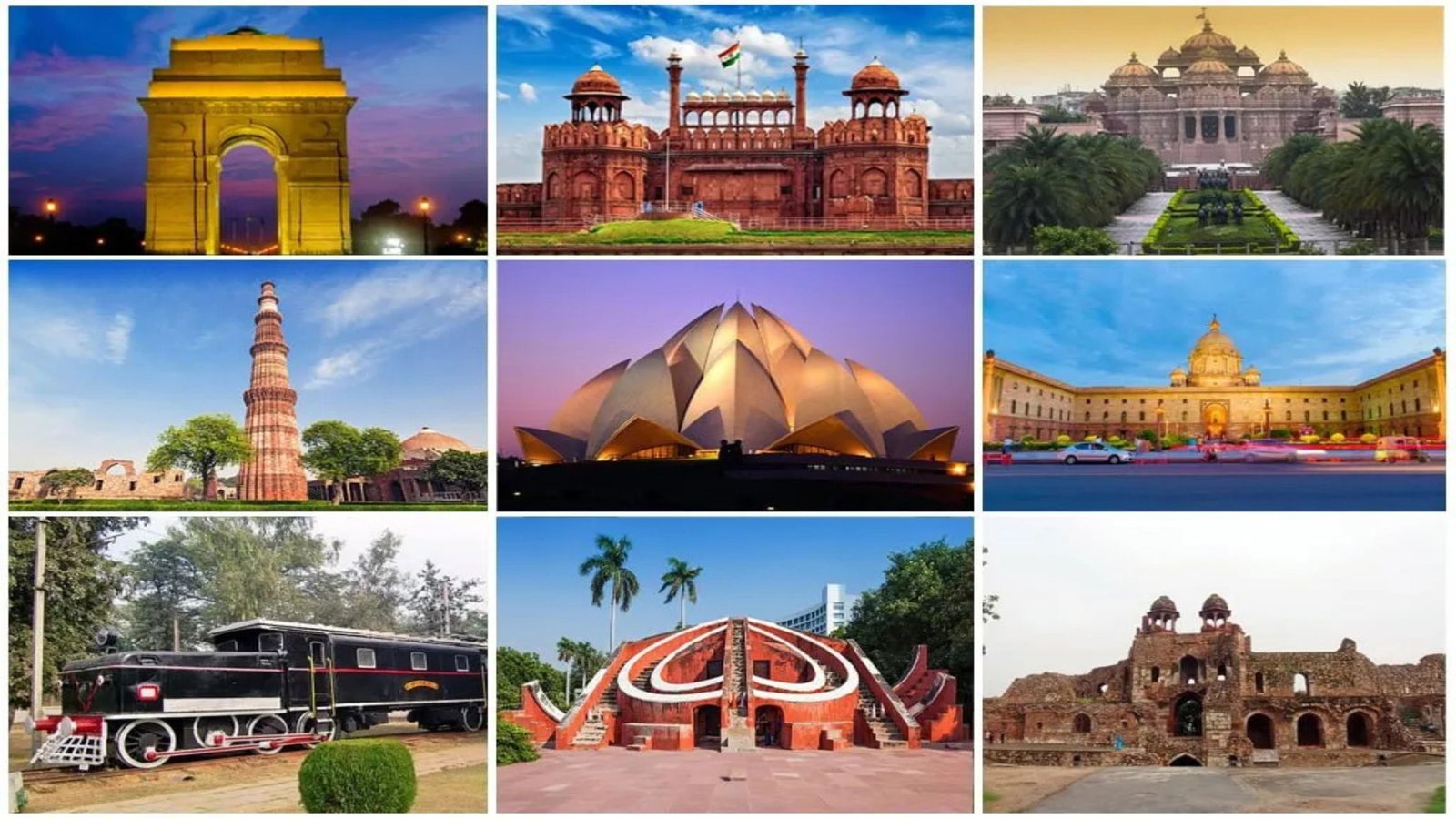
The air quality — which deteriorates badly in November due to crop burning in neighbouring Punjab and Haryana — is still excellent in October. Make the most of it. Every major monument looks its finest in this clarity.
One important note: Dussehra celebrations in Delhi on October 2 are extraordinary. The burning of giant Ravana effigies — some reaching 70 to 80 feet — at Ramlila Maidan near Connaught Place is one of India’s most dramatic public events. If October 2 falls within your visit, position yourself there.
Agra and the Taj Mahal in October
October is one of the finest months to visit the Taj Mahal. The monsoon has cleared completely. Temperatures are dropping from the summer extremes. The Taj Mahal’s gardens — still lush and green from the rains — look extraordinary against the vivid post-monsoon blue sky.
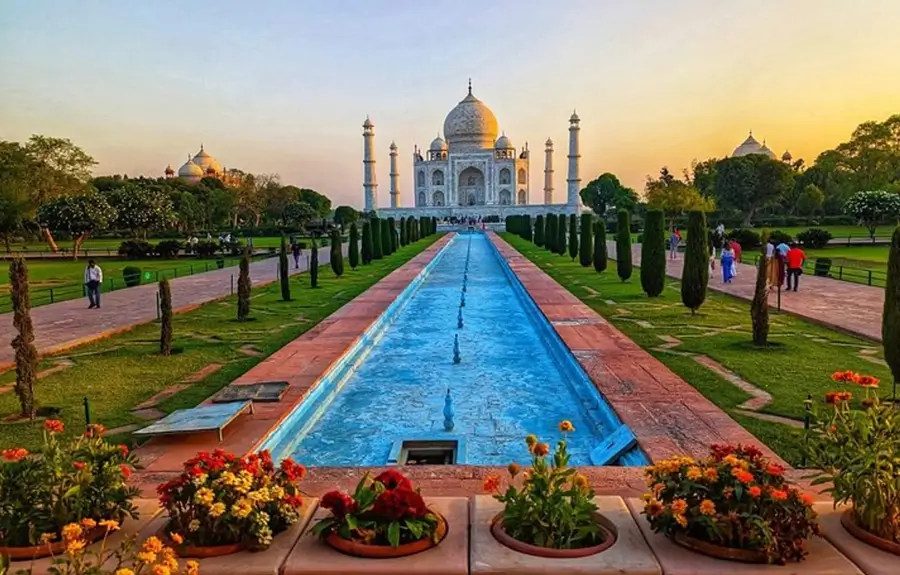
In early October, days in Agra reach 30°C to 34°C. By late October, daytime temperatures settle around 22°C to 28°C with nights at 10°C to 15°C. Sightseeing conditions from mid-October onwards are outstanding.
The October Taj Mahal has a specific quality that photographers seek out. The white marble against the post-monsoon blue sky creates the sharpest, most vivid version of the classic shot. The gardens are at their most lush — brilliant green against white marble — before they dry and fade in the cooler months.
Visitor numbers in early October are well below peak season. By late October, as the Diwali travel wave builds, crowds increase at weekends — but nothing approaching the queues of December and January.
Practical note: Agra can still feel warm in early October at midday. Plan Taj Mahal visits for the first two hours after gate opening (around 5:30 AM to 8:00 AM) or the final two hours before closing (3:30 PM to 5:30 PM).
Taj Mahal planning: Best Time to Visit Agra & Taj Mahal 2026 | Taj Mahal Tickets, Timings & Entry Fee 2026
Jaipur in October
October is the month Jaipur transitions from the monsoon green of September into the classic golden Rajasthan of peak season — and it is a genuinely beautiful transition.
Early October days reach 30°C to 36°C — warm but workable with early morning and late afternoon sightseeing. By late October, days are 24°C to 30°C with evenings around 12°C to 16°C. The Aravalli Hills surrounding Jaipur still carry their monsoon green in early October, photographed alongside the clear Rajasthan blue sky — actually more dramatic than the same views in January.
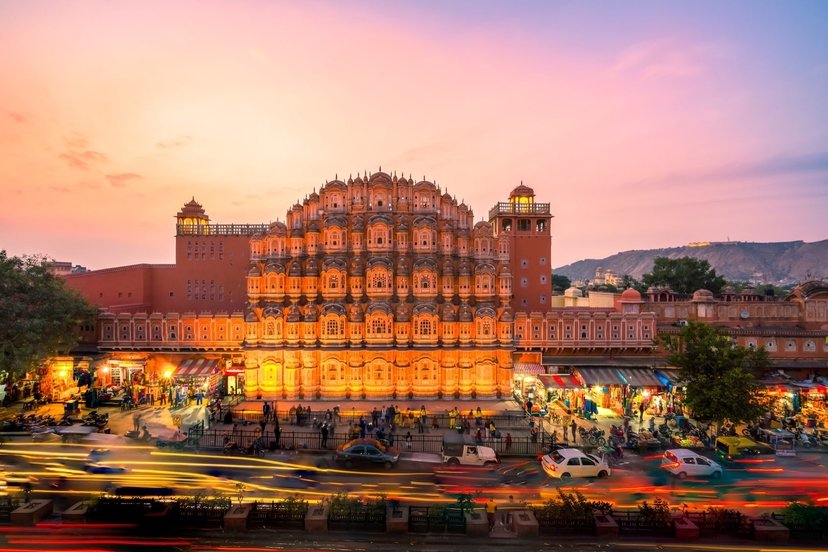
The bazaars are at full energy. Winter crowds have not yet arrived. You can explore the old city’s markets, negotiate with gem dealers in Johari Bazaar, and walk through the textile lanes with space and time to actually look.
For Diwali on October 20, Jaipur is the finest city in Rajasthan to witness the festival. The Pink City’s terracotta buildings are outlined in lights. Amber Fort is illuminated on the hillside. Fireworks burst over the Aravalli Hills. The old city bazaars blaze with diyas and marigold garlands from dusk until midnight.
Rajasthan Beyond Jaipur
All of Rajasthan is excellent in October. A few highlights:
Udaipur — arguably the single finest month for the city. The lakes are full from the monsoon. Lake Pichola is at its most expansive, with the Lake Palace Hotel floating surrounded by water and the City Palace reflected perfectly. Diwali in Udaipur is extraordinarily romantic — the lake reflects the lights of the city and surrounding hills simultaneously.
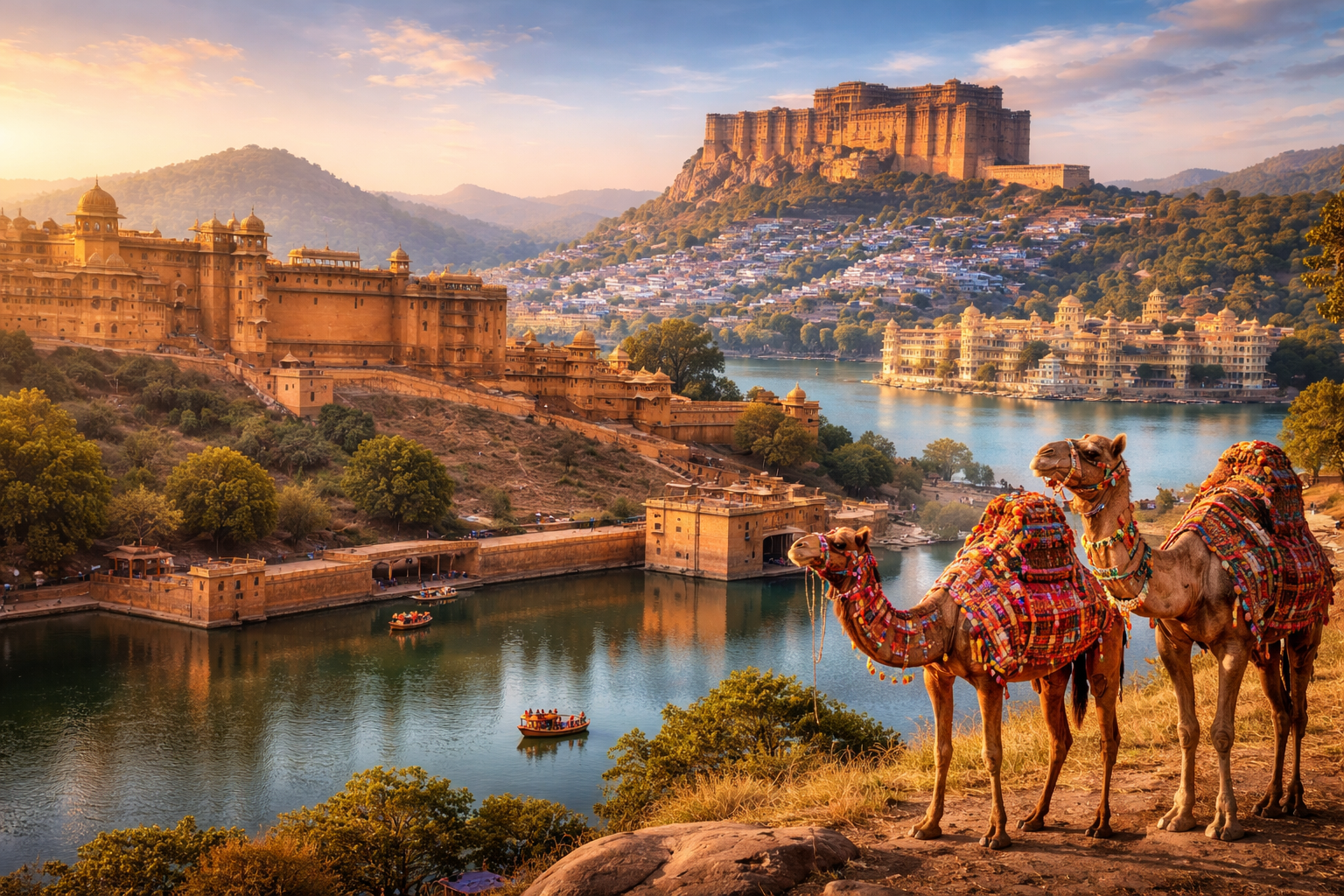
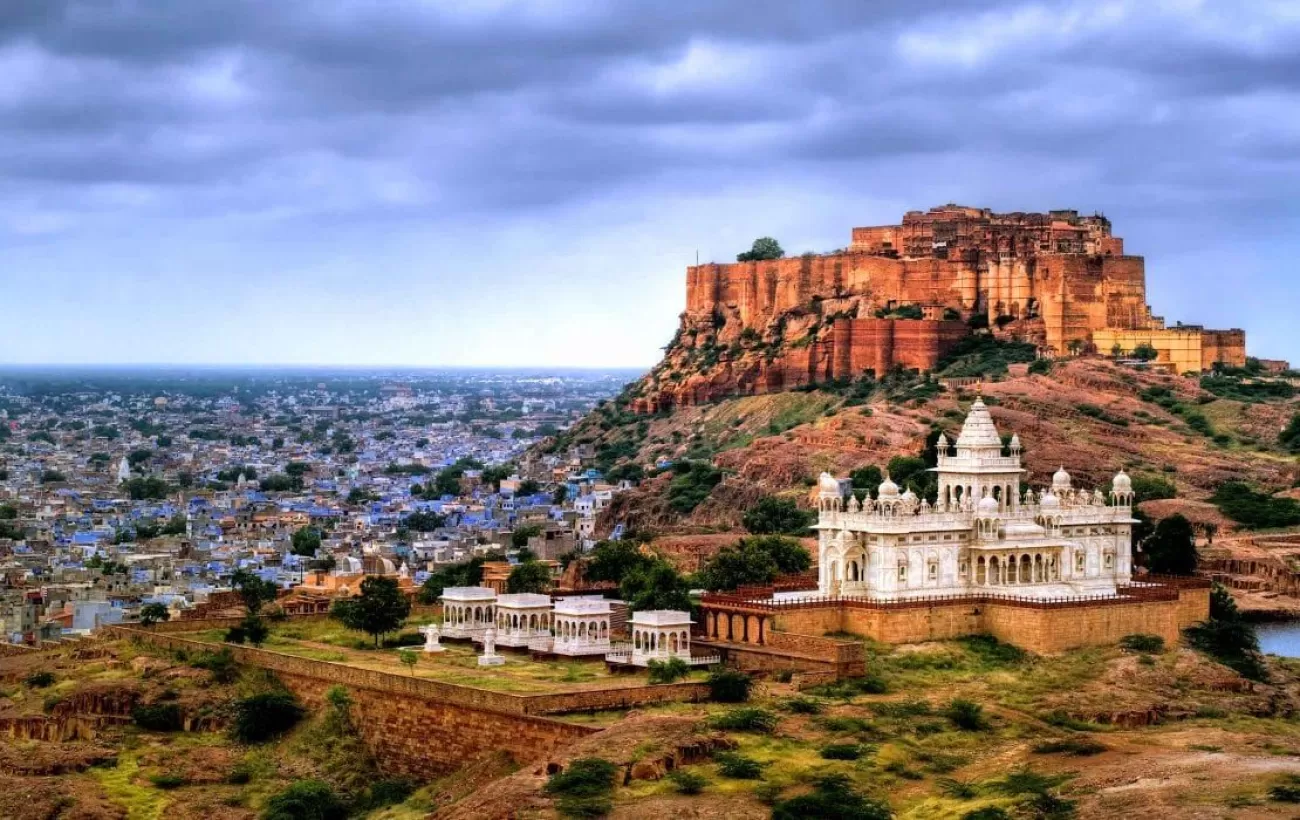
Jodhpur — the Blue City is spectacular in October. Temperatures drop toward the comfortable mid-20s°C by late October. Mehrangarh Fort above the city is at its most dramatic against the clear October sky.
Jaisalmer — still warm early, cooling rapidly. The desert landscape after the monsoon is surprisingly green in early October — an unusual and beautiful version of the golden dunes. By late October, temperatures are ideal for desert camping.
Pushkar — the Pushkar Camel Fair begins building in late October, reaching its peak around the full moon of Kartik (November 5, 2026). If your dates reach into late October, Pushkar is extraordinary.
Full Pushkar guide: Pushkar Camel Fair 2026 — Complete Visitor Guide
Kerala in October
Kerala in October is a more complex picture than North India. The state experiences two monsoon seasons and October sits in the transition between them.
The southwest monsoon typically withdraws from Kerala by mid-October. In its place, the northeast monsoon begins affecting the eastern coast from mid-October onwards.
In practice: the Alleppey backwaters and Munnar tea gardens are excellent throughout October — full, lush, and beautiful. For beach Kerala — Kovalam, Varkala — wait until November when the northeast monsoon eases and the sea calms properly.
October and beyond in South India: Read our India in November 2026 guide for how the season develops into Kerala’s finest window.
Goa in October
Goa is in the final days of its off-season in October. Beach shacks begin reopening in the second half of the month. By late October, North Goa beaches are accessible, the sea is calming down, and Goa’s energy is returning.
If your itinerary includes Goa, late October (the last 10 days) is the earliest reliable beach option. The first week of November is better still.
October 2026 Festivals: India’s Most Festive Month
No month on the Indian calendar concentrates this much celebration in such a short period.
Navratri (Into Early October)
The nine-night festival of the goddess — one of Hinduism’s most important celebrations — runs into early October 2026. In Gujarat, Navratri means Garba: night after night of traditional circular folk dancing in open-air venues across Ahmedabad, Vadodara, and Surat. Thousands of dancers in traditional costumes moving in concentric circles to the rhythm of dhol drums.
It is one of India’s most visually extraordinary events. International visitors are welcomed to participate — dressing in traditional chaniya choli or kurta-dhoti (available from vendors near every major venue) is appreciated.
In Delhi, Jaipur, and North India, elaborate Ramlila performances — dramatic re-enactments of the Ramayana — take place nightly in open-air venues throughout the nine days.
Dussehra — October 2, 2026
The culmination of Navratri. Dussehra celebrates the victory of Lord Ram over the demon king Ravana — good triumphing over evil.
Delhi Dussehra is the most spectacular version for most travellers. Ramlila Maidan near Connaught Place hosts the burning of giant effigies of Ravana, Meghnath, and Kumbhkaran — some reaching 70 to 80 feet — each packed with fireworks. The simultaneous burning of all three, watched by hundreds of thousands of Delhiites, is one of India’s most dramatic public events. Arrive by 5 PM to secure a position.
Mysuru Dasara (Karnataka) is considered India’s finest Dussehra celebration. The Mysore Palace illuminates with 100,000 lights. A royal procession of elephants, cavalry, and traditional musicians parades through the streets. This celebration has continued for over 400 years. If your itinerary includes South India, Mysore Dasara is unmissable.
Kullu Dussehra (Himachal Pradesh) begins the day after Dussehra and runs for seven days — a mountain-setting festival unique to the Kullu Valley.
Durga Puja — Kolkata
Kolkata during Durga Puja is transformed completely. Thousands of elaborate temporary structures called pandals — each housing an artistic representation of the goddess Durga — are erected throughout the city. Neighbourhoods compete fiercely on artistic merit. Walking through Kolkata during Durga Puja at night — illuminated pandals, drumming, the extraordinary creative energy of Bengal — is unlike anything else in India. For travellers interested in art and culture, Kolkata during Durga Puja is extraordinary.
Diwali — October 20, 2026
This is the single most important date in India’s festival calendar for international travellers in 2026.
Diwali is the Festival of Lights. On October 20, every home, shop, temple, and public space in India is illuminated with diyas (clay oil lamps), fairy lights, and candles. Fireworks colour the sky across every city and village simultaneously. The effect is genuinely indescribable.
Where to be for Diwali 2026:
Jaipur is the most spectacular Diwali in Rajasthan and the most popular choice for international visitors. The Pink City outlined in lights, Amber Fort illuminated on the hillside, fireworks over the Aravalli Hills. The old city bazaars from Bapu Bazaar to the City Palace transform into a river of light. Book heritage hotels three to four months ahead — Diwali week in Jaipur sells out completely.
Udaipur is the most romantic Diwali. Lake Pichola reflects the lights of the City Palace and surrounding hills simultaneously. The Lake Palace Hotel floats on the dark water surrounded by fireworks reflections. Quieter than Jaipur, more intimate, supremely beautiful. Best for couples.
Varanasi is the most spiritual Diwali. The ghats are lined with diyas from end to end. Priests conduct extended Ganga Aarti ceremonies. Floating candle boats drift down the sacred river. And fifteen days after Diwali (November 5, 2026), Varanasi hosts Dev Deepawali — the night widely considered the most beautiful in all of India.
Delhi has spectacular fireworks and grand scale. One note: air quality can be poor on Diwali night due to fireworks smoke. If you are sensitive to air quality, Jaipur or Udaipur are more comfortable.
Full Diwali planning guide: Diwali 2026 Travel Guide — city-by-city breakdown, what to expect, and how to book.
Wildlife Parks in October 2026
October 1 is one of the most significant dates in the Indian travel calendar. It is the day the national parks reopen after the monsoon closure.
Ranthambore National Park is the headline. India’s most famous tiger reserve reopens on October 1. The tigers have had four undisturbed months. They are active, well-fed, and beginning to establish territory. The tall monsoon grass hasn’t fully dried yet — November and December deliver slightly clearer sightings — but October still produces excellent tiger encounters in a forest that looks extraordinarily lush and alive.
October safari permits at Ranthambore are the most sought-after of the year. They open for booking 45 to 60 days in advance on the Rajasthan Forest Department portal and sell out within hours. If you want an October Ranthambore safari, set a reminder for 45 days before your visit date and book the moment permits go live.
Jim Corbett National Park reopens in October with excellent elephant viewing. The post-monsoon forest is at its most lush and vibrant. Golden October light through the sal trees makes Corbett one of the most photogenic wildlife experiences available anywhere in India.
Kanha and Bandhavgarh National Parks (Madhya Pradesh) both reopen October 1. Bandhavgarh has one of the highest tiger densities in India — October is excellent for sightings before peak season crowds arrive in November and December.
Kaziranga National Park (Assam) sees its one-horned rhinoceros returning to the grasslands as the monsoon floodwaters recede. Late October and November are the finest months for Kaziranga.
The Golden Triangle in October 2026
Unequivocally, yes — October is one of the three best months for the Golden Triangle alongside November and February.
Everything aligns in October. Weather is excellent. The Taj Mahal in post-monsoon clarity is spectacular. Gardens at every monument are at their most lush. Crowds are building but nothing like December and January. Hotels are 20 to 35% below December peak pricing.
The specific bonus for October 2026 is Diwali on October 20. A Golden Triangle itinerary timed around Diwali gives you the opportunity to be in Jaipur on the most spectacular night of the year — when the Pink City is outlined in lights and fireworks burst over the Aravalli Hills.
A practical 7-night October Golden Triangle itinerary:
Arrive Delhi on October 17. Two nights in Delhi — Red Fort, Humayun’s Tomb, Chandni Chowk. Drive to Agra on October 19 for Taj Mahal at sunrise on October 20 morning — then drive to Jaipur by afternoon in time for Diwali night. Two nights in Jaipur — Amber Fort, City Palace, bazaars. Add Ranthambore for October 1 to 15 visits — two nights and two mornings of tiger safaris in the freshly reopened park. Return to Delhi to depart.
Full planning and pricing: Golden Triangle Tour from Delhi | Golden Triangle Tour Cost 2026 | 4-Day Golden Triangle with Ranthambore
October vs Other Months: The Honest Comparison
October is better than August in almost every respect — the weather is more comfortable, the parks are open, and the festivals are extraordinary. The trade-off is cost: August is 40 to 65% cheaper.
October is very close to November in quality — the main advantages of October over November are that Diwali 2026 falls in October, prices are slightly lower, and crowds are slightly thinner. November edges October on weather (a little cooler and more comfortable by late November) and has Dev Deepawali in Varanasi. The two months are interchangeable for most travellers — and a trip that bridges both (arriving late October, leaving mid-November) is genuinely the finest India travel window of 2026.
October is better than December for price and festivals. December delivers better overall weather (the peak of the cool season) but at significantly higher cost — hotels 25 to 40% more, flights more expensive, crowds at their most intense.
The October verdict: the sweet spot between value and experience. You get 90% of December’s quality at 20 to 35% lower prices — plus Diwali and Dussehra, which December cannot offer.
What October Actually Costs: Honest Budget Guide
Hotels in October vs December:
Mid-range hotels in Delhi cost ₹5,000 to ₹8,500 per night in October versus ₹7,500 to ₹11,000 in December — a 20 to 25% saving. Heritage hotels in Jaipur range ₹10,000 to ₹20,000 in October versus ₹18,000 to ₹35,000 in December — a 35 to 40% saving. The Oberoi Amarvilas in Agra comes in at approximately ₹30,000 to ₹45,000 in October versus ₹45,000 to ₹65,000 in December.
One important exception: Heritage hotels in Jaipur, Udaipur, and Varanasi add a Diwali premium of 25 to 40% for October 18 to 22. Book these three to four months ahead. Outside Diwali week, standard October rates apply.
International flights in October:
From the USA to Delhi: approximately $800 to $1,200 economy return — typically $200 to $400 cheaper than December. From the UK to Delhi: approximately £600 to £850 economy return — typically £150 to £250 cheaper than December. For a 10-day trip for two people, total savings against December travel can reach £1,500 to £2,500.
What to Wear in India in October
Layering is the strategy for October — the temperature range across the day is significant, especially in late October.
For early October (1st to 15th), lightweight breathable clothing works well for daytime — cotton or linen, short sleeves, light trousers or dresses. Carry a light layer for evenings, which cool quickly after sunset. Temperatures in Delhi and Agra still reach 32°C to 34°C in early October.
For late October (16th to 31st), a light jacket or cardigan becomes genuinely useful for evenings and early mornings, particularly across Rajasthan. Days are warm (24°C to 30°C) but evenings can drop to 12°C to 15°C by month’s end.
Always carry a scarf or stole for temples and mosques — covering shoulders and knees is required at every religious site regardless of weather. Comfortable walking shoes for monuments, and easy-slip sandals or slip-ons for temple visits where footwear is removed at the entrance.
Practical Tips for October India Travel
Book Diwali accommodation immediately. With Diwali on October 20, 2026, heritage hotels in Jaipur, Udaipur, and Varanasi will be fully booked by July. If Diwali is part of your itinerary, book today. Three to four months is the minimum lead time for Diwali week properties.
Ranthambore safari permits — set your reminder. October 1 opening permits sell out within hours. Calculate 45 days before your target safari date, set a phone reminder, and book on the Rajasthan Forest Department portal the moment they go live.
Expect traffic disruption around festivals. Dussehra (October 2) and Diwali (October 20) both cause significant traffic and road closures in major cities. Plan to be at your intended location before sunset on these evenings. Build extra time for airport transfers on festival days — an hour of buffer is not excessive.
Air quality in late October. Delhi’s air quality typically begins to deteriorate in the final days of October due to paddy stubble burning in neighbouring states. In October, it is generally still good — but if air quality is a concern, prioritise Agra, Jaipur, and Rajasthan over Delhi in late October.
Photography conditions are outstanding. October offers some of the finest photographic conditions of the year. The post-monsoon clarity makes colours vivid and shadows defined. Golden hour in Rajasthan — particularly on Amber Fort’s sandstone at sunrise — is extraordinary. Bring a wide-angle lens and arrive at monuments 30 minutes before gate opening.
Where NOT to Go in October
Ladakh — roads begin closing for winter by late October. If Ladakh is on your list, visit before mid-October and carry serious buffer days in case passes close early.
Goa beaches early in October — the sea is still rough in the first half of the month and many beach shacks are still closed. Inland Goa is fine. Beach Goa: wait until late October or November.
Andaman Islands — the northeast monsoon affects the Andamans from October onwards. November and December are far better for Andaman beach holidays.
Frequently Asked Questions
Is October a good time to visit India?
October is one of the best months to visit India — particularly for the Golden Triangle, Rajasthan, and wildlife safaris. The monsoon has ended, temperatures are cooling, national parks reopen on October 1, and Diwali on October 20 makes 2026 especially extraordinary.
When is Diwali in 2026?
Diwali 2026 falls on October 20. This is one of the earliest Diwali dates in recent years, meaning October 2026 travellers experience the festival with post-monsoon blue skies and warm evenings rather than the cooler conditions of a typical November Diwali.
What is the weather like in India in October 2026?
Delhi and Agra reach 30°C to 34°C in early October, cooling to 22°C to 28°C by late October. Nights are pleasantly cool — 12°C to 16°C by month’s end. Rajasthan follows a similar pattern. Kerala is transitional. Overall, October offers the best daytime temperatures for outdoor sightseeing of any month at the transition into peak season.
Is Ranthambore open in October?
Yes — Ranthambore reopens on October 1 after the monsoon closure. October is the first month of the new tiger safari season. Book safaris 45 to 60 days in advance as permits for the opening weeks sell out within hours.
Is October good for the Taj Mahal?
Excellent — one of the finest months. Post-monsoon clarity gives the white marble a brilliance rarely seen at other times. Gardens are lush and green. Visitor numbers are below the December to January peak. Plan morning visits (5:30 AM to 8:00 AM) for the best light and fewest crowds.
How much cheaper is October compared to December?
Hotel rates are typically 20 to 35% lower in October than December. International flights are $200 to $400 cheaper from the USA and £150 to £250 cheaper from the UK. For a 10-day trip for two people, total savings against December travel can reach £1,500 to £2,500.
What should I pack for India in October?
Lightweight breathable clothing for days. A light jacket for evenings from mid-October. A scarf for temple visits. Comfortable walking shoes. Sunscreen. Insect repellent — mosquitoes are still present in early October. Bottled water throughout — never drink tap water.
Plan Your October 2026 India Trip with Squid Travel India
October is one of our busiest months at Squid Travel India — and Diwali 2026 falling on October 20 makes this year particularly special.
We organise Golden Triangle tours, Diwali packages in Jaipur and Udaipur, Ranthambore safari extensions, Pushkar Camel Fair itineraries, and complete Rajasthan circuits. Every package includes private AC transport, hand-picked accommodation booked months in advance, licensed expert guides, and 24/7 on-trip support.
Want something built specifically around your dates, group, and interests? Use our Make Your Own Tour page and we will design your perfect October 2026 itinerary within 24 hours.
📞 Call / WhatsApp: +91 9990812499 📧 Email: Squidtravelindia@gmail.com 🌐 Visit: squidtravelindia.com
1,800+ trips completed | 98% happy clients | TripAdvisor Travelers’ Choice 2024–2025
Last updated: August 2026. Festival dates are confirmed for 2026. Hotel rates and flight prices are indicative based on current 2026 availability. Always verify before booking.

Comments (3)