

The Honest Answer Before the Detail
Ranthambore National Park is open from October 1 to June 30 each year. It closes entirely from July through September during the monsoon season.
Within that nine-month open window, every month delivers something different — and the best month for you depends entirely on what you are optimising for.
If you want the highest statistical probability of seeing a tiger: visit in April or May. The heat is intense, but the dry season forces tigers to the waterholes predictably and visibility through the thinning forest is at its best.
If you want the most comfortable and enjoyable overall safari experience: visit from November to February. The weather is perfect, the park is at its most beautiful, and tiger sightings — while slightly less predictable than late dry season — are still excellent.
If you want the best balance of sightings, comfort, and value: late October, November, or February are the sweet spots.
If you are visiting as part of a Golden Triangle tour: October to March fits perfectly. Jaipur is three hours from Ranthambore. Your Delhi-Agra-Jaipur itinerary ends at Jaipur — add two Ranthambore nights and two safari mornings and you have the finest India week available.
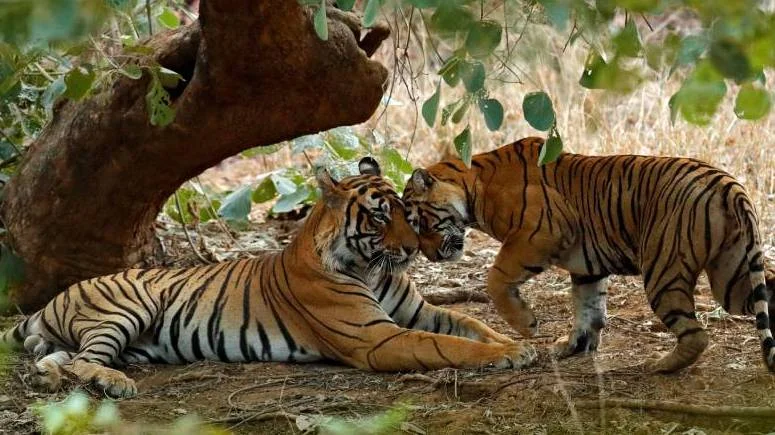
This guide breaks it down month by month so you can decide with complete information.
The Park Calendar: What Is Open and When
Ranthambore’s safari season runs October 1 to June 30. The park closes for the monsoon from July 1 to September 30 each year.
Within the open season, there is an important distinction between core zones and buffer zones.
The core zones (Zones 1 to 5) are the historical heart of the park — centred on the three lakes and the area below Ranthambore Fort. These zones deliver the highest historical tiger sighting rates. They are open throughout the safari season from October to June.
The buffer zones (Zones 6 to 10) are the outer areas of the reserve with lower historical sighting rates but growing tiger populations. During monsoon months (when only limited access is possible), only certain buffer zones may allow safaris — but for most international visitors, the core zones from October to June are the operating window.
Safari sessions run twice daily: a morning session (departing approximately 6:00 AM, returning approximately 9:30 AM) and an afternoon session (departing approximately 2:30 PM, returning approximately 6:00 PM). Morning sessions consistently deliver better tiger sighting rates across all months.
Month by Month: What to Expect at Ranthambore
October — The Season Opens
The gates open on October 1 and the first jeeps roll back into the forest after four months of monsoon closure.
October is a fascinating and underrated month at Ranthambore. The forest is at its most vivid and green — lush with post-monsoon growth. The three lakes are full. The ancient Ranthambore Fort rises dramatically against dramatic post-monsoon skies. The tigers, having had four undisturbed months, are active, territorial, and often seen near water.
The challenge of October is vegetation density. The monsoon rain has produced growth throughout the forest, and in the first weeks of October the undergrowth is thicker than in any other safari month. This can make spotting a tiger through the foliage more difficult than in November or December when the vegetation begins to dry and thin.
Tiger sighting probability in October: 65 to 75% across two safaris. This rises to 85 to 90% across three or four safaris.
October temperatures are very comfortable — 22°C to 32°C during the day, 12°C to 18°C at safari time. A light jacket for the open jeep at dawn is ideal. By mid-morning the sun is warm and pleasant.
Who should visit in October: Golden Triangle travellers who can add Ranthambore at the end of their Jaipur stop. Early-season visitors who want the freshest, greenest version of the park. Budget-conscious travellers — October is shoulder season pricing.
Full October safari guide: Ranthambore Tiger Safari October 2026
November — The Sweet Spot Begins
November is when Ranthambore enters its prime season — and many experienced wildlife travellers consider it the single finest month to visit.
The post-monsoon vegetation begins to dry and thin in November. Visibility through the forest improves significantly compared to October. The waterholes remain the primary water source for all the park’s animals — and the tigers use them with increasing predictability as the month progresses. By mid-to-late November, the forest has opened up enough that a tiger seen at 100 metres is clearly visible rather than partially obscured.
The weather in November is outstanding. Daytime temperatures settle around 20°C to 28°C. Dawn safari temperatures are cool — 10°C to 15°C — and a proper fleece or light jacket is needed. Evenings are pleasantly cool. It is the most physically comfortable month for extended outdoor time at Ranthambore.
Tiger sighting probability in November: 70 to 80% across two safaris, higher across three or four.
November at Ranthambore also coincides with Diwali (November 8, 2026) and the Pushkar Camel Fair (November 17 to 24). A Golden Triangle + Ranthambore + Pushkar itinerary in November covers monuments, wildlife, and the finest festival in Rajasthan in one trip.
Who should visit in November: First-time wildlife visitors who want the best combination of comfortable conditions and good sighting rates. Families. Couples for whom comfort matters. Festival travellers combining Diwali or Pushkar with a safari.
December — Peak Season Arrives
December is Ranthambore’s peak tourist month — and it earns that status.
The vegetation has thinned further. The waterholes are the primary water source and the tigers visit them with high regularity. The park is at its most visually structured — open enough for excellent long-distance sightings, and the ancient fort and lake views are at their most dramatic in the cool December air.
Temperatures in December are cool and ideal for safari — 15°C to 25°C during the day, dropping to 5°C to 10°C at dawn. The early morning jeep ride requires a warm jacket and gloves. By 9 AM conditions are comfortable for outdoor time.
One December caveat: fog. December (and January) can bring dense morning fog to Rajasthan. On foggy mornings at Ranthambore, visibility within the forest can be significantly reduced — a tiger at 50 metres may be invisible until it is 20 metres away. This is not a reason to avoid December, but it is a variable to be aware of. Most mornings in December are clear. Perhaps 20 to 30% of dawn safaris in December encounter significant fog.
December also brings the highest accommodation prices and the most demand for permit zones. Book safari permits and lodge accommodation at least two to three months in advance for December visits.
Who should visit in December: International visitors for whom this is a once-in-a-lifetime trip and who want peak conditions. Experienced wildlife photographers. Anyone combining Ranthambore with a peak Golden Triangle holiday. Those who prefer the cool-season atmosphere even at higher cost.
January — Cold, Fog, and Excellent Sightings
January at Ranthambore is simultaneously the coldest and one of the most rewarding months for tiger sightings.
The forest is at its driest — the monsoon moisture has completely evaporated. Visibility is excellent. Tigers are frequently seen basking in the morning sun on rock outcrops, warming themselves after cold nights. The famous image of a Ranthambore tiger stretched on a rocky ledge in golden morning light is a January phenomenon.
Dawn temperatures in January can fall below 5°C. Sitting in an open jeep at 6 AM in January Ranthambore requires a proper winter jacket, thermal layers, and gloves. This is not optional — it is genuinely cold at that hour. By 10 AM temperatures are pleasant and by afternoon comfortable.
The fog risk is highest in January. Dense fog can descend without warning and can last through the entire morning safari. When this happens, the experience is surreal — moving through a white mist-filled forest — but tiger sightings are much harder. Plan a minimum of three safaris across two days in January to account for the fog variable.
Who should visit in January: Serious wildlife enthusiasts who are well-prepared for cold conditions and potential fog. Winter travellers visiting India during the Christmas and New Year period. Those who specifically want the tiger-on-a-rock morning sun sightings.
February — The Finest Overall Month
February is Ranthambore at its absolute finest for most visitors — and our consistent recommendation for first-time wildlife travellers.
The fog risk of December and January has largely passed. The forest is open and dry. Visibility is excellent throughout the park. Tigers are active in the mornings and evenings, and with the waterholes at their lowest levels of the year beginning to appear, the tigers’ movements are becoming increasingly predictable.
February temperatures are ideal — 18°C to 28°C during the day, 8°C to 14°C at dawn. The morning jeep requires a light jacket. By 9 AM it is warm and comfortable. Afternoons are pleasant.
Tiger sighting probability in February: 75 to 85% across two safaris. With a third and fourth safari, this approaches 90 to 95% among experienced operators.
Permit availability in February is good but not abundant — book two to three months in advance. Accommodation at quality lodges near the gates should be booked even earlier.
February also coincides with the Ranthambore Elephants Festival (in some years) and the general atmosphere of post-January calm that makes the park feel less rushed than December.
Who should visit in February: Anyone for whom Ranthambore is a primary goal of their India trip. Photographers who want both good sighting rates and excellent light conditions. First-time visitors who want the best all-round safari experience.
March — Sightings Rising, Heat Arriving
March is the transition month. The weather is warming, the forest is drying rapidly, and the tiger sighting rates begin to climb significantly.
The waterholes are shrinking fast in March. As the lakes and smaller water sources contract, they become focal points for all of the park’s wildlife — deer, wild boar, peacocks, monkeys, sloth bears, leopards, and tigers all converge on the remaining water. A jeep parked near an active waterhole in March morning light can deliver extraordinary multi-species wildlife encounters within a single session.
Day temperatures in March climb to 28°C to 35°C. Dawn temperatures are still very comfortable at 12°C to 18°C. Afternoon safaris in late March become warm — some visitors prefer to skip the afternoon session and do two morning safaris on consecutive days instead.
Tiger sighting probability in March: 75 to 85% across two safaris — comparable to February, trending higher toward month’s end.
Crowds in March are building but not yet at the May and June intensity. Accommodation costs are still elevated from peak season but beginning to ease.
Who should visit in March: Wildlife enthusiasts who want the rising sighting rates of the late dry season without the extreme heat of May and June. Photographers chasing the waterhole concentration of multiple species. Spring Break visitors from the USA and Europe.
April — The Hot Season and the Best Sightings
April is when the numbers shift decisively in favour of tiger sightings — and the comfort shifts decisively against visitors.
By April, the waterholes in Ranthambore are critically important. The forest is bone dry. Almost all the smaller water sources have evaporated. The three lakes — Padam Talao, Raj Bagh Talao, and Malik Talao — are the only significant water sources remaining in large sections of the park. The tigers must visit them to drink, and they do so with a frequency and regularity that makes sightings significantly more predictable than any winter month.
Temperatures in April: 32°C to 40°C during the day. Dawn temperatures are manageable at 20°C to 25°C — the morning safari is still comfortable. By 10 AM, the heat is intense. By noon, it is brutally hot.
All outdoor activity should finish before 10 AM in April. Return to your air-conditioned lodge. Rest through the midday hours. The evening safari from 3:30 PM to 6:30 PM is again tolerable as temperatures drop.
Tiger sighting probability in April: 80 to 90% across two safaris. Early April sightings are exceptional — the lake-edge encounters in golden morning light with tigers drinking, then resting in the shade, are among the most extraordinary wildlife moments available at any reserve in the world.
Who should visit in April: Serious wildlife travellers who prioritise sightings above comfort. Photographers with experience in hot conditions. Visitors who are willing to spend midday in air-conditioned accommodation in exchange for extraordinary morning encounters.
May — Maximum Sightings, Maximum Heat
May is statistically the finest month for tiger sightings at Ranthambore. It is also the most physically challenging month to visit.
By May, the waterholes are at their lowest. The tigers — unable to survive without water — visit the lakes and any remaining water sources multiple times per day. Morning safaris in May regularly deliver encounters of 20 to 40 minutes with a single tiger or a tigress with cubs at the waterhole. The park’s naturalists know exactly where every tiger is likely to appear each morning. The predictability reaches its peak in May.
Temperatures in May: 38°C to 44°C. Dawn temperatures are already 25°C to 30°C. By 8 AM the sun is fierce. By 10 AM the heat is dangerous for anyone spending extended time outdoors.
The morning safari is the only viable option in May. Most experienced visitors to Ranthambore in May do the morning safari, return to the lodge by 9 AM, stay in air-conditioned comfort until 3 PM, and then do the evening safari before sunset.
The accommodation near the park gates — particularly lodges with pools — is essential in May. The lodges are significantly cheaper than peak season. Permits are more available.
Tiger sighting probability in May: 85 to 95% across two safaris. Many experienced operators guarantee at least a fleeting tiger sighting across three May safaris.
Who should visit in May: Dedicated wildlife enthusiasts for whom the tiger sighting is the non-negotiable goal. Those who can tolerate extreme heat with proper preparation and air-conditioned accommodation. Professional wildlife photographers.
June — Last Chance Before Monsoon
June continues the high-sighting-rate pattern of May, but with an important caveat: the monsoon arrives sometime between mid-June and late June, and when it arrives, the park closes.
The first half of June is excellent — hot like May, excellent sightings, lower accommodation costs. Book with full flexibility on dates and a confirmed understanding of the closure risk. Most operators book June safaris with a weather-dependent cancellation option.
From approximately June 20 to 30, the monsoon front typically reaches Rajasthan. When significant rainfall is forecast, the park closes earlier than the official June 30 end date. Do not plan a June safari that depends on a specific closing date — the actual closure varies by two to three weeks each year depending on monsoon timing.
Who should visit in June: Experienced India travellers with complete itinerary flexibility. Those who have already visited in October to March and want the maximum sighting experience. Not recommended for first-timers or those with fixed travel dates.
July to September — The Park Is Closed
Ranthambore National Park closes on July 1 and does not reopen until October 1. No safari vehicles operate in the core zones during this period.
Some buffer zones may allow limited access during the monsoon, but for practical purposes, Ranthambore is not a viable wildlife destination from July to September. The forest is flooded, the tracks are impassable for most of this period, and the park is undergoing its annual regeneration.
If your India trip falls in July, August, or September — Ladakh, Spiti Valley, Kerala, and the hill stations of Himachal Pradesh are all excellent alternatives. For the Golden Triangle specifically, see our guide to visiting in monsoon season.
The Quick Reference: Which Month Is Right for You?
Best for tiger sightings: April and May — predictable waterhole encounters, highest probability.
Best overall experience: November and February — comfortable weather, good sightings, excellent scenery.
Best for the Golden Triangle combination: October to March — all fall within the standard GT travel season.
Best for budget: October and June — shoulder season pricing with excellent conditions.
Avoid for sightings (but beautiful): July to September — park is closed.
Best for families: November, February, and March — comfortable temperatures throughout the day.
Best for photographers: February for light quality and sightings. May for waterhole encounters.
How Many Safaris Do You Need?
This is the question most first-time visitors get wrong — they book one safari and feel short-changed when they do not see a tiger.
The honest answer: book a minimum of two safaris. One morning and one evening safari is the minimum meaningful visit. Two morning safaris across two days is significantly better.
Three to four safaris across two days gives you the best statistical coverage of different zones, different tiger territories, and different times of day. Across three or four October to March safaris, experienced operators estimate 80 to 90% sighting probability.
Each safari runs approximately 3.5 hours. Two safaris per day — morning and evening — is the maximum. Most experienced visitors do one or two days at Ranthambore with all available safari slots booked.
Getting to Ranthambore
Ranthambore is in Sawai Madhopur district, approximately 160 km from Jaipur (3 hours by road) and 380 km from Delhi (5 to 6 hours, or direct train from Delhi Hazrat Nizamuddin).
For Golden Triangle travellers, the standard route is completing Jaipur and driving directly to Ranthambore — two nights at the park, then return to Jaipur or Delhi for onward travel.
Planning the full trip:
Frequently Asked Questions
What is the best time to visit Ranthambore?
For comfortable weather and good sightings: November to February. For maximum tiger sighting probability: April and May. For the best balance of everything: February is the single finest month for most visitors.
When does Ranthambore open and close?
The park opens October 1 and closes June 30 each year. It is closed during the monsoon from July 1 to September 30.
Is October a good time to visit Ranthambore?
Yes — with realistic expectations. October delivers a 65 to 75% sighting probability across two safaris, beautiful post-monsoon scenery, comfortable weather, and lower prices than peak season. The vegetation is denser than November onwards, making sightings slightly less predictable — but excellent waterhole encounters are very possible.
What months have the best tiger sightings?
April and May deliver the highest statistical sighting rates — 85 to 95% across two to three safaris. February and March are the best months for combining good sightings with comfortable conditions.
Is December or January a good time for Ranthambore?
Good for sightings, but fog is a real risk. Perhaps 20 to 30% of dawn safaris in December to January encounter significant fog that reduces visibility. Plan at least three safaris to account for the variable.
How many days do I need at Ranthambore?
Two nights minimum — giving you two morning and one evening safari. Two nights and three safaris is the ideal minimum. Three nights across four safaris is the most thorough approach for first-timers specifically targeting a tiger sighting.
Plan Your Ranthambore Safari with Squid Travel India
At Squid Travel India, Ranthambore is one of our most-booked experiences — and we know exactly which months, zones, and safari strategies deliver the best results for our clients.
We handle permit bookings months in advance, accommodation near the park gates, private transfers from Jaipur or Delhi, and experienced naturalists who know the park’s tigers by territory and name. We build Ranthambore seamlessly into Golden Triangle itineraries and standalone Rajasthan wildlife circuits.
Also worth reading as you plan:
- Ranthambore Tiger Safari October 2026
- Golden Triangle Tour from Delhi
- 4-Day Golden Triangle with Ranthambore
- India in November 2026
- Make Your Own Tour
📞 Call / WhatsApp: +91 9990812499 📧 Email: Squidtravelindia@gmail.com 🌐 Visit: squidtravelindia.com
1,800+ trips completed | 98% happy clients | TripAdvisor Travelers’ Choice 2024–2025
Last updated: August 2026. Park dates, safari timings, and zone availability are subject to change. Always verify with the official Rajasthan Forest Department before booking.

Comment (1)