

The Short Answer
Yes. With the right timing and the right expectations.
Agra in September is not the easiest version of Agra. The humidity is real. The rain is possible. And every other travel guide will tell you to wait for October.
But here is what those guides do not tell you.
September is when Agra is least crowded. The Taj Mahal gardens are at their most vivid and green. Hotel prices are 30 to 50% lower than December. And the transition from late September into October — when the monsoon retreats and the sky begins to clear — delivers some of the finest conditions available anywhere on the Golden Triangle calendar.
If September is your window, this guide tells you exactly how to make the most of it.
September Weather in Agra: What You Are Actually Dealing With
Agra sits on the Gangetic plain with a climate that swings harder than most travellers expect. September falls in the tail end of the monsoon season — and there is a significant difference between early September and late September.
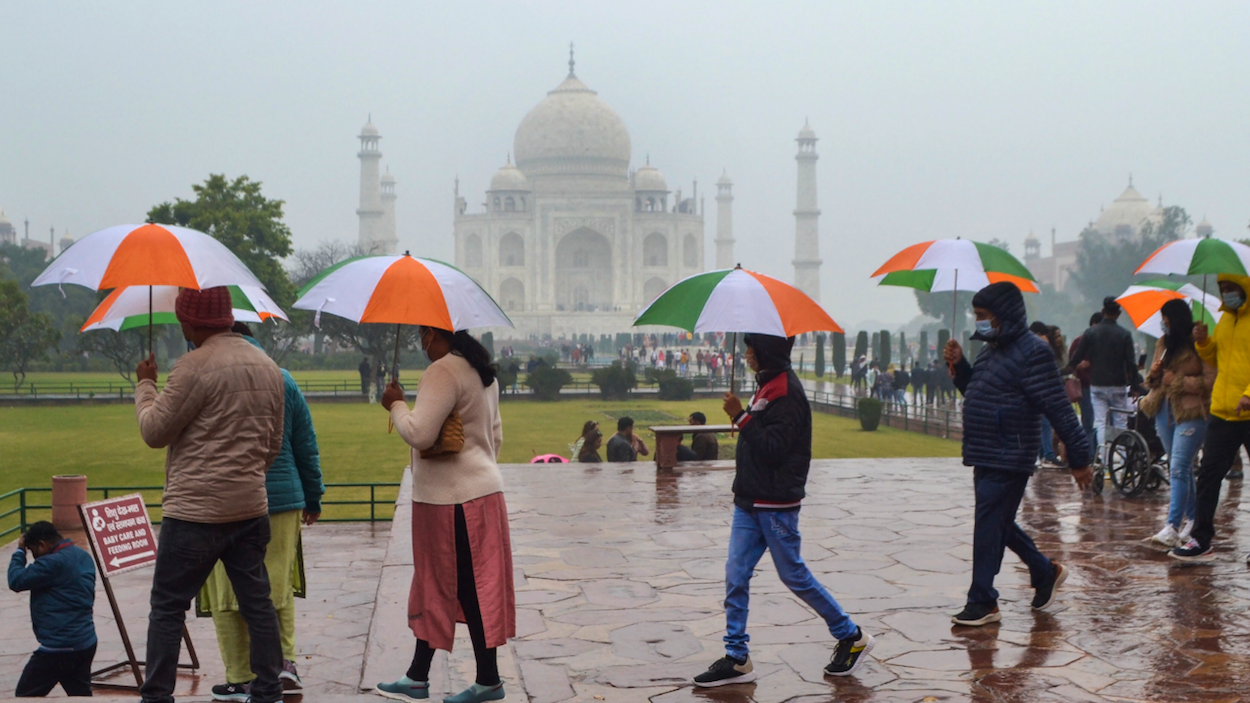
Early September (September 1 to 15): This is the more challenging part of the month. Daytime temperatures sit around 28°C to 36°C. Humidity runs at 75 to 85%. Rain arrives in bursts rather than continuous downpours — typically heavy afternoon showers lasting an hour or two, followed by clearing skies. Mornings are almost always workable.
Late September (September 16 to 30): This is where September becomes genuinely rewarding. The monsoon begins its retreat from North India. Temperatures drop noticeably toward 24°C to 32°C. Humidity falls. The sky starts to clear. Late September Agra is closer to early October than it is to August — and the prices are still low while the conditions are improving daily.
The most important weather fact for planning your Agra visit in September: rain in Agra during this month comes in the afternoon. Mornings are almost always clear. The sunrise window — gate opening at around 5:30 AM through to 9 AM — is your golden window and it is reliably available even in early September.
Is the Taj Mahal Open in September?
Yes. Fully open.
The Taj Mahal operates year-round regardless of season, rain, or humidity. Gates open 30 minutes before sunrise every day — approximately 5:30 AM in September. The monument closes 30 minutes before sunset.
One day is the exception every single week: the Taj Mahal is closed every Friday. In September 2026, Fridays fall on September 4, 11, 18, and 25. Build your Agra visit around any other day.
Full entry information: Taj Mahal Tickets, Timings & Entry Fee 2026 — exact prices, online booking, and the mausoleum add-on explained.
What the Taj Mahal Actually Looks Like in September
This is the part most people get wrong before they visit.
They expect the classic postcard — white marble against a deep blue sky. That is October and November. September delivers something different. Not worse. Different.
The Taj Mahal gardens in September are at their most vivid green of the entire year. The lawns are lush and perfectly maintained. The flower beds along the central pathway are full. The cypress trees lining the walkway to the mausoleum are at their most vigorous. The central reflecting pool is brimming. The overall impression of the complex — marble white against vivid green — is genuinely beautiful and unlike any other time of year.
The marble itself looks different under overcast monsoon skies. The light is softer and more diffused. Harsh shadows disappear. The intricate carved floral detail on the marble surface — which can be washed out in direct midday sun — becomes clearly visible in September’s softer light.
When it rains lightly while you are inside the complex, the marble glistens. The reflections in the central pool become more dramatic. Many professional photographers specifically visit Agra in monsoon season for exactly this effect.
And then there is the Yamuna River. Behind the main mausoleum, the river runs at its fullest level of the year in September. From the back terrace of the Taj, the view over a full, reflective Yamuna — with Mehtab Bagh garden visible on the opposite bank — is extraordinary.
The 5 Real Reasons to Visit Agra in September
1. The Taj Mahal With Almost No One Else There
September is low tourist season. On a weekday morning in September, you can stand at the central reflecting pool with barely anyone else in your frame. You can walk into the main mausoleum chamber without queueing. You can sit on the marble terrace overlooking the Yamuna in near silence.
That experience does not exist in December or January, when the Taj Mahal draws enormous queues and the main platform is always busy.
2. Hotel Prices Drop 30 to 50%
A mid-range Agra hotel that costs ₹12,000 per night in December drops to ₹5,000 to ₹7,000 in September. The Oberoi Amarvilas — the finest hotel in Agra with Taj Mahal views from every room — offers significantly better rates in September than at any other point in the peak season calendar.
For budget travellers, guesthouses in Taj Ganj that cost ₹4,000 in peak season drop to ₹1,500 to ₹2,500 in September.
3. The Gardens Are at Peak Beauty
No month delivers more vivid gardens at the Taj Mahal than September. The post-monsoon growth is at its fullest. The lawns are a deep, saturated green. The flower beds are complete. The fountains running along the central Charbagh garden are at maximum flow.
This is the Taj Mahal that looks different from every photograph you have seen of it — and that difference is worth something.
4. Late September Offers Near-Peak Conditions
After September 20, the monsoon retreats rapidly from North India. The sky begins to clear to a proper blue. Humidity drops noticeably. Temperatures start moving toward the comfortable October range. Late September Agra — particularly the last 10 days of the month — delivers excellent conditions at prices that are still 25 to 35% below December.
5. Every Other Agra Sight Is Also Near-Empty
Agra Fort. Itmad-ud-Daulah (the Baby Taj). Fatehpur Sikri. Mehtab Bagh at sunset. All near-empty in September. In peak season, these monuments are significantly more crowded than their quality merits — in September you can experience them at their own pace.
The 3 Honest Challenges
1. Early September Humidity Is Genuinely Uncomfortable
The humidity in early September Agra — 75 to 85% — is the real challenge, not the rain itself. You will sweat from the moment you step outdoors. A 9 AM Taj Mahal visit in early September feels warmer than a 9 AM visit in October at the same temperature, because the moisture in the air prevents natural cooling.
The solution is to visit earlier. At 6 AM the air is genuinely cooler. The humidity is still present but the temperature is lower and the experience is comfortable. Plan your entire Taj Mahal visit to finish by 9 AM in early September.
2. Afternoon Rain Is Likely
Most days in early September Agra, heavy rain arrives in the afternoon — typically between 2 PM and 5 PM. These showers are usually short (one to two hours) and dramatic rather than sustained. They clear quickly and the evening after rain in Agra is often extraordinarily beautiful.
The practical implication: plan all outdoor sightseeing in the morning. Use afternoons for hotel rest, air-conditioned restaurants, Agra’s excellent handicraft shopping, or the Taj Mahal Museum inside the complex itself.
3. The Classic Blue Sky Shot Is Not Available
If your primary goal is the classic Taj Mahal postcard — white marble against a cloudless deep blue sky — September is not your month. That shot exists most reliably in October, November, and February.
September delivers a different and equally valid visual experience. But if the blue sky postcard is non-negotiable for you, come in October.
October at the Taj Mahal: Read our India in October 2026 guide — the full picture of what October delivers for the Golden Triangle.
The Best Time of Day to Visit in September
The answer is the same every month — but in September it matters more than usual.
Arrive at gate opening: approximately 5:30 AM.
In September, the window between gate opening and the arrival of significant heat and humidity is narrow. The first 90 minutes after opening — before 7 AM — give you the best light, the coolest temperature, the lowest humidity, and the fewest visitors. All four advantages disappear by 9 AM.
The morning light in September at the Taj Mahal has a soft, warm quality. The sun rises behind the mausoleum and lights the marble from the east as you approach from the south gate. The famous reflection pool shot — the Taj reflected in the long central pool — is at its most beautiful in this early morning light.
By 9 AM, the combination of rising temperature and humidity makes extended outdoor walking genuinely tiring in early September. Plan to exit by this time, return to your hotel for a proper breakfast, and rest through the midday heat.
A second window opens in the late afternoon. By 4:30 PM the temperature begins to drop. If the afternoon rain has cleared — which it usually has by 4 PM — the evening light on the Taj Mahal is genuinely beautiful. Go to Mehtab Bagh across the Yamuna from 5 PM for the finest sunset view.
What Else to Do in Agra in September
Agra Fort
India’s second great UNESCO monument in Agra — just 2.5 km from the Taj Mahal. The massive red sandstone fortress is the finest secondary sight in the city. In September, the fort is near-empty. The ramparts overlooking the Yamuna — from where Shah Jahan could see the Taj Mahal in the distance during his imprisonment — are extraordinary. Allow two hours. Go in the morning after the Taj.
Itmad-ud-Daulah — The Baby Taj
This small, exquisitely detailed white marble tomb across the Yamuna river from the Taj Mahal predates the Taj by nearly 20 years and is its direct architectural predecessor. Almost always overlooked by tourists, it is near-empty in September and deeply beautiful. The garden surrounding it is at its most vivid green. A 30-minute visit minimum.
Fatehpur Sikri
The abandoned Mughal capital 40 km from Agra. Emperor Akbar built it in 1571 and deserted it 14 years later — leaving a perfectly preserved red sandstone ghost city. In September, the sandstone is at its most dramatic against monsoon clouds and green hillsides. The vast courtyards are almost entirely empty. Allow three hours. Go on a morning when the forecast is clear.
Mehtab Bagh at Sunset
The garden directly across the Yamuna from the Taj Mahal. Open daily. The finest external viewpoint for photographing the Taj Mahal from the outside — particularly at sunset when the marble turns gold and pink. In September, with the Yamuna running full and reflecting the dramatic sky, this view is extraordinary. Arrive by 5 PM.
The Taj Museum
Inside the Taj Mahal complex itself, on the western side. Free with your entry ticket. Houses Mughal-era artefacts, documents, and exhibits about the construction of the Taj. An excellent afternoon option when rain prevents outdoor sightseeing.
September vs October in Agra: The Honest Comparison
This is the most practical question for anyone trying to decide between the two months.
September advantages: 30 to 50% lower hotel prices. Near-empty monuments. Lush green gardens. Dramatic monsoon sky photography. The last two weeks of September approach October quality.
October advantages: Reliable clear blue sky. Lower humidity. More comfortable all-day sightseeing temperatures. Ranthambore National Park reopens October 1 (closed in September). Crowds starting to build but still manageable compared to December.
The verdict: If budget is important and your dates fall in late September (September 20 to 30), visit in September. You will save 25 to 35% and the experience will be excellent. If this is your first India trip and you want guaranteed comfortable weather and the ability to add a tiger safari, choose October.
Getting to Agra in September
From Delhi by train: The Gatimaan Express covers Delhi Hazrat Nizamuddin to Agra Cantt in 1 hour 40 minutes. Book on IRCTC at least two to three weeks in advance. In September, trains are significantly more reliable than domestic flights during monsoon season.
From Delhi by road: The Yamuna Expressway takes 3 to 3.5 hours under normal conditions. A private car and driver is the most flexible option — you can stop at Fatehpur Sikri en route and control your departure time for an early Taj Mahal arrival.
Same-day option: Our Same Day Agra Tour from Delhi includes early morning pickup, pre-booked tickets, and a licensed guide — handling all the September logistics for you.
Practical Packing List for September Agra
Clothing: The lightest, most breathable fabrics you own. Cotton or linen. Nothing dark-coloured. Light colours reflect heat and show sweat less. A scarf or stole for temple and mosque visits — shoulders and knees must be covered.
Footwear: Easy-slip sandals or shoes that are comfortable to remove. Shoes come off at the Taj Mahal marble plinth. After rain the marble can be slippery — footwear with grip is useful. The shoe covers provided at the plinth entrance actually improve grip on wet marble.
Rain gear: A compact umbrella or packable rain jacket. You will almost certainly not need it before 2 PM. But the afternoon showers in early September arrive fast and without much warning.
Sun protection: Sunscreen SPF 50+. UV radiation in Agra in September is intense even on overcast days — cloud cover does not block UV. Sunglasses. A wide-brimmed hat or cap for the Taj Mahal courtyard.
Health: At least two litres of water from the moment you leave your hotel. Oral rehydration salts — a single sachets costs ₹10 from any pharmacy. Insect repellent — mosquitoes are present in September, particularly near the Yamuna gardens.
Agra in September as Part of the Golden Triangle
The Golden Triangle — Delhi, Agra, and Jaipur — works well in September, particularly from the third week of the month onwards.
The monuments are extraordinary year-round. The Taj Mahal is no less beautiful in September than October — it is differently beautiful. Amber Fort in Jaipur photographs better against dramatic monsoon clouds than flat winter light. The Golden Triangle hotel prices in September are 30 to 40% below December. And you have the monuments largely to yourself.
The one limitation is Ranthambore — the wildlife park is closed until October 1. If adding a tiger safari is important, plan your Golden Triangle for October or November rather than September.
Plan your full Golden Triangle:
Frequently Asked Questions
Is Agra worth visiting in September?
Yes — particularly in late September. The Taj Mahal is open, the gardens are at their most beautiful, prices are 30 to 50% lower, and crowds are minimal. Early September requires morning-focused visits due to afternoon rain and humidity.
Is the Taj Mahal beautiful in September?
Yes — differently beautiful from the October to February peak season. The gardens are at their most vivid green. The marble has a softer, more ethereal quality under monsoon light. Monsoon sky photography produces some of the finest Taj Mahal images available.
What is the best time to visit the Taj Mahal in September?
Gate opening — approximately 5:30 AM. The first 90 minutes after opening deliver the best light, coolest temperature, lowest humidity, and fewest visitors. Plan to exit by 9 AM.
Is it safe to visit Agra in September?
Yes. Agra is safe year-round. September-specific considerations: avoid walking near the Yamuna River after heavy rain (water can rise quickly), carry more cash than usual in case of card machine disruptions, and carry insect repellent.
How much cheaper is September than December in Agra?
Hotel prices are typically 35 to 50% lower. A ₹12,000 per night mid-range hotel in December drops to ₹5,000 to ₹7,000 in September. Tour package prices are 30 to 40% lower. International flights from the USA and UK are $200 to $400 and £150 to £250 cheaper respectively.
Is September better for the Taj Mahal than August?
Yes — significantly. August has heavier rain and higher humidity. September is the monsoon’s retreat phase. Late September in particular is meaningfully better than August in every respect except price (both months are similarly affordable).
Plan Your September Agra Visit with Squid Travel India
September is one of the best-value months to visit Agra — and one of the most atmospheric.
At Squid Travel India, we arrange September Agra tours built around the weather — early morning departures, pre-booked online tickets, licensed guides at the Taj Mahal, and private comfortable transport. You experience the Taj at its finest, however the sky behaves.
Also worth reading for your September India trip:
- Taj Mahal in September 2026
- India in September 2026
- Agra in August 2026 — Monsoon Visit Guide
- India in October 2026
- Golden Triangle Tour from Delhi
📞 Call / WhatsApp: +91 9990812499 📧 Email: Squidtravelindia@gmail.com 🌐 Visit: squidtravelindia.com
1,800+ trips completed | 98% happy clients | TripAdvisor Travelers’ Choice 2024–2025
Last updated: August 2026. Taj Mahal timings and entry fees are subject to change. Always verify at the official ASI portal before your visit.

Comment (1)