An honest answer for American tourists — what India is actually like at Christmas, what to expect, and the one thing you must know before you book Agra.
Yes — but India at Christmas looks nothing like Christmas at home. The weather is excellent, the monuments are magical, and December is one of the best months to visit. Just don't expect tinsel, carols, or an open Taj Mahal on December 25th.
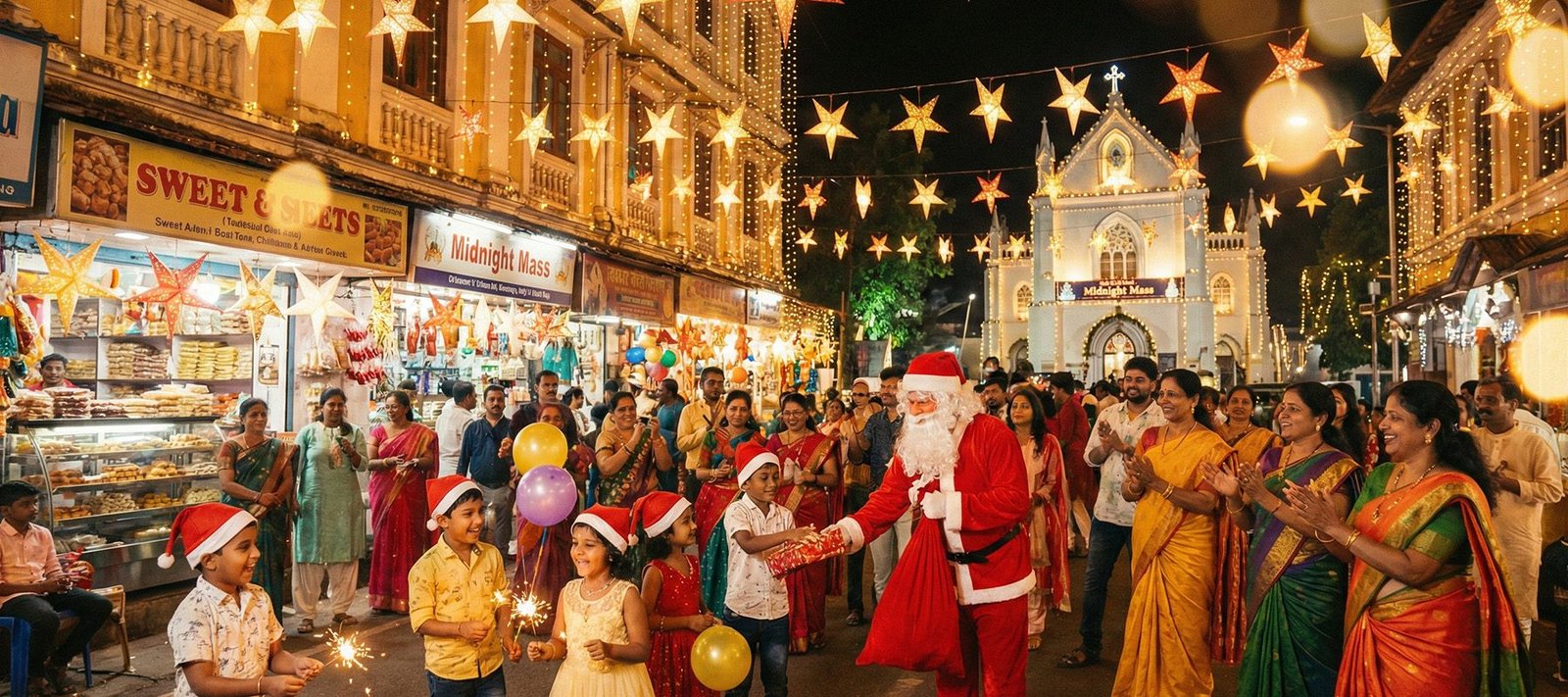
The first thing to understand about Christmas in India is that it is not a national holiday in the way it is in the United States. India is predominantly Hindu, with large Muslim, Sikh, and Buddhist populations. Christians make up roughly 2.3% of the population — concentrated in Kerala, Goa, the northeast states, and certain urban neighborhoods of Mumbai and Delhi. For the vast majority of India, December 25th is a regular working day.
That said, Christmas is not invisible in India either. The major five-star hotel chains — the Taj Group, Oberoi, ITC — go all out with decorations, Christmas Eve dinners, and New Year packages aimed specifically at international guests. Shopping malls in Delhi, Mumbai, and Bangalore string up lights and play carols from mid-December. Some of the larger cities have Christmas markets, particularly in areas with historic Christian communities.
But if you arrive in Agra or Jaipur on December 25th expecting a festive atmosphere, you will find a normal December day — markets open, streets busy, monuments operating on their usual schedules. The experience is not worse for it. It is simply different. India does not pause for Christmas. It continues being India, which, in December, happens to be extraordinary.
Here is the thing that many Americans discover only after they arrive: December is genuinely one of the finest months to travel in India. The monsoon ended in September. The brutal summer heat is months away. What remains is a cool, dry, brilliantly clear winter that makes every monument look its best and every morning comfortable to explore.
In Delhi, December daytime temperatures sit between 15°C and 20°C (59°F to 68°F) — cool enough for a light jacket in the morning, comfortable by noon. In Agra, the air is crisp and clear, and the Taj Mahal at sunrise in December, with mist rising off the Yamuna River and the marble glowing in golden morning light, is as extraordinary a sight as exists anywhere in the world. Jaipur is similar — bright days, cool nights, and the kind of visibility that makes the Amber Fort look like it was placed on the hillside specifically for your photograph.
December also means you are traveling in peak tourist season, which has two implications. The well-worn infrastructure — guides, hotels, transfers — is at its most polished and prepared. But popular sites, particularly the Taj Mahal, will be busier than at other times of year. A sunrise visit, which gets you there before the main crowds arrive, is worth arranging in December more than in any other month.
The Taj Mahal is closed every Friday. No exceptions, no special access, no early-morning workarounds. If your Agra day falls on a Friday, the Taj Mahal will not be open to you.
December 25, 2026 falls on a Friday. The Taj Mahal will be closed on Christmas Day. If you are planning a Christmas morning visit to the Taj Mahal — a romantic idea that many American travelers have — you need to know this before you finalize your itinerary.
The fix is simple: plan your Agra night for December 23rd or 24th and visit the Taj on December 24th morning, or stay through December 25th and visit on December 26th (Saturday). A good tour operator will flag this automatically and build your itinerary around it. If yours doesn't mention it, ask directly: "Does our Agra day fall on a Friday?"
India is a large country with very different Christmas experiences depending on where you go. Here is an honest assessment of the main options for American travelers.
The Golden Triangle is at its absolute best in December. The weather is perfect for sightseeing — cool mornings, comfortable afternoons, and clear skies that make the monuments look spectacular. Delhi's Humayun's Tomb, Agra's Taj Mahal, and Jaipur's Amber Fort all photograph beautifully in December's golden winter light.
The cities themselves are not particularly festive for Christmas, but the five-star hotels throughout the circuit — especially in Agra, where properties overlooking the Taj compete for the best Christmas dinner set-up — do put on special holiday programming for international guests. If you want a memorable Christmas dinner, Agra's luxury hotels deliver it, with the Taj Mahal lit up at night visible from some rooftop restaurants.
The key planning point: do not schedule Agra on December 25th. Build your itinerary so the Taj visit falls on December 23rd, 24th, 26th, or 27th — never the 25th.
If you want an India Christmas that actually feels like Christmas, Goa is the answer. Goa has a 450-year history of Portuguese Catholic colonialism — roughly 25% of the population is Christian, ancient whitewashed churches line the old quarter of Panaji, and Christmas is celebrated with genuine fervor and community spirit.
The Basilica of Bom Jesus in Old Goa, which holds the remains of St. Francis Xavier, is a UNESCO World Heritage site and one of the finest examples of Baroque architecture in Asia. Christmas Eve Mass here, with hundreds of candles lit inside a 16th-century church on the coast of India, is a genuinely moving experience that nothing in a Delhi hotel can replicate.
Add to that Goa's beaches, seafood, and relaxed pace, and you have a Christmas that is both authentically Indian and authentically festive. Many American travelers combine Goa with the Golden Triangle: fly into Delhi, do the triangle, then fly down to Goa for Christmas week before heading home. This is a strong 10–12 day itinerary.
December is Rajasthan's finest month — the desert cities are cool and comfortable, the light on the sandstone forts is extraordinary, and the heritage hotels run special Christmas and New Year packages that are worth considering. Udaipur's Lake Palace, Jodhpur's Umaid Bhawan, and Jaisalmer's desert camps all do atmospheric Christmas dinners for international guests.
There is no community Christmas celebration in these cities — it is purely a hotel and tourist experience rather than a cultural one. But the backdrop more than compensates. Watching the sun go down over the Mehrangarh Fort from a rooftop in Jodhpur on Christmas evening, with a candlelit dinner set up for two, is not a bad way to spend the holiday.
Kerala is one of India's best-kept secrets for American Christmas travelers. The state has a 20% Christian population and a tradition of Christmas that predates European colonialism — the Syrian Christian churches of Kerala trace their origins to the apostle Thomas in 52 AD. Christmas here is a family and community celebration, not a tourist show.
Kerala in December also offers warm weather — a contrast to the cool north — combined with beautiful backwaters, spice gardens, and hill stations. It is a completely different India from the Golden Triangle, more lush and tropical, and it rewards travelers looking for something beyond the standard itinerary. Kochi's Fort area has a genuinely atmospheric Christmas, with its historic Jewish and Portuguese heritage adding further layers to the celebration.
December is India's peak tourist month. The best hotels along the Golden Triangle — especially the heritage properties in Jaipur and the Taj-view hotels in Agra — book out weeks or months in advance for the Christmas and New Year window. If you are planning a December trip, start the booking process in September or October at the latest. Waiting until November means your preferred dates and properties may already be gone.
We have said this already and it bears repeating: December 25, 2026 is a Friday, and the Taj Mahal closes every Friday. The ideal Golden Triangle itinerary for Christmas week puts you in Agra on December 23rd or 24th, visits the Taj on the morning of the 24th, then continues to Jaipur for Christmas Day. If your schedule puts you in Agra on December 25th, you will spend the day at Agra Fort or Fatehpur Sikri — both excellent sites, but not what you came for.
Americans often underestimate how cold North India gets in December. Delhi evenings can drop to 8°C (46°F) or lower. Jaipur and Agra are similar. Daytime is pleasant and warm, but once the sun goes down, a proper jacket is not optional. Rajasthan's desert cities — Jodhpur, Jaisalmer — go colder at night than you would expect from a desert. Pack at least one warm layer you would wear in a cool East Coast autumn.
India requires a visa for all US passport holders. The e-Visa is straightforward and usually approved within 72 to 96 hours, but December is peak season and processing can slow. Apply at least two to three weeks before departure. Use only the official Indian government e-Visa portal.
10–12 days: Fly into Delhi → Agra on Day 2 (Taj Mahal morning of Day 3, NOT Dec 25) → Jaipur for Christmas Day → fly to Goa for December 26th through 30th → New Year's Eve in Goa or fly home.
This covers North India's best monuments in perfect December weather, then ends with Goa's beaches and genuine Catholic Christmas atmosphere. It is the best of both worlds for American travelers spending Christmas in India.
December books out fast — especially the heritage hotels in Jaipur and Agra's Taj-view properties. Tell us your dates, group size, and what matters most to you. We'll build a custom itinerary that works around the Taj closure, gets you the best hotels, and makes the most of December's perfect weather.