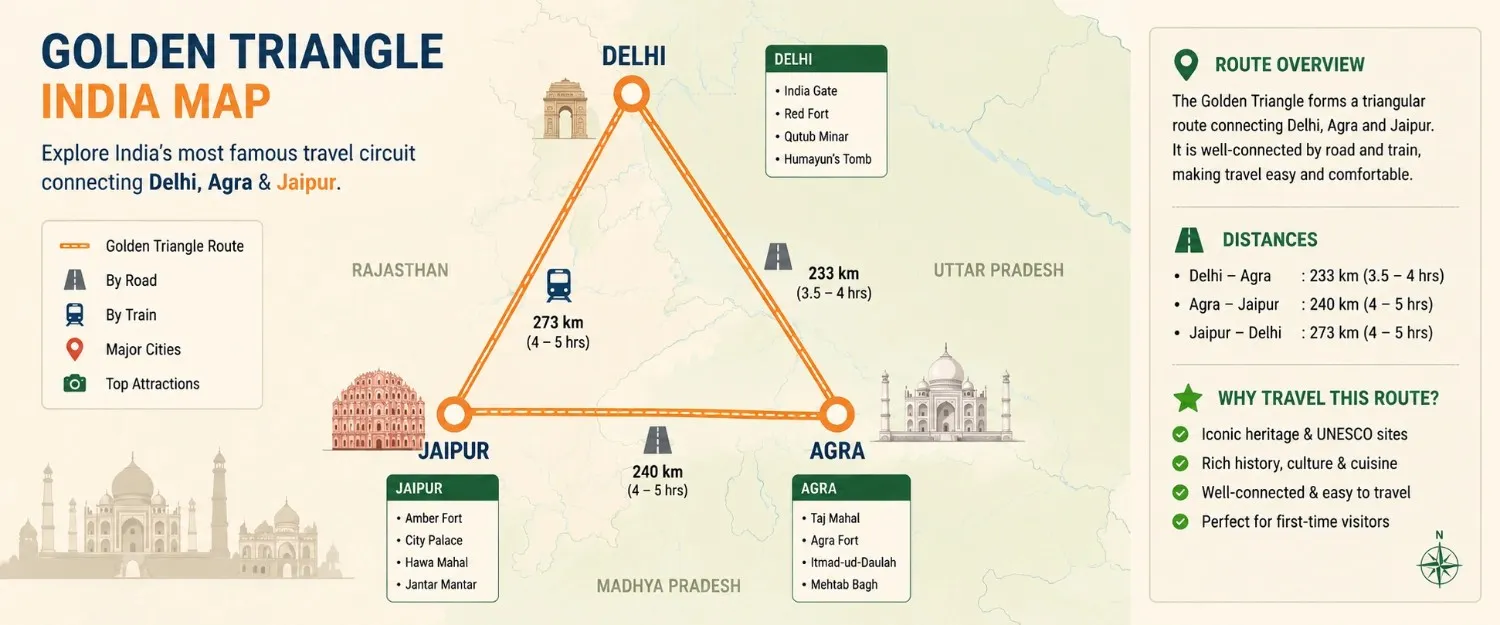
5 days, 7 days, or 10 days — honest breakdown of what you get with each option, so you can choose the right trip length before you book.
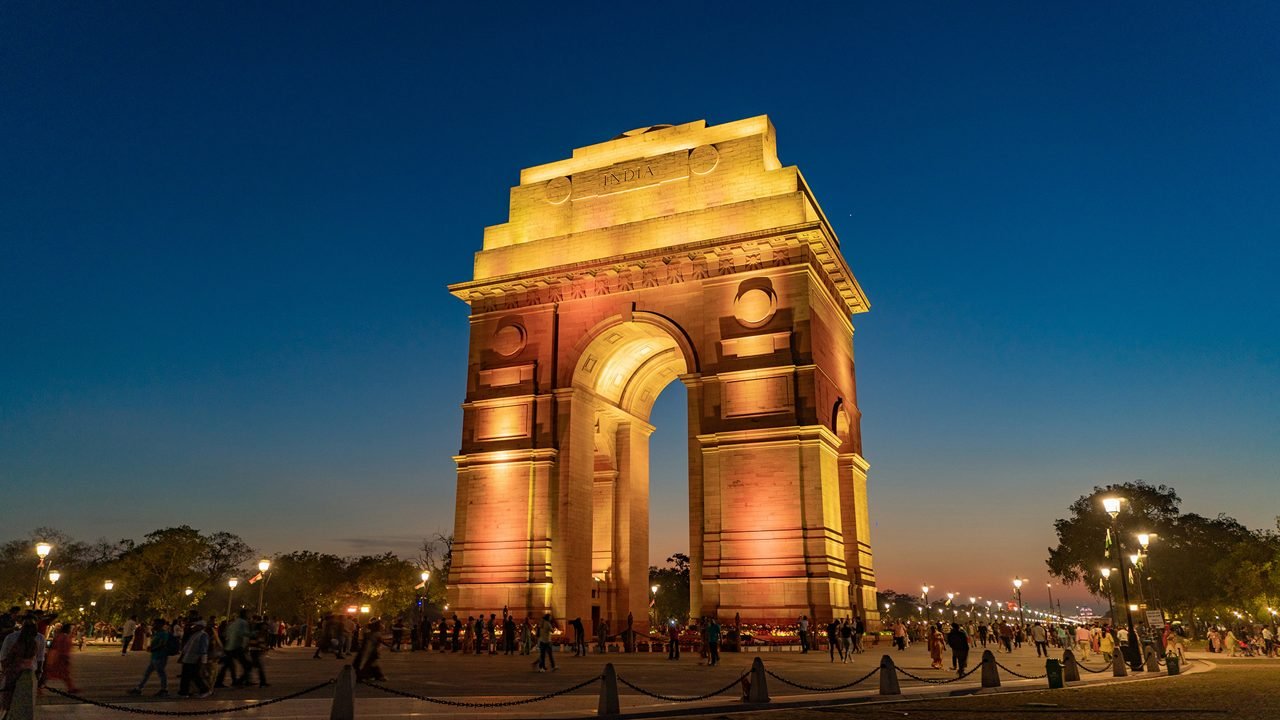
Five days is the minimum to see the Golden Triangle with any sense of meaning. You will arrive in Delhi, spend a day taking in the major landmarks — the Red Fort, India Gate, Humayun's Tomb, Qutub Minar, the organized chaos of Chandni Chowk — before heading to Agra for your Taj Mahal sunrise the following morning. After Agra, you move on to Jaipur, see the Amber Fort and the Pink City, then fly home. That is the five-day shape, and it is entirely doable.
What it costs you is pace. Five days on the Golden Triangle means you are almost always in transit or on a schedule. You will see everything on the highlight reel, but you will not wander. You will not discover a rooftop restaurant in Jaipur at dusk by accident, or take a cycle-rickshaw through Old Delhi without watching the clock. If you are the kind of traveler who wants to be in a place rather than just see it, five days will leave you feeling like you got a preview of India rather than India itself.
That said, for first-timers with limited vacation days, five days is infinitely better than zero. The monuments are genuinely world-class — the Taj Mahal alone makes almost any trip worthwhile — and a focused five-day tour in the hands of a good operator can be a remarkable experience even at pace.
Seven days is the itinerary that most experienced India travelers recommend, and it is what the majority of our clients from the US, UK, and Australia book. The extra two days over the five-day option change the character of the trip entirely. You have a full day to absorb Delhi rather than rushing between monuments. You have time to visit Fatehpur Sikri — the abandoned Mughal capital just outside Agra, which is one of the most astonishing sites in India and almost always skipped on a five-day trip because there simply isn't room. And in Jaipur, you have a morning to wake up slowly, have a proper breakfast with a city view, and explore the bazaars without the anxiety of a waiting driver and an afternoon flight.
Seven days also gives you breathing room for the unexpected. A food stop that turns into a two-hour conversation with the owner. A sudden invitation to watch a local family's evening prayers at a haveli. The moments that make a trip a memory rather than an itinerary. India rewards travelers who are not always sprinting to the next thing, and seven days gives you just enough slack for India to show you something it doesn't show everyone.
For travelers flying in from North America or Australia, the seven-day option also accommodates jet lag more realistically. Your first day in Delhi is a genuine arrival day — you are not on a minibus by 7am trying to stay awake in front of a 400-year-old monument you can barely focus on.
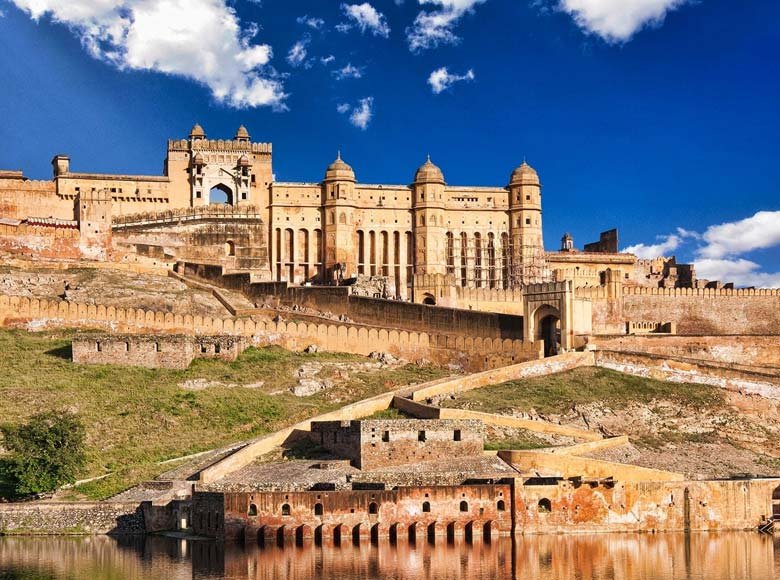
Ten days transforms the Golden Triangle from a sightseeing circuit into an actual encounter with India. The core triangle stays the same, but the extra days allow for extensions that change the nature of the trip entirely. The most popular addition is Ranthambore National Park, located between Agra and Jaipur — a 90-minute detour from the main route that gives you two game drives in one of India's most accessible tiger reserves. Ranthambore's tigers are habituated to jeep safaris and sightings are more reliable here than at almost any other park in India.
Some travelers use the extra days to add Varanasi — India's oldest living city, on the Ganges, where the morning boat ride along the ghats is one of the most extraordinary experiences the country offers. Varanasi requires a short flight from Agra or Delhi and two nights to do justice, but it rounds out the Golden Triangle into something much closer to a complete picture of India: Mughal grandeur, Rajput fortresses, and ancient Hindu civilization all in one trip.
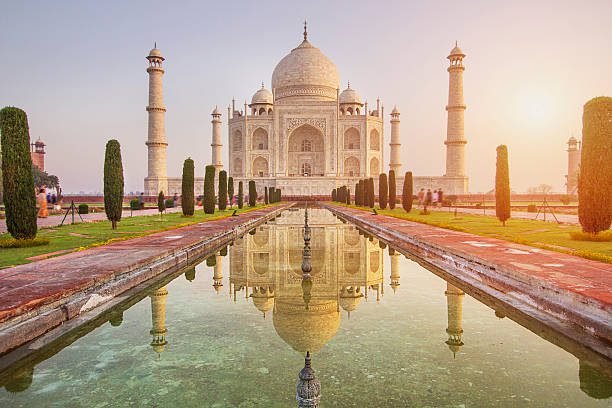
Even without an extension, ten days on the core triangle means you can slow down inside each city rather than simply passing through. A second morning in Agra lets you revisit the Taj Mahal at a different time of day — the light is completely different from sunrise to late morning, and many photographers argue the late morning light is better than the famous golden hour. A second Jaipur day opens up the possibility of a day trip to Pushkar, one of Rajasthan's most sacred and photogenic towns, just 90 minutes away.
The Taj Mahal closes every Friday, without exception. No tickets, no early access, no workarounds. If your Agra day falls on a Friday, you will not be able to enter the Taj Mahal.
When planning your Golden Triangle dates, check that your Agra night does not put the Taj visit on a Friday. December 25, 2026 is a Friday — the Taj Mahal will be closed on Christmas Day. Any competent tour operator will flag this in your itinerary automatically. If yours doesn't mention it, ask directly before you confirm your dates.
The fix is simple: shift your Agra night one day earlier or later so the morning visit falls on a Thursday or Saturday instead.
The honest answer depends less on your budget and more on what kind of traveler you are and how much time you have available. Here is a simple guide to match your situation to the right itinerary length.
The Golden Triangle is very well-suited to private touring — your own car, your own guide, your own schedule. The distances between Delhi, Agra, and Jaipur are comfortable for road travel (3–5 hours between each city), and a private driver gives you the flexibility to stop at the roadside dhaba that looks good, or add an unplanned detour to a village market. This is worth considering regardless of which duration you choose.
Whether it's 5 days, 7 days, or 10 — tell us when you want to travel, how many people, and what matters most to you. We'll put together a custom Golden Triangle itinerary with hotels, transfers, and guides that fits your trip, not a template.