

Most travel guides tell you the best time to visit the Taj Mahal. This one tells you the worst — and why that distinction matters more than most people realise.
Every month has tradeoffs. The “best” months bring crowds that turn the sunrise queue into a festival. The “worst” months bring heat that genuinely endangers unprepared visitors, fog that hides the monument entirely, or rain that closes viewing platforms at short notice. Knowing what to avoid — and why — is the difference between a trip that delivers what you imagined and one that doesn’t.
This is the honest guide. No spin, no “every month is magical in its own way.” Clear answers about what each difficult period actually looks like, who can handle it, and what your alternatives are.
The Short Answer
Absolute worst: May and June — extreme heat above 45°C, physically dangerous for outdoor sightseeing, monument closes at peak heat hours Second worst: Mid-December to late January — dense morning fog that can completely hide the Taj Mahal at sunrise, combined with the highest crowd levels of the year Most misunderstood: July and August — heavy monsoon rain and high humidity, but with genuine compensating advantages that make this period workable for the right traveller
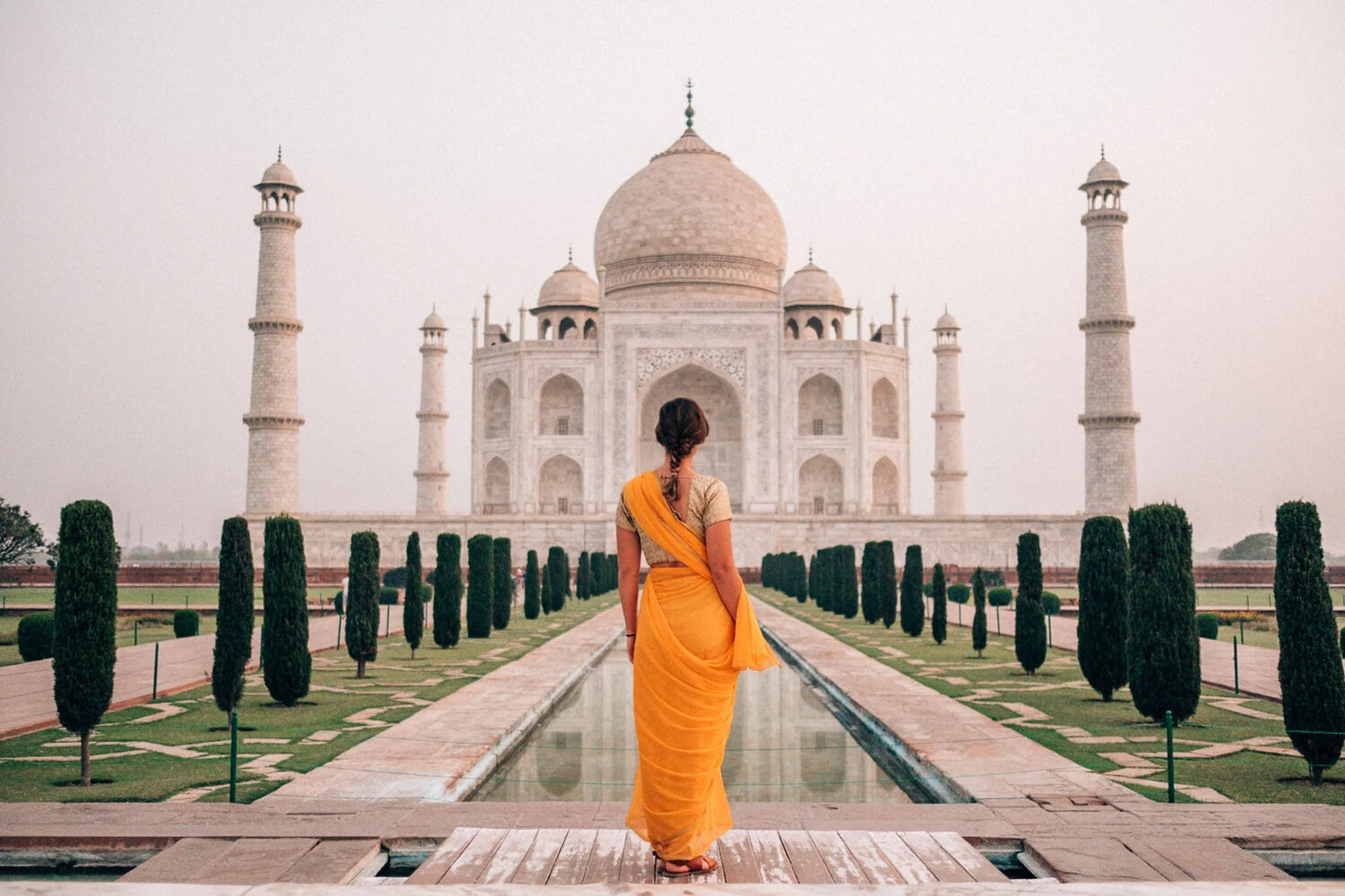
Everything else — October through early December, February through early April — is a spectrum from excellent to very good.
The Worst Time to Visit: May and June
No hedging: May and June are the worst months to visit Agra and the Taj Mahal. This is the Indian summer at its most extreme, and Agra — sitting on the Gangetic plain without the moderating influence of hills or coast — is one of the hottest cities in the country.
The Numbers
May temperatures in Agra regularly reach 42–45°C. On peak summer days, the thermometer hits 47–48°C. That is 116–118°F — temperatures that can cause heat exhaustion in healthy adults within 30–45 minutes of outdoor exposure, and that are genuinely dangerous for children, elderly visitors, and anyone with cardiovascular conditions.
June maintains those extremes before the monsoon arrives in the final week of the month. The pre-monsoon period adds humidity to the heat — the air thickens, the sky turns white with haze, and the heat feels wet and inescapable rather than dry.
What the Taj Mahal Experience Actually Looks Like
The Taj Mahal is an outdoor monument. Almost all of it — the approach gardens, the reflecting pool walkway, the marble platform, the pathways around the mausoleum — is exposed to direct sun. The white marble amplifies the heat, reflecting and radiating it back at visitors. The marble platform itself becomes too hot to walk on barefoot and shoe covers melt in the direct midday sun.
By 9 AM in May, the temperature on the marble platform is already uncomfortable. By 10 AM it is punishing. The two to three hours of morning light that make the Taj Mahal beautiful are the same window you have before conditions become physically challenging.
The monument does not close due to heat — but your body effectively forces an earlier exit than you planned. Most visitors who come in May describe cutting their visit short because of the conditions, even after planning for the heat.
The Loo
A specific hazard worth naming: the loo. This is the hot, dry wind that blows across the North Indian plains from the west in April, May, and June. It arrives suddenly, raises the temperature by several degrees in minutes, and causes rapid dehydration. Walking through the Taj Mahal gardens in a loo wind is a genuinely unpleasant experience that turns discomfort into something more serious without warning.
Who Should Still Consider It
Only visitors with no flexibility in travel dates and a clear strategy for managing the heat:
- Arrive at gate opening (approximately 5:30–6:00 AM in May) and be inside the complex before 7 AM
- Complete your Taj Mahal visit by 9:00 AM maximum — two hours, no more
- Return to your air-conditioned hotel for the hottest hours (10 AM to 5 PM)
- Visit Agra Fort late afternoon (5–7 PM) when the temperature begins to ease
- Carry 2+ litres of water per person, oral rehydration salts, and high-SPF sunscreen
- Book a hotel as close to the Taj as possible to minimise outdoor transit
The one genuine advantage of May and June: the lowest crowd levels of the entire year. The Taj Mahal at 6 AM in May, with almost no other visitors present, is genuinely extraordinary — you can stand at the reflecting pool in near-complete solitude and experience the monument as almost no peak-season visitor ever does. For travellers who prioritise the experience over comfort and can manage the heat strategically, this is a real, if demanding, tradeoff.
The Second Worst: Mid-December to Late January Fog
This one surprises people because December and January are supposed to be the best months — and in terms of temperature, they are. The problem is the fog.
The Fog Problem
Dense fog settles over the Indo-Gangetic plain every winter, typically beginning in mid-December and persisting through mid-to-late January. In Agra, this fog can be so thick that the Taj Mahal is completely invisible from the entrance gate at sunrise.
This is not a photogenic wisp of morning mist that the monument emerges through dramatically. At its worst, it is a solid wall of grey that hides the mausoleum entirely until 9, 10, or even 11 AM, at which point the crowd that has been waiting since dawn has grown to its daily maximum and the golden light has gone.
Visitors who fly from Delhi in December specifically to see the Taj Mahal sunrise — sometimes paying premium hotel rates for the proximity — have stood at the gate in complete grey blankness. It happens more often than any travel guide admits.
How to Know If You’ll Get Fog
The honest answer: you won’t know until 24 hours before. The fog is weather-dependent and unpredictable beyond a short forecast window. In years with severe fog, you may see clear visibility only on a handful of mornings across the entire December–January period. Other years are clearer.
What is consistent: the second half of December and all of January carry the highest fog risk. Early December (the first two weeks) is significantly more reliable. Late January begins to clear as the season turns toward February.
The Crowd Problem Compounds It
December and January are peak tourist season — the highest visitor numbers of the year. Christmas week and New Year’s Eve period (December 24–January 3) see the Taj Mahal at maximum capacity. The sunrise queue can stretch back hundreds of metres before the gates open. By 7:30 AM, the reflecting pool is full of bodies, photographically speaking.
The combination of potential fog and maximum crowds means that December–January visits require the most careful planning of any month — and carry the highest risk of disappointment for visitors with rigid expectations.
Who Should Still Consider It
December to January remains genuinely beautiful — when it’s clear. If you have flexibility:
- Early December (1st–15th): Lower fog risk, still manageable crowds. One of the best windows of the entire year.
- Mid-to-late January: Fog begins clearing. By the final week of January, conditions improve meaningfully.
- The mist has its own beauty: A foggy Taj Mahal is not the same experience as a clear-sky sunrise — but the emergence of the white marble through morning haze has a haunting, ethereal quality that some visitors find more moving than the sharp clarity of October. Go without fixed expectations and you may find it extraordinary.
- Visit after 10 AM on foggy days: The fog almost always clears by mid-morning. You miss the golden hour but the monument is fully visible and you can still have a wonderful experience.
The Monsoon Months: July and August
July and August are the months most people instinctively avoid — and for mostly valid reasons. But the picture is more nuanced than “don’t go.”
What Actually Happens
The monsoon arrives in Agra in late June or early July and brings:
- Heavy rain, typically in the form of sudden, intense afternoon showers rather than continuous drizzle
- High humidity — 70–85% through July and August
- Temperatures of 28–35°C — significantly more bearable than the pre-monsoon heat but heavy with moisture
- Occasional flooding of lower areas around Agra
The Taj Mahal’s main viewing platform and mausoleum interior may close temporarily during very heavy rain — the marble is slippery and the management takes a cautious approach to visitor safety. This is unpredictable and can happen without warning.
The Hidden Advantages
Here is what most travel guides don’t tell you about July and August:
The gardens are extraordinary. The Taj Mahal’s formal charbagh gardens — which are dry and yellowed during winter and brown during summer — are lush, intensely green, and flowering in the monsoon months. The cypress trees along the reflecting pool are at full height and deep green. The grass between the pathways is alive. The flowers in the raised garden beds are blooming. The overall visual palette of the complex — white marble against vivid green gardens under dramatic grey-silver monsoon sky — is completely different from any other month and genuinely beautiful in its own right.
Monsoon light for photography. The overcast monsoon sky acts as a natural light diffuser. The harsh shadows that direct overhead sun creates on the marble reliefs are absent. The light is soft, even, and reveals the carved details of the marble in a way that harsh direct sun suppresses. Against a dramatic cloud formation, the Taj Mahal looks different — more connected to its river landscape, more atmospheric. Photographers who visit specifically for this effect know what they’re getting.
The lowest crowds of the year. July and August see a fraction of the winter visitor numbers. You can walk the reflecting pool path without navigating a crowd of bodies. You can stand at viewpoints without jostling for position. Inside the mausoleum, the echo is audible and the experience is contemplative rather than pressured. On a clear Monday morning in July, you may have the gardens nearly to yourself — an experience that is genuinely impossible in December or January.
Hotel prices are the lowest of the year. The same room that costs ₹15,000 in December can cost ₹6,000–₹8,000 in August. Heritage hotels and upmarket properties near the Taj run significant off-season discounts.
Who Should Avoid It
Visitors who cannot absorb disruption. If your Agra trip is a single day with a fixed return to Delhi, a monsoon rain shower closing the viewing platform for an hour or two can derail the whole plan. If you have children or elderly family members who find heat and humidity difficult, the August feels-like temperature of 38–40°C combined with 80% humidity is genuinely hard.
Who Can Handle It
Flexible, experienced travellers who can:
- Monitor the daily weather forecast and plan around the typical afternoon rain pattern (mornings are usually clearer)
- Stay two nights to have two morning windows
- Treat a rain shower as part of the experience rather than a problem to be solved
- Handle heat and humidity without medical risk
Read our full guide to visiting Agra in September — the final monsoon month has its own specific character and works well for visitors who understand what to expect.
Times to Avoid Within Good Months
Beyond the seasonal patterns, there are specific dates and situations to avoid regardless of which month you visit.
Every Friday — The Taj is Closed
The Taj Mahal closes every Friday for religious observance. This is non-negotiable, applies year-round, and catches more visitors off-guard than any other logistical fact about the monument. Check your travel dates before booking. If your only available day in Agra falls on a Friday, you cannot visit the Taj Mahal.
In 2026, the October Fridays are: October 2, 9, 16, 23, and 30. Plan accordingly.
Midday in Any Month
Regardless of season, 11 AM to 3 PM is the worst time of day to visit the Taj Mahal. The overhead sun creates harsh, flat light that washes out the marble’s texture and makes photography look like a tourist snapshot rather than a meaningful photograph. Crowds are at their daily peak as day-trippers from Delhi arrive. And in any month warmer than November, the open white-marble platform absorbs and reflects heat intensely.
The gate opens 30 minutes before sunrise — that window is when the Taj Mahal is at its finest. Arrive then. Midday is for lunch in the shade.
Public Holidays and Long Weekends
Major Indian public holidays bring large crowds of domestic day-trippers from Delhi, Mathura, and nearby cities. Independence Day (August 15), Republic Day (January 26), and national long weekends consistently produce the Taj Mahal’s highest single-day crowd levels. The queues at the entry gates can stretch to 45–60 minutes on peak days.
Christmas week (December 24–January 1) is the single busiest period of the year for international tourists, compounding the domestic holiday crowd. If you visit during Christmas week, book tickets well in advance and arrive at gate opening — not mid-morning.
Weekends in Peak Season
October through February weekend crowds at the Taj Mahal are significantly heavier than weekdays. If your dates are flexible, a Tuesday to Thursday visit in any peak-season month will be meaningfully quieter and more relaxed than a Saturday visit.
Month-by-Month Honest Summary
| Month | Verdict | Main Problem | Hidden Advantage |
|---|---|---|---|
| January | Caution | Dense fog risk, highest crowds | Beautiful when clear, festive atmosphere |
| February | Excellent | Crowds building | Perfect temperature, Taj Mahotsav festival |
| March | Very Good | Getting warm | Good light, manageable crowds |
| April | Acceptable | Heat building fast | Low crowds, dramatic pre-monsoon skies |
| May | Avoid | 45°C+ heat, dangerous | Lowest crowds of year |
| June | Avoid | Extreme heat + pre-monsoon humidity | Very low crowds |
| July | Caution | Rain disruption, humidity | Lush gardens, dramatic skies, lowest prices |
| August | Caution | Heavy monsoon, humidity | Near-empty gardens, extraordinary green light |
| September | Mixed | Monsoon tail-end, heat | Gardens still green, crowds low, transitioning |
| October | Excellent | Slight heat early Oct | Post-monsoon clarity, lush gardens, no fog |
| November | Best | Crowds building | Perfect weather, clear skies, no fog |
| December | Good/Caution | Fog from mid-month, peak crowds | Holiday atmosphere, pleasant daytime temps |
The One Time of Day That Trumps Everything
Here is the most practical piece of advice in this entire guide: the time of day you arrive matters more than the month you choose.
Visiting the Taj Mahal at sunrise in August is a better experience than visiting it at 11 AM in October. The morning window — the first 90 minutes after gates open — is when the light is golden, the crowds are minimal, the air is cool (or at least, cooler), and the reflecting pool is still and undisturbed.
Every experienced Agra guide will tell you the same thing: arrive at gate opening. The exact time changes by season (approximately 5:30–6:15 AM depending on the month), but the principle is constant. This one decision — arriving at dawn rather than mid-morning — transforms the experience more than any seasonal variable.
For a complete breakdown of what time of day is best in each month, visit our best time to visit Agra and the Taj Mahal guide.
What About the Photography — When Does the Taj Look Worst?
For photographers specifically, the worst conditions are not the months most people avoid — they are specific light situations that can occur in any month.
Harsh midday overhead light (11 AM–3 PM in any month): The sun directly overhead produces no directional shadow, washes out the marble’s carved relief work, and creates a flat, bright image with no depth. This is the worst light for Taj Mahal photography regardless of season.
Thick uniform overcast without drama (peak monsoon): A completely flat grey sky without interesting cloud formations produces dull, evenly lit photographs with no visual contrast. This happens occasionally in July and August when the cloud cover is total and featureless.
Haze in April–June: Pre-monsoon atmospheric haze creates a soft, diffused light that reduces apparent clarity — the Taj appears less crisp and vivid than in the sharp October and November air.
The best light for photography: The 45 minutes after sunrise in October, November, or February — warm directional light, deep blue sky, golden marble, still reflecting pool. These conditions produce the photographs that define the Taj Mahal in most people’s imagination.
If You Have No Choice — Making the Most of a Bad Month
If your travel dates are fixed and they fall in May, June, or a foggy December week, here is how to make it work:
For summer visits (May–June):
- Book a hotel within 1 kilometre of the Taj Mahal — the closer the better
- Depart for the Taj at 5:00 AM, be at the East Gate before it opens
- Complete your visit by 9:00 AM at the absolute latest
- Spend the hottest hours (10 AM–5 PM) at the hotel
- Visit Agra Fort between 5:30 PM and closing — the stone fort cools quickly in the evening
- Carry more water than you think you need and drink constantly
- Wear a hat and high-SPF sunscreen — the reflected marble heat means burn risk is higher than it appears
For foggy December–January visits:
- Check the weather forecast the evening before — a clear forecast for the following morning is your green light
- If forecast is foggy, don’t get up at 4 AM — sleep in and arrive at the Taj at 10–11 AM when the fog has cleared
- Have a backup plan — Agra Fort, Fatehpur Sikri, Itmad-ud-Daulah, and Mehtab Bagh are all worth visiting regardless of Taj visibility
- A foggy Taj Mahal is still the Taj Mahal — adjust your expectations from “golden sunrise” to “atmospheric and mysterious” and it becomes a different but valuable experience
- Book two nights in Agra rather than one, giving yourself two morning windows and the ability to absorb one foggy day without missing the monument entirely
For a complete guide to planning your Agra visit across all seasons, see our 3 days in Agra itinerary which covers how to structure your time for maximum impact whatever time of year you visit.
The Bottom Line
The worst time to visit Agra and the Taj Mahal is May or June if you have any alternative. The heat is not inconvenient — it is dangerous, and it fundamentally limits how long you can spend at an outdoor monument that deserves at least two hours of unhurried attention.
The second worst is a foggy morning in mid-December to late January — not the months themselves, but the specific situation of standing at the Taj Mahal gate at dawn in zero visibility. This is avoidable with a weather check the night before and a flexible attitude to timing.
Everything else is a matter of tradeoffs that experienced travellers manage. Monsoon is challenging but beautiful. Summer crowds in November are real but manageable at sunrise. Midday in any month is a mistake. Fridays are wasted journeys.
The single most reliable advice: whatever month you go, arrive at sunrise. The Taj Mahal at dawn, in virtually any season, is an experience that justifies the early alarm.
Plan Your Agra Visit with Squid Travel India
Squid Travel India runs one day Agra tours from Delhi and multi-day Agra itineraries year-round. Our guides know which gates move fastest on which days, how to time your visit around the morning light, and how to structure an Agra day so the difficult weather — whatever the season — disrupts as little as possible.
We’ve completed over 1,800 tours with a 98% satisfaction rate and TripAdvisor Travelers’ Choice recognition for 2024–25.
Plan your Agra trip with Squid Travel India → Call us: +91 9990812499
Quick Reference — Worst vs Best
| Situation | Rating | Reason |
|---|---|---|
| May, midday | 🔴 Avoid entirely | 45°C+, physically dangerous |
| June, midday | 🔴 Avoid entirely | Extreme heat + humidity |
| Foggy January dawn | 🔴 Worst specific moment | Monument completely invisible |
| Any Friday | 🔴 Closed | No entry, year-round |
| May/June, 6 AM | 🟡 Manageable | Lowest crowds, but heat builds fast |
| Dec 24–Jan 3 | 🟡 Caution | Maximum crowds + fog risk |
| July–August monsoon | 🟡 Mixed | Rain disruption, but beautiful gardens |
| Any month, midday | 🟡 Avoid | Worst light + peak crowds daily |
| Weekends Oct–Feb | 🟡 Caution | Heavier domestic crowds |
| October, 6 AM | 🟢 Excellent | Post-monsoon clarity, cool, green |
| November, 6 AM | 🟢 Best overall | Perfect temperature, clear, no fog |
| February, 6 AM | 🟢 Excellent | Ideal weather, manageable crowds |
| Early December, 6 AM | 🟢 Very good | Clear, cool, festive |
Squid Travel India is a New Delhi-based, award-winning tour operator specialising in Golden Triangle tours, Rajasthan packages, and Agra day tours from Delhi.

Comment (0)