

Two Weeks. One Country. A Trip You Will Talk About for the Rest of Your Life.
Most Americans get two weeks of vacation for a big international trip.
Two weeks is exactly enough time to experience India the right way — not rushed, not superficial, but genuinely immersive. You will see the Taj Mahal at sunrise. You will ride an elephant in Rajasthan. You will watch a Bengal tiger emerge from the tall grass on a morning jeep safari. You will eat food that makes everything you thought was Indian food back home feel like a rough draft.
Two weeks in India is not a checklist trip. It is a trip that changes how you see the world.
This guide is built specifically for American travelers — with US flight connections in mind, USD cost estimates, American visa requirements, and the practical logistics that matter when you are traveling from the other side of the planet. Every itinerary decision is based on what actually works for people flying from New York, Los Angeles, Chicago, San Francisco, or Houston.
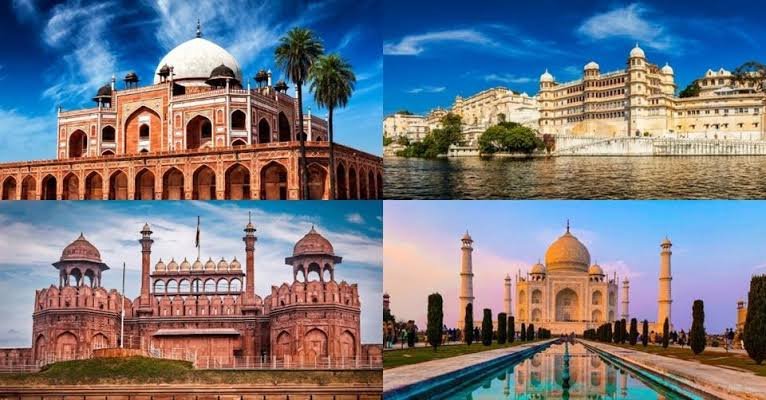
Let’s build your trip.
Before You Go: Three Things Every American Needs to Sort First
1. Your India eVisa
US passport holders need a visa to enter India. The good news: it is simple, done entirely online, and takes three to five business days to process.
Apply at the official Government of India eVisa portal: indianvisaonline.gov.in. Do not use third-party sites — they charge extra fees for the same result.
For a two-week trip, apply for the one-year multiple-entry eVisa at $40. It gives you flexibility if your plans change and covers any future India trips within the year. You will need a digital passport photo, a scanned copy of your passport bio page, and a credit or debit card.
Apply at least two to three weeks before your departure. Print a copy of the approved visa and carry it with you — immigration at Delhi airport will ask for it.
2. Your Flights
Most American travelers to India fly through one of three hubs: Dubai (Emirates), Doha (Qatar Airways), or Abu Dhabi (Etihad). These Middle Eastern carriers consistently offer the best combination of price, comfort, and connections from US gateway cities.
From New York JFK, total journey time to Delhi is approximately 14 to 16 hours with one connection. From Los Angeles LAX, it is 18 to 20 hours. From Chicago ORD, approximately 15 to 17 hours. From San Francisco SFO, approximately 18 to 20 hours.
Air India also flies direct from New York JFK to Delhi — around 14 hours nonstop — which eliminates a connection and is worth checking for pricing.
Round-trip economy fares from the USA to Delhi in 2026 range from $800 to $1,400 depending on departure city and season. Book three to four months in advance for the best prices. October to March is peak season in India — fares reflect that. Traveling in September or early October saves significantly on flights.
3. Travel Insurance
Buy comprehensive travel insurance before you go. Medical care for foreigners in India can be expensive at private hospitals. Trip cancellation coverage is essential given the logistical complexity of a long-haul trip. A good policy for a two-week India trip costs $60 to $120 for most Americans — a very small cost against the peace of mind it provides.
The Best Time for Americans to Visit India
The sweet spot is October through March.
October is outstanding — Diwali falls in mid-to-late October most years, the monsoon is over, temperatures are dropping toward comfortable levels, and the national parks have just reopened for safari season.
November is arguably the finest India travel month — perfect weather, Diwali (in some years), and the famous Dev Deepawali in Varanasi.
December and January are peak season — great weather but higher prices, more crowds at the Taj Mahal, and the risk of morning fog in Agra and Delhi that can obscure sunrise views.
February and March offer excellent weather with slightly fewer crowds than December to January.
For Americans working around school calendars: Thanksgiving week (late November) is an excellent India window. Spring Break (March) is very good. Summer (June to August) is monsoon season — manageable with the right destinations but not the easiest introduction to India.
Two Weeks in India: Four Itinerary Options
Not all two-week India trips look the same. Your best route depends on what you care about most.
Here are four tested two-week routes for American travelers. Pick the one that matches you, then read the day-by-day breakdown.
Route A — The Classic (North India): Delhi, Agra, Ranthambore, Jaipur. The most popular first-time itinerary. Covers the Taj Mahal, a tiger safari, and Rajasthan’s finest city. Manageable pace, no internal flights needed.
Route B — North + South India: Golden Triangle + Kerala backwaters. Fly from Delhi or Jaipur to Kochi and spend the last five nights in Kerala. Two completely different Indias in one trip.
Route C — Deep Rajasthan: Delhi, Agra, Jaipur, Udaipur, Jodhpur. No wildlife, full immersion in Rajasthan’s royal heritage, forts, and desert landscape. For history and architecture lovers.
Route D — Golden Triangle + Varanasi: Delhi, Agra, Jaipur, Varanasi. Add India’s oldest city and most spiritual destination to the classic circuit. For travelers who want depth over breadth.
All four routes are detailed below. Read the Classic (Route A) for the full day-by-day breakdown, then scan the alternatives.
ROUTE A — The Classic: Golden Triangle + Ranthambore Tiger Safari
14 nights | Delhi → Agra → Ranthambore → Jaipur → Delhi
This is India’s most popular first-time itinerary — and it has earned that status completely.
Day 1: Arrive Delhi
You land at Indira Gandhi International Airport after a long flight. Allow yourself a full arrival day.
Your private driver will meet you at arrivals with a name board. The transfer to your hotel takes 30 to 60 minutes depending on traffic. Check in, shower, and eat something — the hotel restaurant is fine today, no need to explore.
Do not try to sightsee on arrival day. Jet lag from the US to India (a 9.5 to 12.5 hour time difference depending on your US city) is real and significant. Rest is the priority. If you arrive in the afternoon, a short evening walk to a nearby market or a dinner at a good restaurant near your hotel is enough.
Practical: Set your phone to IST (Indian Standard Time) immediately. IST is 10.5 hours ahead of Eastern Time, 13.5 hours ahead of Pacific Time.
Day 2: Old Delhi — The Mughal Capital
Start in Old Delhi — the city that the Mughal emperors built in the 17th century and that has never stopped being alive since.
Begin at the Red Fort — the great red sandstone fortress that served as the Mughal seat of power for two centuries. The exteriors are fortress-like and imposing. Inside, the complex opens into a series of palaces, halls, and pavilions that speak of extraordinary imperial refinement.
From the Red Fort, take a cycle rickshaw through Chandni Chowk — Old Delhi’s legendary bazaar lane. This is India at full volume: the smell of spices frying in open vats, the sound of vendors and motor horns and temple bells, lanes so narrow that two people can barely pass, shops selling silver jewellery, wedding garments, electronics, and food that has been made on the same street corners for four centuries.
Stop at Paranthe Wali Gali — literally “the lane of the paratha sellers” — for lunch. Stuffed parathas fried in ghee, served with tamarind chutney, from shops that have been operating since the 1870s. Around $2 a plate. One of the great cheap meals in Asia.
After lunch, visit Jama Masjid — India’s largest mosque, built by the same emperor who built the Taj Mahal. Climb the minaret for a sweeping view over Old Delhi’s rooftops.
In the afternoon, switch to New Delhi — the colonial-era capital built by the British in the 1930s. Walk past India Gate. Visit Humayun’s Tomb — a UNESCO World Heritage Site and the architectural forerunner of the Taj Mahal. Less famous, almost never crowded, and extraordinarily beautiful. If you visit one monument in Delhi, make it this one.
End the day at Qutub Minar — a 73-metre medieval tower of victory, India’s tallest, surrounded by the ruins of Delhi’s oldest mosque. Spectacular in the late afternoon light.
Evening: Dinner at Khan Market — Delhi’s finest dining precinct. Indian Accent (book in advance) is one of the best restaurants in all of Asia. Bukhara at ITC Maurya is legendary for its dal and tandoor. Or simply explore the restaurants and cafes along the market’s colonnaded streets.
Day 3: New Delhi — Parks, Art, and the Best Evening in the City
A slower day. Delhi rewards unhurried exploration.
Morning at Lodhi Garden — 90 acres of 15th and 16th-century Mughal tombs within a beautifully maintained public park. Free entry. Almost no tourists. The combination of ancient architecture and manicured gardens is unlike anything in any American city.
After Lodhi Garden, walk through the Lodhi Art District — Delhi’s street art neighbourhood, where large-format murals by Indian and international artists cover entire building faces. One of Delhi’s most photogenic and least-visited areas.
Afternoon: Dilli Haat craft market — an open-air exhibition where artisans from every Indian state sell traditional crafts directly to visitors. Fixed prices (no bargaining), excellent quality. Good for picking up gifts without the stress of the bazaar.
Evening: Hauz Khas Village — medieval ruins, a deer park, and a cluster of rooftop restaurants all in one neighbourhood. Pre-book a table at Mia Bella for lakeside dinner views over the 14th-century reservoir. Stay for the evening atmosphere as the village comes alive.
Day 4: Delhi to Agra — The Taj Mahal Eve
Drive or take the train to Agra. The Gatimaan Express covers Delhi to Agra in 1 hour 40 minutes and is an excellent experience — clean, comfortable, and scenic. A private car takes 3 to 3.5 hours on the Yamuna Expressway.
Arrive in Agra by midday. Check in, rest, explore the local streets around Taj Ganj in the afternoon.
Evening: Visit Mehtab Bagh — the garden directly across the Yamuna river from the Taj Mahal. This is where you get your first view of the monument — from outside, across the river, at sunset. The reflection of the Taj in the river, with the sky turning pink and orange behind it, is something you will not forget.
Eat dinner and go to sleep early. You have a very early morning ahead.
Day 5: Taj Mahal at Sunrise + Agra
Wake at 4:30 AM. This sounds brutal. Do it anyway.
Be at the West Gate of the Taj Mahal by 5:15 AM — 30 minutes before the gates open at approximately 5:30 AM. Enter with your pre-booked online ticket (always book in advance — the gate queue on an unbooked day is long and slow).
Walk through the main gateway arch. Stop.
What opens in front of you — the Taj Mahal in its full symmetrical grandeur, the long central reflecting pool stretching toward it, the marble shimmering in the first light of dawn — is genuinely one of the most extraordinary sights on earth. No photograph fully prepares you for the scale and the perfection of it.
Spend your first hour at the reflection pool before tour groups arrive around 7 AM. Enter the main mausoleum — where the cenotaphs of Shah Jahan and Mumtaz Mahal are kept — before 8 AM. Buy the ₹200 mausoleum add-on ticket; it is essential and not included in the basic entry.
Walk every section of the complex — the mosque on the left, the guest house on the right, the back terrace overlooking the Yamuna. Stay until at least 8:30 AM.
Return to your hotel for a proper breakfast. Rest during the midday heat.
Afternoon: Agra Fort — another UNESCO World Heritage Site, 2.5 km from the Taj. The massive red sandstone fortress was the primary Mughal residence. From its ramparts, you can see the Taj Mahal in the distance — the view that the imprisoned Emperor Shah Jahan had of his monument in the final years of his life.
Entry fees (foreign nationals): Taj Mahal garden: ₹1,100 ($13). Mausoleum add-on: ₹200 ($2.50). Agra Fort: ₹650 ($8). Total for the day: approximately $25 per person.
Day 6: Fatehpur Sikri + Drive to Ranthambore
Morning: Drive 40 km to Fatehpur Sikri — the abandoned Mughal capital that Emperor Akbar built in 1571 and deserted just 14 years later, leaving a perfectly preserved ghost city of red sandstone palaces, courtyards, and mosques. Walking through Fatehpur Sikri feels like stepping directly into the 16th century. Allow two hours.
Continue driving to Ranthambore (approximately 3.5 hours from Fatehpur Sikri). Check into your safari lodge. Afternoon rest. Evening nature walk or lodge activity.
Ranthambore accommodation: The difference between a ₹5,000 guesthouse and a ₹15,000 to ₹25,000 safari lodge matters here more than anywhere else on the trip. Good lodges handle your safari bookings, brief you on tiger behaviour, and have naturalists on staff. Do not cut costs on Ranthambore accommodation.
Day 7: Ranthambore National Park — Tiger Safari
This is the day many Americans describe as the highlight of the entire India trip.
Morning safari (6:00 AM to 9:30 AM): Your open-top jeep enters the park at dawn. The forest is silent. The light filters through the trees. A naturalist beside you watches for pugmarks in the dust, sambar deer alarm calls, and the distinctive sound of a langur monkey signalling a predator below.
Ranthambore has one of the highest tiger sighting rates of any national park in India. October to March delivers the best visibility — the monsoon grass has dried, the tigers visit the waterholes predictably, and the forest is open enough to spot an animal at distance.
When you see a Bengal tiger — and the odds at Ranthambore are genuinely good — everything else fades. The size of the animal. The way it moves. The complete indifference it shows toward your jeep. It is a deeply humbling encounter.
Afternoon (3:00 PM to 6:30 PM): A second safari in the late afternoon delivers different conditions. The light is golden. The animals are active as the heat of the day drops. Many of the best tiger sightings at Ranthambore happen between 4 PM and 6 PM.
Safari costs: Zone safari by jeep approximately ₹3,000 to ₹4,500 per person ($36 to $55). Canter (larger vehicle, shared) approximately ₹1,200 to ₹1,800. Book the jeep — the canter is a significantly inferior experience.
Important: Ranthambore safari permits must be booked in advance through the official Rajasthan Forest Department portal. During peak season (October to March), Zone 1 to 5 permits sell out weeks ahead. Your tour operator should handle this — confirm well before your travel dates.
Day 8: Ranthambore to Jaipur
Morning: An optional third safari if your schedule allows. Drive to Jaipur (approximately 3 hours). Check in, rest, and explore the old city in the late afternoon.
Evening: Walk the old city bazaars — Johari Bazaar for gemstones, Bapu Bazaar for textiles, Nehru Bazaar for traditional footwear. The old city of Jaipur at dusk, with its terracotta-coloured 18th-century buildings lit by the falling sun, is one of the most beautiful urban streetscapes in all of India.
Day 9: Jaipur — The Pink City
Start at Amber Fort — 11 km outside Jaipur on a hillside above a lake. This is Rajasthan’s finest fort and arguably the most spectacular monument in India after the Taj Mahal. The Sheesh Mahal (Hall of Mirrors) inside the fort — a ceiling and walls encrusted with thousands of tiny mirror fragments that reflect a single candle flame into a galaxy of stars — is one of the most extraordinary architectural experiences in the world.
Back in the city: Hawa Mahal — the five-storey “Palace of Winds,” with its 953 intricately carved latticed windows, is Jaipur’s most photographed facade. Spend 20 minutes photographing the exterior from the chai stall across the street. The interior (₹200 entry) is worth a quick walk-through.
City Palace — the royal residence of the Jaipur maharaja’s family, parts of which are still in use. The museum houses an extraordinary collection of royal textiles, weapons, and manuscripts.
Jantar Mantar — a UNESCO-listed outdoor astronomical observatory built in 1734. Giant stone instruments — sundials and celestial calculators — that were used to calculate time with extraordinary precision. Genuinely fascinating even if you are not into astronomy.
Shopping in Jaipur: Jaipur is one of the world’s great shopping cities. Block-print textiles, hand-stitched quilts, blue pottery, silver jewellery, and leather goods are all excellent quality and well-priced. Anokhi and Fabindia have fixed-price quality textiles if you prefer that to bargaining. For the bazaar experience, Johari Bazaar delivers.
Warning: Do not buy gemstones from any shop recommended by your driver or guide. This is the most common and most expensive tourist scam in Jaipur. Drivers earn large commissions from gem shops. If you want gems, use a government-certified emporium only.
Day 10: Jaipur Full Day — Forts, Countryside, and Cooking
A full second day in Jaipur rewards you with experiences that rushed visitors miss.
Morning: Nahargarh Fort — perched on the Aravalli Hills above Jaipur with sweeping views over the Pink City. Far less crowded than Amber Fort and equally beautiful. The drive up through the hills is spectacular. Arrive at 7 AM for the best light and complete solitude.
Afternoon: A cooking class with a local family in the old city. This is one of the most memorable and human experiences available on the Golden Triangle. You cook dal baati churma (Rajasthan’s signature dish), learn to make chai the right way, and eat lunch in someone’s home. Around $30 to $50 per person. Book through your tour operator.
Evening: Rooftop dinner with views over the city. Dera Rawatsar restaurant has the finest rooftop view of Hawa Mahal after dark. Alternatively, the Rajmahal Palace Hotel terrace overlooks the Rambagh gardens and is extraordinary for sundowners.
Day 11: Jaipur to Delhi + International Departure, or Extend
Option 1: Drive or train back to Delhi (5 hours). Overnight in Delhi and fly home the following morning. This gives you a buffer for your international departure.
Option 2: Add three days in Udaipur (fly or drive from Jaipur). Udaipur — the City of Lakes — is Rajasthan’s most romantic city, with the Lake Palace Hotel floating on Lake Pichola and the City Palace reflected in the water. It is genuinely extraordinary and worth extending your trip for.
Option 3: Add three days in Kerala (fly from Jaipur to Kochi). See Route B below.
ROUTE B — North + South India: Golden Triangle + Kerala
14 nights | Delhi → Agra → Jaipur → Fly → Kochi → Alleppey → Munnar → Fly Home
Follow Days 1 to 9 of Route A (Delhi, Agra, Ranthambore, Jaipur). Then:
Day 10: Fly from Jaipur to Kochi (via Delhi or Mumbai — approximately 3 to 5 hours total). Arrive in Kerala. The contrast with North India is immediate and total. From Rajasthan’s desert dust and sandstone forts, you land in a world of palm trees, backwaters, spice plantations, and an air that smells of rain and coconut.
Day 11: Transfer to Alleppey (1.5 hours from Kochi). Board your houseboat on the Kerala backwaters.
A Keralan houseboat — a traditional wooden kettuvallam converted into a floating guesthouse — is one of the most distinctive accommodation experiences available anywhere in the world. Your own private boat. A captain and cook on board. Slow movement through canals lined with coconut palms, past rice paddies and fishing villages, with meals cooked fresh on deck and served on the water.
Spend 24 hours on the houseboat. Watch the sunset over the backwaters from the front deck with a cold drink. Sleep rocked gently by the water. Wake to the sound of birds and the smell of breakfast being cooked in the tiny kitchen.
Day 12: Disembark in the morning. Drive to Munnar (3.5 hours) — Kerala’s hill station, at 1,600 metres above sea level, surrounded by tea plantations.
Munnar is a different India again — cool, misty, green, and very quiet. The tea estates here supply some of the finest teas in the world. Walk through the plantations in the morning. Visit the Tea Museum. Eat well — Munnar’s small restaurants serve excellent Keralan fish curry, appam (fermented rice pancakes), and stew.
Day 13: Munnar exploration. Eravikulam National Park — home to the endangered Nilgiri tahr. Morning nature walk through the tea estates. Optional: Attukkal waterfalls.
Afternoon: Ayurvedic treatment at your hotel. Kerala Ayurveda is genuinely world-class and deeply different from a Western spa experience. A full-body Abhyanga massage with medicated herbal oils costs $40 to $80 and leaves you feeling entirely different.
Day 14: Drive back to Kochi (3.5 hours). Explore Fort Kochi — the colonial harbour neighbourhood with Portuguese churches, Dutch palaces, Chinese fishing nets, and one of the finest independent cafe and gallery scenes in South India. The Chinese Fishing Nets at sunset on the Kochi waterfront are iconic and beautiful.
Fly home from Cochin International Airport (COK) — connected to most major Indian hubs with onward international connections.
ROUTE C — Deep Rajasthan: Five Royal Cities
14 nights | Delhi → Agra → Jaipur → Pushkar → Jodhpur → Udaipur
Follow Days 1 to 4 of Route A. Then instead of Ranthambore, continue into Rajasthan:
After Jaipur (two nights), drive to Pushkar (2.5 hours) — a tiny sacred town beside a holy lake, surrounded by desert hills. One of the most atmospheric small towns in India. The lakeside ghats, the Brahma Temple (one of the only temples in the world dedicated to Lord Brahma), and the bazaars full of textiles and folk art make Pushkar one of Rajasthan’s most loved destinations. One night.
Continue to Jodhpur (3 hours) — the Blue City. A dense tangle of cobalt-washed houses beneath Mehrangarh Fort, one of the most spectacular forts in all of India. Two nights. Walk the blue city’s lanes. Visit the fort. Climb to the rooftop of Pal Haveli for the finest view of the blue city at sunset.
Finish in Udaipur (5 hours from Jodhpur) — three nights. The most romantic city in India, built around a series of interconnected lakes. The Lake Palace Hotel — a white marble palace floating in the middle of Lake Pichola — is one of the most beautiful hotels in the world. Boat ride on the lake. City Palace visit. Dinner at a rooftop restaurant overlooking the water. This is the ending that makes people book their second India trip.
Fly home from Udaipur (UDR) or Jaipur (JAI).
ROUTE D — Golden Triangle + Varanasi
14 nights | Delhi → Agra → Jaipur → Fly/Train → Varanasi → Delhi
Follow Days 1 to 9 of Route A. Then:
Days 10 to 13 — Varanasi: Take an overnight train from Jaipur or fly Delhi to Varanasi (1.5 hours). Three nights in Varanasi — India’s oldest continuously inhabited city and its spiritual heart.
Varanasi is unlike anywhere else in India. It is unlikely anywhere else on earth. The city’s 84 ghats — ancient stone stairways descending to the Ganges — are the stage for an unbroken ceremony of life, death, prayer, and ritual that has continued for over 3,000 years.
The Ganga Aarti ceremony at Dashashwamedh Ghat at sunset is one of the most powerful collective experiences available to any traveller anywhere in the world. Dozens of priests perform a choreographed fire ritual simultaneously on the riverbank, surrounded by thousands of devotees and the light of hundreds of oil lamps. Watch from a boat on the river for the best view.
Take a dawn boat ride on the Ganges. As the sun rises over the river, the ghats come alive — bathers performing morning rituals, washermen beating clothes on stone, priests chanting, smoke rising from the cremation ghats where bodies have been brought for their final journey for thousands of years. It is deeply moving and unlike anything you will experience anywhere else.
Visit Sarnath — 10 km from Varanasi, where the Buddha delivered his first sermon after achieving enlightenment. One of Buddhism’s most sacred sites.
Day 14: Train or fly back to Delhi. International departure.
What Does Two Weeks in India Cost From the USA?
Here is an honest breakdown in USD for two people traveling together.
International flights (return from East Coast): $1,600 to $2,800 total for two people.
India eVisa: $40 per person ($80 total).
Travel insurance: $60 to $120 per person ($120 to $240 total).
Tour package (private car, driver, licensed guides, daily breakfast, all transfers):
- Standard (3 to 4 star hotels): $1,800 to $2,800 for two people for 14 days
- Comfortable (4 to 5 star hotels): $3,500 to $6,000 for two people
- Luxury (palace hotels, Oberoi/Taj properties): $8,000 to $20,000+ for two people
Monument entry fees (foreign nationals, two people): approximately $150 to $200 total across the full itinerary.
Food (all meals not included in package, 14 days, two people):
- Mid-range restaurants: $400 to $700 total
- Mix of local and good restaurants: $250 to $450 total
Ranthambore safari (two safaris, two people): $150 to $250.
Tips (driver + guides + hotel staff, 14 days): $150 to $250 for two people.
Shopping: Whatever your self-control allows. Budget $200 to $500 for a meaningful selection of textiles, handicrafts, and gifts.
Total for two people, 14 nights, standard package: Approximately $5,000 to $7,500 all-in including international flights. Divided equally, that is $2,500 to $3,750 per person for a full two-week India experience — a genuine best-value extraordinary trip compared to the cost of equivalent quality travel in Europe or Japan.
Practical Tips Written Specifically for Americans
Time zones: IST is 10.5 hours ahead of Eastern Time, 13.5 hours ahead of Pacific. Your body clock will be significantly disrupted for the first two to three days. Build a slow arrival day into your itinerary and do not fight the jet lag — rest when tired, eat at local meal times, and you will acclimatise faster than you expect.
Phone and data: Your US carrier’s international plan ($10 to $15 per day for most major carriers) works in India but is expensive over two weeks. Buy a local prepaid tourist SIM at Delhi airport on arrival — Airtel or Jio — for approximately $5 to $8. This gives you fast Indian data (4G is excellent in cities) for the entire trip without the daily roaming charge.
Money: India has shifted substantially to digital payments. UPI QR codes work everywhere in cities. For your purposes, use your debit card at ATMs (Visa and Mastercard work at most urban ATMs) and carry the equivalent of $150 to $200 in rupees for markets, rickshaws, tips, and smaller purchases. Withdraw cash in cities — ATMs in rural areas and small towns can be unreliable.
Tipping: India has a tipping culture that Americans will find familiar. Your driver deserves $5 to $7 per day. Your guide deserves $7 to $10 per half-day session. Hotel bellmen: $1 to $2 per bag. Restaurant servers: 10% if not already included. These tips make a real difference to people’s income — budget for them from the start.
Food and stomach: Indian food is extraordinary. Eat at it enthusiastically. In the first two to three days, stick to cooked food and avoid raw salads and unpeeled fruit — give your stomach time to adjust to new bacteria. Drink bottled water throughout. The street food is generally safe at busy stalls with high turnover — look for the vendor with the longest queue of locals.
Electricity: India uses 220V power with Type C, D, and M plugs. Bring a universal travel adapter. Most modern US electronics (MacBooks, iPhones, camera chargers) are dual voltage and work fine with just an adapter. A power bank is essential — outlet availability during long sightseeing days is limited.
What to pack: Light, breathable clothing for the daytime. A light jacket or cardigan for evenings (October to February can be cool in North India after sunset). A scarf or stole for temple visits — shoulders and knees must be covered at religious sites. Comfortable walking shoes that are easy to slip off (you remove shoes at every temple and mosque). Sunscreen SPF 50+ regardless of season.
Frequently Asked Questions
Do Americans need a visa to visit India?
Yes. Apply for the India eVisa online at indianvisaonline.gov.in. For a two-week trip, the one-year multiple-entry eVisa ($40) is the best option. Apply at least two to three weeks before departure and carry a printed copy.
How long is the flight from the USA to India?
From New York JFK: approximately 14 to 16 hours with one connection. From Los Angeles: 18 to 20 hours. Air India flies nonstop New York to Delhi in approximately 14 hours.
Is India safe for Americans?
Yes. The major tourist destinations covered in this itinerary — Delhi, Agra, Jaipur, Ranthambore, Udaipur, Varanasi, Kerala — are all well-established for international travel and have excellent tourism infrastructure. The US State Department maintains a “Level 2: Exercise Increased Caution” advisory for India as a whole, which applies to most international destinations. Book through a reputable tour operator and follow standard travel common sense.
What is the best route for a first-time American visitor?
Route A — Golden Triangle with Ranthambore Tiger Safari — is our consistent recommendation. Delhi, Agra, Ranthambore, and Jaipur cover the most famous, most accessible, and most rewarding combination of monuments, wildlife, and culture available in India without requiring internal flights or long drives.
Can I do the Taj Mahal as a day trip from Delhi?
Yes — it is physically possible (3.5 hours each way by car, 1 hour 40 minutes by train). But we strongly recommend spending at least one night in Agra. The Taj Mahal is best experienced at sunrise, and driving from Delhi in time for gate opening requires leaving before 4 AM. Staying in Agra lets you visit at sunrise properly rested and also allows a second evening visit to Mehtab Bagh.
How much spending money do I need per day?
On top of your package cost, budget $40 to $80 per person per day for mid-range meals, tips, incidentals, and modest shopping. India is excellent value for Americans — $50 covers a very comfortable day of food and extras.
Plan Your Two Weeks in India with Squid Travel India
At Squid Travel India, we have designed two-week India itineraries for hundreds of American travelers — from first-time visitors who wanted everything explained to experienced travelers who knew exactly what they wanted and needed a team to execute it perfectly.
Every package is fully private. Your own car and driver. Your own licensed guides in each city. Hotels chosen for your budget and taste. Safari permits booked months in advance. Taj Mahal tickets pre-booked so you never queue at the gate.
We are TripAdvisor Travelers’ Choice 2024–2025. Over 1,800 trips completed. 98% of our clients rate their experience as excellent.
Tell us your travel dates, your group size, and which route appeals to you. We will build your perfect two-week India itinerary and send you a full cost breakdown within 24 hours.
Also worth reading as you plan:
- Golden Triangle Tour from Delhi
- Golden Triangle Tour Cost 2026
- India Travel Guide for First Timers 2026
- Best Time to Visit Agra & Taj Mahal 2026
- How Much Does a Trip to India Cost from the UK?
- Make Your Own Tour — Custom Itinerary
📞 Call / WhatsApp: +91 9990812499 📧 Email: Squidtravelindia@gmail.com 🌐 Visit: squidtravelindia.com
1,800+ trips completed | 98% happy clients | TripAdvisor Travelers’ Choice 2024–2025
Last updated: August 2026. All costs are estimates based on current 2026 pricing. Entry fees, flight prices, and package costs are subject to change.

Comment (0)