

Canada produces some of the most well-travelled visitors to India. Canadians — many with Indian heritage making a first ancestral visit, others seeking the India that defines every travel bucket list — arrive with high expectations and tend to leave with those expectations exceeded.
The Golden Triangle is the natural starting point. Delhi, Agra, and Jaipur in a single circuit covers the Red Fort, Humayun’s Tomb, the Taj Mahal, Agra Fort, Fatehpur Sikri, Amber Fort, the City Palace, and the Hawa Mahal — the full sweep of Mughal and Rajput India in seven to ten days. No other itinerary compresses this much world-class heritage into this manageable a distance.
This guide covers everything a Canadian traveller needs: flights from Toronto, Vancouver, and Calgary, the Indian eVisa process for Canadian passport holders, costs in Canadian dollars, the best timing based on Canadian school holidays, and what to expect at each destination.
Flights from Canada to India for the Golden Triangle
The entry point for the Golden Triangle is Delhi Indira Gandhi International Airport (DEL). Every Canadian Golden Triangle tour starts and ends here.
Flights from Toronto (YYZ)
Toronto Pearson is the primary departure hub for Canadian travellers to India, with the largest Indian diaspora community in Canada and the most route options.
Air India — Toronto to Delhi (non-stop): Air India operates a direct Toronto–Delhi route. The non-stop flight takes approximately 14 to 15 hours and is the fastest option from Canada to Delhi. This is the route to book if minimising travel time matters — you board in Toronto and land directly in Delhi without a connection. Prices from approximately CAD 1,100 to CAD 2,000 return in economy depending on season and booking lead time. Business class from CAD 5,500 to CAD 9,000.
Air Canada via London (LHR): Air Canada flies Toronto to London Heathrow, connecting to Air India or British Airways onward to Delhi. Total journey time approximately 16 to 18 hours. Useful if your Air Canada points balance makes it worthwhile; the connection is seamless at Heathrow Terminal 5. Economy from approximately CAD 1,200 to CAD 2,200 return.
Emirates via Dubai: Toronto to Dubai to Delhi. Emirates is one of the most consistently rated airlines on this route. Total journey approximately 17 to 19 hours. Prices from CAD 1,100 to CAD 2,000 economy; the ground experience at Dubai International is excellent for layovers. Business class from CAD 6,000 to CAD 11,000.
Qatar Airways via Doha: Toronto via Hamad International Airport in Doha to Delhi. Qatar Airways is frequently ranked the world’s best airline and the Doha stopover is among the smoothest connections in international aviation. Economy from CAD 1,000 to CAD 1,900; business class from CAD 5,500 to CAD 10,000.
Turkish Airlines via Istanbul: Toronto via Istanbul Atatürk to Delhi. Competitive pricing — economy from CAD 950 to CAD 1,700. Layovers in Istanbul range from 1.5 hours to several hours depending on scheduling. Turkish Airlines is a strong choice for budget-conscious travellers willing to accept a slightly longer journey.
Booking strategy for Toronto: The Air India non-stop to Delhi is the strongest choice on pure efficiency — 14.5 hours, no connection risk. Book 3 to 4 months ahead for October to March (India’s peak season). For December and January, book by September.
Flights from Vancouver (YVR)
Vancouver is the second major departure point for Canadian travellers to India, with a large Punjabi community and several routing options.
Air India — Vancouver to Delhi (non-stop): Air India also operates a direct Vancouver–Delhi non-stop route. This is one of the most popular India routes from Western Canada. Journey time approximately 14 to 15 hours. Vancouver to Delhi non-stop is particularly efficient — it often departs in the evening and arrives the following morning Delhi time. Economy from approximately CAD 1,000 to CAD 1,900 return.
Air Canada via a hub: Vancouver to Toronto or Vancouver to London, then onward to Delhi. Adding a domestic leg extends total journey time to 18 to 22 hours. Useful for Aeroplan points redemptions.
Cathay Pacific via Hong Kong: Vancouver to Hong Kong to Delhi. Cathay Pacific is a premium option with a strong reputation. Total journey approximately 17 to 19 hours. Economy from CAD 1,100 to CAD 2,100.
Emirates via Dubai: Vancouver to Dubai to Delhi. Total journey approximately 18 to 20 hours. Economy from CAD 1,000 to CAD 1,900.
Note on direction of travel: Vancouver to Delhi flies westward (over the Pacific, through Asia). It arrives in Delhi early morning, which is ideal — you land, transfer to your hotel, and begin sightseeing the same afternoon. The westbound routing also means the time change is gradual rather than the brutal eastward jet lag from Toronto.
Flights from Calgary (YYC)
Calgary does not have a direct Delhi route. The most practical options:
Via Vancouver: Calgary to Vancouver (1.5 hours, Air Canada, WestJet) then connect to the Air India non-stop Vancouver–Delhi service. Total door-to-door approximately 18 to 20 hours.
Via Toronto: Calgary to Toronto Pearson (3.5 hours), then Air India or another carrier direct to Delhi. Total approximately 20 to 22 hours.
Via Dubai (Emirates): Calgary has Emirates service to Dubai. Calgary–Dubai–Delhi is a viable option at approximately 19 to 21 hours total. Economy from CAD 1,100 to CAD 2,000.
Flights from Montreal (YUL) and Ottawa (YOW)
Montreal: No direct Delhi service. Best options are via Toronto (Air Canada connection to Air India or Emirates direct) or via Paris (Air France-KLM to Delhi). The Paris routing adds character if you want a night in Paris en route.
Ottawa: Connect through Toronto or Montreal for all India-bound flights.
Indian eVisa for Canadian Citizens
Canadian citizens require a visa to enter India. The Indian eVisa process is entirely online and does not require visiting an embassy or mailing your passport.
How to Apply
- Visit the official portal: indianvisaonline.gov.in — this is the only official Indian government eVisa website. Do not use any third-party booking agent or look-alike site.
- Complete the online form: personal details, passport information, travel dates, purpose of visit (Tourism), and port of entry (select Delhi — DEL).
- Upload a recent passport-size photo (white background) and a scan of your passport biographical page.
- Pay the fee by credit or debit card online.
- Processing: typically 72 hours to 5 business days. Apply at least 7 to 10 days before departure to have margin.
- Receive the eVisa confirmation by email. Print it or save it to your phone — you present it at immigration in Delhi alongside your passport.
eVisa Fees for Canadians (2026)
- 30-day Tourist eVisa: USD 25 (approximately CAD 34 to CAD 36)
- 1-year Multiple Entry Tourist eVisa: USD 40 (approximately CAD 55 to CAD 58)
- 5-year Multiple Entry Tourist eVisa: USD 80 (approximately CAD 109 to CAD 115)
For a first Golden Triangle trip, the 30-day single entry eVisa is standard. If you plan to return to India within a year, the 1-year multiple entry is worth considering.
Canadian Government Travel Advice for India
The Government of Canada publishes country-specific travel advisories at travel.gc.ca. Check the India advisory before departure for current entry requirements, regional safety notices, and any health advisories. Canada’s IRCC (Immigration, Refugees and Citizenship Canada) and Global Affairs Canada update these pages regularly.
As of 2026, Canada’s India travel advisory is Exercise Normal Security Precautions for tourist areas including Delhi, Agra, and Jaipur — the same advisory level as most major tourist destinations worldwide. Specific high-alert regions (border areas, parts of the northeast) are marked separately and are not on any Golden Triangle itinerary.
Canada to India Exchange Rate — Costs in CAD
Approximate exchange rate (2026): CAD 1 = ₹61 to ₹63
This is a favourable rate for Canadian travellers. India is significantly more affordable than Canada for accommodation, food, guides, and local transport — particularly in the mid-range and budget tiers.
What Things Cost in CAD
| Item | INR Cost | CAD Equivalent |
|---|---|---|
| Taj Mahal entry (foreign visitor) | ₹1,100 | CAD 17–18 |
| Agra Fort entry (foreign visitor) | ₹550 | CAD 8–9 |
| Amber Fort entry (Jaipur) | ₹500 | CAD 8 |
| Qutub Minar entry (Delhi) | ₹600 | CAD 9–10 |
| Fatehpur Sikri entry | ₹610 | CAD 10 |
| Street food / local dhaba meal | ₹80–150 | CAD 1.30–2.50 |
| Sit-down restaurant meal (mid-range) | ₹800–1,500 | CAD 13–24 |
| Dinner at a heritage hotel restaurant | ₹2,500–5,000 | CAD 40–80 |
| Chai at a roadside stall | ₹10–20 | CAD 0.15–0.35 |
| Bottled water (1 litre) | ₹20–30 | CAD 0.30–0.50 |
| Delhi–Agra Gatimaan Express (Chair Car) | ₹755 | CAD 12 |
| Delhi–Agra Gatimaan Express (Executive) | ₹1,505 | CAD 24 |
| Auto-rickshaw short trip | ₹50–100 | CAD 0.80–1.60 |
Tour Package Costs in CAD
A private 7-day Golden Triangle tour — 4-star hotels, private air-conditioned vehicle and driver throughout, licensed English-speaking guides at each city, all monument entry fees — costs approximately:
- 4-star standard: CAD 1,900 to CAD 2,800 per person (for two travelling together)
- Heritage properties (Taj/Oberoi group mid-range): CAD 2,800 to CAD 4,500 per person
- Luxury 5-star (Oberoi Amarvilas Agra, Rambagh Palace Jaipur): CAD 5,500 to CAD 10,000 per person
A 10-day Golden Triangle plus Ranthambore adds approximately CAD 600 to CAD 1,500 per person for the safari lodge and jeep permits depending on lodge category.
All-in cost from Canada (return flights + private 10-day tour): approximately CAD 4,500 to CAD 8,000 per person in economy with 4-star hotels. Business class and 5-star properties push this to CAD 12,000 to CAD 22,000 per person.
Best Time to Visit India from Canada
India’s ideal tourist season for the Golden Triangle is October to March. For Canadian travellers, several holiday windows align well.
March Break — Ontario, BC, Alberta (Mid-to-Late March)
Ontario and most Canadian provinces schedule a spring break in mid-to-late March. This is an excellent window for India:
- Delhi and Agra in late March: 22°C to 36°C — warm but not oppressive. Sightseeing is comfortable in the early morning and late afternoon.
- Jaipur in March: 18°C to 32°C — ideal.
- Ranthambore: open and active, tiger sightings good in March.
- No monsoon risk until June.
March Break is the best Canadian school holiday alignment for India — good weather, fully open parks, and it falls in the heart of India’s tourist season.
Christmas / New Year (December–January)
The December 24 to January 1 window is popular for Canadian families. It aligns with India’s peak tourist season:
- Weather across the Golden Triangle in late December to early January: 8°C to 22°C — cool and clear. Bring a proper jacket for Agra mornings.
- December 26 to January 5 is peak of peak season — Taj Mahal lines are long, Jaipur fills up, Ranthambore safari permits sell out months in advance. Book everything by September for Christmas travel.
- January 26 — Republic Day: If your trip extends into late January, the Republic Day military parade in Delhi is one of the most extraordinary public events in Asia. Full Republic Day guide in our India in January 2027 article.
Summer (July–August): Avoid India
Canadian summer holidays (July to August) coincide with India’s southwest monsoon — heavy daily rain across Delhi, Agra, and Jaipur, flooding in Rajasthan, and Ranthambore National Park closed from late June to September 30. The Golden Triangle in July and August is not recommended for a first-time visit.
The exception: Goa and Kerala in July are dramatically cheap and uncrowded, the monsoon rain is spectacular if you embrace it, and beach resorts run deep discounts. Not Golden Triangle months, but worth knowing.
Thanksgiving (October Long Weekend — Canadian)
Canada’s Thanksgiving in early October is only a long weekend — too short for India from most Canadian cities given the travel time. However, travellers who extend around Thanksgiving by booking a full 10-day trip from Thursday to Sunday the following week get a strong Indian tourist season window: October 1 is when Ranthambore reopens, Diwali is in October/November, and the air is clear and cool.
Summary — Best Windows from Canada
| Window | India Timing | Rating |
|---|---|---|
| March Break (mid-March) | Late peak season | ⭐⭐⭐⭐⭐ Best |
| Christmas / New Year | Peak season | ⭐⭐⭐⭐ Excellent — book early |
| October–November | Early peak season | ⭐⭐⭐⭐ Excellent |
| February | Peak season | ⭐⭐⭐⭐ Very good |
| July–August | Monsoon | ✗ Avoid |
The Golden Triangle Itinerary for Canadian Travellers
Why 10 Days Rather Than 7
From Toronto or Vancouver, the door-to-door travel time to Delhi is 16 to 20 hours. A 7-day trip leaves barely 5 full sightseeing days — you spend the first day recovering from the flight and the last day transferring to the airport. Ten days is the minimum that feels worth the journey. Twelve to fourteen days — adding Ranthambore, Varanasi, or a few nights in Goa or Kerala — is what most Canadian travellers who come once end up wishing they had done.
Suggested 10-Day Golden Triangle Plus Ranthambore
Day 1 — Arrive Delhi Overnight flight from Toronto or Vancouver. Arrive Delhi morning. Transfer to hotel. Rest. Evening walk in the neighbourhood — Connaught Place, Lodhi Colony Market, or Khan Market depending on where you’re staying. Delhi hits immediately: the scale, the density, the sound.
Day 2 — Old Delhi Red Fort (arrive at opening — 7 AM in peak season). Rickshaw through Chandni Chowk. Jama Masjid — one of South Asia’s largest mosques. Lunch at Karim’s. Afternoon at Humayun’s Tomb — the garden tomb that directly prefigured the Taj. Evening at India Gate. This is a full and rich day.
Day 3 — New Delhi Qutub Minar in the morning (Delhi’s oldest monument complex, 12th century). Lodhi Garden for a walk. National Museum if you want historical context before seeing the Mughal monuments in Agra. Afternoon at Hauz Khas or shopping in Lajpat Nagar if you want textiles.
Day 4 — Delhi to Agra Gatimaan Express from Hazrat Nizamuddin station (1 hour 40 minutes — the fastest connection). Check into hotel. Afternoon: Agra Fort — the red sandstone citadel from which the imprisoned Shah Jahan could see only the Taj in the distance. Sunset at Mehtab Bagh across the Yamuna — the rear view of the Taj reflected in the river at golden hour.
Day 5 — Taj Mahal at Sunrise Gate opens at approximately 6:00 AM. Arrive 15 minutes before opening. The first 90 minutes inside the complex — before the tour coaches arrive — are what the Taj Mahal actually is. The white marble in early winter light is unlike any photograph. Return for breakfast. Afternoon: Fatehpur Sikri — the ghost city built and abandoned by Akbar in 1585, 40km from Agra. An extraordinary and rarely crowded UNESCO site.
Day 6 — Agra to Jaipur Second sunrise option at the Taj if your first was foggy (fog risk is real in December and January — booking two nights in Agra protects against this). Drive to Jaipur (4.5 hours). En route lunch stop in a small Rajasthani town. Arrive Jaipur — check in, rooftop dinner.
Day 7 — Jaipur Amber Fort at 8:00 AM — the Kachwaha Rajput citadel above Maota Lake with its Sheesh Mahal (Hall of Mirrors). City Palace — part royal residence, part museum; the current Maharaja of Jaipur still lives here. Jantar Mantar — the 18th-century astronomical observatory. Sunset from Nahargarh Fort above the city.
Day 8 — Jaipur Hawa Mahal (the 953-window Palace of Winds — photograph it from the café across the road). Johari Bazaar and Bapu Bazaar — Rajasthani block-print textiles, blue pottery, silver jewellery. Afternoon cooking class or craft workshop. Optional: Jaipur Literature Festival if your dates overlap with late January.
Day 9 — Ranthambore Drive from Jaipur (3 hours). Afternoon safari — your first jeep zone allocation. The afternoon safari in Ranthambore’s zones 1–5 are where most sightings happen. Cold Kingfisher beer at the lodge after the drive.
Day 10 — Ranthambore to Delhi Early morning safari (6:30 AM — the best light and highest sighting probability). Drive to Delhi or take the Sawai Madhopur–Delhi train. Evening international flight home.
The Golden Triangle Monuments — What to Know Before You Go
Delhi
Red Fort (Lal Qila): Built 1639–1648 by Shah Jahan as the centrepiece of his new capital Shahjahanabad. The Lahori Gate, the Diwan-i-Am (public audience hall), and the Rang Mahal (Palace of Colours) are the key sections. Allow 2 to 2.5 hours. Entry ₹600 (CAD 10).
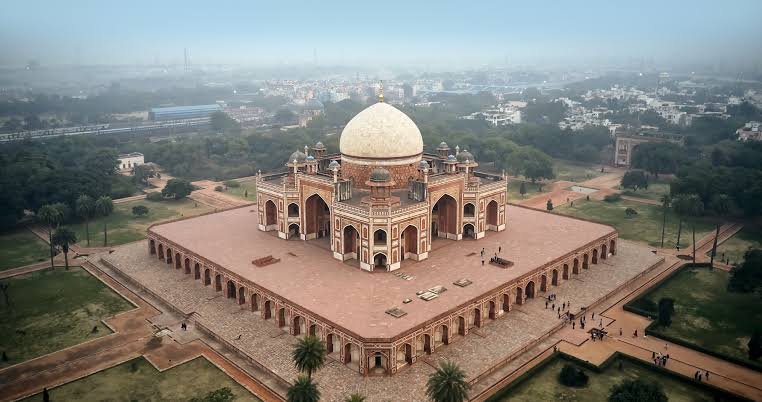
Humayun’s Tomb: The 1570 garden tomb of the second Mughal emperor — the direct architectural ancestor of the Taj Mahal. Built by his widow with a Persian architect. The symmetry, the scale, and the serene garden around it are extraordinary and underappreciated by visitors who go straight to Agra. Entry ₹600 (CAD 10). Open sunrise to sunset.
Qutub Minar: A 73-metre minaret begun in 1193 by Qutb ud-Din Aibak — the first sultan of Delhi. The Iron Pillar in the complex courtyard has stood without rusting for 1,600 years and is a metallurgical mystery still not fully explained. Entry ₹600 (CAD 10).
India Gate: A 42-metre war memorial on the central axis of New Delhi, built 1921–1931 to commemorate the 70,000 Indian soldiers of the British Indian Army who died in the First World War. The Kartavya Path (formerly Rajpath) connects India Gate to the Presidential Palace — the axis of New Delhi is the most formally planned avenue in Asia. Free entry.
Agra
Taj Mahal: Emperor Shah Jahan commissioned the mausoleum in 1632 for his wife Mumtaz Mahal, who died in childbirth. Construction took 21 years with 20,000 workers and artisans from across Asia and Europe. The white Makrana marble inlaid with 28 types of precious and semi-precious stone — carnelian, lapis lazuli, jade, crystal — is the finest decorative stonework produced in the Mughal era. Entry ₹1,100 (CAD 18). Closed Fridays.
Agra Fort: The red sandstone citadel begun by Akbar in 1565 and expanded in white marble by Shah Jahan. After the 1658 coup by his son Aurangzeb, Shah Jahan was imprisoned here for the last eight years of his life. From the Musamman Burj tower, he could see the Taj Mahal in the distance — the monument he had built for his wife. Entry ₹550 (CAD 9).
Fatehpur Sikri: Akbar built this entire imperial capital between 1571 and 1585 and then effectively abandoned it, possibly due to water scarcity. The royal complex — Jodha Bai’s palace, the Panch Mahal, the Buland Darwaza gateway — is extraordinarily well-preserved and far less crowded than the Taj. Entry ₹610 (CAD 10). About 40km from Agra.
Jaipur
Amber Fort: The Kachwaha Rajput clan’s seat from the 16th century, built into a hillside above Maota Lake with views across the Aravalli Hills. The Sheesh Mahal — the Hall of Mirrors — has over a million tiny mirror tiles in its ceiling and walls: a single candle reflects as if a thousand. Entry ₹500 (CAD 8).
City Palace: The current palace of the Maharaja of Jaipur — part of it is still a royal residence. The Chandra Mahal at its centre has seven floors, each dedicated to a different season. The two enormous silver urns in the Diwan-i-Khas are listed in the Guinness Book of Records as the world’s largest silver objects: each holds 4,000 litres of Ganges water for the Maharaja’s travel. Entry ₹700 (CAD 11).
Jantar Mantar: Maharaja Sawai Jai Singh II built this astronomical observatory in 1734 using naked-eye instruments calibrated to extraordinary precision. The Samrat Yantra — a 27-metre stone sundial — tells local time to within two seconds. There are 19 instruments in total, many of which still function. UNESCO World Heritage Site. Entry ₹200 (CAD 3).
Hawa Mahal: The Palace of Winds — a five-storey 1799 façade of 953 latticed windows through which Rajput ladies of the court could observe street life while remaining unseen. The building is only one room deep. Best photographed from the rooftop café directly across the road. Entry ₹50 (CAD 0.80).
Ranthambore: The Tiger Safari Addition
No Golden Triangle circuit from Canada is complete without at least considering Ranthambore. The national park sits 3 hours’ drive from Jaipur — it fits naturally into the circuit without backtracking to Delhi.
Bengal tigers: Ranthambore’s tigers are among the most reliably sighted in India. The park has approximately 75 to 80 tigers across 10 zones. In the October to March peak season, morning safari sighting probability with a good zone allocation from an experienced operator is 65 to 75% across two safaris.
The experience: An open 6-seater Gypsy jeep on a dirt track through dry deciduous forest at dawn. Temperature 8°C to 14°C (dress for it — it’s cold in an open vehicle). The driver radios other vehicles when fresh pugmarks are found. Then silence, scanning. Then the striped orange of a tiger moving through the tall grass 30 metres away.
For Canadian visitors specifically: Many Canadians come from cities where large predators in the wild are part of the national identity — grizzlies in BC, wolves in the Rockies. Seeing a Bengal tiger in its habitat has a similar weight. It is not a zoo. The tigers are wild and the landscape is ancient.
Book Ranthambore safari permits at least 2 to 3 months ahead for any peak-season dates. February and March permits fill quickly. Full zone detail: Ranthambore Zone Guide.
Practical Advice for Canadian Travellers
Canadian Banking Cards in India
India is significantly cash-reliant for small transactions — auto-rickshaws, street food, local markets, many monument fee counters, and guesthouses in smaller towns.
Best options for Canadians:
- Wise (formerly TransferWise): The most cost-effective way to spend CAD in India. Load your Wise account with CAD and pay in INR at the mid-market rate. Zero foreign transaction fee. Works on Mastercard network throughout India. This is the single best financial tool for Canadians travelling to India.
- Revolut: Similar to Wise — zero FX fees at the base account tier, good ATM limits. Available in Canada.
- Scotiabank / TD Bank / RBC / BMO cards: Work at Indian ATMs and point-of-sale terminals but typically charge 2.5 to 3.5% foreign transaction fees plus an ATM fee of CAD 5 per withdrawal. Notify your bank before departure to avoid fraud flags.
- ATMs in India: Available everywhere in Delhi, Agra, and Jaipur — at airports, in hotel lobbies, and at every shopping mall. HDFC, ICICI, and SBI ATMs are the most reliable. Withdraw ₹10,000 to ₹20,000 at a time to minimise per-transaction fees.
- Carry cash (INR): Exchange some CAD to INR at a Canadian airport foreign exchange counter or on arrival in Delhi (the Forex counters at Delhi airport T3 are legitimate and rates are reasonable). Keep ₹5,000 to ₹10,000 in cash at all times.
Electrical Adapters
Canada uses Type A and Type B plugs (flat blade, 120V/60Hz). India uses Type C, Type D, and Type M sockets at 230V/50Hz. This is a voltage difference — Canadian appliances rated for 120V only will be damaged by Indian 230V sockets.
What to do:
- Check your device’s power supply: Most modern phone chargers, laptop adapters, and USB hubs are rated 100–240V (printed on the brick). These are universal and only need a plug adapter — no voltage converter.
- Buy a Type D adapter (or universal travel adapter) before departure. Available at any Canadian electronics store (Best Buy, Staples, Amazon.ca). A universal adapter covering Type C/D/M covers all Indian socket formats.
- Single-voltage appliances (old hair dryers, some electric shavers rated 120V only) — do not plug these in without a voltage converter. Most 5-star hotels in Delhi and Jaipur have universal sockets or hair dryers available on request.
- Higher-end hotels across the Golden Triangle increasingly have universal multi-socket panels at the desk. Ask the hotel if unsure.
Travel Insurance for Canadians in India
Provincial health plans (OHIP in Ontario, BC MSP, Alberta AHCIP, RAMQ in Quebec, etc.) do not cover medical care abroad. You are uninsured in India without a travel policy.
Take out comprehensive travel insurance before departure. Key items to confirm coverage for India:
- Emergency medical treatment and hospitalisation
- Emergency medical evacuation (medivac) back to Canada — medical evacuation from Delhi to Canada can cost CAD 80,000 to CAD 150,000 without insurance
- Trip cancellation and interruption
- Baggage and personal effects
Major Canadian providers: Manulife Financial, Sun Life, Blue Cross (provincial), TuGo, Medipac (strong for seniors). Many Canadian credit cards (TD First Class Visa Infinite, Scotiabank Passport Visa Infinite, CIBC Aventura) include travel medical coverage for trips under 15 to 21 days — check your card terms carefully and ensure the coverage limit is sufficient for India.
Travellers with pre-existing conditions must disclose these to the insurer. Coverage for pre-existing conditions often requires a stability clause — ask your broker.
Canadian Embassy and High Commission in India
High Commission of Canada — New Delhi: 7/8 Shantipath, Chanakyapuri, New Delhi 110021 Tel: +91 11 4178 2000 Emergency line (after hours): +91 11 4178 2000 (press 0 for emergency) Website: india.gc.ca
Consulate General of Canada — Mumbai: For Canadians in western India, the Mumbai consulate is the nearest consular post.
Emergency assistance abroad: Canadians in distress abroad can call the Emergency Watch and Response Centre (EWRC) at +1 613 996 8885 (24/7, collect calls accepted).
Registering your trip with the Registration of Canadians Abroad service (travel.gc.ca) before departure means the Canadian government can contact you in an emergency.
Jet Lag Management from Canada
Toronto to Delhi is an approximately 9.5-hour time difference (IST is UTC+5:30; Toronto in winter is UTC-5). Vancouver to Delhi is approximately 13.5 hours. This is a significant time shift.
Practical approach:
- On the flight out, set your watch to IST immediately and try to sleep and eat on IST schedules.
- Arrive in Delhi and resist napping until the local evening — staying awake through the first afternoon accelerates adjustment.
- The Air India non-stop from Toronto typically arrives Delhi morning, which is ideal: you are awake during Indian daytime from the first day.
- The first two days in Delhi are good buffer days — city sightseeing is flexible enough to accommodate a slower morning if your body insists.
Extending Beyond the Golden Triangle
North India and Goa — 14 Days
Golden Triangle (7 to 9 nights) then fly from Jaipur to Goa (1 hour direct, IndiGo/Air India). Five nights in North Goa or South Goa — warm, clear sea, beach shacks open October to March. Fly home from Goa via Mumbai. This is the single most popular two-week India itinerary for North American visitors — monuments and beach in a single trip.
North India and Kerala — 14 Days
Golden Triangle, then fly from Delhi or Jaipur to Kochi (2 hours). Two nights on an Alleppey backwaters houseboat — Kerala’s famous floating guesthouses on the inland waterway network. Two nights in Munnar tea gardens. One night Kovalam beach. Ayurvedic treatments available everywhere in Kerala. A more culturally immersive alternative to Goa.
The Full Rajasthan Circuit — 12 Days
Delhi → Jaipur → Ranthambore → Udaipur (the City of Lakes, with the Lake Palace Hotel floating on Pichola) → Jodhpur (the Blue City) → fly home from Jodhpur. This is the deepest Rajasthan experience — palaces, tiger safari, lake cities, desert fortresses — in 12 days. January and February weather across all these cities is ideal.
Adding Varanasi — 10 to 12 Days
After Jaipur, fly to Varanasi (1 hour). Two nights: sunrise boat ride on the Ganges, Ganga Aarti ceremony at Dashashwamedh Ghat, Sarnath (where the Buddha gave his first sermon). Varanasi is the most spiritually intense city in India and the contrast with the Mughal heritage of the Golden Triangle makes it one of the most powerful two-stop combinations in India travel.
Frequently Asked Questions
Do Canadians need a visa for India?
Yes. Canadian citizens require a visa to enter India. The Indian eVisa is available online at indianvisaonline.gov.in and takes 72 hours to 5 business days to process. Cost is approximately USD 25 (CAD 34 to CAD 36) for a 30-day tourist eVisa. Apply at least 7 to 10 days before travel.
Is there a direct flight from Canada to Delhi?
Yes. Air India operates non-stop flights from both Toronto (YYZ) and Vancouver (YVR) to Delhi (DEL). The Toronto–Delhi non-stop takes approximately 14 to 15 hours. It is the most efficient routing for Canadian travellers.
What is the best time to visit India from Canada?
March Break (mid-to-late March) aligns perfectly with India’s tail end of peak tourist season — excellent weather, open parks, no monsoon risk. December and January are India’s peak season (book early). October and November are excellent and slightly less crowded. Avoid July and August (monsoon).
How much does a Golden Triangle tour cost from Canada?
A 10-day private Golden Triangle plus Ranthambore tour including return economy flights from Toronto and 4-star hotels costs approximately CAD 4,500 to CAD 8,000 per person. Budget-conscious travellers can do the ground tour for CAD 1,900 to CAD 2,800 per person (excluding flights). Luxury options with 5-star properties and business class flights run CAD 12,000 to CAD 22,000 per person.
Is India safe for Canadian tourists?
Yes. The Golden Triangle tourist corridor — Delhi, Agra, and Jaipur — is one of the most visited tourist circuits in Asia and is safe for international visitors. Canada’s Global Affairs India advisory is Exercise Normal Security Precautions for tourist areas. Use a licensed guide and private driver, book through a reputable operator, and apply standard urban travel awareness. Register your trip at travel.gc.ca before departure.
Can I use my Canadian credit card in India?
Yes, Visa and Mastercard are widely accepted at hotels, larger restaurants, and shops in Delhi, Agra, and Jaipur. For local transport, market shopping, monument fee counters, and smaller vendors, cash (Indian rupees) is required. Use Wise or Revolut for the best exchange rates; standard Canadian bank cards charge 2.5 to 3.5% foreign transaction fees. Withdraw INR at Delhi airport on arrival.
What voltage adapter do I need for India?
Canada uses 120V Type A/B plugs; India uses 230V Type C/D/M sockets. Buy a universal travel adapter before departure (available at Best Buy, Staples, or Amazon.ca). Check that your device’s power brick says 100–240V — most modern phones, laptops and cameras are universal. Do not plug 120V-only appliances (some hair dryers, electric shavers) directly into Indian sockets without a voltage converter.
Plan Your Golden Triangle Tour from Canada with Squid Travel India
At Squid Travel India, we build fully private India tours for international visitors — including Canadian travellers who want more than a group bus tour and a fixed schedule.
Every tour is entirely private. Your own air-conditioned vehicle throughout. Your own licensed English-speaking guide at each destination. No fixed group departures. We adjust pace, timing, and priorities to your group.
We handle the full logistics months in advance: the Taj Mahal pre-booking, Ranthambore safari zone allocation, and the heritage property reservations that sell out by September for December–January and March Break travel.
Contact us with your Canadian departure city, travel dates, and group size. We’ll send a full itinerary and pricing in CAD within 24 hours.
Also worth reading:
- Golden Triangle Tour from Delhi
- Golden Triangle Tour Cost 2026
- Ranthambore Zone Guide
- India in January 2027
- India in November 2026
- Diwali 2026 in Jaipur
- Diwali 2026 in Udaipur
- Best Time to Visit Agra and the Taj Mahal 2026
- Golden Triangle Tour from Australia
- Golden Triangle Tour from Germany
- Golden Triangle Tour from Poland
📞 Call / WhatsApp: +91 9990812499 📧 Email: Squidtravelindia@gmail.com 🌐 Visit: squidtravelindia.com
1,800+ trips completed | 98% happy clients | TripAdvisor Travelers’ Choice 2024–2025
Last updated: September 2026.

Comment (0)