

October is one of the most rewarding months to visit Delhi. The monsoon retreats by late September, leaving behind clear skies, cooler mornings, and a city that comes alive with two of India’s biggest festivals — Dussehra on October 2 and Diwali on October 20. The streets fill with colour, the monuments glow under festival lighting, and Delhi’s markets are at their most electric. If you have been waiting for the right time to see the Indian capital, October 2026 is it.
Delhi Weather in October 2026
October in Delhi brings a welcome transition from the humidity of the monsoon season into one of the city’s most pleasant spells of the year. The shift happens in two distinct phases across the month, and understanding them helps you plan your days more effectively.
During the first two weeks of October, daytime temperatures sit between 30°C and 35°C, particularly in the afternoons. The mornings are noticeably fresher than August or September, starting around 22°C to 25°C, and the oppressive humidity of the rainy season has largely gone. The sky is clear and brilliantly blue — a sharp contrast to the grey, overcast days of monsoon. This early-October window is ideal for outdoor sightseeing, as the light is spectacular and the air feels clean. You can comfortably spend full days at Humayun’s Tomb, Qutub Minar, and the Red Fort without being drenched in sweat the way you might be in July or August.
From mid-October onwards, the temperature drops more noticeably. Afternoons remain warm at 28°C to 32°C, but evenings begin to cool, and mornings can feel genuinely pleasant at 18°C to 22°C. By the last week of October, it is worth having a light jacket for early mornings and after sunset, especially if you are sitting outside at a rooftop restaurant or attending one of the many evening festival events.
Rainfall in October is rare. The monsoon is fully withdrawn from Delhi by early October in most years, and you are very unlikely to encounter significant rain during your visit. The occasional brief shower in the first few days of October is possible if the retreating monsoon lingers, but this is the exception rather than the rule. Pack a light rain layer as a precaution if you are arriving in the first week of the month, and you will almost certainly not need it for the rest of your stay.
One thing worth noting honestly is Delhi’s air quality. October sits in the transition window before the city’s notorious winter pollution sets in. During the first three weeks of October, the air quality is generally good to moderate — the north-westerly winds that carry crop-burning smoke from Punjab and Haryana have not yet established themselves in full force, and the AQI is typically in the 50–120 range, which is acceptable for most visitors including those who are reasonably fit. From late October and into November, the air quality begins to deteriorate as stubble burning peaks in surrounding states. If you are sensitive to air quality or travelling with young children or elderly family members, targeting the first two to three weeks of October gives you the most comfortable conditions. Mornings are always cleaner than afternoons and evenings in Delhi.
Dussehra in Delhi — October 2, 2026
Dussehra falls on October 2 in 2026, and Delhi’s celebrations are among the most spectacular in India. The festival marks the victory of Lord Rama over the demon king Ravana, and the way Delhi marks it is unmistakable — giant effigies of Ravana, his brother Kumbhakarna, and his son Meghnath are erected across the city and set alight at dusk to the sound of fireworks and thousands of cheering spectators.
In the weeks before Dussehra, the Ramleela season transforms several open grounds across Delhi into vast theatrical stages. The most famous of these is the Lal Quila Ramleela at the Red Fort grounds, which has been running for generations and draws enormous crowds. The performances are colourful, energetic, and deeply atmospheric even if you do not follow the story — the costumes, the music, and the crowd energy make it one of the most memorable evenings you can have in Delhi. Evening performances typically run from around 6:30 PM onwards in the days leading up to Dussehra.
On Dussehra evening itself, the effigy burnings happen simultaneously at multiple locations across the city. Subhash Nagar in West Delhi and Dwarka are two of the most well-known venues, but nearly every neighbourhood has its own Ravana. The scale and pyrotechnics at the major venues are impressive, with effigies reaching 50 to 100 feet. The crowd scenes are extraordinary — colourful, joyful, and completely overwhelming in the best possible way. Plan to arrive at your chosen venue at least 90 minutes before sunset to get a reasonable vantage point, as these events draw tens of thousands of people.
If Dussehra falls during your Delhi leg of a Golden Triangle itinerary, it is one of the most memorable festival experiences in all of India. Keep in mind that traffic across the city will be heavy from the afternoon onwards on October 2, so build extra time into any transfers.
Diwali in Delhi — October 20, 2026
Diwali in 2026 falls on October 20, and experiencing the Festival of Lights in Delhi is something that stays with you long after you leave. The city’s transformation in the days leading up to Diwali is gradual and then sudden — markets fill with lamps, diyas, sweets, and decorations from late September, and then in the final 48 hours before the festival, Delhi lights up in a way that is genuinely difficult to describe to someone who has never seen it.
Chandni Chowk in Old Delhi becomes a river of light and colour in the week before Diwali. The lanes that normally sell spices, textiles, and hardware are taken over by vendors selling clay diyas, string lights, and fireworks. The energy here in the evenings — around 6 PM to 9 PM — is extraordinary. The main bazaar, Dariba Kalan (the silver market), and Kinari Bazaar (the wedding market) are all worth exploring, and the snacks available from street vendors — jalebi, chaat, and the famous Ghantewala sweets — are at their most abundant during the festive season.
Connaught Place in central Delhi is transformed by Diwali lighting and temporary markets. The inner circle and outer circle roads are lined with illuminated decorations, and the entire area has a festive atmosphere that makes evening walks genuinely enjoyable. Dilli Haat near INA Metro Station also runs special Diwali crafts fairs in the lead-up to the festival, where artisans from across India sell traditional lamps, pottery, textiles, and handmade gifts. Admission to Dilli Haat is nominal, and it is one of the most pleasant ways to spend a Diwali afternoon.
Dhanteras, which falls two days before Diwali on October 18, is the auspicious day for buying gold, silver, and new utensils. If you visit a market on this day, the activity is remarkable — jewellery shops in Karol Bagh and Chandni Chowk see queues stretching out the door. It is not necessarily the most comfortable time to shop, but as an observation of how seriously Delhiites take Dhanteras, it is genuinely fascinating.
On Diwali night itself — the evening of October 20 — the entire city erupts in firecrackers and diyas. If you are staying in a hotel with a rooftop or terrace, request access, because the skyline view during peak Diwali fireworks is unlike anything else. The celebration typically peaks between 8 PM and 10 PM. Delhi’s Diwali is emphatically not a quiet or sedate affair.
A practical note: noise and smoke levels on Diwali night are high. If you are light sleepers or sensitive to noise, earplugs are worth packing. The air quality also temporarily spikes on Diwali night and the morning after due to fireworks, though it typically returns to normal within 24 to 48 hours in October (this is different from the sustained pollution of November and December).
What to See in Delhi in October
Delhi rewards slow exploration, and October’s comfortable temperatures make it possible to spend proper time at each site rather than rushing through to escape the heat.
Red Fort (Lal Qila)
The Red Fort in Old Delhi is arguably the most iconic monument in the city, and October is one of the best months to visit it. The Mughal architecture is at its most dramatic under clear October skies, and the crowds, while never absent at this famous site, are more manageable than during peak December-January season. The fort complex is vast — budget at least two to three hours to walk through Diwan-i-Am, Diwan-i-Khas, the Royal Baths, and the museum buildings. The fort is closed on Mondays. In the evening, a sound and light show runs after sunset and is worth staying for if you are an architecture or history enthusiast.
Humayun’s Tomb
Humayun’s Tomb in Nizamuddin is one of Delhi’s most beautiful monuments and the architectural forerunner of the Taj Mahal. The scale of the complex — the charbagh garden, the central domed tomb, and the surrounding smaller tombs — is impressive, and October’s clear light makes it a photographer’s paradise. The crowds here are considerably thinner than at the Red Fort or Qutub Minar, making it a more peaceful experience. Early morning visits, from opening at 6 AM until around 9 AM, are particularly atmospheric.
Qutub Minar
The Qutub Minar complex in south Delhi is one of India’s most visited UNESCO World Heritage Sites, and October’s weather makes the long walks through the complex genuinely enjoyable. The 73-metre minaret, the Quwwat ul-Islam mosque, and the Iron Pillar — which has stood for 1,600 years without rusting — are all remarkable. October mornings here are cool and quiet, and the garden grounds are particularly pleasant. Visit before 10 AM to avoid the larger tour groups that arrive mid-morning.
India Gate and Central Delhi
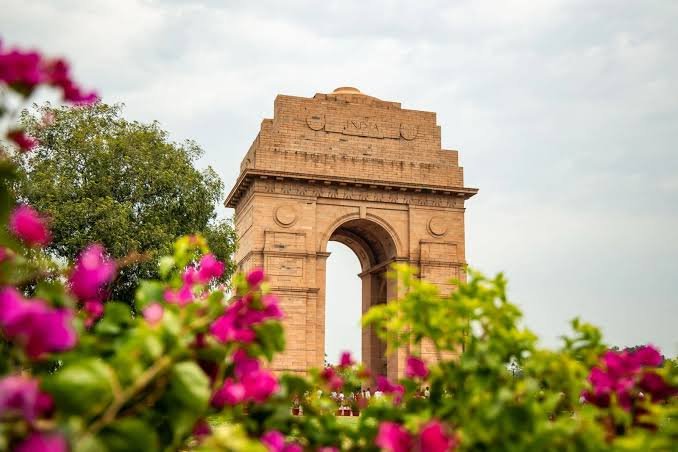
India Gate, the 42-metre war memorial on Rajpath (now Kartavya Path), is surrounded by large open lawns that Delhiites use for evening strolls, cricket, and picnics. In October, the evenings here are pleasant and lively, and the illuminated monument after dark is one of Delhi’s most attractive sights. The area around India Gate also gives access to the Rashtrapati Bhavan (President’s House), the Parliament Building, and the broad ceremonial boulevard — a walk through this part of central Delhi gives a strong sense of the city’s scale and ambition.
Lotus Temple
The Bahá’í Lotus Temple in south Delhi is one of the most architecturally striking buildings in the entire country. The flower-shaped white marble structure rises out of a reflecting pool and draws visitors of all faiths. It is free to enter and is open Tuesday through Sunday. The interior is simple, calm, and meditative — a complete contrast to the bustle of Old Delhi. October crowds here are manageable, and the surrounding gardens are pleasant for a quiet hour.
Akshardham Temple
The Swaminarayan Akshardham temple complex on the eastern bank of the Yamuna is one of the largest Hindu temples in the world and an extraordinary feat of craftsmanship. The main monument, covered in hand-carved pink sandstone, took thousands of artisans years to complete. The complex also includes an elaborate boat ride through 10,000 years of Indian history and a musical fountain show in the evenings. Akshardham is free to enter (charges apply for the exhibitions and shows inside). Photography of the main monument is not permitted, so you visit it purely to experience it rather than to photograph it. October is a comfortable month to spend the three to four hours this complex deserves.
Chandni Chowk and Old Delhi
No visit to Delhi is complete without at least half a day in Old Delhi, and October — particularly the festive October that 2026 delivers — makes it more rewarding than ever. The Jama Masjid, one of India’s largest mosques, anchors the area. The spice market at Khari Baoli, the silver market at Dariba Kalan, and the chaotic lanes of Chandni Chowk itself are best explored on foot or by cycle rickshaw. The food in Old Delhi is extraordinary — the parathas at Paranthe Wali Gali, the nihari at Karim’s near the Jama Masjid, and the sweets at any of the generations-old mithai shops are all worth making time for. Go on an empty stomach.
Lodi Garden
Lodi Garden is one of Delhi’s most charming green spaces, scattered with fifteenth-century Lodi dynasty tombs set among landscaped gardens. In October, the gardens are at their most pleasant — the grass is green from the monsoon but the weather is comfortable enough to walk and sit outside. Early mornings in Lodi Garden, with the tombs catching the morning light and Delhi’s residents doing yoga and walking dogs, are a wonderful counterpoint to the intensity of the monuments and markets. The garden is free to enter and open from sunrise to sunset.
3-Day Delhi Itinerary for October 2026
Three days in Delhi gives you enough time to cover the major sites at a reasonable pace without rushing, while leaving room for the spontaneous discoveries — a street food stall, a neighbourhood market, an unexpected conversation — that often become the highlights of a trip.
Day One: Old Delhi and the Mughal City
Start your first morning at the Red Fort as early as possible, ideally at or shortly after opening time to get ahead of the tour groups. Spend two to three hours walking through the complex, then walk or take a cycle rickshaw to Jama Masjid for a look at one of India’s most impressive mosques. From there, dive into Chandni Chowk for the remainder of the morning — pick up spices at Khari Baoli, walk the silver lanes, and stop for breakfast or brunch at Paranthe Wali Gali. After lunch, make your way to Humayun’s Tomb and spend the afternoon in the garden complex. End the day at Lodi Garden for the golden hour light, then dinner in the Lodhi Colony neighbourhood or Khan Market.
Day Two: South Delhi Monuments and New Delhi
Begin at Qutub Minar shortly after opening — this is a large complex and early visits are much calmer. After the Qutub, head to the Lotus Temple for an hour of quiet contemplation, then make your way to Akshardham for the afternoon if you are interested in the temple complex and its exhibitions (allow three to four hours). In the evening, head to India Gate for a walk along Kartavya Path, then explore Connaught Place in the evening, which has good restaurants, cafes, and the atmospheric inner circle.
Day Three: Markets, Neighbourhoods, and Departure Preparation
Use your third day more flexibly depending on what has captured your interest. Hauz Khas Village in south Delhi is worth exploring for its mix of a medieval reservoir, ruins, and contemporary cafes and boutiques. Dilli Haat near INA Metro is excellent for buying craft gifts and textiles from across India. If you are in Delhi for Diwali, the evening of your third day is best spent in Chandni Chowk or your hotel neighbourhood watching the celebrations unfold.
Getting Around Delhi in October
Delhi has an excellent metro network that covers most of the major tourist sites. The Yellow Line connects Chandni Chowk and Old Delhi to Connaught Place and further south; the Violet Line reaches Kashmere Gate and connects to the Airport Express Line. For a tourist doing a circuit of monuments, the metro is often the most efficient option — it runs on time, is air-conditioned, and avoids the traffic jams that can make road travel frustratingly slow during festive periods.
For site-to-site transfers that are not metro-friendly, app-based taxis (Ola and Uber both work well in Delhi) are the most reliable option. Fares are metered and transparent. Auto-rickshaws are useful for short distances within neighbourhoods — negotiate the fare before getting in, or insist on the meter. During Dussehra and Diwali, traffic across the city is significantly heavier than usual, particularly in the evenings. If you have a dinner reservation or show ticket in the festive period, leave considerably more time than you would normally expect.
Where to Stay in Delhi in October
Delhi has accommodation across every price point, and the right area depends on how you prefer to balance access to monuments, restaurants, and shopping.
The area around Connaught Place in central New Delhi is the most convenient base for most visitors. You are within reasonable distance of India Gate, Khan Market, and the metro, which connects you to Old Delhi and south Delhi monuments quickly. Mid-range and business hotels cluster heavily here, and there are good restaurants and cafes within walking distance.
For a more atmospheric experience, the Lodhi Road and Defence Colony area in south Delhi puts you close to Humayun’s Tomb, Lodi Garden, and some of Delhi’s best restaurants. Several of Delhi’s best boutique and design hotels are in this part of the city.
Aerocity, next to Indira Gandhi International Airport, is ideal if you have an early departure or are stopping in Delhi briefly as part of a longer itinerary. The hotel options here range from budget business stays to international five-stars.
Old Delhi itself has limited quality accommodation options, but staying here — in one of the heritage havelis that have been converted to guesthouses — gives you the most immersive experience of the old city.
October is a busy month in Delhi due to the festivals, and hotel rates tick upward in the Diwali week (roughly October 17 to 22). Book accommodation at least three to four weeks in advance if you are visiting during this period.
What to Pack for Delhi in October
Lightweight cotton clothing works well for daytime sightseeing in early October, when temperatures remain warm. Breathable fabrics dry quickly if you perspire during afternoon temple visits. For evenings and for the second half of October, add a light cardigan or jacket — evenings can drop to 18°C and feel cool after a warm day.
Comfortable walking shoes are essential for the amount of ground Delhi’s monuments cover. Several sites also require removing footwear, so shoes that slip on and off easily are worth prioritising. Women visiting mosques or traditional temples should carry a dupatta or light scarf to cover the head and shoulders.
A reusable water bottle is important — October days are warm enough that you will be drinking a litre or more on a full sightseeing day. Sunscreen is worth applying in the mornings, particularly if you are spending time at outdoor sites like Qutub Minar or the Red Fort grounds.
If you are visiting around Diwali, earplugs for Diwali night and a small pollution mask (N95) for the morning after are sensible additions. Most pharmacies in Delhi sell N95 masks readily.
Delhi as the Gateway to the Golden Triangle
Delhi is the natural starting and finishing point of the Golden Triangle — the classic circuit that links Delhi, Agra, and Jaipur into one coherent India itinerary. October 2026 is an exceptional time to do this circuit, because the post-monsoon weather is ideal across all three cities, and both Agra and Jaipur are at their most atmospheric in the festive October period.
From Delhi, the Agra Cantt railway station is four to five hours by fast train from Hazrat Nizamuddin or New Delhi stations. The Taj Mahal is at its most beautiful in October’s clear morning light — the early mist has gone, the crowds are moderate compared to peak December-January season, and the colours of the marble shift from pink to white to gold as the morning progresses. From Agra, the road or train journey to Jaipur takes around four to five hours, passing through Fatehpur Sikri along the way.
Jaipur in October 2026 has Dussehra and Diwali celebrations of its own, and the city’s pink sandstone monuments — Amber Fort, City Palace, and Hawa Mahal — are at their finest under clear autumn skies. If you are planning a complete Golden Triangle visit, a 10-night itinerary gives you enough time to do all three cities without feeling rushed. You can read the detailed Jaipur in October 2026 guide and the Agra in October 2026 guide on this site for the full breakdown of what to see and when in each city.
One practical note for Agra: the Taj Mahal is closed every Friday for prayer, regardless of season or public holidays. Plan your Agra days accordingly and avoid scheduling your Taj visit on a Friday.
Practical Travel Tips for Delhi in October
Indira Gandhi International Airport is one of Asia’s busiest, and Terminal 3 handles most international and long-haul domestic arrivals. The Airport Express metro line connects T3 to New Delhi Railway Station and Connaught Place (Shivaji Stadium station) in approximately 20 minutes and is by far the most efficient way to reach central Delhi. Taxis from the prepaid taxi stand outside arrivals are the alternative if you have heavy luggage or are travelling as a group.
Delhi’s e-ticketing system covers metro rides efficiently, and tourist travel cards are available at major stations for a small deposit. The metro runs from approximately 5:30 AM to 11 PM daily.
Most major monuments require purchased tickets (Red Fort, Humayun’s Tomb, Qutub Minar), with separate pricing for Indian and foreign nationals. The Archaeological Survey of India’s ticketing is now largely digital, and you can often book in advance online to avoid queues. The Lotus Temple and Akshardham are free to enter.
Cash is useful in Old Delhi markets and for auto-rickshaws, but ATMs are widely available across the city. UPI-based payments (Google Pay, PhonePe) are accepted at many vendors and restaurants, particularly in newer areas like Connaught Place and Khan Market. Your international card will work at ATMs and at restaurants, hotels, and larger shops.
Delhi tap water should not be consumed. Stick to sealed bottles or filtered water from your hotel. Street food is generally safe if you choose busy stalls with high turnover — the Paranthe Wali Gali parathas and the chaat at Old Delhi’s main stands have been feeding visitors for generations without issue.
Frequently Asked Questions
Is October a good time to visit Delhi?
October is one of the best months to visit Delhi. The monsoon has ended, skies are clear, temperatures are warm but not extreme, and both Dussehra (October 2) and Diwali (October 20) make 2026 particularly special. The first three weeks of October also have the city’s best air quality before winter pollution sets in.
What is the weather like in Delhi in October 2026?
Early October sees daytime highs of 30°C to 35°C with cool mornings around 22°C to 25°C. By late October, afternoons are 28°C to 32°C and mornings drop to 18°C to 22°C. Rainfall is rare after the first week. Evenings in the second half of the month are pleasant enough to require a light jacket.
When is Diwali in 2026?
Diwali 2026 falls on October 20. Dussehra falls on October 2 and Dhanteras on October 18. The entire festive period from late September through late October makes 2026 an exceptional year to visit Delhi in the autumn.
Is the Taj Mahal open in October?
Yes, the Taj Mahal in Agra is open in October. It is closed every Friday. October is one of the best months to visit the Taj Mahal — the post-monsoon clear skies make for excellent visibility, crowds are moderate, and the marble looks particularly beautiful in the crisp October light.
How many days do I need in Delhi?
Three days gives you a thorough introduction to Delhi’s major monuments, Old Delhi’s markets, and the key neighbourhoods. Two days is enough for a highlights circuit. If you are using Delhi as a base for a Golden Triangle tour, build in time at the start and end of your trip separately so the city gets the attention it deserves.
What is the air quality like in Delhi in October?
October, particularly the first three weeks, is one of Delhi’s better months for air quality. AQI readings typically fall in the 50–120 range, which is considered good to moderate and acceptable for most travellers. From late October onwards, crop-burning smoke from neighbouring states begins to affect the air, and quality deteriorates further in November and December. Visiting in October rather than November gives you noticeably better conditions.
Can I use the Delhi Metro to reach the monuments?
Yes. The Delhi Metro covers most major tourist sites. The Red Fort and Chandni Chowk are on the Yellow Line (Chandni Chowk station). Qutub Minar is on the Yellow Line (Qutb Minar station). Lodi Garden, Humayun’s Tomb, and the Nizamuddin area are accessible from JLN Stadium or Jangpura on the Violet Line. India Gate and Connaught Place are central. The Airport Express connects T3 to the city in 20 minutes.
What festivals happen in Delhi in October 2026?
Dussehra on October 2 brings citywide Ramleela performances and spectacular effigy burnings at Subhash Nagar, Dwarka, and other venues. Dhanteras on October 18 sees markets packed with shoppers buying gold and silver. Diwali on October 20 lights up the entire city with diyas, decorations, and fireworks. Govardhan Puja follows on October 21. These four events in three weeks make October 2026 one of the most festive months Delhi will see in years.
Planning a Golden Triangle tour from Delhi in October? Read our guides to Agra in October 2026, Jaipur in October 2026, and Varanasi Weather in October 2026 to build your complete India itinerary. For detailed route planning, see our 10-Day Golden Triangle Itinerary and Golden Triangle Tour Cost 2026 guide.

Comment (0)