

Agra Fort is the most underrated monument in Agra.
Most visitors arrive after the Taj Mahal, give it 45 minutes, and leave. That is a mistake. Agra Fort — a UNESCO World Heritage Site since 1983 — is a walled city of palaces, mosques, audience halls, and hidden gardens built over 150 years by three of the greatest Mughal emperors. Done properly, it deserves two to three hours of your morning and will rival the Taj Mahal for the quality of what you see.
This guide covers everything you need to plan your Agra Fort visit: opening times, ticket prices, the best time of day to go, which structures to see in what order, how long to spend, and how to combine Agra Fort with the Taj Mahal on the same day.
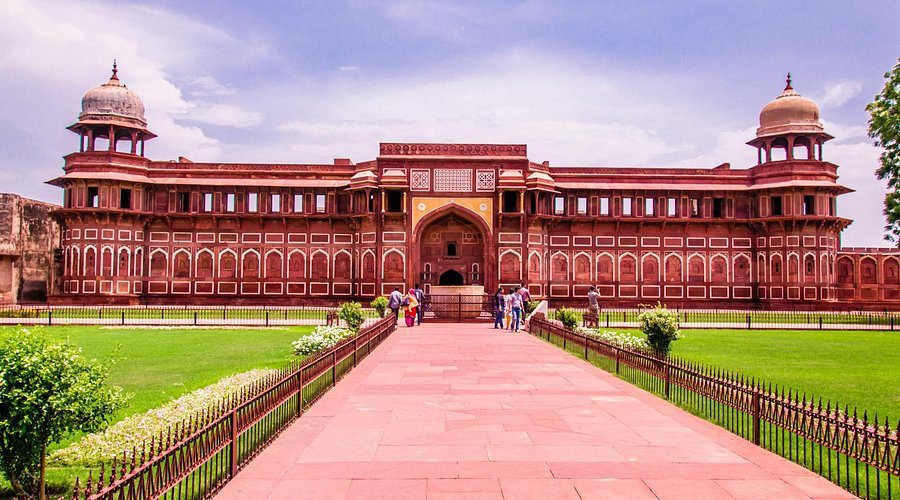
Agra Fort: Quick Facts
| Full name | Agra Fort (also Lal Qila of Agra, Red Fort of Agra) |
| Location | Rakabganj, Agra — 2.5km northwest of the Taj Mahal |
| UNESCO status | World Heritage Site since 1983 |
| Built | 1565 onwards — Akbar, Jahangir, Shah Jahan, Aurangzeb |
| Open | Sunrise to sunset, daily except Friday |
| Approximate timings | 6:00 AM to 6:00 PM (varies with seasonal sunrise/sunset) |
| Ticket price (foreigners) | ₹650 per person |
| Ticket price (Indians) | ₹35 per person |
| SAARC/BIMSTEC nationals | ₹35 per person |
| Children under 15 | Free (all nationalities) |
| Photography | Permitted throughout — no extra charge |
| Audio guide | Available at the entrance — ₹118 (English, Hindi, and others) |
Agra Fort Opening Times
Agra Fort is open from sunrise to sunset every day except Friday.
In practical terms:
| Month | Approximate Opening | Approximate Closing |
|---|---|---|
| October–February (winter) | 6:00 AM | 6:00 PM |
| March–June (pre-monsoon/summer) | 5:30 AM | 7:00 PM |
| July–September (monsoon) | 6:00 AM | 6:30 PM |
The fort closes at 6 PM in winter months (November–January) when sunset comes early. In summer, the longer daylight hours mean you can be inside until 7 PM.
Friday closure: Agra Fort is closed to visitors every Friday. This applies to the entire complex. Plan accordingly — if your Agra day falls on a Friday, visit the Taj Mahal and Fatehpur Sikri instead, and move Agra Fort to Saturday or Thursday.
Best Time to Visit Agra Fort
Best Time of Day: 7:00 AM to 9:00 AM
Arrive at or before 7 AM.
Here is why the early morning visit transforms the experience:
1. You beat the tour buses. Organised day-trip groups from Delhi arrive in Agra between 9 AM and 11 AM and head first to the Taj Mahal. Agra Fort gets the overflow from 10 AM onwards. The 7–9 AM window is the least crowded the fort will be all day.
2. The light is extraordinary. Agra Fort is built from Dholpur red sandstone, with white marble inlaid into the Jahangiri Mahal and Shah Jahan’s palaces. In the low-angle morning light — before 9 AM — the sandstone glows deep amber and the marble catches the early blue sky. After 10 AM, the light becomes harsh and flat. Every photograph from the fort’s ramparts and from Diwan-i-Khas looks better before 9 AM.
3. The temperature is manageable. Between October and March, mornings at Agra Fort are cool (10°C to 16°C). Between April and June, arriving early is essential — by 11 AM the temperature inside the fort’s stone corridors and open courtyards climbs rapidly. A 7 AM start in April means you finish by 10 AM before the worst of the heat.
4. Musamman Burj — the view of the Taj Mahal. From the Musamman Burj tower (where Shah Jahan died as a prisoner of his son Aurangzeb), the Taj Mahal is visible across the river. In the morning, the Taj catches the eastern light and gleams white against the sky. This view — the Taj from Agra Fort, 2.5km away — is one of the great views in India. It looks best in the first two hours of daylight.
Best Time of Year: October to March
Agra has an extreme climate. The sweet window for comfortable visiting is October through March.
| Season | Verdict | Notes |
|---|---|---|
| October–November | ⭐⭐⭐⭐⭐ Excellent | Post-monsoon, still warm but comfortable. October light is beautiful. |
| December–January | ⭐⭐⭐⭐⭐ Peak | Cool and clear. Fog risk in January mornings — arrive early to check. |
| February | ⭐⭐⭐⭐⭐ Excellent | Warm days, cool mornings. One of the best months. |
| March | ⭐⭐⭐⭐ Very good | Warming up but still manageable. |
| April | ⭐⭐⭐ Manageable | Hot by midday. Morning-only visit essential. |
| May–June | ⭐ Avoid | 40°C+ inside the stone fort. Brutal. |
| July–September | ⭐⭐ Monsoon | Fort stays open. Rain gives green backdrop. Humid. |
How Long to Spend at Agra Fort
Allow 2 to 2.5 hours. Most guidebooks say 1.5 hours. Most visitors who rush it wish they had taken longer.
The fort complex covers 94 acres and has multiple distinct structures worth seeing properly:
- Amar Singh Gate and outer ramparts: 10 minutes
- Jahangiri Mahal: 20 minutes
- Khas Mahal and Shah Jahan’s palace apartments: 20 minutes
- Musamman Burj (with Taj Mahal view): 15 minutes
- Diwan-i-Khas (Hall of Private Audience): 10 minutes
- Diwan-i-Am (Hall of Public Audience): 10 minutes
- Nagina Masjid and Moti Masjid: 15 minutes
- Ramparts walk and views: 20 minutes
Total: approximately 2 hours at a measured pace. If you move quickly, 90 minutes is possible. With an audio guide or a private guide who knows the history well, 2.5 hours passes easily.
What to See at Agra Fort: The Key Structures
Amar Singh Gate
The only gate open to visitors. A double-right-angled entrance designed to slow down charging war elephants — the sharply turned ramp made it impossible to build momentum. Notice the bullet marks and cannon damage on the outer walls: Agra Fort withstood multiple sieges during the Mughal succession wars.
Jahangiri Mahal
The largest private residence in the fort, built by Akbar for his son Jahangir. It is a transitional building — Hindu architectural vocabulary (intricate stone lattice, carved brackets, flat stone roofs) blended with early Mughal forms. The central courtyard has an enormous stone bathtub (said to have been used by Nur Jahan, Jahangir’s queen) carved from a single block of stone.
This is the oldest surviving palace structure in the fort and gives a clear sense of how Akbar’s court — still rooted in pre-Islamic architectural traditions — was evolving toward the pure Mughal white marble style that would define Shah Jahan’s era.
Khas Mahal and Shah Jahan’s Palace Apartments
The shift to Shah Jahan’s palaces is dramatic. From Akbar’s red sandstone, you enter white marble inlaid with semi-precious stones. The Khas Mahal (Private Palace) was Shah Jahan’s personal apartment — the emperor who built the Taj Mahal brought the same obsessive refinement to his own residence. The marble screens (jali), the cusped arches, the pietra dura inlay — this is the Mughal aesthetic at its peak.
Adjacent are the two pavilions of his daughters, Roshanara and Jahanara, flanking the central hall.
Musamman Burj (the Prisoner’s Tower)
The most emotionally charged spot in the fort. Shah Jahan built the Musamman Burj as a pleasure pavilion — a marble-inlaid tower overlooking the Yamuna River — with the Taj Mahal, the tomb of his wife Mumtaz, visible 2.5km away across the river bend.
After his son Aurangzeb imprisoned him here in 1658, Shah Jahan spent his last seven years in this tower. Historians believe that in his final years, unable to leave, he could only look at the Taj Mahal from this window. He died in January 1666, and according to legend was found facing the view of the Taj.
The view from Musamman Burj is real and spectacular. The Taj Mahal, 2.5km away, visible on a clear day as a white dome above the treeline above the Yamuna. In morning light it is extraordinary.
Diwan-i-Khas (Hall of Private Audience)
Shah Jahan’s audience chamber for private meetings with nobles, foreign dignitaries, and senior officials. Entirely in white marble, with pietra dura inlay. The columns and alcoves show the highest level of Mughal craftsmanship applied to a working governmental building rather than a tomb or mosque. The famous quote attributed to the walls of Delhi’s Diwan-i-Khas — “if there is paradise on earth, it is this, it is this, it is this” — was likely composed for this chamber in Agra first, before being applied later to the Delhi version.
Diwan-i-Am (Hall of Public Audience)
The largest pavilion in the fort — the space where the emperor held open court for ordinary citizens presenting petitions and grievances. The carved marble throne alcove at the rear (where the emperor sat) is beautifully preserved. The scale gives a sense of the ceremonial power of the Mughal court. Stand at the far end of the hall and look at the throne: this is where tens of thousands of people came to seek justice from the most powerful empire on earth.
Moti Masjid (Pearl Mosque)
Built by Shah Jahan for his personal use — a private mosque of pure white marble, not open for public prayers. The courtyard and the three marble domes are serene and usually quiet, away from the main visitor flow. One of the most elegant small mosques in India, despite being almost unknown compared to the Taj Mahal.
Agra Fort Tickets: Where to Buy
Online (recommended): Book at asi.payumoney.com — the Archaeological Survey of India’s official ticketing portal. Online booking avoids the queue at the gate. Print the QR code or have it on your phone.
At the gate: Tickets are sold at the Amar Singh Gate ticket window. In peak season (December–February), queues form by 9 AM. With an early start (7 AM), there is usually no queue.
What is included: Entry to all open areas of the fort complex. Audio guide is separate (₹118).
What is NOT included: Agra Fort tickets do not cover the Taj Mahal or Fatehpur Sikri. These are separate tickets — Taj Mahal ₹1,300 for foreigners.
Composite ticket: There is no longer an official ASI composite ticket covering both the Taj Mahal and Agra Fort. Purchase them separately.
Combining Agra Fort and the Taj Mahal in One Day
This is the standard itinerary for a Golden Triangle Agra day, and it works well if you sequence it correctly.
The right order: Taj Mahal first, Agra Fort second.
Here is the logic:
- The Taj Mahal at dawn (6 AM entry) is the single finest experience in Indian tourism. The empty forecourt, the mist off the Yamuna, the first light hitting the marble — this is why people travel to India. Do not miss this window by saving your energy for the afternoon.
- By 8 AM you have had 90 minutes at the Taj in its finest light and with relatively light crowds.
- By 8:30 AM you are at Agra Fort for its own 7–9 AM best window.
- By 10:30 to 11 AM both monuments are done before the tour group rush peaks.
Alternatively: Agra Fort first if you cannot do the Taj at dawn.
If your schedule doesn’t allow a 6 AM Taj Mahal start:
- Agra Fort at 7:00 AM → done by 9:30 AM
- Taj Mahal from 10:00 AM (still good, some crowds)
- Itimad-ud-Daulah (Baby Taj) in the afternoon
Journey between the two: Agra Fort and the Taj Mahal are 2.5km apart — a 10-minute auto-rickshaw ride or 15-minute tuk-tuk along the Ring Road. Walking is possible in winter but not recommended in summer heat.
Agra Fort: Practical Tips
Footwear: Closed shoes with good grip are recommended. The stone ramps inside the fort are steep and polished. Sandals are fine; heels are not.
Entry: Only the Amar Singh Gate (southern entrance) is open to tourists. The Delhi Gate on the north side is used by the Indian Army (part of the fort remains an active military installation) and is closed to visitors.
Guides: A private licensed guide makes a very significant difference at Agra Fort. The structures look like beautiful old buildings until you know the stories — Shah Jahan as prisoner, the succession war, the weight of the Koh-i-Noor diamond which was once in the Diwan-i-Khas. Budget ₹500–₹800 for a 2-hour guided tour from a licensed guide at the gate, or arrange in advance through your tour operator.
What is not accessible: Portions of Agra Fort — particularly the Delhi Gate section and structures adjacent to the military cantonment — are not open to civilian visitors. Do not attempt to access restricted areas.
Drinking water: Bring water. Inside the fort there are limited vendors. In summer this is critical.
Photography: Permitted throughout the open areas. Tripods technically require a permit but this is rarely enforced for small tripods. Drone photography is not permitted.
Getting to Agra Fort
From Taj Mahal: 2.5km, 10 minutes by auto-rickshaw (₹50–80) or tuk-tuk.
From Agra Cantonment Railway Station: 4km, 15 minutes by auto-rickshaw or taxi.
From Agra city centre hotels: 2–5km depending on hotel location.
Parking: Available at Amar Singh Gate for private vehicles. Most visitors arrive by auto-rickshaw, tuk-tuk, or private vehicle arranged by their hotel or tour operator.
Agra Fort vs Taj Mahal: What is the Difference?
This is a question many first-time visitors to Agra ask.
The Taj Mahal is a mausoleum — built by Shah Jahan as a tomb for his wife Mumtaz Mahal. It is an exercise in beauty at the extreme: one perfect building, surrounded by gardens and water channels designed to frame it. The experience is emotional and visual.
Agra Fort is a working palace — built by Akbar, developed by Jahangir and Shah Jahan, and used as the seat of Mughal power for over a century. It has multiple structures built in different eras, each with its own story. The experience is historical and immersive.
They complement each other rather than competing. The Taj Mahal is the destination; Agra Fort is the context. The same emperor who built the world’s most famous tomb also built these palaces, and understanding Shah Jahan’s life — including the room in Agra Fort where he died a prisoner — adds a layer to the Taj Mahal that transforms it from beautiful marble into a human story.
Is Agra Fort Worth Visiting?
Yes — without qualification.
Agra Fort is consistently rated by independent travellers as the more satisfying visit once they have seen both. The Taj Mahal exceeds expectation in its beauty; Agra Fort exceeds expectation in its depth. If you are visiting Agra, going to only one is a mistake the itinerary doesn’t need to make. They are 2.5km apart, 90 minutes of structured visit each, and together they form one of the great monument visits anywhere in the world.
Frequently Asked Questions
What is the best time to visit Agra Fort?
7 AM to 9 AM is the best time of day — lowest crowds, best light for photography, and the Musamman Burj view of the Taj Mahal at its finest. October to March is the best season — cool weather and clear skies.
Is Agra Fort open on Friday?
No. Agra Fort is closed every Friday. Plan your Agra itinerary to avoid Agra Fort on Fridays — the Taj Mahal, Fatehpur Sikri, and Itimad-ud-Daulah remain open.
How much is the entry ticket for Agra Fort?
₹650 for foreign nationals. ₹35 for Indian nationals. ₹35 for SAARC/BIMSTEC nationals. Children under 15 are free regardless of nationality.
How long does Agra Fort take to visit?
2 to 2.5 hours at a comfortable pace covering the main structures. 90 minutes is the minimum for a meaningful visit. With a private guide and a thorough walk of the ramparts, 3 hours is not excessive.
Can you see the Taj Mahal from Agra Fort?
Yes — from the Musamman Burj (the tower where Shah Jahan was imprisoned). The Taj Mahal is visible 2.5km away across the Yamuna River. This view is one of the most historically significant and photographically dramatic viewpoints in Agra.
Should I visit Agra Fort before or after the Taj Mahal?
Taj Mahal first (at dawn, 6 AM), then Agra Fort (arriving by 8–8:30 AM). This gives you both monuments in their best morning light and before the 10 AM crowd surge.
Is Agra Fort bigger than the Taj Mahal?
Yes — significantly. Agra Fort covers 94 acres; the Taj Mahal complex covers 42 acres. Agra Fort is a full walled city with multiple palaces, mosques, and audience halls. The Taj Mahal is a single building within a garden complex.
Do I need a guide at Agra Fort?
Not required, but strongly recommended. Agra Fort without context is a series of old buildings. With a knowledgeable guide explaining the history — Akbar’s original vision, the Shah Jahan palaces, the final imprisonment — the visit becomes one of the great historical experiences in India.
Plan Your Agra Visit with Squid Travel India
Agra Fort is a centrepiece of every Golden Triangle tour we build at Squid Travel India. We arrange early entry timing, provide licensed local guides who know Agra Fort in depth, and structure the Taj Mahal / Agra Fort / Fatehpur Sikri day so you see everything in the right order with the right amount of time at each site.
Every tour is private. Your own guide. Your own vehicle. No shared groups, no rushed timings.
Contact us with your travel dates. We will send a full itinerary and pricing within 24 hours.
Also worth reading:
- Best Time to Visit Agra and the Taj Mahal 2026
- Golden Triangle Tour from Delhi
- Agra in October 2026
- India in January 2027
- Golden Triangle Tour Cost 2026
- Fatehpur Sikri Guide
📞 Call / WhatsApp: +91 9990812499 📧 Email: Squidtravelindia@gmail.com 🌐 Visit: squidtravelindia.com
1,800+ trips completed | 98% happy clients | TripAdvisor Travelers’ Choice 2024–2025
Last updated: September 2026.

Comments (3)