

Written by the travel experts at Squid Travel India — a New Delhi-based tour operator that runs Taj Mahal tours year-round, in every season, including the monsoon. TripAdvisor Travellers’ Choice Award, 2024–2025.
Quick Answer: Is August a Good Month to Visit the Taj Mahal?
| Factor | August Rating |
|---|---|
| Weather | ☁️ Warm, humid, occasional rain showers |
| Temperature | 26–35°C (79–95°F) |
| Crowds | ✅ Very low — one of the quietest months |
| Photography | 🌧️ Dramatic monsoon skies — unique shots |
| Hotel prices | ✅ 40–50% cheaper than peak season |
| Tour prices | ✅ 50–65% cheaper than peak season |
| Overall rating | ⭐⭐⭐ — Worth it with the right expectations |
Bottom line: August is not the classic Taj Mahal experience. It is something different — quieter, greener, moodier, and significantly cheaper. If you have the flexibility to choose your month, October to March gives you clearer skies and more comfortable temperatures. But if August is your window, the Taj Mahal in the monsoon is genuinely worth visiting — and this guide tells you exactly how to make the most of it.
What Is the Taj Mahal Like in August?
Most people picture the Taj Mahal in brilliant sunshine — white marble blazing against a deep blue sky, the reflecting pool mirror-still, the gardens immaculate. That is the October to March version.
August is different. And different does not mean worse.
In August, the monsoon is at or near its peak in Agra. The surrounding landscape — normally dry and dusty — turns an unexpected lush green. The gardens of the Taj Mahal complex, which can look parched in May and June, are vivid and alive with rain-fed grass and flowering plants. The Yamuna River behind the monument fills up and regains the broad, reflective quality it loses in the dry season.
And then there is the sky.
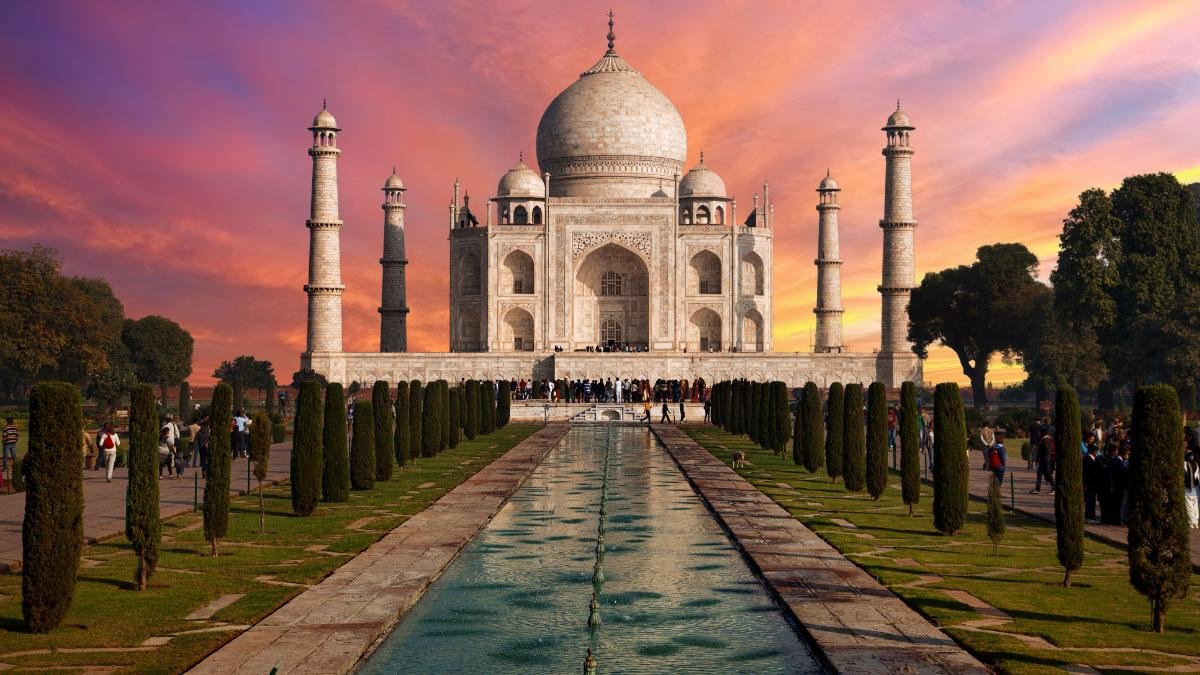
The Taj Mahal against a dramatic monsoon sky — deep grey and purple clouds rolling behind pure white marble — is one of the most striking and least-photographed views of this monument. Most tourists never see it. The photographers who have are often evangelical about it. The contrast between the monument’s luminous white and the dark, churning sky above is dramatic in a way that a clear blue sky simply cannot replicate.
Is it guaranteed? No. Some August mornings the sky is flat white overcast and the light is dull. Some mornings the rain comes in hard and stays. But some mornings — particularly in the first and last weeks of August when the monsoon is slightly less intense — you get the dramatic cloud and light combination that makes for genuinely extraordinary photographs.
Going in August means accepting variability. In return you get lower prices, far fewer crowds, and an experience of the Taj Mahal that most visitors to India never have.
Taj Mahal Weather in August 2026
| August | |
|---|---|
| Average high | 33°C (91°F) |
| Average low | 26°C (79°F) |
| Rainfall | ~200mm across the month |
| Humidity | High — 75–85% |
| Rain pattern | Intermittent showers, not continuous rain |
| Sunshine | Variable — mornings often clearer than afternoons |
The 2026 monsoon is forecast at 92% of the long-period average — slightly below normal. For August visitors this is good news: slightly less rainfall than a typical August, fewer completely overcast days, and more chance of the dramatic partial-cloud skies that make monsoon Taj Mahal photography so compelling.
The key thing to understand about Agra’s monsoon rain: it is usually intermittent, not constant. Mornings are often relatively dry. Heavy rain typically comes in afternoon and evening bursts that pass within an hour. Planning your Taj Mahal visit for the first hours of the morning — as you should in any month — makes the rain question almost irrelevant most days.
Crowds at the Taj Mahal in August
This is August’s single biggest advantage.
During peak season — October to March — the Taj Mahal receives 50,000 to 70,000 visitors daily. Weekends and public holidays push beyond that. The reflecting pool area becomes a jostle for photographs. The queue for the main mausoleum interior can be 30–45 minutes.
In August, daily visitor numbers drop to a fraction of that. You will share the complex with a few hundred domestic tourists and a handful of international visitors rather than tens of thousands. The reflecting pool is accessible without jostling. The interior of the mausoleum is calm. The garden pathways are quiet enough to hear the birdsong.
For anyone who has visited the Taj Mahal in December or February and felt overwhelmed by the crowds, the August experience is almost startlingly peaceful by comparison.
If you want the Taj Mahal nearly to yourself — August delivers that more reliably than any other time of year except the extreme heat of May and June.
Taj Mahal Entry Fees August 2026
Entry fees are the same year-round — no monsoon discount, no seasonal variation:
| Visitor Type | Garden + Complex | Mausoleum Interior (extra) |
|---|---|---|
| Foreign nationals | ₹1,300 | ₹200 |
| Indian nationals | ₹50 | ₹200 |
| Children under 15 | Free | Free |
Book online. Even in August when queues are shorter than peak season, online pre-booking means you use the dedicated pre-booked entry lane and skip the ticket counter entirely. Book through the Archaeological Survey of India (ASI) website at least 24–48 hours before your visit.
The Taj Mahal is closed every Friday — no exceptions. Check your calendar before finalising your August visit dates.
Best Time of Day to Visit the Taj Mahal in August
Sunrise — Best Option in Any Month
Gates open one hour before sunrise. In August this means approximately 5:30 AM. This is still the single best time to visit the Taj Mahal regardless of the month.
In August specifically, the early morning has two additional advantages over peak season:
First, the air after a night of monsoon rain is washed and clear — the marble gleams with a freshness that the dusty winter months cannot match. Second, the dramatic monsoon clouds that build through the day are often still forming in the early morning, creating the partial-cloud and dramatic-light conditions that make for the best August photographs.
Arrive at the gate 20 minutes before opening. In August you will not face the peak-season queue but arriving early still secures you the first light and the fewest fellow visitors.
Mid-Morning (8:00–11:00 AM)
Still good in August. Light is harsher than at sunrise but crowds remain thin. The risk of rain increases as the morning progresses but rarely becomes a problem before 11:00 AM.
Afternoon (12:00 PM onwards)
This is when August becomes genuinely challenging. Humidity peaks in the afternoon, temperature is at its highest, and afternoon monsoon showers are most likely. If your schedule forces an afternoon visit, the Taj is still worth seeing — just carry an umbrella, wear light breathable clothing, and be prepared for the marble to become slippery in rain. The rain itself can be dramatic and atmospheric, and the post-rain light — when the sun breaks through and the wet marble reflects it — is extraordinary.
Sunset
The Taj at sunset in August can be beautiful — if the clouds part enough to let the evening light through. The Mehtab Bagh garden directly across the Yamuna River gives the best sunset view and is the recommended option over the main complex for evening photography. Entry ₹300 for foreign nationals.
Photography at the Taj Mahal in August
August produces two completely different kinds of Taj Mahal photographs — and both are worth having.
The dramatic monsoon shot: Dark or partially clouded sky behind pure white marble, the gardens luminously green, the Yamuna running full and silver behind the monument. This is the shot most visitors never get because they come in winter. The key is timing — the partial cloud conditions that create this shot are most common in the first and last weeks of August and in the early morning.
The rain-washed shot: Immediately after a monsoon shower, the marble is wet and reflective, the gardens drip, the air is clear, and the light has a particular softness that dry-season sun cannot create. If you are caught in a brief shower, wait it out under the gateway arch and then walk out when it passes — the post-rain Taj is genuinely special.
Practical photography tips for August:
- Carry a waterproof bag or dry case for your camera
- A lens cloth is essential — rain drops on the lens are a constant issue
- Shoot in the first hour after opening for best light and fewest people in frame
- The reflecting pool in August is fuller than in winter, making the classic symmetrical reflection shot even more effective
- Avoid shooting at midday when the flat white overcast sky makes the marble look grey rather than white
What to Wear for the Taj Mahal in August
Clothing: Light, breathable fabrics — linen or moisture-wicking synthetic rather than cotton, which absorbs sweat and monsoon rain and becomes heavy and uncomfortable. Light colours reflect heat. Modest dress is appropriate — covered shoulders and legs.
Footwear: This is critical in August. The Taj Mahal’s marble surfaces become genuinely slippery in rain. Wear shoes or sandals with proper grip — not leather-soled shoes, not flip-flops, not smooth-soled trainers. Closed shoes with rubber grip soles are ideal. You will be asked to remove your shoes or cover them with provided booties before entering the main mausoleum — factor this into your footwear choice.
Rain gear: A compact umbrella rather than a poncho — the Taj Mahal’s forecourt is open and umbrellas are practical here. Ponchos are more useful on the walk from the gate to the complex.
Essentials to carry: Water (large bottle — stay hydrated in the humidity), mosquito repellent (the gardens in August are mosquito territory, particularly near sunset), and a dry bag for electronics.
Agra in August: Beyond the Taj Mahal
If you are spending a day or more in Agra around your Taj Mahal visit, here is what to expect at the other monuments:
Agra Fort — Open year-round, same monsoon conditions as the Taj. In August the red sandstone walls of the fort contrast dramatically with the green landscape below. Far less crowded than peak season. The Musamman Burj tower view of the Taj Mahal from across the river is particularly atmospheric on a partially cloudy day. Entry ₹650 for foreign nationals.
Fatehpur Sikri — 37 km from Agra on the road to Jaipur. August is actually a particularly good month for Fatehpur Sikri — the monsoon brings a coolness to the stone complex that is welcome relief from summer heat, and the surrounding landscape is green. The main risk is road conditions — confirm your driver is comfortable with the route after heavy rain. Entry ₹610 for foreign nationals.
Mehtab Bagh — The rear garden across the Yamuna is at its most lush in August, and the Yamuna River running full and wide adds to the drama of the Taj view. Best at sunset if the sky clears. Entry ₹300 for foreign nationals.
Itmad-ud-Daulah (Baby Taj) — Small, quiet, and exquisite in any month. In August the crowds are minimal and the surrounding gardens are vivid green. Entry ₹310 for foreign nationals.
Hotels in Agra in August: What to Expect
August is Agra’s lowest hotel pricing period. This is a significant benefit for budget-conscious visitors:
| Hotel Tier | Peak Season (Dec–Feb) | August Price |
|---|---|---|
| Budget guesthouse | ₹2,000–₹4,000/night | ₹1,000–₹2,500/night |
| Mid-range 3–4 star | ₹7,000–₹12,000/night | ₹3,500–₹7,000/night |
| Luxury (Taj view) | ₹45,000–₹90,000/night | ₹20,000–₹45,000/night |
The Oberoi Amarvilas — Agra’s most famous luxury hotel with direct Taj Mahal views from every room — drops to approximately half its peak season rate in August. If staying at the Amarvilas is on your wishlist but the December price is prohibitive, August is the most practical window.
Getting to Agra in August: Train vs Car
By private car from Delhi: The Yamuna Expressway is a smooth, well-maintained toll road that handles monsoon rain well. Journey time is 2.5–3.5 hours from central Delhi. The expressway itself rarely floods. Your driver will know conditions — confirm departure time the evening before if heavy rain is forecast.
By Gatimaan Express from Delhi: Departs Hazrat Nizamuddin at 8:10 AM, arrives Agra Cantt at 9:50 AM. The train is air-conditioned, reliable, and unaffected by rain. Fares ₹860–₹1,695 per person return. Does not run on Fridays.
For a sunrise visit by private car: Depart Delhi at 5:00–5:30 AM, arrive Agra at 7:30–8:00 AM — in time for the best morning light even accounting for the later August sunrise opening time.
For the complete guide to getting from Delhi to Agra, visit our one day Agra tour from Delhi guide.
Is the Taj Mahal Worth Visiting in August? Honest Verdict
Yes — if you go in with the right expectations.
August is not the month for guaranteed clear-sky sunrise photographs and comfortable all-day outdoor sightseeing. It is the month for a quieter, cheaper, and genuinely different Taj Mahal experience — fewer people, lower prices, lush green gardens, and the dramatic monsoon sky that most Taj Mahal visitors never see.
The visitors who are disappointed by the Taj Mahal in August are those who expected the December experience and got something different. The visitors who love it are those who came prepared for variability, went early in the morning, and allowed the monsoon atmosphere to be part of the experience rather than an obstacle to it.
If August is your only available window — go. Plan the morning visit, carry an umbrella, wear grippy shoes, and book a hotel with a Taj view so that even if it rains during your complex visit you can watch the monument from your window through the monsoon.
If you have flexibility to choose your month, October and November offer the best combination of clear skies, comfortable temperatures, and lower crowds than December to February. Read our complete Best Time to Visit Agra and the Taj Mahal guide for the full month-by-month comparison.
Frequently Asked Questions: Taj Mahal in August
Q: Is it safe to visit the Taj Mahal in August during monsoon?
A: Yes. The complex remains open and safe throughout the monsoon. The main practical consideration is slippery marble in rain — wear shoes with good grip and take care on wet surfaces. The Taj Mahal complex is large and open so there is no flooding risk to visitors.
Q: What is the weather like at the Taj Mahal in August?
A: Warm and humid with intermittent rain showers. Average temperature 26–33°C (79–91°F). Rain typically comes in bursts rather than all-day downpours. Mornings are generally drier than afternoons. The 2026 monsoon is forecast slightly below normal intensity, which means slightly more predictable conditions than a heavy monsoon year.
Q: How crowded is the Taj Mahal in August?
A: August is one of the least crowded months of the year at the Taj Mahal. Daily visitor numbers are a fraction of the 50,000–70,000 seen in peak winter months. Arriving at opening you will find the complex remarkably quiet by Taj Mahal standards.
Q: What time does the Taj Mahal open in August?
A: Gates open one hour before sunrise — approximately 5:30 AM in August. The complex closes 30 minutes before sunset. Closed every Friday.
Q: Can I get good photographs of the Taj Mahal in August?
A: Yes — different from winter photographs but often more dramatic. The monsoon sky behind the white marble creates a contrast that peak-season clear skies cannot match. Shoot in the first hour after opening for best light. Carry a waterproof bag for your camera and a lens cloth for rain drops.
Q: How much does it cost to visit the Taj Mahal in August 2026?
A: Entry fee is ₹1,300 for foreign nationals plus ₹200 for mausoleum interior — same year-round. Hotels and tour packages in August are 40–60% cheaper than peak season. A complete one day Agra tour from Delhi including private car, licensed guide, and monument entries typically costs ₹9,000–₹12,000 per person in August.
Q: Should I visit the Taj Mahal in August or wait for October?
A: If you have flexibility, October is better — cooler temperatures, clearer skies, and the post-monsoon greenery is still visible. But August is not a bad choice. It is cheaper, quieter, and offers a genuinely different aesthetic that many photographers and repeat visitors actively prefer. Do not skip the Taj Mahal if August is your only window.
Q: Is the Taj Mahal closed on any day in August?
A: The Taj Mahal is closed every Friday throughout the year including August. All other days it is open from one hour before sunrise to 30 minutes before sunset.
Book Your August Taj Mahal Tour with Squid Travel India
We run Taj Mahal tours every month of the year — including August. We know exactly which mornings are most likely to deliver the dramatic monsoon sky, which entry gate is fastest, and how to structure your August day in Agra so you get the most out of every hour regardless of what the weather does.
Every tour includes a private air-conditioned car from Delhi, a licensed expert guide, pre-booked monument tickets, and all transfers handled door to door.
The Taj Mahal in August is not the postcard version. It is something more rare, more personal, and in its own way more memorable.
Contact Squid Travel India today to book your August Taj Mahal tour.

Comments (2)