

By Squid Travel India | Updated: July 2026 | 15 min read
Written by the travel experts at Squid Travel India — a New Delhi-based tour operator with years of first-hand experience taking international visitors across India in every season, including the monsoon. TripAdvisor Travellers’ Choice Award, 2024–2025.
Most travel guides tell you to avoid India in July, August, and September.
They are wrong — or at least, they are telling you only half the story.
India during the monsoon is a completely different country to the one most international visitors see. The tea gardens of Munnar turn an almost electric green. Waterfalls that don’t exist in winter roar back to life across the Western Ghats. The lakes of Udaipur fill up and the city earns a romantic quality that no other season can replicate. Ladakh — paradoxically — sits in a high-altitude rain shadow and basks in clear blue skies while the rest of India is drenched.
Domestic flight fares drop 30–50% compared to peak winter pricing. Hotel rates across India dip significantly from July through early September. The monuments of the Golden Triangle — Taj Mahal, Agra Fort, Amber Fort — are visited by a fraction of the December crowds.
The monsoon is not a reason to avoid India. It is a reason to visit differently.
This is your complete India monsoon travel guide for July, August, and September 2026 — the best destinations by region, honest notes on what to expect, the rain-free escape options, costs, and every practical tip you need to make a monsoon India trip one of the most memorable journeys of your life.
Understanding India’s Monsoon: The Basics
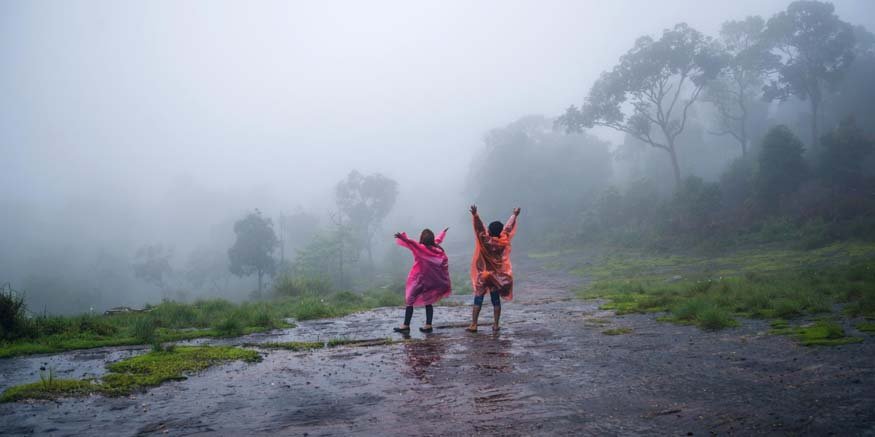
India’s southwest monsoon enters the country through two arms — one sweeping up from the Arabian Sea into Kerala in early June, and one arriving over the Bay of Bengal into the northeast simultaneously. By July the monsoon covers most of the country, delivering approximately 75% of India’s annual rainfall between June and September.
The India Meteorological Department (IMD) has forecast 2026 monsoon rainfall at approximately 92% of the long-period average — a slightly below-normal season, which for travellers means fewer landslide closures in the Western Ghats, drier mornings at hill stations, and more predictable road conditions than a heavy monsoon year.
But here is the key thing to understand: India is an enormous and geographically diverse country. Not everywhere receives the same monsoon. The Himalayan cold deserts of Ladakh and Spiti receive under 200mm of rain annually — less than London gets in two months — because the high mountain ranges block the monsoon clouds before they can cross. The Thar Desert of Rajasthan receives limited rainfall. Tamil Nadu on India’s east coast gets most of its rain in October–December from the northeast monsoon, not the southwest monsoon at all.
Knowing which regions get rain, which don’t, and which are actually best in the rain is the foundation of planning a great monsoon India trip.
Two Types of Monsoon Travel: Rain-Loving vs Rain-Free
Before diving into destinations, decide which kind of monsoon traveller you are:
Rain-loving: You want lush green landscapes, full waterfalls, empty trails, dramatic skies, and the atmosphere of India at its most primal and alive. You don’t mind getting wet and you are comfortable with flexible schedules. Kerala, the Western Ghats, Meghalaya, Rajasthan’s lake cities, and Uttarakhand’s Valley of Flowers are for you.
Rain-free: You want to travel during the monsoon months but prefer dry weather. Ladakh, Spiti Valley, Jaisalmer, and parts of Tamil Nadu sit in rain-shadow zones and offer clear skies throughout July–September.
Both are valid choices. Both offer extraordinary experiences. This guide covers both.
PART 1: BEST RAIN-LOVING MONSOON DESTINATIONS IN INDIA
1. Kerala — India’s Original Monsoon Destination
Best months: June–September
Rain intensity: Heavy, especially June–August
Kerala is where monsoon tourism in India was invented. The state’s official monsoon tourism campaign promotes June through August as the best season for Ayurvedic treatments, when the humid climate makes the body more receptive to traditional therapies like Panchakarma. The combination of warm rain, high humidity, and the healing herbs of the Western Ghats creates conditions that Ayurvedic practitioners consider uniquely ideal for deep-cleansing treatments.
But Kerala in monsoon is far more than wellness retreats.
Munnar — the hill station at 1,600 metres above sea level in Kerala’s Idukki district — transforms in the rains. The tea plantations turn an almost electric neon green. The valleys fill with clouds that drift between the tea bushes at eye level. Waterfalls that are dry gullies in March become thundering curtains of white water. The Attukal and Lakkam waterfalls near Munnar are at their most spectacular from July to September. Hotels drop 40–50% from their peak December rates.
Alleppey (Alappuzha) and the Kerala Backwaters — the famous houseboat experience on Kerala’s network of inland waterways takes on a completely different character in monsoon. Rain falling on the backwater, the smell of water hyacinth and coconut groves in the wet, and the quiet of the backwaters with fewer tourist houseboats operating — it is atmospheric and beautiful in a way that the crowded December houseboat season rarely is.
Wayanad — Kerala’s most lush and forested district, bordering Karnataka and Tamil Nadu. Wayanad in monsoon is a world of mist, waterfalls, coffee and spice plantations, and quiet forest paths. Soochipara Falls and Meenmutty Falls — two of Kerala’s finest — are at maximum flow between July and September.
Practical notes: Pack waterproof footwear, a sturdy poncho, and a dry bag for electronics. Mosquito repellent is essential in Kerala year-round, doubly so in monsoon. Some beach areas and houseboat routes have restrictions during rough weather — confirm before booking.
2. Munnar, Coorg and the Western Ghats — Green Hills and Full Waterfalls
Best months: July–September
Rain intensity: Heavy July–August, easing in September
The Western Ghats — the mountain range running parallel to India’s west coast through Kerala, Karnataka, Tamil Nadu, Goa, and Maharashtra — are at their most spectacular during the monsoon. The Arabian Sea deposits most of its moisture on the western face of these hills, creating conditions of extraordinary lushness.
Coorg (Kodagu), Karnataka — India’s coffee capital and one of its most visited hill destinations sits in the Western Ghats at 900–1,750 metres. In monsoon the coffee estates turn rich green, the Kaveri River runs full and fast, Abbey Falls roars at its most powerful, and the mist that rolls through the cardamom and pepper plantations creates an atmosphere that no photograph fully captures. Coorg in July and August has a raw, quiet beauty that the October–March tourist season crowds cannot offer.
Chikmagalur, Karnataka — Coorg’s less-visited neighbour and the region where India’s first coffee bean was planted in the 17th century. The estates climbing the Baba Budangiri range turn especially vivid during monsoon. Significantly less crowded than Coorg and a growing favourite with experienced India travellers.
Mahabaleshwar and Panchgani, Maharashtra — the most accessible hill station from Mumbai and Pune, both sit on Maharashtra’s Sahyadri plateau and are among India’s most popular monsoon destinations for domestic travellers. Wilson Point and Arthur’s Seat in Mahabaleshwar are particularly spectacular in the rains — the plateau edge looks out over the Sahyadri valleys as clouds roll in below you. Weekdays are significantly less crowded than weekends.
Lonavala, Maharashtra — 2 hours from Mumbai and Pune, Lonavala is the closest and most popular monsoon escape for Maharashtra’s urban population. In monsoon the entire landscape transforms — the Bhushi Dam overflows and becomes a waterfall in its own right, the Rajmachi fort rises above the clouds, and the seasonal waterfalls at Kune and Bhivpuri are stunning. Best for short 2–3 day escapes rather than a primary India travel destination.
3. Meghalaya — The Wettest Place on Earth (and Why That’s the Point)
Best months: July–September
Rain intensity: Extreme — Cherrapunji is officially the wettest place on earth
Meghalaya — meaning “abode of clouds” — is the most extraordinary monsoon destination in India and one of the most unusual in the world. The state sits at the edge of the Shillong Plateau in Northeast India, directly in the path of the Bay of Bengal monsoon arm. Cherrapunji (Sohra) holds multiple records for the highest rainfall ever recorded on earth. In July and August the rain is constant, dramatic, and immense.
And that is exactly why you should go.
Nohkalikai Falls — at 340 metres, the tallest plunge waterfall in India and one of the highest in the world — is only at its full and thundering volume during the monsoon. The view from the observation point above, looking down at the curtain of water falling into the green pool below while monsoon clouds swirl around you, is among the most dramatic natural sights in India.
The living root bridges of Nongriat — ancient bridges made from the aerial roots of rubber fig trees, trained over generations by the Khasi people into functional pedestrian crossings — sit deep in the Meghalaya forest and require a descent of approximately 3,000 steps to reach. The forest around them is at its most vivid and alive during monsoon. The trail gets slippery — waterproof shoes with grip are essential. Your effort is rewarded with a sight that exists nowhere else on earth.
Shillong — Meghalaya’s capital and base for day trips to Cherrapunji and Mawlynnong — is a pleasantly cool city with a strong local music culture, excellent Khasi food, and a relaxed atmosphere. Use it as your base for 2–3 days.
Mawlynnong — 90 km from Shillong and officially recognised as the cleanest village in Asia. Immaculate paths, bamboo dustbins at every corner, traditional Khasi houses, and a sky view point. In monsoon the surrounding forests are brilliant green and frequently mist-covered.
Practical notes: Cherrapunji can see rain every day for weeks in July and August. This is part of the experience, not a problem. Pack serious rain gear, waterproof everything, wear shoes with real grip. Road conditions in Meghalaya during heavy rain require flexible schedules — build buffer days into your itinerary.
4. Rajasthan in Monsoon — The Unexpected Choice
Best months: July–September
Rain intensity: Light to moderate (much less than western India)
Rajasthan is not the first state you associate with monsoon travel. But it should be on every serious India traveller’s radar for the July–September window.
Udaipur transforms between July and September. Lake Pichola and Fateh Sagar Lake — which can look alarmingly empty after a dry winter — fill up with the rains and regain the dramatic, movie-set quality that makes Udaipur arguably India’s most romantic city. The Sajjangarh Monsoon Palace on the hill above the city was specifically built by the Maharana of Udaipur for the purpose of watching the monsoon clouds roll in from the Aravalli Hills. It earns its name. Hotel rates in Udaipur drop to a fraction of their winter prices and the city is far less crowded. Direct flights from Delhi to Udaipur can drop as low as ₹1,500 one-way during monsoon months.
Jaisalmer — in the heart of the Thar Desert — receives minimal monsoon rainfall even during peak season. The golden sandstone city, the Jaisalmer Fort (the only living fort in India), and the Sam Sand Dunes are fully accessible in July–September with lower prices and dramatically fewer tourists than the October–February peak.
Mount Abu — Rajasthan’s only hill station, at 1,220 metres in the southern Aravalli Hills — receives moderate monsoon rain and is transformed into a green and misty retreat quite unlike its arid surroundings. Nakki Lake fills up. The Dilwara Jain Temples — among the finest marble temples in India, rivalling the Taj Mahal in craftsmanship — are cool and quiet. An excellent Rajasthan monsoon base.
What about the Golden Triangle in monsoon? Delhi, Agra, and Jaipur all receive moderate monsoon rainfall — not the heavy downpours of the Western Ghats, but regular showers and overcast days. The Taj Mahal against monsoon clouds is a genuinely beautiful and unusual sight, and the October–March crowds are dramatically reduced. If you are considering the Golden Triangle Tour and monsoon is your only available window, read our Best Time to Visit Agra and the Taj Mahal guide for an honest month-by-month breakdown.
5. Valley of Flowers — Open Only in Monsoon
Best months: Mid-July to mid-August (peak bloom)
Rain intensity: Moderate — the valley itself is partly protected
The Valley of Flowers National Park in Uttarakhand is one of India’s most extraordinary natural spectacles — and uniquely, it only opens during the monsoon. The national park opens June 1 and closes October 10, with the peak alpine bloom running from mid-July to mid-August when over 500 species of wildflowers carpet the Himalayan meadow in waves of colour.
The rare Brahma Kamal — Uttarakhand’s state flower, a lotus-like bloom considered sacred in Hindu and Buddhist traditions — flowers only in August at high altitude. The Valley of Flowers in August is the only place in India where you can reliably see it.
The trek starts from Govindghat, approximately 10 hours from Rishikesh. The base at Ghangaria is a 13 km walk from Govindghat (or a helicopter option for those who prefer). The valley itself is a further 3–4 km from Ghangaria. Plan for a minimum of 4–5 days for the full experience.
Entry fee: ₹150 for Indian nationals, ₹650 for foreign nationals (3-day pass). The park gate is open 7 AM to 2 PM — last entry strictly at 2 PM.
Practical notes: Leeches are active in the valley during monsoon — wear closed shoes, tuck trousers into socks, carry salt. The trail is slippery — trekking poles recommended. Go with a guide if this is your first time at Himalayan altitude.
6. Darjeeling and the Himalayan Foothills
Best months: July–September
Rain intensity: Heavy, but interspersed with clear periods
Darjeeling — the queen of India’s hill stations at 2,100 metres in West Bengal — is at its most lush and atmospheric during the monsoon. The tea gardens that produce the world’s most sought-after tea flush (the second flush, harvested June–July, produces the famous muscatel Darjeeling) are a vivid, misty green. The Himalayan peaks are cloud-covered for most of the monsoon but emerge spectacularly on clear mornings — especially in September when the monsoon begins to retreat and visibility dramatically improves.
The Darjeeling Himalayan Railway — the famous toy train, a UNESCO World Heritage Site — runs through the monsoon, winding through tea estates and small hill towns on its narrow-gauge track. September is particularly good: post-monsoon clarity returning, the estates still green, and significantly fewer crowds than October–November.
PART 2: RAIN-FREE MONSOON DESTINATIONS (Dry Weather July–September)
7. Ladakh — India’s Monsoon Escape
Best months: July–September
Rain intensity: Minimal — under 15mm per month
Ladakh is the single best answer to “where can I go in India in July and August without rain?” Located in the high-altitude Himalayan cold desert at elevations between 2,600 and 5,600 metres, Ladakh sits in a geographic rain shadow where monsoon clouds cannot reach. While the rest of India is drenched, Ladakh basks in clear blue skies, warm daytime temperatures of 20–28°C, and dramatic high-altitude landscapes.
July and August are actually peak season in Ladakh — the mountain passes are open, the roads are accessible, and the high-altitude lakes (Pangong Tso, Moriri) are at their most beautiful under summer skies.
Key attractions:
- Pangong Tso — the 134-km long high-altitude lake at 4,350 metres, famous for its shifting colours from turquoise to blue to green across the day
- Nubra Valley — accessed via the Khardung La pass (one of the world’s highest motorable roads at 5,359 metres), with sand dunes, Bactrian camels, and the ancient Diskit Monastery
- Leh Palace and Shanti Stupa — the old Ladakhi royal palace and a Buddhist stupa with panoramic views over the Indus Valley
- Key Monastery (Thiksey), Hemis Monastery, Alchi — Ladakh’s extraordinary network of ancient Buddhist monasteries
Permits: Foreign nationals require a Protected Area Permit for certain restricted areas, arranged through a registered Leh travel agent. Indian nationals pay a one-time Ladakh Environment and Health Fee of approximately ₹400 plus ₹20 per day, applied online.
Practical notes: Altitude sickness is a real risk in Ladakh. Spend your first 2 days in Leh (3,500 metres) acclimatising before any high-pass excursions. Carry altitude medication and stay hydrated. Book accommodation and flights to Leh well in advance — peak season July–August is Ladakh’s busiest period and flights fill up.
8. Spiti Valley, Himachal Pradesh — The High Altitude Desert
Best months: July–September (via Shimla–Kinnaur route)
Rain intensity: Minimal — under 200mm annual rainfall
Spiti Valley — often called “Little Tibet” — is a remote, high-altitude cold desert in Himachal Pradesh at elevations between 3,600 and 4,500 metres. Like Ladakh, it sits in a Himalayan rain shadow and remains almost completely dry throughout the monsoon months. Daytime temperatures are a pleasant 15–20°C with clear high-altitude skies.
Spiti is for the more adventurous traveller — roads are rough, infrastructure is basic, and the journey takes time. But the reward is a landscape of extraordinary raw beauty: ancient Buddhist monasteries perched on cliff faces, villages at the edge of the inhabitable world, and a silence and scale that is completely unlike anywhere else in India.
Key attractions:
- Key Monastery — a 1,000-year-old Tibetan Buddhist monastery perched dramatically above the Spiti River
- Chandratal Lake — a crescent-shaped high-altitude lake at 4,300 metres, reached by a 5 km trek from the road
- Komic — one of the highest motorable villages in the world at 4,513 metres
- Pin Valley National Park — home to the snow leopard (rarely seen, but the habitat alone is extraordinary)
Important: The approach road from Manali via Rohtang Pass sees heavy rain and occasional landslides during monsoon. Take the Shimla–Kinnaur route instead — longer but significantly more reliable. Build in 2–3 buffer days for potential road closures.
Budget accommodation in Kaza (Spiti’s main town) starts from ₹1,200–₹2,500 per night. Basic but clean.
9. Jaisalmer, Rajasthan — Desert City in Dry Season
Best months: July–September
Rain intensity: Very low — Thar Desert receives minimal monsoon rain
Jaisalmer is the most accessible rain-free destination in India for international visitors during the July–September window. The golden sandstone city in the heart of the Thar Desert receives minimal monsoon rainfall — what does fall evaporates quickly on the hot sand. The city is as photogenic in July as in December, with the added advantages of significantly lower prices and far fewer tourists.
The Jaisalmer Fort — the only living fort in India, with shops, hotels, and houses within its medieval walls — the Patwon Ki Haveli, the Salim Singh Ki Haveli, and the Sam Sand Dunes are all fully accessible. Camel safaris at the Sam Dunes run year-round. The desert at sunset is as golden and dramatic in August as in January.
Hotel rates in Jaisalmer during monsoon can be 40–60% lower than peak season. A luxury heritage haveli property that costs ₹15,000 per night in December can be booked for ₹6,000–₹8,000 in August.
PART 3: GOLDEN TRIANGLE TOUR IN MONSOON — IS IT WORTH IT?
If the monsoon months are your only available travel window and you are considering the Golden Triangle Tour — Delhi, Agra, Jaipur — here is an honest assessment:
The case for going: Crowds at the Taj Mahal, Agra Fort, and Amber Fort are dramatically lower in July–September than in December–February. Hotel prices across all three cities drop 30–50%. The monuments themselves look different — the Taj against a dramatic monsoon sky, Amber Fort rising above green Aravalli Hills — and some visitors find this more beautiful than the clear-sky winter version.
The honest tradeoffs: Agra and Jaipur receive moderate monsoon rainfall — not extreme, but regular afternoon showers and overcast days are normal from July through September. Outdoor sightseeing is comfortable in the morning but afternoon rain can affect plans. The Taj Mahal’s white marble looks most luminous against a clear blue sky — overcast days reduce this effect.
Our recommendation: October and March are the best months for the Golden Triangle Tour. If monsoon is your only window, September is the best of the three months — the heaviest rains have typically passed, greenery is at its peak from the season’s rain, hotel prices are still low, and conditions are improving daily toward peak season.
For a complete breakdown of the Golden Triangle Tour by season and budget, read our Golden Triangle Tour Cost 2026 guide and Best Time to Visit Agra and the Taj Mahal guide.
Monsoon Travel Tips: What to Know Before You Go
Flights: Domestic flight fares drop 30–50% compared to peak winter pricing on popular routes during July–September. Book midweek departures — Tuesday and Wednesday — for savings of 20–25% compared to Friday flights. Weather-related delays are common at Mumbai, Goa, and Kochi airports during heavy rain. Build buffer time into airport connections.
Trains: Indian Railways runs on schedule through most monsoon conditions and is a reliable alternative to flying for routes like Mumbai–Goa and Delhi–Dehradun. For Himalayan destinations, keep 1–2 buffer days for road closures due to landslides.
Roads: Himalayan roads are the main concern. The Manali–Leh Highway and Manali–Spiti route via Rohtang Pass are subject to landslides in July–August. Always check current road conditions through the Border Roads Organisation (BRO) before departing. The Shimla–Kinnaur route to Spiti is more reliable.
What to pack:
- Compact umbrella and a sturdy poncho — carry both, not just one
- Waterproof shoes or sandals with grip — marble and wet stone are extremely slippery
- Dry bag for camera, phone, and passport
- Quick-dry clothing — not cotton, which stays wet and heavy
- Mosquito repellent — essential everywhere during monsoon
- Salt or anti-leech protection for forest treks
- Power bank — monsoon power cuts are common in smaller towns
Health: Drink only bottled or filtered water throughout India in any season — doubly important during monsoon when water-borne illness risk increases. Carry basic medicines including oral rehydration salts, anti-diarrhoeal medication, and antihistamines.
Budget: Monsoon is India’s best-value travel season. Accommodation 30–50% cheaper, flights 30–50% cheaper, monuments less crowded, restaurants less busy. If budget is a consideration, July–September offers the best value of any travel window.
Month-by-Month: What to Expect
| Month | Best Destinations | Avoid | Weather |
|---|---|---|---|
| July | Ladakh, Spiti, Valley of Flowers, Meghalaya, Kerala | Manali road to Leh, Goa beaches | Peak monsoon everywhere except Ladakh/Spiti/Jaisalmer |
| August | Ladakh, Valley of Flowers (peak bloom), Udaipur, Munnar | Same as July | Monsoon at maximum intensity in western and central India |
| September | Best all-rounder month — most destinations open, rain easing | N/A | Monsoon retreating, greenery at peak, prices still low |
September offers the best balance of all monsoon months — the heaviest rains have passed, greenery is at its absolute peak from the season’s rainfall, hotel prices are still low, and most destinations are fully accessible with improving conditions.
Frequently Asked Questions: India Monsoon Travel
Q: Is it safe to travel to India during the monsoon?
A: Yes, with sensible precautions. Avoid areas known for flooding and landslides (particularly mountain roads during heavy rainfall), check weather forecasts before travel to hill destinations, and keep your itinerary flexible. India’s major cities and most tourist destinations are perfectly safe and accessible during the monsoon.
Q: Which is the best month to visit India during monsoon?
A: September is the best all-round month. The heaviest rains have passed by mid-September in most regions, greenery is at its peak from the season’s rainfall, monuments are far less crowded than peak season, and prices remain at monsoon levels — 30–50% below December rates.
Q: Can I visit the Taj Mahal in monsoon?
A: Yes. The Taj Mahal is open year-round (closed Fridays). Monsoon visit means lower crowds, lower hotel prices in Agra, and the unusual experience of the white marble against dramatic monsoon clouds. For the full breakdown by month, read our Best Time to Visit Agra and the Taj Mahal guide.
Q: Where in India has no rain during July and August?
A: Ladakh and Spiti Valley are the two driest destinations in India during the monsoon — both sit in Himalayan rain shadow zones and receive minimal rainfall. Jaisalmer in the Thar Desert also receives very little monsoon rain.
Q: Is Kerala good to visit during monsoon?
A: Kerala is excellent during the monsoon for specific experiences — Ayurvedic treatments (the humid climate is considered ideal), backwater houseboat stays, Munnar’s green tea estates, and waterfall visits. It is not ideal for beach holidays (rough seas, closed beach shacks) or outdoor sightseeing in heavy rain. The monsoon typically runs strongly in Kerala from June through mid-August, easing from late August onward.
Q: What is the Valley of Flowers and when should I visit?
A: The Valley of Flowers National Park in Uttarakhand is a UNESCO World Heritage Site — a high-altitude alpine meadow that erupts in over 500 species of wildflowers during the monsoon season. It only opens June 1 and closes October 10. Peak bloom is mid-July to mid-August. It is one of India’s most extraordinary natural experiences and can only be seen during the monsoon months.
Q: Is the Golden Triangle Tour worth doing in monsoon?
A: Yes, with the right expectations. Crowds are dramatically lower, prices 30–40% cheaper, and the monuments have a different but genuine beauty in the rain. September is the best monsoon month for the Golden Triangle. Read our Golden Triangle Tour from Delhi guide for full planning details.
Q: How much cheaper is India to travel in monsoon?
A: Significantly. Domestic flights typically drop 30–50%, hotel rates across most destinations fall 30–60% from peak winter pricing, and popular monuments are a fraction of their December crowds. Monsoon is India’s best-value travel season by a meaningful margin.
Plan Your Monsoon India Trip with Squid Travel India
Monsoon India is a different country — greener, quieter, cheaper, and in many ways more authentic than the December-to-February peak season version that most international visitors experience.
At Squid Travel India, we plan and run tours throughout the monsoon season across North India, Rajasthan, and beyond. Every monsoon itinerary is built around the realities of the season — which sights are best in the rain, which days to schedule morning-only outdoor visits, when to be flexible and when to commit.
Whether you are considering a Golden Triangle Tour in September, a Rajasthan heritage trip in August, or a broader India itinerary that makes the most of monsoon’s lower prices and quieter monuments — we build every tour with care and transparency.
Contact Squid Travel India today to plan your monsoon India trip.
Comment (0)