

The Taj Mahal is one of those rare monuments that genuinely surpasses every photograph you have ever seen of it. When the marble catches the morning light and the reflection shimmers in the long pool stretching toward you, it is impossible not to feel something. But the experience you have depends enormously on how well you plan your visit. This complete guide covers everything a foreign visitor needs to know — from the best time to arrive to the rules that catch most tourists off guard.
Why the Taj Mahal Still Leaves People Speechless
Built between 1632 and 1653 by Mughal Emperor Shah Jahan as a mausoleum for his beloved wife Mumtaz Mahal, the Taj Mahal is not simply a tourist attraction. It is a monument to grief and devotion on a scale that is almost impossible to comprehend. Over twenty thousand craftsmen worked for more than two decades to complete it. The white Makrana marble was brought from Rajasthan, while semi-precious stones — lapis lazuli, jade, turquoise, carnelian, coral — were inlaid into the marble in a technique called pietra dura that remains unmatched anywhere in the world.
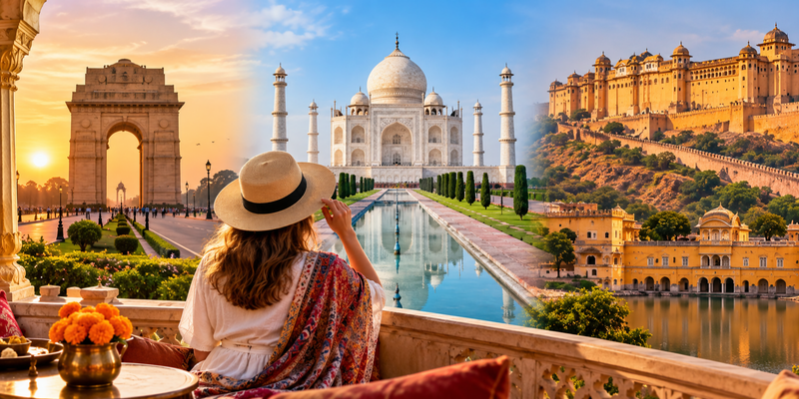
UNESCO declared it a World Heritage Site in 1983. In 2007, it was named one of the New Seven Wonders of the World. None of these designations quite prepare you for standing in front of it.
The Most Important Rule: The Taj Mahal Is Closed Every Friday
This is the single most important thing to know before you visit. The Taj Mahal closes every Friday, without exception. The closure is to allow Friday prayers at the Taj Mahal mosque, which is an active place of worship. It does not matter that it is the most visited monument in India — on Fridays, the gates are shut to tourists entirely.
Every year, thousands of foreign visitors arrive in Agra on a Friday to find the Taj closed. Some have flown across the world. Do not let this happen to you. Before you book a train, a car, or a hotel in Agra, check which day of the week you are travelling. Plan your Taj visit on any day except Friday.
It is also worth noting that the Taj Mahal closes on certain national holidays for security or religious reasons, though these closures are less predictable. As a general rule, arriving at any other time of the week gives you full access.
Entry Fees for Foreign Visitors
The entry fee for foreign nationals is significantly higher than the domestic rate, which is standard practice at major monuments in India. For international visitors in 2026, the combined entry fee including the main mausoleum entry is approximately INR 1,100 (around £10 to £11, or US$13 to US$14). This covers entry to the outer gardens and the raised marble plinth where the main monument stands.
You will also pay a small mandatory fee for shoe covers, which you must wear on the marble plinth to protect the surface. The fee is nominal — usually INR 50 or less — and covers a disposable pair. Many visitors prefer to carry their own reusable shoe covers.
Photography of the exterior and gardens is included in the ticket price. There is no additional photography fee for personal cameras. Professional photography and videography with equipment requires a separate permit.
Tickets can be purchased at the gate or online through the Archaeological Survey of India (ASI) website. During peak season — October through March — buying online in advance is strongly recommended, particularly for sunrise entry slots, which sell out quickly.
The Best Time to Visit: Why Sunrise Is Worth the Early Wake-Up
The Taj Mahal opens at sunrise, and arriving at opening time is one of the best decisions you can make as a visitor. The light in the first hour after sunrise is extraordinary — the marble takes on a soft golden or pinkish hue depending on the season, and the crowds that build through the morning have not yet arrived. You will have wide open space in front of the monument, clean sightlines for photographs, and an atmosphere that is genuinely peaceful.
By nine or ten in the morning, the Taj becomes extremely busy. Tour groups arrive in large numbers, the light becomes harsher, and the queues for the main mausoleum interior stretch significantly. Visiting at mid-morning or early afternoon is still worthwhile, but the experience is noisier and more crowded.
Sunset is another magical time to visit, though the timing is trickier. The Taj closes at sunset, and entry stops roughly half an hour before closing time. If you want to catch the late afternoon golden light, arrive no later than two hours before sunset to give yourself time to settle in and reach the best vantage points.
Best Time of Year for Foreign Visitors
The months from October through March are by far the best time for foreign visitors to see the Taj Mahal. Temperatures are comfortable — daytime highs in October and November sit around 28 to 32 degrees Celsius, dropping pleasantly in December and January when mornings can be genuinely cool. The air is clearer than during the monsoon or summer months, which affects visibility and the luminosity of the marble.
November is a particularly pleasant month. The heat of the post-monsoon season has passed, Diwali celebrations add a festive energy to the region, and the light in Agra in November has a quality that photographers return for year after year.
December and January are peak season. The days are mild and the skies are often a deep blue that contrasts beautifully against the white marble. However, early January mornings can bring fog to the Yamuna River plain, and on heavily foggy mornings the monument may not be fully visible from the main entrance. Locals and experienced guides will tell you that fog at the Taj creates its own ethereal beauty, but if a clear view is important to you, check weather forecasts before you go.
April through June is extremely hot in Agra, with temperatures regularly exceeding 40 degrees Celsius. July through September brings the monsoon, with high humidity and occasional rain. Visiting is possible in these months, and crowds are thinner, but the experience is less comfortable for most international visitors.
How to Get to Agra from Delhi
Most foreign visitors to the Taj Mahal come from Delhi, and the journey is straightforward by any of three main methods.
The fastest and most comfortable option is the Gatimaan Express train, which runs from Hazrat Nizamuddin station in Delhi to Agra Cantonment station in approximately one hour and forty minutes. This is India’s fastest train and the experience is smooth and reliable. The return service brings you back to Delhi in the early afternoon, making a same-day round trip entirely feasible.
The Agra Shatabdi is another excellent option, running from New Delhi railway station to Agra Cantonment in about two hours. Both trains have air-conditioned carriages with comfortable seats and are popular with foreign visitors for their reliability. Book train tickets well in advance through the Indian Railways IRCTC website or through a reputable travel agent, as seats fill up quickly during peak season.
Travelling by car from Delhi to Agra takes between three and four hours depending on traffic, using the Yamuna Expressway. A private car with a driver is a flexible option that allows you to stop at Sikandra (the tomb of Akbar the Great) on the way and to visit Agra Fort and Fatehpur Sikri at your own pace. Most private tours from Delhi to Agra operate this way, and it is the most comfortable option for families, older travellers, or those who prefer not to navigate Indian railway stations.
The Three Entry Gates
The Taj Mahal complex has three entry gates — the East Gate, the West Gate, and the South Gate, also known as the Taj Ganj Gate. Foreign visitors most commonly enter through the West Gate or the East Gate. The West Gate is generally considered less crowded during peak hours and is the preferred entry point for morning visits.
Whichever gate you enter through, you will pass through security screening, which involves X-ray of bags and a personal pat-down. Prohibited items include food, drinks, tobacco, tripods, and selfie sticks. Water is available inside at designated stalls. Keep your ticket accessible, as you will need to show it at multiple checkpoints.
Inside the Complex: What You Will See
Once through the gate, you pass through the imposing red sandstone Darwaza-i-Rauza, the Great Gate, and the Taj Mahal comes into full view for the first time. This first sighting is genuinely breathtaking for almost every visitor, regardless of how many photographs they have seen. The monument at the end of the long reflecting pool, perfectly framed by the gate’s arch, is one of the great visual experiences of any journey to India.
The gardens you walk through are called the Charbagh — a Persian-style quadrilateral garden divided into four sections by water channels, representing the four rivers of Islamic paradise. Take time to walk along the sides of the reflecting pool and along the garden edges rather than rushing straight to the monument. Different angles reveal different perspectives, and the gardens themselves are beautifully maintained.
The main mausoleum stands on a raised marble plinth. You will need to put on your shoe covers before stepping onto the plinth. The central chamber inside the mausoleum contains the cenotaphs of Mumtaz Mahal and Shah Jahan, surrounded by an intricate marble screen inlaid with precious stones. The actual tombs lie in a chamber directly below at garden level, and that lower chamber is not open to visitors. The interior space is always dimly lit and relatively small, so expect some crowding near the cenotaphs.
On either side of the main mausoleum stand two identical red sandstone buildings. The one to the west is the mosque, which is an active place of worship. The building to the east is a mirror image — its sole purpose is architectural symmetry, which was a defining principle of Mughal design.
Photography Tips for the Best Shots
The classic straight-on reflection shot is taken from the far end of the reflecting pool, near the main gate. This is always the most crowded spot in the complex. If you want this photograph without dozens of strangers in the background, arrive at sunrise and position yourself within the first fifteen minutes of opening.
The northern side of the complex, along the Yamuna River bank, offers a completely different perspective — the rear of the Taj Mahal from the waterside, which fewer visitors ever see. You can access this viewpoint by walking around the outer edge of the complex. Across the river, the Mehtab Bagh (Moonlight Garden) offers a beautiful straight-on view of the rear of the Taj, and in late afternoon the light from this direction is exceptional. Entry to Mehtab Bagh is separate and relatively inexpensive.
The best overall photographs come in the first and last hours of the day. Midday light is harsh and flattening. If photography is important to you, plan your visit around the light, not around your schedule.
What to Wear and Carry
The Taj Mahal is a working mosque and a place of profound cultural significance. Modest dress is expected and appreciated. Both men and women should cover their shoulders and avoid shorts. Women do not need to cover their heads, but a scarf is useful to carry. Comfortable walking shoes that slip on and off easily are practical since you will remove them on the marble plinth.
Carry water with you to the entrance gate, as buying water inside the complex is possible but limited. In summer months especially, hydration is important. Sunscreen, sunglasses, and a hat are useful at any time of year. In the winter months, a light layer for the early morning is advisable.
Photography is permitted throughout the complex. Video cameras are also allowed without a special permit for personal use. Drones are strictly prohibited.
Combining the Taj Mahal with Other Agra Sights
Agra offers far more than the Taj Mahal alone, and most foreign visitors benefit from spending at least one full day in the city rather than rushing in and out.
Agra Fort, a UNESCO World Heritage Site just two kilometres from the Taj, is the vast red sandstone fort that served as the main residence of the Mughal emperors before the capital shifted to Delhi. It is an extraordinary complex of palaces, mosques, and audience halls. From the Musamman Burj tower inside the fort, Shah Jahan spent his final years under house arrest with a view of the Taj Mahal — a heartbreaking end to the man who built it. A visit to Agra Fort takes two to three hours.
Fatehpur Sikri, about forty kilometres from Agra, was briefly the capital of the Mughal empire under Akbar the Great and is one of the best-preserved Mughal cities in India. The Buland Darwaza gateway is the largest in Asia. It is worth including on any itinerary that covers more than one day in the region.
The Tomb of Itimad-ud-Daulah, sometimes called the Baby Taj, is an earlier Mughal mausoleum that uses similar marble inlay techniques to the Taj Mahal and is far less crowded. Visiting it gives you a quieter, more intimate experience of Mughal craftsmanship.
Practical Tips from Experienced Travellers
Hire a licensed guide from the Archaeological Survey of India counter at the main gate. Licensed guides carry official identification and can be trusted. Unofficial guides who approach you outside the gates may be knowledgeable but are not vetted, and some will push shops and services onto you throughout the visit. An ASI guide typically charges INR 800 to INR 1,200 for a full tour of the Taj complex.
Be prepared for persistent hawkers outside the gates. They are a feature of Agra’s tourist ecosystem and largely harmless, but a firm and polite “no thank you” repeated once is usually sufficient. Do not engage with sellers offering to take you to marble shops to see demonstrations — this is a longstanding distraction tactic that wastes time.
Rickshaws and auto-rickshaws are the best way to travel between the main sights within Agra. Agree on a price before you get in. The distance between the Taj and Agra Fort is short enough to walk if the weather is comfortable.
Planning Your Visit with Squid Travel India
The Taj Mahal is most powerful when it is part of a larger journey — one that takes you through the palaces of Jaipur, the ghats of Varanasi, and the living culture of Rajasthan. The Golden Triangle tour connecting Delhi, Agra, and Jaipur remains the most popular introduction to India for first-time foreign visitors, and for good reason. It covers the country’s most iconic sights in a compact and manageable circuit.
Squid Travel India specialises in private, customised tours for international visitors who want more than a packaged itinerary. Whether you have four days or three weeks, our team designs journeys that move at the right pace, stay in properties with real character, and leave space for the moments that cannot be scheduled. Every tour includes a knowledgeable private guide and a dedicated car with a driver, so the logistics are handled from the moment you land.
To start planning your India journey, contact Squid Travel India through our website or WhatsApp. We are based in Delhi and available to answer questions, suggest itineraries, and tailor a trip that works for exactly when you are travelling and what you want to experience.
In Summary
The Taj Mahal rewards visitors who plan carefully and arrive with patience. Come at sunrise, avoid Fridays, wear comfortable shoes, and give yourself time to simply sit and look. It is one of the few places on earth where the reality is better than the expectation — and that is a rare thing indeed.
Planning a trip to Agra and the Taj Mahal? Squid Travel India offers private tours for international visitors with expert guides, private cars, and flexible itineraries. Contact us to start planning your India journey.

Comment (0)