

The UAE has one of the world’s most India-connected populations.
Emirati nationals who have travelled across Asia and want the cultural depth that Mughal and Rajput India uniquely offers. Indian expats — the largest expatriate community in the UAE — making a first or long-overdue visit to the monuments of their heritage. Western and Arab expats based in Dubai or Abu Dhabi who have three to ten days of annual leave and want to use the UAE’s extraordinary flight connectivity to reach the Taj Mahal.
All of them are within three hours of Delhi.
Dubai International Airport is one of the world’s busiest international hubs, and the Delhi route is among its most trafficked. Multiple airlines fly Dubai to Delhi daily — in the morning, afternoon, and evening. From Abu Dhabi and Sharjah, the options are almost as broad. No other country outside India’s immediate neighbours can get you to the Taj Mahal so quickly, so cheaply, and so frequently.
This guide covers every practical detail for Golden Triangle travel from the UAE — flights, the Indian eVisa for UAE residents of all nationalities, costs in UAE dirhams, school holiday windows, and what to plan for on the ground.
Flights from the UAE to India for the Golden Triangle
The arrival airport for the Golden Triangle is Delhi Indira Gandhi International Airport (DEL). All Golden Triangle tours start and end here.
Flights from Dubai (DXB)
Dubai to Delhi is one of the highest-frequency routes in international aviation. Dozens of flights operate daily, operated by:
Emirates: The flagship UAE carrier flies Dubai–Delhi multiple times daily. Flight time approximately 3 hours 10 minutes to 3 hours 30 minutes. Emirates offers premium economy and business class products on this route — the business class flat bed is a comfortable way to start a holiday, especially on an early-morning departure. Economy fares from approximately AED 450 to AED 900 return; business class from AED 3,500 to AED 8,000.
Air India: Multiple daily Dubai–Delhi non-stop flights. Air India is often the cheapest carrier on this route for economy travel, with return fares from approximately AED 380 to AED 750. Punctuality has improved significantly in recent years.
IndiGo: The largest Indian low-cost carrier operates Dubai–Delhi daily. Fares from approximately AED 350 to AED 650 return — consistently among the cheapest options on the route. Onboard service is minimal (IndiGo is a no-frills carrier) but the aircraft are new and the schedule reliability is strong.
flydubai: Dubai’s government-owned low-cost carrier flies Dubai–Delhi at very competitive prices. Return fares from AED 320 to AED 600 on the budget end. Multiple departure times daily.
Air Arabia (via Sharjah): Technically a Sharjah-based carrier but accessible from Dubai, Air Arabia operates Sharjah–Delhi at very low fares — AED 280 to AED 550 return. A strong option for UAE residents in Sharjah or those willing to drive to SHJ.
Booking strategy from Dubai: Because the Dubai–Delhi route has such high frequency, you can often find reasonable fares even 2 to 3 weeks out. For India’s peak tourist season (October to March), book 6 to 8 weeks ahead for the best economy combination of price and schedule. For the UAE school holiday windows (December and March), book 2 to 3 months ahead.
Flights from Abu Dhabi (AUH)
Etihad Airways: Abu Dhabi’s flag carrier flies Abu Dhabi–Delhi non-stop multiple times daily. Flight time approximately 3 hours. Economy from approximately AED 480 to AED 950 return; business class from AED 3,800 to AED 9,000. Etihad’s business class on this route is among the best available from the Gulf to India.
Air India: Also operates Abu Dhabi–Delhi non-stop.
IndiGo: Abu Dhabi–Delhi service at low fares.
Flights from Sharjah (SHJ)
Air Arabia: Sharjah-based carrier operating Sharjah–Delhi at very competitive fares. For UAE residents in Sharjah, Ajman, or Umm Al Quwain, SHJ is the logical departure point. Fares from AED 280 to AED 550 return.
Open-Jaw Routing from the UAE
Because Delhi is just 3 hours away, open-jaw routing is easily worth considering for a longer UAE trip to India:
Fly into Delhi, fly home from Jaipur or Mumbai: Jaipur has a domestic airport (JAI) with connections to Dubai via Air Arabia and IndiGo. Flying in to Delhi and out from Jaipur eliminates the return Delhi transfer and saves half a day. Ask your tour operator to structure the circuit accordingly.
Fly into Delhi, fly home from Goa: For a 12 to 14-day North India + beach trip, fly Dubai–Delhi for the Golden Triangle, then fly Jaipur–Goa (1 hour, IndiGo), and fly Goa–Dubai home (3 hours, IndiGo/Air India). This is a smooth routing that requires no backtracking.
Indian Visa for UAE Residents
The UAE has a highly diverse population — Emiratis, GCC nationals, Indian passport holders, Western expats, Asian expats. Visa requirements for India differ by passport nationality, not UAE residency.
Indian eVisa — For Most Nationalities Living in the UAE
Most UAE residents (those holding passports from the US, UK, EU, Australia, Canada, GCC countries, and many others) are eligible for the Indian Tourist eVisa — a fully online process requiring no embassy visit.
How to apply:
- Go to indianvisaonline.gov.in — the official Indian government portal. Avoid all unofficial third-party sites charging inflated fees.
- Fill in the application: personal details, passport number, travel dates, point of entry (select Delhi — DEL).
- Upload a passport-size photo (white background) and a scan of your passport biographical page.
- Pay the fee online by card.
- Receive the eVisa by email in 2 to 5 business days. Print it or save it to your phone.
eVisa cost (most nationalities): USD 25 (approximately AED 92 to AED 96) for a 30-day tourist eVisa.
Processing time: Apply at least 7 to 10 days before travel. eVisas are typically approved in 72 hours but allow margin.
For Indian Passport Holders Based in the UAE
Indian nationals do not require a visa to enter India — your Indian passport is your entry document. However, if your Indian passport has expired or is close to expiry, renew it through the Indian Consulate in Dubai or the Indian Embassy in Abu Dhabi before your trip. Processing times for passport renewal in the UAE can be 4 to 8 weeks.
For GCC Nationals (Emirati, Saudi, Kuwaiti, Bahraini, Omani, Qatari)
GCC nationals are eligible for the Indian eVisa system. Apply at indianvisaonline.gov.in as above. Emirati passport holders have historically had straightforward eVisa approvals.
UAE Ministry of Foreign Affairs Travel Advice
The UAE Ministry of Foreign Affairs (mofa.gov.ae) publishes travel advisories for UAE nationals. Check the India listing before departure. India is not under any travel restriction for UAE nationals and the advisory is routinely at standard precaution level.
UAE to India Exchange Rate — Costs in AED
Approximate exchange rate (2026): AED 1 = ₹22 to ₹23
India is significantly more affordable than the UAE across all tiers — accommodation, food, local transport, and services. Even luxury-tier India (Oberoi, Taj palace properties) is a fraction of comparable UAE hospitality costs.
What Things Cost in AED
| Item | INR Cost | AED Equivalent |
|---|---|---|
| Taj Mahal entry (foreign visitor) | ₹1,100 | AED 48–50 |
| Agra Fort entry | ₹550 | AED 24–25 |
| Amber Fort entry (Jaipur) | ₹500 | AED 22–23 |
| Qutub Minar entry (Delhi) | ₹600 | AED 26–27 |
| Fatehpur Sikri entry | ₹610 | AED 27 |
| Street food / local dhaba meal | ₹80–150 | AED 3.50–6.50 |
| Sit-down restaurant (mid-range) | ₹800–1,500 | AED 35–65 |
| Dinner at a heritage hotel | ₹2,500–5,000 | AED 110–220 |
| Delhi–Agra Gatimaan Express (Chair Car) | ₹755 | AED 33 |
| Bottled water (1 litre) | ₹20–30 | AED 0.90–1.30 |
| Auto-rickshaw short trip | ₹50–100 | AED 2.20–4.40 |
| Cup of chai | ₹10–20 | AED 0.45–0.90 |
Tour Package Costs in AED
A private 7-day Golden Triangle tour — 4-star hotels, private air-conditioned vehicle and driver throughout, licensed guides at each city, all monument entry fees — costs approximately:
- 4-star standard: AED 6,000 to AED 9,500 per person (for two travelling together)
- Mid-range heritage properties: AED 9,500 to AED 16,000 per person
- Luxury 5-star (Oberoi Amarvilas Agra, Rambagh Palace Jaipur): AED 20,000 to AED 38,000 per person
A 10-day Golden Triangle plus Ranthambore adds approximately AED 2,200 to AED 5,500 per person depending on lodge category.
All-in cost from the UAE (return flights + private 7-day tour): approximately AED 7,000 to AED 12,000 per person in economy with 4-star hotels. The short cheap flight from Dubai means the ground package dominates the budget — flights are only AED 350 to AED 900 return, far below what travellers from Canada or Australia spend.
This makes the UAE one of the best-value departure points for India in the world: the total all-in cost is lower than from almost any Western country, and you lose almost no time in transit.
Best Time to Visit India from the UAE
India’s peak tourist season for the Golden Triangle is October to March. This aligns exceptionally well with the UAE calendar — the months when UAE residents most want to travel happen to be the best months to be in India.
UAE School Holiday Windows
UAE schools follow a three-term academic year aligned broadly with the Northern Hemisphere:
Winter Break (Mid-December to Early January): Government schools and most private schools in the UAE close for approximately 2 to 3 weeks from around December 15 to January 5. This is the most popular UAE family travel window.
India in this period: Peak season. Delhi, Agra, and Jaipur in late December are cool, clear, and spectacular (8°C to 22°C). The Taj Mahal is at its most vivid under the winter blue sky. Book everything — especially Ranthambore safaris and Agra heritage hotels — 3 to 4 months ahead (by September) for the December window.
Spring Break (Late March to Early April): Most UAE schools have a 2-week spring break in late March or early April, aligned with Easter.
India in this period: Very good. Late March temperatures in Delhi and Agra are 22°C to 36°C — warm, but not the extreme heat that arrives in May. Mornings and evenings are comfortable for sightseeing. Ranthambore is open and active.
Summer Break (June to August): UAE schools close from June through August. This coincides exactly with India’s southwest monsoon — heavy daily rain across the Golden Triangle, Ranthambore closed, extreme heat before the rains arrive in June. The Golden Triangle in July and August is not recommended for a first visit.
The UAE summer window is, however, perfect for Goa’s off-season (empty beaches, dramatic monsoon scenery, 50% off room rates) or the Himalayan destinations like Ladakh, Spiti Valley, or Himachal Pradesh — the only parts of India where summer is the correct season.
The October–November Window — The Hidden Gem
Many UAE residents take annual leave in October or November. This aligns with one of India’s best travel windows:
- October 1: Ranthambore National Park reopens after monsoon closure — the tigers are hungry and active.
- October temperatures across the Golden Triangle: 22°C to 34°C — post-monsoon fresh, green Rajasthan.
- Diwali falls in October or November — the most spectacular festival in India. Diwali 2026 falls on November 8. Being in Jaipur or Udaipur for Diwali is an experience that stays with you for years. Diwali in Udaipur — with the City Palace illuminated reflecting across Lake Pichola — is the most romantic Diwali in India.
- October and November are slightly less crowded than December–January, and prices for Agra and Jaipur hotels are 20 to 30% lower than peak season.
October is the highest-value month for UAE visitors to India — good weather, Ranthambore just opened, Diwali, and pre-peak pricing.
Summary — Best Windows from the UAE
| Window | India Timing | Rating |
|---|---|---|
| October–November | Early peak, Diwali | ⭐⭐⭐⭐⭐ Best value |
| Winter Break (Dec–Jan) | Peak season | ⭐⭐⭐⭐ Book early |
| Spring Break (late March) | Warm, tail end | ⭐⭐⭐⭐ Very good |
| February | Peak season | ⭐⭐⭐⭐ Very good |
| Summer (June–Aug) | Monsoon | ✗ Avoid for GT |
The Golden Triangle Itinerary for UAE Travellers
Why 7 Days Works from the UAE
Unlike visitors from Canada, Australia, or the US, UAE travellers lose almost no time in transit. A 3-hour flight from Dubai means you can realistically fly out on a Friday morning and begin sightseeing in Delhi by Friday afternoon. A 7-day Golden Triangle is a full and satisfying trip from the UAE without needing to compress or rush.
For those with 10 days, adding Ranthambore and an extra city — Varanasi, Udaipur, or Jodhpur — produces one of the most complete India experiences available.
7-Day Classic Golden Triangle from Dubai
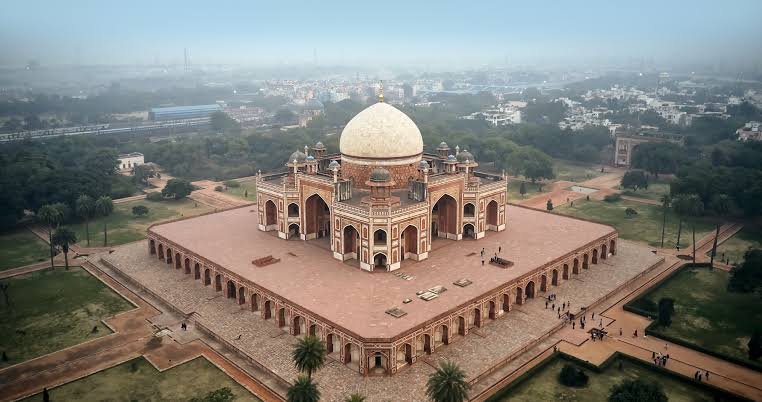
Day 1 — Friday: Fly Dubai to Delhi, afternoon arrival Early morning flight from Dubai (DXB). Land in Delhi by 10 AM to noon. Transfer to hotel. After freshening up: Humayun’s Tomb in the afternoon (the garden tomb that directly preceded the Taj Mahal — less crowded, deeply atmospheric). Evening at India Gate and Connaught Place for dinner.
Day 2 — Saturday: Old Delhi Red Fort at gate opening (7 AM in peak season). Rickshaw through Chandni Chowk’s silk and spice lanes. Jama Masjid — one of the largest mosques in South Asia, capacity 25,000. Lunch at Karim’s near the mosque. Afternoon: Qutub Minar (the 73-metre 12th-century minaret in Delhi’s oldest complex). Evening free.
Day 3 — Sunday: Delhi to Agra Gatimaan Express from Hazrat Nizamuddin (departs 8:10 AM, arrives Agra Cantonment 9:50 AM — 1 hour 40 minutes). Check in. Afternoon: Agra Fort. Sunset view of the Taj Mahal from Mehtab Bagh across the Yamuna river — the rear view at golden hour with the marble glowing.
Day 4 — Monday: Taj Mahal at Sunrise Gates open approximately 6:00 AM. Arrive 15 minutes before opening. The Taj Mahal at first light — the white marble before the tour coaches arrive — is one of the defining experiences of world travel. Back to hotel for breakfast. Mid-morning: Fatehpur Sikri (the ghost Mughal capital, 40km from Agra). Return to Agra, check out, afternoon drive to Jaipur (4.5 hours).
Day 5 — Tuesday: Jaipur Amber Fort at 8:00 AM (before the tour groups). Sheesh Mahal (Hall of Mirrors). City Palace and its museum. Jantar Mantar astronomical observatory. Sunset from Nahargarh Fort overlooking the Pink City.
Day 6 — Wednesday: Jaipur Hawa Mahal in the morning. Johari Bazaar for Rajasthani jewellery, block-print textiles, blue pottery. Afternoon cooking class or visit to a local craftsman’s workshop. Rooftop dinner in the old city.
Day 7 — Thursday: Jaipur to Delhi, fly home Morning at leisure or optional early visit to a local attraction. Drive Jaipur to Delhi (5 hours) or fly Jaipur–Delhi (55 minutes, IndiGo). Afternoon international flight from Delhi back to Dubai.
10-Day Golden Triangle Plus Ranthambore and Varanasi
Days 1–6: Delhi (2 nights), Agra (2 nights), Jaipur (2 nights) — as above.
Day 7: Drive Jaipur to Ranthambore (3 hours). Afternoon safari.
Day 8: Morning safari at Ranthambore (best sighting times). Drive or train to Delhi. Fly Delhi to Varanasi (1.5 hours).
Day 9: Sunrise Ganges boat ride at 5:30 AM — the ghats of Varanasi at dawn with morning mist rising from the river. Ganga Aarti ceremony at Dashashwamedh Ghat at sunset. Sarnath (where the Buddha gave his first sermon, 10km from Varanasi city).
Day 10: Fly Varanasi to Delhi. International flight home from Delhi.
The Golden Triangle Monuments
Delhi
Red Fort (Lal Qila): Built by Shah Jahan in 1648 as the centrepiece of his new capital Shahjahanabad. The Lahori Gate, Diwan-i-Am, and Rang Mahal are the main sections. Entry ₹600 (AED 26–27). Allow 2 hours.
Humayun’s Tomb: The 1570 garden tomb of the second Mughal emperor — directly prefiguring the Taj Mahal in its symmetry and garden design. A quieter, more contemplative monument than the Taj. Entry ₹600 (AED 26–27).
Qutub Minar: A 73-metre 12th-century minaret — the oldest surviving tower in India. The complex includes Delhi’s earliest mosques. The Iron Pillar in the courtyard has stood without rusting for 1,600 years. Entry ₹600 (AED 26–27).
Agra
Taj Mahal: Built 1632–1653 by Shah Jahan for his wife Mumtaz Mahal. 20,000 workers. 28 types of precious stone inlaid into white Makrana marble. The most visited building on earth. Entry ₹1,100 (AED 48–50). Closed Fridays — critical to plan around.
Agra Fort: Red sandstone and white marble citadel from which Shah Jahan, imprisoned by his son Aurangzeb, spent his final years gazing at the Taj Mahal across the Yamuna. Entry ₹550 (AED 24–25).
Fatehpur Sikri: Akbar’s imperial city — built and abandoned in 1585, now a UNESCO site of extraordinary preservation. The Buland Darwaza gateway is 54 metres tall. Entry ₹610 (AED 27).
Jaipur
Amber Fort: The Kachwaha Rajput citadel above Maota Lake with the Sheesh Mahal (Hall of Mirrors) — a million tiny mirrors in the ceiling that reflect a single candle into a star field. Entry ₹500 (AED 22–23).
City Palace: Part royal residence, part museum. The Maharaja of Jaipur still lives in the upper floors. The silver urns in the Diwan-i-Khas (4,000 litres each) are the world’s largest silver objects. Entry ₹700 (AED 30–32).
Hawa Mahal: The 1799 Palace of Winds — 953 latticed windows, five storeys, one room deep. Photograph from the café across the road. Entry ₹50 (AED 2.20).
Jantar Mantar: The 18th-century astronomical observatory where stone and marble instruments measure time, solar declination, and eclipses with naked-eye precision. The Samrat Yantra tells time to within 2 seconds. UNESCO World Heritage Site. Entry ₹200 (AED 8.70).
Ranthambore Tiger Safari — Adding Two Nights
For UAE travellers with 9 to 10 days, Ranthambore is the addition that transforms a great trip into an unforgettable one.
The national park is 3 hours’ drive from Jaipur and fits cleanly into the circuit — Jaipur → Ranthambore → Delhi (for the return flight or onward). No backtracking.
October–November from the UAE is the best Ranthambore window: The park opens October 1 after the monsoon closure. The tigers are fully active and establishing winter territories. Morning safari sighting probability with good zone allocation: 65 to 75% across two safaris.
The morning safari experience — 6:30 AM departure in an open Gypsy jeep, temperature 12°C to 18°C in October, dry deciduous forest, the radio crackling with other jeep reports of fresh pugmarks — is fundamentally different from any wildlife experience in the Gulf or elsewhere in the region. A Bengal tiger 30 metres away in the undergrowth at dawn is not a safari park. It is wild India at its most visceral.
Full zone guide and booking: Ranthambore Zone Guide.
Practical Advice for UAE Travellers
Currency and Cards in India
Exchange rate: AED 1 = ₹22 to ₹23. Exchange at UAE exchange houses (Al Ansari Exchange, UAE Exchange, LuLu Exchange) before departure for competitive rates — often better than airport counters in Delhi. Exchange a reasonable amount of cash (INR 5,000 to INR 15,000) depending on your trip length and spending style.
Best cards for UAE residents:
- Wise (multi-currency card): Available to UAE residents. Zero FX fees at mid-market rate — the best tool for spending INR from an AED base account. Works on Mastercard network across India.
- Emirates NBD / ADCB / FAB debit and credit cards: Work at Indian ATMs and retail POS terminals. Foreign transaction fees typically 2 to 3.5% — check your card terms.
- ADIB / Mashreq cards: Similar — functional in India, some FX fees apply.
- Revolut: Available in the UAE and charges zero FX fees on base tier.
- Cash in INR is essential for auto-rickshaws, street food, local markets, smaller monuments, and many temple entry fees. Carry ₹5,000 to ₹10,000 in cash at all times.
ATMs in India: HDFC, ICICI, and SBI ATMs are everywhere in Delhi, Agra, and Jaipur — airports, hotels, shopping malls. Withdraw ₹10,000 to ₹20,000 per transaction to minimise fees.
Electrical Adapters
UAE sockets are Type G (British 3-pin, 230V/50Hz) — the same British standard used across the Gulf. India uses Type C, Type D (round pin), and Type M sockets, also at 230V/50Hz.
The voltage is identical (230V) — no converter needed for any UAE appliance. You only need a plug adapter from Type G to Type C or Type D. Buy one before departure at any Carrefour, Lulu Hypermarket, or electronics shop in the UAE, or from Amazon.ae.
In practice: most luxury and mid-range hotels in Delhi, Agra, and Jaipur have universal multi-socket panels in the rooms and at the desk. Your phone charger (Type G plug) will likely fit directly if the hotel has a Type G socket available — many do given the large Indian visitor base from the UK and Gulf. Carry a small Type C/D adapter regardless.
Travel Insurance from the UAE
UAE residents are not covered by any government health scheme for medical care in India — the UAE has no equivalent of European state health coverage abroad. Travel insurance is essential before entering India.
UAE-based insurers for India travel:
- AXA / Gulf Insurance: Strong medical and evacuation coverage for UAE residents
- Sukoon Insurance (formerly Oman Insurance): Comprehensive travel policies
- Daman (now Hayah): Health-focused travel insurance
- RSA Middle East / MetLife UAE: International travel medical
Many UAE bank credit cards (Emirates NBD Skywards, ADCB SimplyLife, Mashreq Solitaire) include travel insurance as a card benefit — check your card’s terms and confirm the coverage limit for India is sufficient. Medical evacuation from Delhi to Dubai can cost AED 100,000 to AED 300,000 without insurance.
Indian Embassy / Consulate for UAE Residents
Embassy of India — Abu Dhabi: P.O. Box 4090, Plot 10, Sector W-59/02, Diplomatic Area, Abu Dhabi Tel: +971 2 449 2700 Website: indembassyabudhabi.gov.in
Consulate General of India — Dubai: Consulate General of India, Al Hamriya, Dubai Tel: +971 4 397 1222 Website: cgidubai.gov.in
Consulate General of India — Dubai (Visa Section): For passport services, OCI cards, and emergency consular assistance for Indian nationals in the UAE.
What to Pack from the UAE
The UAE climate and India’s peak season climate are not identical — India is significantly cooler.
- October–November: Daytime in Delhi, Agra, and Jaipur reaches 28°C to 34°C — similar to a mild UAE winter. Evenings drop to 18°C to 22°C. Light layers for evenings.
- December–January: Delhi and Agra mornings are 6°C to 12°C — cold by UAE standards. Pack a proper jacket, not just a light layer. The Taj Mahal at 6 AM in January is cold. Afternoons warm to 16°C to 22°C.
- Comfortable walking shoes — the major monuments involve significant walking on uneven stone surfaces. Sandals are impractical for a full day at Amber Fort or Fatehpur Sikri.
- Sunscreen — the winter sun in Rajasthan between 10 AM and 3 PM is deceptively powerful despite the cool air.
- Loose, modest clothing — for mosque and temple entries. Shoulders and knees should be covered at the Jama Masjid, Taj Mahal inner mosque area, and Rajasthan temples. A light scarf or shawl covers you in any situation.
For Indian Expats in the UAE — Coming Home to the Taj
A particular note for the large Indian community based in the UAE.
Many Indian expats in Dubai, Abu Dhabi, and Sharjah have never visited the Taj Mahal, Amber Fort, or even Delhi’s Red Fort. Life in India was in a home city — Mumbai, Bengaluru, Hyderabad, Chennai — and the north was never quite the priority.
From the UAE, the Taj Mahal is 3 hours away.
A private tour — your own vehicle, your own licensed guide, your own schedule — is a different experience from what most Indian visitors assume a tour involves. No group buses. No fixed timetables. A guide who speaks English, Hindi, or Urdu fluently and explains what you are looking at with the depth it deserves.
For many Indian expats, a private Golden Triangle tour is the trip that reconnects them with a part of their heritage they had never personally seen. The Taj at sunrise — the white marble before the crowds, the green lawns, the reflecting pool full in winter — is not something that photographs prepare you for, regardless of how many times you have seen the image.
Frequently Asked Questions
How long is the flight from Dubai to Delhi?
Approximately 3 hours to 3 hours 30 minutes non-stop. It is one of the shortest international flights to India from any non-Indian-subcontinent country. Flights operate throughout the day on Emirates, Air India, IndiGo, and flydubai.
Do UAE residents need a visa for India?
It depends on your passport nationality. Most nationalities (US, UK, EU, GCC, many others) resident in the UAE are eligible for the Indian Tourist eVisa at indianvisaonline.gov.in. Indian passport holders do not need a visa. Apply at least 7 to 10 days before travel. Cost approximately USD 25 (AED 92–96).
What is the best time to visit India from the UAE?
October and November are the highest-value months — excellent weather, Ranthambore open, Diwali festival, and pre-peak hotel prices. December to January is peak season with perfect weather (but book 3 to 4 months ahead). Late March aligns with UAE school spring break and offers warm but manageable temperatures.
How much does a Golden Triangle tour cost from Dubai?
A 7-day private Golden Triangle tour including return economy flights from Dubai and 4-star hotels costs approximately AED 7,000 to AED 12,000 per person. The Dubai–Delhi flights are typically AED 350 to AED 900 return — among the cheapest international flights to India from any major city. This makes the all-in cost lower than for visitors from Europe, Canada, or Australia.
Is the Taj Mahal closed on Friday?
Yes. The Taj Mahal is closed every Friday. Plan your Agra visit so that your Taj Mahal morning falls on any day except Friday. If your circuit brings you to Agra on a Thursday, visit Agra Fort and Mehtab Bagh on Thursday and the Taj Mahal on Saturday morning.
Is India safe for UAE residents and tourists?
Yes. Delhi, Agra, and Jaipur are established international tourist destinations with strong infrastructure for visitors. The UAE’s Ministry of Foreign Affairs India advisory is at standard precaution level. Use a licensed guide and private driver, book through a reputable tour operator, and keep your embassy contact details stored on your phone.
Plan Your Golden Triangle Tour from the UAE with Squid Travel India
At Squid Travel India, we specialise in private India tours for international visitors — including a significant and growing number of clients from the UAE, both UAE nationals and the Indian and Western expat community based in Dubai and Abu Dhabi.
Every tour is entirely private. Your own air-conditioned vehicle. Your own licensed English-speaking guide at each destination. No group buses, no fixed departure times, no compromise on timing.
From the UAE, you are 3 hours from the Taj Mahal. We handle everything from that point: hotel pre-bookings, Taj Mahal entry ticket pre-booking, Ranthambore safari permits secured months in advance, and detailed day-by-day logistics. You arrive in Delhi and everything is ready.
Contact us with your Dubai or Abu Dhabi departure dates and group size. We will send a full itinerary and pricing in AED within 24 hours.
Also worth reading:
- Golden Triangle Tour from Delhi
- Golden Triangle Tour Cost 2026
- Ranthambore Zone Guide
- Diwali 2026 in Jaipur
- Diwali 2026 in Udaipur
- India in November 2026
- India in January 2027
- Best Time to Visit Agra and the Taj Mahal 2026
- Golden Triangle Tour from Australia
- Golden Triangle Tour from Germany
- Golden Triangle Tour from Canada
📞 Call / WhatsApp: +91 9990812499 📧 Email: Squidtravelindia@gmail.com 🌐 Visit: squidtravelindia.com
1,800+ trips completed | 98% happy clients | TripAdvisor Travelers’ Choice 2024–2025
Last updated: September 2026.

Comment (0)