

Jaipur. The Pink City. The Gem of Rajasthan. India’s most regal city.
Call it what you like — one afternoon walking through the rose-coloured streets of Jaipur’s walled old city, with the scent of marigold garlands drifting from temple steps and the distant sound of a shehnai rising over the chaos of rickshaws and motorbikes, and you’ll understand why travellers from every corner of the world come here and find it difficult to leave.
Jaipur is the capital of Rajasthan and the third point of India’s famous Golden Triangle — the iconic travel circuit connecting Delhi, Agra, and Jaipur. But Jaipur is far more than a checkbox on an India itinerary. It is a living, breathing royal city with centuries of Mughal and Rajput history packed into its majestic forts, opulent palaces, ancient observatories, and brilliant bazaars.
This complete 2026 guide covers the top 15 things to do in Jaipur — every iconic attraction, every hidden gem, every practical detail you need (timings, entry fees, insider tips) — so you can make the absolute most of your time in the Pink City.
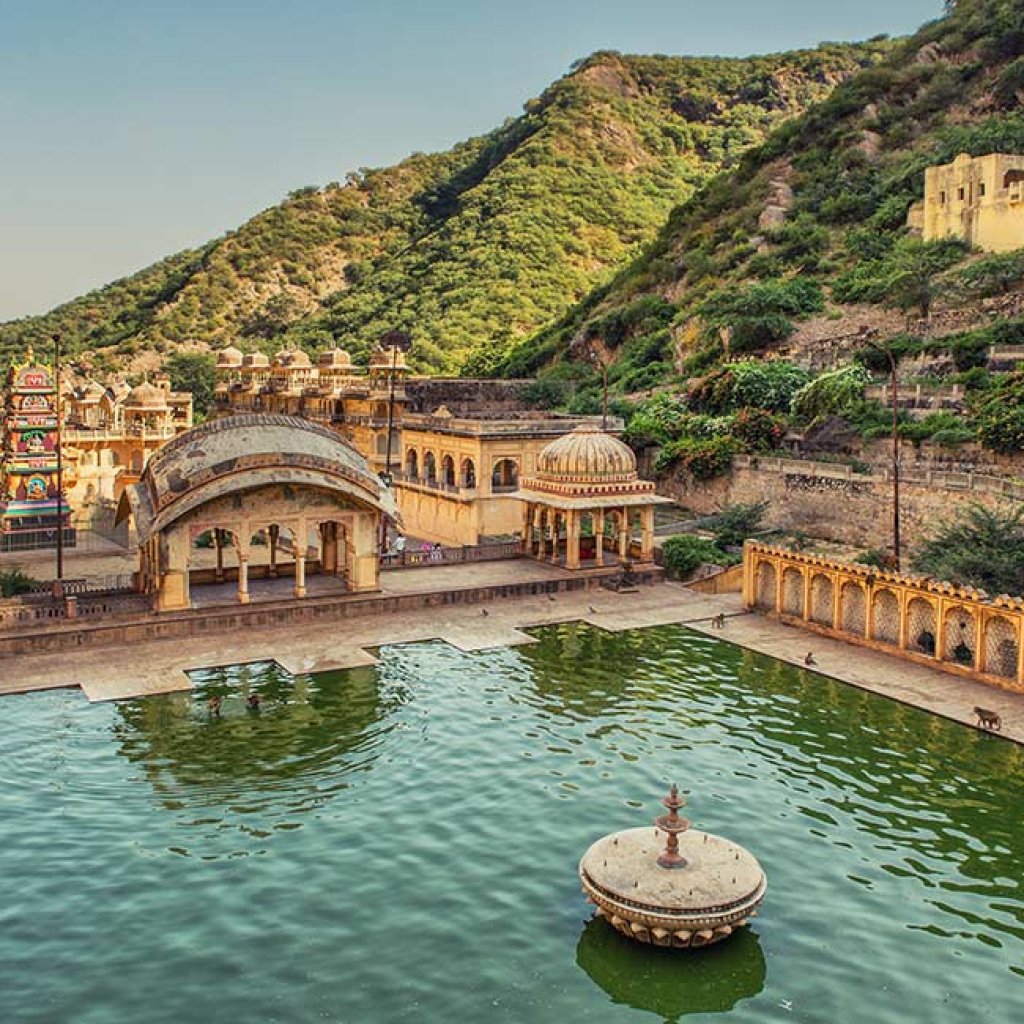
Quick Facts: Jaipur at a Glance
| Founded | 1727 by Maharaja Sawai Jai Singh II |
| Nickname | The Pink City |
| State | Rajasthan, India |
| Best time to visit | October to March |
| Getting there | Jaipur International Airport (JAI) — 13km from city centre |
| Distance from Delhi | ~280km (4–5 hrs by road / 4.5 hrs by train) |
| Distance from Agra | ~240km (4–4.5 hrs by road) |
| UNESCO Status | Old City of Jaipur — World Heritage Site since 2019 |
1. Amber Fort — The Crown Jewel of Jaipur
If you do only one thing in Jaipur, make it Amber Fort. Perched dramatically atop the Aravalli Hills, 11 kilometres north of the city centre and overlooking the shimmering Maota Lake, Amber Fort is one of the finest examples of Rajput-Mughal architecture in the entire world.
Built in 1592 by Raja Man Singh I and expanded over successive generations, the fort spreads across a staggering 4 square kilometres of hilltop terrain. It is a maze of grand courtyards, ornate temples, royal chambers, and hidden passages — each one telling a story of Rajasthan’s formidable warrior kings.
The absolute highlight of any Amber Fort visit is the Sheesh Mahal — the Hall of Mirrors. This extraordinary room was designed so that a single candle, reflected thousands of times across its mirror-inlaid ceiling and walls, would illuminate the entire chamber. Standing inside it at the right angle, it genuinely looks like the inside of a starlit sky.
Other unmissable sections include the Diwan-i-Aam (Hall of Public Audience), the Ganesh Pol gateway — decorated with breathtaking frescoes — and the Sukh Niwas, a pleasure chamber with a remarkable ancient cooling system that channelled mountain water through the walls to regulate temperature. Centuries before air conditioning, this was climate engineering at its finest.
⏰ Timings: 8:00 AM – 5:30 PM daily (last entry 5:00 PM) 🎟️ Entry Fee: Foreigners: ₹1,000 | Indians: ₹200 💡 Insider Tip: Arrive right at 8:00 AM opening. The morning light on the fort’s sandstone walls is extraordinary for photography, and you’ll have at least an hour before the tour groups arrive. The midday heat can be brutal March through September — morning is always better. 🎭 Light & Sound Show: Every evening in Hindi (8:00 PM) and English (7:30 PM). Tickets from ₹200. Highly recommended — the fort illuminated at night is a completely different experience. 🎟️ Pro Tip: Buy the Jaipur Composite Ticket (approx. ₹1,500 for foreigners / ₹600 for Indians) — it covers Amber Fort, Hawa Mahal, Jantar Mantar, Nahargarh Fort, Albert Hall Museum, and more across 2 consecutive days. Substantial savings if you’re visiting multiple monuments.
2. Hawa Mahal — The Palace of Winds
No image is more synonymous with Jaipur than the Hawa Mahal — the extraordinary five-storey pink sandstone facade that looms over the main bazaar of the old walled city like an ornate honeycomb crown. Built in 1799 by Maharaja Sawai Pratap Singh, the palace has 953 small windows — called jharokhas — each intricately latticed with carved sandstone screens.
The design was deliberate and ingenious. The royal women of the Jaipur court were in purdah — they could not appear in public. The Hawa Mahal allowed them to observe street festivals, processions, and daily city life from behind the screens, unseen by the crowds below. The latticed windows also created a natural ventilation system, allowing cool breezes to flow through the building and keep the interior comfortable even in Rajasthan’s scorching summers.
The view of the Hawa Mahal from the street — best photographed in the golden hours of early morning — is one of the most photographed images in all of India. But walk around to the entrance at the back and climb to the upper floors, and you’ll discover the equally impressive view from inside looking out over the Pink City’s bustling rooftops and bazaars.
⏰ Timings: 9:00 AM – 5:00 PM (closed Mondays) 🎟️ Entry Fee: Foreigners: ₹200 | Indians: ₹50 📍 Location: Hawa Mahal Road, Badi Choupad, Old City 💡 Insider Tip: The best photograph of the Hawa Mahal is from the rooftop of the Wind View Café directly opposite — grab a chai, sit down, and shoot at your leisure. Early morning before 9am gives the best golden light without the crowds.
3. City Palace — Where Royalty Still Lives
Unlike most of India’s palaces that have been converted entirely into museums, the City Palace of Jaipur is still home to the current royal family of Jaipur. The Maharaja of Jaipur actually lives here — which makes walking through its grand corridors feel genuinely different from any other palace visit.
Built between 1729 and 1732 by Maharaja Sawai Jai Singh II — the same ruler who founded Jaipur — the City Palace complex sits at the heart of the walled old city and is a stunning blend of Rajput, Mughal, and European architectural styles. The complex includes multiple palaces, courtyards, temples, and the magnificent museum that now occupies a large portion of the complex.
The museum’s highlights include two enormous silver vessels — the Gangajali — each weighing 340 kilograms and holding 4,000 litres of water. Maharaja Sawai Madho Singh II had them made to carry Ganges water to England when he visited in 1901 — so he would have holy water for his daily rituals. They remain the world’s largest silver vessels and are listed in the Guinness Book of World Records.
The Peacock Gate within the complex is one of Jaipur’s most photographed architectural details — four gates representing the four seasons, each decorated with elaborate peacock-themed artwork in brilliant blues and greens.
⏰ Timings: 9:30 AM – 5:00 PM daily 🎟️ Entry Fee: Foreigners: ₹700 | Indians: ₹200 (museum included) 💡 Insider Tip: Upgrade to the Maharaja Experience ticket (₹2,500+) for access to the private royal quarters and a personal tour with a royal family aide. Limited capacity — book in advance.
4. Jantar Mantar — The World’s Most Accurate Ancient Observatory
Here is one of Jaipur’s most underrated wonders — and arguably one of the most extraordinary scientific achievements of the 18th century. The Jantar Mantar is an astronomical observatory built between 1724 and 1735 by Maharaja Sawai Jai Singh II — not as a folly or a status symbol, but as a working scientific institution that was used to track celestial movements and maintain the royal calendar.
The complex contains 19 massive architectural instruments — all constructed from stone and marble — each designed to measure a specific astronomical event: the altitude of the sun, the positions of stars and planets, the time of day, the declination of celestial objects. They are not decorative. They work. Some are accurate to within two seconds.
The most impressive instrument is the Samrat Yantra — a 27-metre sundial that is the world’s largest. Its shadow moves at a measurable 6 centimetres per minute, allowing time to be read to within 20 seconds of accuracy. Built without electricity, computers, or modern tools. Extraordinary.
Jantar Mantar was declared a UNESCO World Heritage Site in 2010, joining Amber Fort as one of Jaipur’s two UNESCO-listed monuments.
⏰ Timings: 9:00 AM – 4:30 PM daily 🎟️ Entry Fee: Foreigners: ₹200 | Indians: ₹50 💡 Insider Tip: Do not visit without a guide. The instruments look like bizarre sculptures to the uninitiated — a knowledgeable guide transforms them into mind-bending scientific marvels. Hire one at the entrance for approximately ₹300–400.
5. Nahargarh Fort — The Best Sunset View in Jaipur
While Amber Fort gets all the fame, local Jaipuris will tell you that Nahargarh Fort — perched high on the Aravalli ridge above the city — offers the finest panoramic view in all of Jaipur. And they are absolutely right.
Built in 1734 by Maharaja Sawai Jai Singh II as a retreat and defence fortification, Nahargarh (which means “Abode of Tigers”) sits 700 metres above sea level and commands a spectacular 360-degree view across the entire Pink City, the old walled town, and the surrounding Aravalli hills. At sunset, as Jaipur’s rooftops turn gold and the call to prayer drifts up from the mosques below, this viewpoint is genuinely breathtaking.
The fort itself contains the elaborate Madhavendra Bhavan — 12 suites built for the Maharaja’s 12 queens, each with its own bathroom, bedroom, and sitting room, connected by a common corridor. The entire complex is a fascinating record of royal domestic life.
The restaurant and café at Nahargarh Fort serve excellent food and local Rajasthani beer — making sunset here one of the finest slow evenings available in the city.
⏰ Timings: 10:00 AM – 5:30 PM daily 🎟️ Entry Fee: Foreigners: ₹200 | Indians: ₹50 💡 Insider Tip: Visit between 4:00–5:30 PM for the golden hour. The drive up the hill is narrow — most visitors take a tuk-tuk or pre-arranged taxi. The walk up is possible but steep and takes 45–60 minutes.
6. Jaigarh Fort & The World’s Largest Wheeled Cannon
Connected to Amber Fort by a series of underground passages, Jaigarh Fort sits even higher on the Aravalli ridge and was built primarily as a defence fortification for Amber. It was here that the Rajput royal family is said to have stored their treasury — and legends of buried Mughal treasure inside the fort’s grounds have persisted for centuries.
The fort’s most famous attraction is the Jaivana Cannon — the world’s largest wheeled cannon. Cast in 1720 within the fort’s own cannon foundry, the Jaivana weighs 50 tonnes, has a barrel 6.15 metres long, and was reportedly fired only once (its single test shot travelled 35 kilometres and created a small lake where it landed). It is an extraordinary and slightly terrifying object.
⏰ Timings: 9:00 AM – 5:00 PM daily 🎟️ Entry Fee: Foreigners: ₹200 | Indians: ₹70 💡 Insider Tip: Combine Amber Fort + Jaigarh Fort in the same morning visit — they are connected by a free shuttle within the complex. Most tourists skip Jaigarh, which means you get it almost entirely to yourself.
7. The Walled Old City — Walk Through 300 Years of History
The old walled city of Jaipur — declared a UNESCO World Heritage Site in 2019 — is not just a collection of monuments. It is a living, working, breathing 18th-century city that has been continuously inhabited since its founding in 1727. The city was laid out on a strict grid pattern according to ancient Hindu principles of town planning, with wide boulevards, organised market zones, and colour-coded neighbourhoods.
The famous pink colour — which gives Jaipur its nickname — was painted throughout the old city in 1876 as a gesture of welcome for the visit of Prince Albert, Queen Victoria’s husband. The tradition has been maintained ever since, and the entire old city is required by law to be painted the same shade of terracotta pink.
Walking through the old city’s main bazaars is one of the most sensory experiences in all of India. The Johari Bazaar glitters with gemstones and jewellery. The Bapu Bazaar is lined with stalls selling block-printed fabrics, tie-dye textiles, and embroidered shoes. The Tripolia Bazaar specialises in lac bangles and traditional Rajasthani crafts. The Kishanpole Bazaar is famous for its wooden furniture and blue pottery.
⏰ Best time to explore: 8:00–10:00 AM (before the heat) or 5:00–8:00 PM (the bazaars come alive after sunset) 💡 Insider Tip: Hire a cycle rickshaw for ₹200–300 per hour and let the driver navigate. It is the most enjoyable and authentic way to move through the old city’s narrow lanes without getting lost.
8. Albert Hall Museum — Rajasthan’s Finest Collection
Built in 1887 in the style of a Victorian-era museum, the Albert Hall Museum — officially the Government Central Museum — is Rajasthan’s oldest public museum and arguably its finest. Located in Ram Niwas Garden just south of the old city walls, the building itself is a remarkable example of Indo-Saracenic architecture, designed by Sir Samuel Swinton Jacob.
Inside, the museum’s collection spans decorative arts, textiles, pottery, carpets, metalwork, ivory carvings, natural history specimens, and an exceptional collection of Rajasthani miniature paintings. The Egyptian mummy on display (yes, a real Egyptian mummy) never fails to draw a crowd.
The gardens surrounding Albert Hall are Jaipur’s most popular public park and a lovely spot for an early evening walk.
⏰ Timings: 9:00 AM – 5:00 PM and 7:00 PM – 10:00 PM daily (open for night viewing) 🎟️ Entry Fee: Foreigners: ₹300 | Indians: ₹40 💡 Insider Tip: The museum is stunning at night when it is fully illuminated. The evening session from 7:00–10:00 PM sees far fewer visitors and is the best time to explore at leisure.
9. Jal Mahal — The Water Palace
One of Jaipur’s most photographed landmarks requires no ticket, no entry, and no more than 20 minutes of your time — but the image will stay with you for a lifetime. The Jal Mahal (Water Palace) appears to float on the surface of the Man Sagar Lake, 8 kilometres north of the city on the road to Amber Fort.
The five-storey palace was built in the 18th century as a summer retreat and duck-hunting lodge for the Maharaja. When the lake level is full, four of the five storeys are submerged, leaving just the rooftop terrace visible above the water. The effect — especially at dawn when the lake is still and the palace reflects perfectly in the water — is genuinely magical.
The palace is not currently open to visitors (renovation work has been ongoing for years), but the lakeshore viewpoint is free, beautifully maintained, and atmospheric at any time of day.
💡 Insider Tip: Stop here early morning on your drive to Amber Fort (they are on the same road). At sunrise, the mist over the lake and the perfect mirror reflection of the palace make for the best photograph you will take in Jaipur.
10. Chokhi Dhani — Immerse Yourself in Rajasthani Village Life
About 20 kilometres south of Jaipur city centre, Chokhi Dhani is a recreation of a traditional Rajasthani village that has become one of the most popular evening experiences in the city — and for good reason. What could have been a tacky tourist gimmick is instead a genuinely warm, well-run, and entertaining cultural experience that gives visitors an insight into Rajasthani folk traditions that would otherwise be impossible to access.
Spread across a large campus, Chokhi Dhani includes traditional folk music and dance performances (including the breathtaking fire dance), puppet shows, camel and elephant rides, henna artists, astrologers, a traditional Rajasthani village market, and multiple dining areas serving authentic Rajasthani cuisine on traditional clay plates.
The food at Chokhi Dhani is excellent — a full traditional Rajasthani thali with dal baati churma, ker sangri, gatte ki sabzi, buttermilk, and traditional sweets, served on the floor in true village style.
⏰ Timings: 5:00 PM – 11:00 PM daily 🎟️ Entry Fee: ₹800–1,200 per person (includes most activities; food is extra) 💡 Insider Tip: Book your table in the main dining hall in advance during peak season (November–February). The cultural performances begin at 6:30 PM — arrive by 6:00 PM to get a good spot.
11. Birla Mandir — A Temple of Dazzling White Marble
Built entirely from gleaming white Makrana marble — the same marble used to build the Taj Mahal — the Birla Mandir (officially the Laxmi Narayan Temple) sits at the base of Moti Dungri Hill in the southern part of the city. Constructed in 1988 by the B.M. Birla Foundation, the temple is dedicated to Goddess Lakshmi and Lord Vishnu.
Unlike many temples that are architecturally interesting but spiritually performative, the Birla Mandir feels genuinely serene. The white marble exterior is covered with intricate carvings of Hindu deities, and the interior is flooded with coloured light filtering through stained glass windows. The temple houses a 500-year-old Ganesha statue brought from an older temple on the same site.
Evening puja at Birla Mandir — with incense smoke rising through the coloured light, priests chanting, and the sound of bells echoing across the white marble — is one of the most peaceful experiences Jaipur has to offer.
⏰ Timings: 6:00 AM – 12:00 PM and 3:00 PM – 9:00 PM daily 🎟️ Entry Fee: Free 💡 Insider Tip: Visit for the evening aarti at around 7:30 PM. Dress modestly (shoulders and knees covered) and remove shoes before entering.
12. Block Printing Workshop — Learn Jaipur’s Most Famous Craft
Jaipur is the world capital of hand block printing — the ancient art of applying natural dyes to fabric using hand-carved wooden blocks. The craft has been practised here for over 500 years and is still very much alive today, with entire neighbourhoods of artisan families maintaining the tradition.
A block printing workshop is one of the most rewarding and hands-on experiences Jaipur offers. In a 2–3 hour session with a master craftsman, you’ll learn how the wooden blocks are carved, how the natural dyes are prepared (from indigo, turmeric, pomegranate rind, and other natural sources), and how the precise, repetitive application of blocks creates the intricate patterns you see on scarves, bed linen, and kurtas across the city.
Most workshops include the materials and let you take home your printed piece as a souvenir — easily the most personal item you’ll bring back from India.
💡 Where to go: Anokhi Museum of Hand Printing in Amber (₹100 entry, workshop extra) is the most authoritative and beautifully presented. Several hotels also arrange in-house workshop sessions.
13. Hot Air Balloon Over Jaipur — India’s Most Spectacular Dawn View
If your budget allows one splurge in Jaipur, make it a hot air balloon flight over the Pink City at sunrise. Floating 300–500 metres above the Aravalli Hills as the sun rises over Amber Fort, the city spread below you in pink and gold light, with the distant white dome of a mosque glowing against the hills — this is one of India’s most extraordinary experiences.
Balloon flights last approximately 45–60 minutes and typically cover the area above the old city, Amber Fort, Nahargarh Fort, and the surrounding Aravalli landscape. The flights operate from November to March only, when the weather conditions are stable and the morning sky is clear.
💡 Operators: Sky Waltz and Skymagic are the two most reputable operators in Jaipur. Book at least 3–5 days in advance during peak season. 💰 Cost: Approximately ₹8,000–12,000 per person (USD $100–145) ⏰ Timing: Flights depart approximately 90 minutes before sunrise. Pickup from your hotel is arranged by the operator.
14. Shopping in Jaipur’s Bazaars — India’s Best Shopping City
Jaipur is widely considered the finest shopping city in India — and the range, quality, and authenticity of what’s available is remarkable. Unlike the tourist-trap markets of many Indian cities, Jaipur’s bazaars still largely sell what local craftspeople and traders have sold for generations.
Here is a quick guide to Jaipur’s best shopping zones:
Johari Bazaar — The gemstone and jewellery heart of Jaipur. India is the world’s largest gemstone cutting and polishing industry, and a huge proportion of that trade passes through Jaipur. Here you can buy certified rubies, emeralds, sapphires, and semi-precious stones at a fraction of their international retail price. Stick to reputable shops with certification.
Bapu Bazaar — The best place for textiles. Block-printed cotton, tie-dye bandhani, embroidered mojari shoes, and colourful Rajasthani quilts (razais). Bargaining is expected and enjoyable.
Tripolia Bazaar — Lac bangles, traditional Rajasthani handicrafts, and brassware. This is the most photogenic of the bazaars and feels the most authentically local.
Kishanpole Bazaar — Blue pottery (Jaipur’s unique ceramic tradition, made without clay), wooden furniture, and carved stone items.
Nehru Bazaar — Leather goods, Rajasthani puppets (kathputli), and miniature paintings.
💡 Insider Tip: The government-run Rajasthali store on M.I. Road has fixed, non-negotiable prices for quality handicrafts — a useful reference point before bargaining in the open markets.
15. Chand Baori Step Well — Jaipur’s Most Underrated Wonder
Technically 95 kilometres east of Jaipur in the village of Abhaneri, the Chand Baori step well is worth the 2-hour round trip for any traveller with an eye for extraordinary architecture — and it remains surprisingly uncrowded for how spectacular it is.
Built between the 8th and 9th centuries, Chand Baori is one of the deepest and most elaborately designed step wells in the world. It descends 20 metres underground through 13 storeys and approximately 3,500 symmetrically arranged steps on three sides — creating a perfectly geometric inverted pyramid that is one of the most visually striking structures in India.
Step wells (vav or baoli) were engineering solutions to Rajasthan’s chronic water scarcity — they were built to reach the water table deep underground. But Chand Baori is also an extraordinary work of art, with each level featuring ornate carved columns and niches.
If you have seen the film The Dark Knight Rises or The Fall — both filmed here — you will recognise it immediately.
⏰ Timings: Sunrise to sunset daily 🎟️ Entry Fee: Foreigners: ₹300 | Indians: ₹30 💡 How to visit: Best combined with a visit to nearby Abhaneri village and the Harshat Mata Temple adjacent to the step well. Arrange a private car from Jaipur for approximately ₹1,500–2,000 for the half-day trip.
Practical Information: Visiting Jaipur in 2026
Best Time to Visit
October to March is ideal — cool, dry weather with daytime temperatures between 15°C and 28°C. November to February is peak season; book accommodation well in advance. April to June is extremely hot (up to 45°C) and not recommended. July to September brings the monsoon.
How to Get Around Jaipur
- Private car with driver — The most comfortable and time-efficient option for sightseeing. Your Squid Travel India package includes this.
- Tuk-tuk (auto-rickshaw) — Great for short distances in the old city. Negotiate the fare before getting in.
- Cycle rickshaw — Perfect for slow exploration of the walled city bazaars.
- Uber/Ola — Available and reliable in Jaipur for point-to-point travel.
What to Eat in Jaipur
Jaipur is a food lover’s destination. Do not leave without trying:
- Dal Baati Churma — The signature dish of Rajasthan: baked wheat balls dipped in ghee-laden lentils with sweet crumbled churma
- Laal Maas — A fiery Rajasthani mutton curry that earns its name (“red meat”) from the generous quantity of dried chilies
- Pyaaz Kachori — Deep-fried pastry filled with spiced onion, best eaten at a roadside stall for breakfast
- Ghewar — Rajasthan’s festival sweet; a crispy disc-shaped sweet soaked in sugar syrup and topped with cream
Where to eat: Suvarna Mahal (Rambagh Palace) for a royal dining experience; Niro’s for reliable classics since 1949; Anokhi Café for a calm break between sightseeing; any roadside stall on Johari Bazaar for pyaaz kachori at breakfast.
Money-Saving Tip: Buy the Composite Ticket
The Jaipur Composite Ticket covers Amber Fort, Hawa Mahal, Jantar Mantar, Nahargarh Fort, Albert Hall Museum, Isarlat, Sisodia Rani Garden, and Vidhyadhar Garden over 2 consecutive days. For foreign visitors it costs approximately ₹1,500 and saves significant money versus buying individual tickets. Available at any of the covered monuments.
Suggested Jaipur Itineraries
One Day in Jaipur (Tight Schedule)
Morning: Amber Fort (3 hours) → Jal Mahal (photo stop) → Hawa Mahal → Old City walk and lunch. Afternoon: City Palace → Jantar Mantar → Bapu Bazaar shopping. Evening: Nahargarh Fort sunset → dinner at a rooftop restaurant in the old city.
Two Days in Jaipur (Comfortable Pace)
Day 1: Amber Fort + Jaigarh Fort (morning) → Jal Mahal → City Palace → Jantar Mantar → Albert Hall Museum (evening). Day 2: Hawa Mahal → Old City walking tour and bazaar shopping → Birla Mandir → Chokhi Dhani (evening).
Three Days in Jaipur (Immersive)
Follow the 2-day plan above, then add: Block printing workshop (morning) → Chand Baori day trip → Hot air balloon at sunrise (if in season, book Day 1 evening for Day 3 morning).
Ready to Visit Jaipur?
Jaipur is the most rewarding city on the Golden Triangle — and most travellers agree it deserves at least two full days, ideally more. The combination of spectacular forts, royal palaces, ancient science, living bazaars, and the sheer warmth of Rajasthani hospitality is unlike anywhere else on earth.
At Squid Travel India, we’ve been helping travellers experience Jaipur properly for over 15 years. Every one of our Golden Triangle packages includes Jaipur with handpicked hotels, private transport, and an expert local guide who knows the city’s hidden stories as well as its famous landmarks.
📞 Call us: +91 9818489607 📧 Email: squidtravelindia@gmail.com 🌐 Explore packages: Golden Triangle Tour Packages 🏆 TripAdvisor Travelers’ Choice Award Winner 2024–25
Frequently Asked Questions About Jaipur
How many days do you need in Jaipur? A minimum of 2 full days is recommended for first-time visitors. Three days allows a comfortable, unhurried experience of all the major attractions plus the bazaars.
Is Jaipur safe for tourists? Yes — Jaipur is one of India’s most tourist-friendly cities. It is well-organised, widely English-speaking in tourist areas, and has an established tourism infrastructure. Solo female travellers visit Jaipur regularly and safely.
What is Jaipur famous for? Jaipur is famous for its rose-pink walled old city, Amber Fort, Hawa Mahal, the UNESCO World Heritage-listed City Palace complex and Jantar Mantar, its gemstone and jewellery trade, hand block printing, blue pottery, and Rajasthani cuisine.
Is Jaipur expensive? Jaipur is affordable by international standards. Budget travellers can manage comfortably on ₹2,000–3,000 per day. Mid-range travellers spending ₹5,000–8,000 per day can enjoy excellent accommodation, guided tours, and good restaurants. Luxury options — including heritage palace hotels — are world-class.
What is the best month to visit Jaipur? November, December, and February are the three best months. The weather is perfect (15–25°C), the festivals are rich (Diwali in November, Jaipur Literature Festival in January/February), and the city is at its most vibrant.

Comment (1)