

By Vivek Sharma — Founder, Squid Travel India Updated July 2026 · TripAdvisor Travelers’ Choice Award Winner 2024–25
Close your eyes and picture it.
A mug of first-flush Darjeeling tea warming your hands. The morning mist rolling through valleys of deep green. And rising above it all — the snow-covered peak of Kanchenjunga, the world’s third-highest mountain, turning gold in the first light of sunrise.
That image is not a travel brochure fantasy. It is Tuesday morning in Darjeeling.
Sitting at 2,050 metres above sea level in the foothills of the eastern Himalayas, Darjeeling is one of India’s most beloved hill stations — and one of its most rewarding destinations for any kind of traveller. Whether you come for the mountain views, the tea gardens, the Buddhist monasteries, the toy train, or simply the cool mountain air and the chance to exhale properly for a few days — Darjeeling delivers.
This guide covers the top 10 places to visit in Darjeeling in 2026. Every attraction is described honestly, with practical timings, entry fees, and tips that make a real difference.
Quick Facts Before You Go
| Altitude | 2,050 metres (6,726 feet) |
| State | West Bengal |
| Best time to visit | March to May and October to December |
| Ideal trip length | 3–4 days |
| Nearest airport | Bagdogra (90 km, approximately 3 hours) |
| Nearest railway station | New Jalpaiguri (NJP), 88 km (3 hours) |
| Famous for | Tea, toy train, Kanchenjunga views, monasteries |
| Temperature | 8°C–18°C (March–June) · 5°C–14°C (Oct–Dec) |
1. Tiger Hill — The Most Breathtaking Sunrise in India
Let’s start with the reason most people set an alarm for 3:30 AM during their Darjeeling trip.
Tiger Hill is the highest point in the Darjeeling area, standing at 2,590 metres above sea level. Every morning — weather permitting — visitors make the early drive up the hill to watch the sun rise over the Himalayas. And what a sunrise it is.
As the sky lightens from black to deep violet to orange, the snow peaks emerge one by one from the darkness. Kanchenjunga (8,586 m) glows pink, then gold. On exceptionally clear days — most common in October, November, March, and April — you can see the distant white triangle of Everest on the horizon, 220 km away. It is one of those genuinely rare moments when the scale and beauty of the natural world makes you stop thinking and simply feel.
Practical details:
- The drive from Darjeeling town takes about 45 minutes
- Shared jeeps depart from Chowk Bazar in Darjeeling at around 4:00 AM
- Private taxis can be arranged from your hotel
- Entry fee: approximately ₹50 per person
- Dress warmly — Tiger Hill at 4:00 AM is genuinely cold (sometimes 0–5°C)
- Clear days are most frequent October–November and March–May. July–September fog can obscure the view.
Insider tip: Book a viewing spot in the enclosed observation gallery (₹100 extra) on cold mornings — it’s significantly warmer than the open terrace.
2. Darjeeling Himalayan Railway — The Toy Train
There are trains. And then there is the Darjeeling Himalayan Railway.
Completed in 1881 and listed as a UNESCO World Heritage Site in 1999, the narrow-gauge “toy train” is one of the engineering marvels of the Victorian era — a 78-km mountain railway that climbs from New Jalpaiguri (88 metres above sea level) all the way to Darjeeling (2,050 metres), navigating the vertiginous Himalayan terrain through a series of zig-zags, loops, and tunnels that would be remarkable achievements today, let alone in the 1880s.
You can ride the toy train in two ways:
The joyride — a short 2-hour excursion from Darjeeling station through the town and surrounding hills, returning to the starting point. This is the option most visitors choose and it’s genuinely delightful — the steam engine chugging through tea gardens and forest, past houses close enough to touch, through the fog and out into mountain sunshine.
The full journey — the complete 7-hour trip from New Jalpaiguri to Darjeeling, passing through forests, river valleys, and dramatically changing landscapes. This is for train enthusiasts and anyone who wants to experience the railway as it was originally intended.
Practical details:
- Joyride tickets: approximately ₹1,400 for the steam service (check the Indian Railways website for current schedules and prices)
- Book in advance — the steam service joyrides sell out, especially at weekends and peak season
- The train departs from Darjeeling station, 10 minutes walk from Chowrasta
What to expect: The toy train is slow, charming, and slightly smoky. It is not efficient transport. It is an experience — and a genuinely lovely one.
3. Batasia Loop — Where the Train Makes Its Famous Circle
About 5 km from Darjeeling on the toy train route, the track spirals around a beautifully maintained garden in a wide loop — allowing the train to lose altitude gradually as it descends toward the plains. This engineering solution, built in 1919, created one of Darjeeling’s most photogenic spots.
From the Batasia Loop viewpoint, you can watch the toy train circle the garden below while Kanchenjunga fills the sky behind it. On a clear morning, it is one of the finest photographs available in all of Darjeeling.
The garden at the centre of the loop is immaculately maintained — year-round flowers, manicured lawns, and a prominent War Memorial honouring Gorkha soldiers of the Indian Army. The memorial is moving and beautifully kept.
Practical details:
- Entry fee: ₹30 per person
- Best visited in the morning for clear mountain views and the chance to photograph the toy train
- 15 minutes from Darjeeling by shared jeep or taxi
- Combined well with Ghoom Monastery (just 3 km further)
4. Tea Gardens — Where the World’s Finest Tea Grows
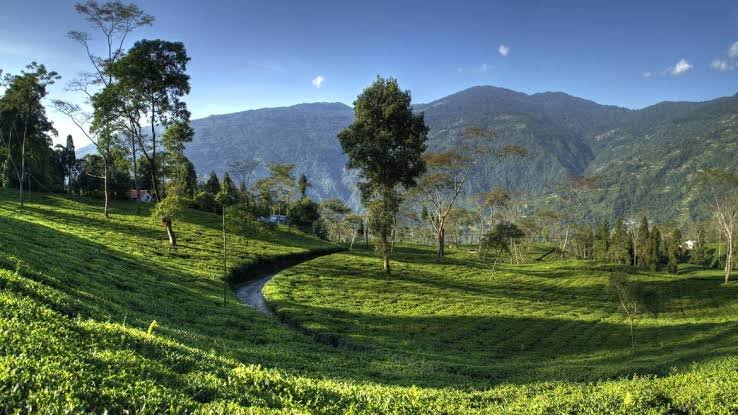
Darjeeling produces some of the world’s most prized tea. The first flush (March–April harvest) Darjeeling tea is valued by connoisseurs the way Burgundy wine drinkers discuss their favourite vintages. A cup of properly brewed first flush Darjeeling is a genuinely different experience from any tea you have tasted before.
The rolling tea gardens that surround Darjeeling — covering the hillsides in precisely spaced rows of vivid green bushes — are part of the landscape in a way that feels inseparable from the town itself. There are over 80 tea estates in the Darjeeling district.
The best tea garden experiences:
Happy Valley Tea Estate (3 km from town) is the most popular for visitors — one of Darjeeling’s oldest functioning estates (established 1854), offering factory tours during the processing season (March to November). You can walk through the plucking fields, watch the withering, rolling, and drying process in the factory, and buy tea directly from the estate at significantly lower prices than you’ll find in shops.
Makaibari Tea Estate is considered the gold standard of Darjeeling tea — the first certified organic and biodynamic tea estate in the world. Makaibari offers full estate experiences including guided walks through the gardens, tea-tasting sessions, and homestay accommodation with local tea workers’ families.
Practical details:
- Happy Valley Tea Estate: Open Monday to Saturday, 8:00 AM – 4:00 PM (closed Sundays and during January–February off-season). Entry free for factory tour.
- Best time for factory visits: March to May (first flush season) and October to November (autumn flush)
- Buy your Darjeeling tea directly at the estate — you’ll pay a fraction of the retail price for better quality
5. Ghoom Monastery — The Oldest in Darjeeling
Three kilometres from Darjeeling town, just past the Batasia Loop, the Ghoom Monastery (officially Yiga Choeling Monastery) is the oldest and most revered Buddhist monastery in the Darjeeling area.
Founded in 1850, Ghoom is a Gelugpa (Yellow Hat) Buddhist monastery housing monks of the Tibetan Buddhist tradition. Its most significant treasure is a magnificent 15-foot (4.6-metre) statue of Maitreya — the future Buddha — seated in contemplation with gilded features and jewelled ornaments, surrounded by thangka paintings and butter lamps.
The atmosphere inside is genuine and unhurried — not a tourist attraction performing itself for visitors, but a real, working monastery where monks study and pray according to traditions stretching back centuries. If you arrive during a prayer session, the sound of chanting and the smell of butter lamps in the dim interior creates an experience of considerable power.
Practical details:
- Open: 6:00 AM – 6:00 PM daily
- Entry fee: Small donation appropriate (approximately ₹10–20)
- Location: 3 km from Darjeeling town, easily combined with Batasia Loop
- Photography: Permitted in the courtyard and exterior. Always ask before photographing inside the prayer hall.
- Dress modestly: Shoulders and knees covered. Remove shoes before entering.
6. Observatory Hill (Mahakal Temple) — Sacred and Panoramic
Rising above Chowrasta — Darjeeling’s central mall — Observatory Hill is simultaneously the town’s most sacred site and one of its best viewpoints.
At the summit sits the Mahakal Temple, a Hindu shrine dedicated to Lord Shiva dating back to the early 18th century. The temple is draped in prayer flags of vivid red, yellow, green, and blue — a Buddhist visual language adopted by the local community in a beautiful example of religious syncretism that characterises Darjeeling’s unique culture.
The walk up through the forest to the temple passes prayer wheels, small shrines, and large Himalayan grey langur monkeys — the silver-furred, black-faced primates that treat Observatory Hill as their personal territory. They are bold, entertaining, and entirely at home with human visitors (though do not feed them — it creates dependency and occasional aggression).
The views from the summit over Darjeeling town and toward Kanchenjunga — on clear days — are among the finest available from within the town itself.
Practical details:
- Open: All day. The temple is most active in the early morning.
- Entry fee: Free
- Getting there: 10-minute walk from Chowrasta along a clearly marked forest path
- The monkeys are charming but watch your bags — they are opportunistic
7. Padmaja Naidu Himalayan Zoological Park — Wildlife at Altitude
This is not an ordinary zoo.
The Padmaja Naidu Himalayan Zoological Park — commonly called Darjeeling Zoo — was established in 1958 specifically for the conservation of high-altitude Himalayan species. At 2,150 metres above sea level, it is the highest zoo in India, and the cold-climate environment allows it to house animals that thrive in genuinely Himalayan conditions.
The star residents are extraordinary.
Red pandas — one of the world’s most endangered and most beautiful mammals — nap and play in enclosures of bamboo and rhododendron that closely replicate their natural habitat. Darjeeling Zoo is one of the world’s most important red panda conservation centres and has one of the most successful captive breeding programmes for the species.
Snow leopards — among the most elusive animals on earth, rarely seen in the wild — are visible here in conditions that allow genuinely close observation. To watch a snow leopard move is to understand why people devote their lives to seeing them.
Himalayan wolves, red foxes, Tibetan wolves, and clouded leopards are among the other species. The bird collection includes Himalayan monals (the national bird of Nepal) and other high-altitude species rarely seen at lower elevations.
The adjoining Himalayan Mountaineering Institute — established in 1954 by India’s first prime minister Jawaharlal Nehru after Tenzing Norgay and Edmund Hillary’s first ascent of Everest — houses a museum of mountaineering equipment, photographs, and the personal artefacts of Tenzing Norgay himself. If you have any interest in mountaineering history, this is unmissable.
Practical details:
- Open: 8:30 AM – 4:30 PM Thursday to Tuesday (closed Wednesdays and Holi)
- Entry fee: ₹100 for adults, ₹20 for children
- Combined ticket for zoo + Mountaineering Institute museum: ₹150
- Location: Below the town centre, a 15-minute walk from Chowrasta
- Allow 2–3 hours for both the zoo and institute
8. Chowrasta and Mall Road — The Heart of Darjeeling
Every hill station has its promenade. Darjeeling has Chowrasta — and it is one of the finest.
Chowrasta (which translates simply as “four roads”) is a flat, pedestrianised open square where four roads converge at the centre of Darjeeling town, surrounded by Victorian-era buildings, shops, cafés, and benches from which the Kanchenjunga range is visible on clear days.
It is a place to simply be, rather than do. Horse rides around the square for children. Street musicians playing folk songs. Vendors of momos and local snacks. The smell of wood smoke from nearby kitchens mixing with the mountain air.
The Mall Road running from Chowrasta is Darjeeling’s main shopping and café street — lined with shops selling Darjeeling tea, Tibetan handicrafts, woollen goods, and the local pashmina-like yak wool products. The quality of shopping here is genuine — no tourist-trap mass production, but actual local craft.
What to eat on Mall Road:
- Momos — the steamed or fried dumplings that are Darjeeling’s street food staple. Pork momos at Kunga Restaurant on Gandhi Road are considered some of the finest in the hill station.
- Thukpa — Tibetan noodle soup, warming and deeply satisfying on a cool mountain day
- Sel roti — a traditional Nepali sweet fried bread ring, eaten with pickle or yoghurt
- Butter tea — the salted, butter-churned Tibetan tea that tastes utterly unlike anything you expect but is deeply warming
Practical details:
- Chowrasta and Mall Road are free to walk
- Most shops open 9:00 AM – 8:00 PM
- Chowrasta is pedestrianised — no vehicles. Horses available for ₹80–100 per round
9. Japanese Peace Pagoda — Serenity Above the Town
On a hilltop on Jalapahar Hill, overlooking the valley below Darjeeling, stands one of the most serene places in the entire hill station — the Japanese Peace Pagoda.
Built by the Nipponzan Myohoji Buddhist organisation — a Japanese Buddhist movement that has constructed similar pagodas in over 80 countries as symbols of world peace — the Darjeeling Pagoda is a gleaming white stupa surrounded by four golden Buddha statues, each facing a different cardinal direction.
The atmosphere here is extraordinary. Monks in saffron and white conduct morning and evening drum chanting ceremonies at the pagoda — the deep resonance of the drum and the monks’ voices against the backdrop of Himalayan peaks and valley mist creates a genuinely moving experience.
The location also provides one of the finest panoramic views in Darjeeling — looking out over the town below and toward the tea gardens rolling down the hillside.
Practical details:
- Open: 4:30 AM – 8:00 AM and 4:00 PM – 7:00 PM daily
- Entry fee: Free
- Drum chanting ceremonies: Morning (~5:00 AM) and evening (~4:30 PM) — visitors welcome to attend respectfully
- Getting there: 20-minute walk from Chowrasta or short taxi ride
- Combine with: Himalayan Mountaineering Institute and Darjeeling Zoo nearby
10. Sandakphu Trek — The Roof of West Bengal
If you have more than 3 days in Darjeeling and reasonable fitness, Sandakphu is one of the finest trekking experiences in India.
At 3,636 metres, Sandakphu is the highest peak in West Bengal — and the only place in the world from which four of the world’s five highest mountains are simultaneously visible: Everest, Kanchenjunga, Lhotse, and Makalu. Standing at the Sandakphu summit on a clear morning and counting those four great peaks spread across the horizon is an experience of almost absurd beauty.
The trek to Sandakphu begins at Maneybhanjyang (26 km from Darjeeling) and typically takes 4–5 days return, following the Singalila Ridge through rhododendron forests (spectacular in April when in full bloom), bamboo groves, and high-altitude grasslands inhabited by red pandas, Himalayan black bears, and a remarkable variety of birds.
The trek passes through Tonglu, Kalapokhri, and Bikheybhanjyang before reaching the summit. Each night is spent in basic but comfortable trekking lodges (called “trekkers’ huts”) operated by the West Bengal Tourism Development Corporation.
Practical details:
- Best season: April to June (rhododendrons in bloom) and October to December (clearest mountain views)
- Difficulty: Moderate — suitable for fit walkers with no technical mountaineering experience required
- Permit required: Singalila National Park entry permit (available at Maneybhanjyang)
- Guide: Strongly recommended — local Darjeeling guides know the trail, the weather, and the wildlife
- Advance booking: Book guide and trekking huts at least 1 week ahead in peak season
Not ready for Sandakphu? The first section of the trek to Tonglu (3,070 metres) is achievable as a day trek and still offers exceptional Himalayan views — a good option for visitors who want a mountain walk without the full 4-day commitment.
Bonus: 3 More Places Worth Your Time
Rock Garden and Ganga Maya Park
A terraced garden built around natural boulders and streams, 10 km from Darjeeling town. Waterfalls, small bridges, and well-maintained flower beds make this a lovely afternoon escape. Adjacent Ganga Maya Park has boating on a small lake. Entry: approximately ₹10.
Tibetan Refugee Self Help Centre
Established in 1959 to help Tibetan refugees preserve their culture after fleeing Chinese occupation, this centre houses workshops where artisans make carpets, woollen garments, leather goods, and wood carvings using traditional Tibetan techniques. Visitors can watch artisans at work and buy directly from the workshops. Open Monday to Saturday, 9:00 AM – 4:30 PM. Free entry. One of the most meaningful shopping experiences in Darjeeling.
Lamahatta Eco Park
A peaceful village 23 km from Darjeeling, surrounded by pine forest and rhododendron groves, with a small sacred lake and views toward Kanchenjunga. Virtually unknown to mass tourism and entirely different from the busy hill station atmosphere of central Darjeeling. Perfect for a half-day drive and gentle walk.
When to Visit Darjeeling in 2026
Getting the timing right makes a significant difference in Darjeeling.
March to May — The Best Season
This is Darjeeling at its finest. April and May bring the rhododendron bloom — entire hillsides turn vivid red, pink, and white. The tea gardens are in full first-flush production. The skies are generally clear before the pre-monsoon haze builds. Temperatures are 10–18°C — perfect for walking, sightseeing, and sitting on Chowrasta with a cup of tea watching Kanchenjunga.
The famous Darjeeling Spring Festival is held in April — a celebration of the region’s culture with folk dances, traditional music, and local food.
October to December — The Second Best Season
Post-monsoon clarity makes October to December exceptional for mountain views — the atmosphere is washed clean by the rains and Kanchenjunga appears in its sharpest, most detailed form. Temperatures drop (5–14°C by December) but the clear skies and comfortable sightseeing conditions make this an excellent period.
June to September — Monsoon (Not Recommended for Most Visitors)
Darjeeling receives heavy rainfall during the monsoon. Landslides can block roads. The toy train service is sometimes disrupted. Fog obscures mountain views for days at a time. The tea gardens are lush and beautiful but sightseeing is challenging. July and August are best avoided.
January to February — Cold and Quiet
Temperatures drop to 2–8°C. Some days bring frost and occasional snow. The tea gardens are dormant. Mountain views can be excellent when the skies are clear. This is a good option for visitors who specifically want a quiet, uncrowded Darjeeling experience.
How to Reach Darjeeling
By Air The nearest airport is Bagdogra (IXB), 90 km from Darjeeling — approximately 3 hours by shared taxi or private car along the winding mountain road. Bagdogra has daily flights from Kolkata (1 hour), Delhi (2.5 hours), and Mumbai (3 hours).
By Train + Taxi New Jalpaiguri (NJP) station is 88 km from Darjeeling — connected to Kolkata, Delhi, Mumbai, and all major Indian cities by rail. From NJP, shared taxis depart regularly for Darjeeling (approximately 3 hours) from outside the station.
The Toy Train from NJP The full toy train journey from New Jalpaiguri to Darjeeling takes 7 hours — slow, charming, and memorable. Not efficient transport, but a genuinely wonderful experience for railway enthusiasts.
By Road Well-connected by road from Siliguri (54 km), which is a major junction accessible from Kolkata by bus, train, or flight.
Darjeeling Essentials
What to pack:
- Warm layers — even in summer, mornings and evenings are cool (8–12°C)
- A waterproof jacket — rain can come quickly
- Comfortable walking shoes — the town is hilly and the paths can be uneven
- Sunscreen — altitude amplifies UV exposure
- Cash — ATMs exist but can run dry at weekends
Altitude note: Darjeeling is at 2,050 metres — high enough that some visitors experience mild altitude symptoms (headache, reduced appetite, slight breathlessness). These typically resolve within a day. Drink plenty of water, avoid alcohol on the first day, and rest on arrival.
Getting around: Darjeeling town is small and mostly walkable. Shared jeeps serve routes to Tiger Hill, Batasia Loop, Ghoom, and other nearby attractions at fixed, affordable prices. Private taxis are also available — agree the price before getting in.
Darjeeling vs Other Hill Stations — Why Darjeeling Wins
| Darjeeling | Shimla | Ooty | Mussoorie | |
|---|---|---|---|---|
| Mountain views | Kanchenjunga — extraordinary | Himalayan views — good | Nilgiri Hills — lovely | Himalayan — good |
| Tea gardens | World famous | None | None | None |
| UNESCO railway | Yes | Yes (toy train) | Yes (Nilgiri) | No |
| Monastery culture | Rich Tibetan Buddhist heritage | Limited | Limited | Limited |
| Trekking | Excellent — Sandakphu | Good | Moderate | Good |
| Best season | Mar–May, Oct–Dec | Mar–Jun, Sept–Oct | Oct–Mar | Mar–Jun, Sept–Oct |
Darjeeling wins for the combination of mountain views, tea culture, Buddhist heritage, and trekking — all in one compact, walkable hill station.
Frequently Asked Questions
How many days do you need in Darjeeling? Three days covers the main highlights comfortably — Tiger Hill sunrise, toy train joyride, Batasia Loop, Ghoom Monastery, tea garden visit, Observatory Hill, and the zoo. Four to five days allows you to add the Sandakphu trek or day trips to Mirik and Lamahatta.
What is Darjeeling famous for? Darjeeling is famous for four things above all: its tea (considered among the world’s finest), its toy train (UNESCO World Heritage Site), its views of Kanchenjunga (world’s third-highest peak), and its unique cultural blend of Bengali, Nepali, Tibetan, and British colonial influences.
Is Darjeeling worth visiting? Yes — without qualification. Darjeeling offers an experience unique in India: cool mountain air, world-famous tea at source, Buddhist monastery culture, genuine Himalayan scenery, and a charming colonial-era hill station atmosphere that has been maintained remarkably well. Most visitors say they wished they had stayed longer.
What is the best time to visit Darjeeling in 2026? April is the single best month — rhododendrons are in bloom, the first flush tea is being harvested, and the skies are generally clear. October and November are excellent for the clearest mountain views. Avoid July and August (heavy monsoon).
Is Darjeeling safe for solo travellers? Yes — Darjeeling is one of India’s safest tourist destinations. The town is compact, well-lit, and has a well-developed tourism infrastructure. Solo female travellers visit regularly without issues. Standard sensible precautions apply.
Can you combine Darjeeling with other destinations? Absolutely. Darjeeling combines naturally with Gangtok in Sikkim (3 hours by shared taxi), the Dooars tea gardens, and the Sundarbans mangrove forest. Many visitors also combine Darjeeling with Kolkata as the nearest major city (6–8 hours by road or rail from NJP).
Plan Your Darjeeling Tour with Squid Travel India
Darjeeling makes an excellent addition to a broader East India or North-East India itinerary. We organise customised Darjeeling tours combining the hill station with Kolkata, Sikkim, and the tea gardens of the Dooars.
Every tour includes private transport from Bagdogra or NJP, hand-picked accommodation, expert local guides, and 24/7 on-trip support.
📞 WhatsApp: +91 9818489607 📧 Email: squidtravelindia@gmail.com 🌐 Visit: squidtravelindia.com 🏆 TripAdvisor Travelers’ Choice Award Winner 2024–25
We reply within 24 hours. Free quote, no obligation.
Comment (0)