

Let’s start with the question exactly as Americans type it into Google: Is India safe?
The honest answer — the one that neither the overly cautious government advisory nor the rose-tinted travel brochure will give you — is this:
Yes. India is safe for American tourists in 2026. Hundreds of thousands of Americans visit India every year and return home with some of the most extraordinary travel experiences of their lives.
But “safe” doesn’t mean “effortless.” India asks more of its visitors than Europe or Southeast Asia. The sensory intensity is real. The scams exist. There are specific regions you should avoid. And there are meaningful differences in experience depending on whether you’re traveling as a couple, a family, a solo male, or a solo female.
This guide gives you the complete, honest picture — the US State Department advisory in plain English, the regions to avoid, the real risks versus the perceived ones, and the specific precautions that make the difference between a stressful trip and a life-changing one.
We’ve been organising India tours for American travellers for over 15 years. Everything in this guide is drawn from that experience — not from a fear-based news cycle.
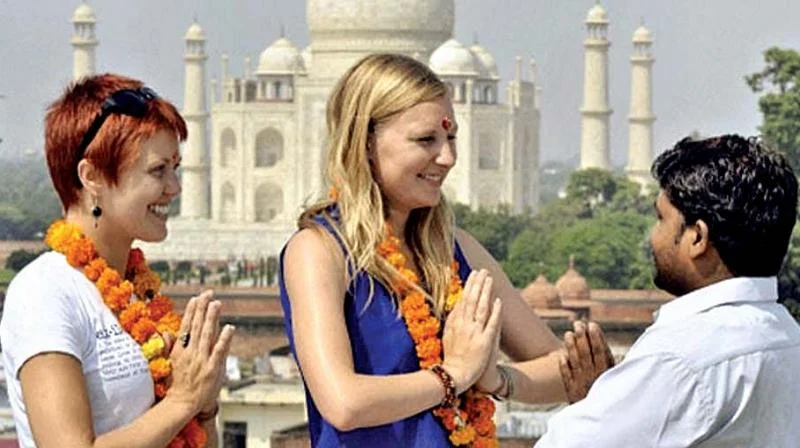
The US State Department Travel Advisory — What It Actually Means
The US State Department currently maintains a Level 2: “Exercise Increased Caution” advisory for India.
Before that sends you running — here’s the critical context: this is the same level applied to popular destinations like France, Italy, and Germany. It does not mean “don’t go.
The State Department uses four advisory levels:
| Level | Meaning | Examples |
|---|---|---|
| Level 1 | Exercise Normal Precautions | Canada, Japan, Ireland |
| Level 2 | Exercise Increased Caution | India, France, Italy, Germany, Spain |
| Level 3 | Reconsider Travel | Some regions in specific countries |
| Level 4 | Do Not Travel | Active conflict zones |
India sitting at Level 2 alongside some of the world’s most-visited tourist destinations tells you a great deal. It means there are risks worth being aware of — not that the country is dangerous for tourists.
Specific Level 3 and Level 4 warnings exist within India for: Manipur (Do Not Travel due to ongoing ethnic conflict), northeastern states including Assam, Nagaland, Mizoram, Tripura and Meghalaya (Reconsider Travel), and eastern regions of central India including parts of Maharashtra and Telangana (due to Maoist insurgent activity).
Here’s the critical point: none of these regions are on the standard tourist itinerary. The Golden Triangle (Delhi, Agra, Jaipur), Rajasthan, Kerala, Goa, and Varanasi — the places American tourists actually visit — are all well outside these restricted zones.
Destinations such as Rajasthan, Kerala, Goa, Delhi, Agra, and Mumbai remain widely visited by international travelers. The most common incidents affecting tourists are minor issues such as pickpocketing or travel scams rather than violent situations.
The Real Risks — Honest, Unfiltered
Here is what American tourists in India actually encounter, ranked by how likely you are to experience them:
1. Scams — Very Common, Very Manageable
This is the number one thing to prepare for. India has a well-developed ecosystem of tourist scams — not violent crime, but elaborate cons designed to separate you from your money.
The most common scams Americans encounter:
The “Closed Monument” Scam: A friendly stranger approaches near the Taj Mahal or Red Fort and tells you the monument is “closed today for cleaning / government holiday / special ceremony.” He offers to take you to his cousin’s shop instead. The monument is never closed. Walk away.
The Gem Export Scheme: A driver or guide takes you to a jewellery shop where a convincing salesman explains that you can buy precious gems at Indian wholesale prices and resell them in America for enormous profit. The gems are worthless. This is one of the oldest and most persistent scams in India — never buy gems based on a recommendation from your driver or guide.
The Fake Guide: Someone approaches at a monument claiming to be an “official government guide.” Official guides at major monuments wear identification badges and are booked through the monument ticketing office. Anyone approaching you unsolicited is not official.
The Rickshaw Bait-and-Switch: An auto-rickshaw driver agrees to take you somewhere for a very low price, then claims he knows a better version of the place — usually a shop where he earns commission. Agree on the destination firmly before getting in.
The Overpriced Everything: This isn’t exactly a scam — it’s simply dual pricing. Tourist prices at markets, rickshaws, and some restaurants are higher than local prices. Bargaining is expected at markets. Know the approximate local price before engaging.
How to avoid virtually all scams: Travel with a reputable tour operator that pre-arranges all your transport and guides. When your driver, guide, and accommodation are all booked through a vetted company, the entire scam ecosystem is bypassed.
2. Petty Theft — Common in Crowds, Easily Prevented
Pickpockets operate in crowded markets, train stations, airports, and around major monuments. Bag-snatching, purse-slitting, and elaborate tourist scams are the most reported issues by foreign travelers.
The prevention is simple and the same as in any crowded international city:
- Use a money belt or anti-theft bag worn under your clothing
- Keep your passport locked in your hotel safe and carry a photocopy
- Don’t flash expensive cameras, phones, or jewellery in markets
- Be particularly vigilant at Chandni Chowk in Delhi, around the Taj Mahal gate area, and at train stations
3. Stomach Issues — Common, Usually Mild
Traveller’s stomach is the most universally reported experience among American visitors to India. The good news: it is almost always mild, lasts 24–48 hours, and does not ruin trips.
The rules that prevent 90% of stomach problems:
- Never drink tap water — not even for brushing teeth. Bottled water only, with the seal intact when you open it
- No ice at street stalls or budget restaurants. Major hotels and reputable restaurants are generally fine
- Be selective with street food — eat at busy stalls where food is cooked hot and fresh in front of you, not sitting out
- Avoid raw salads and unpeeled fruit bought from unknown sources
- Carry Imodium and oral rehydration salts. You may not need them — but you’ll be glad to have them if you do
4. Intense Attention and Harassment — Uncomfortable but Rarely Dangerous
American tourists in India are visible. You will be stared at. People will approach you for photographs — particularly if you’re blonde, very tall, or visibly different from the local population. In tourist areas, vendors will be persistent.
This is uncomfortable but almost never dangerous. Understanding it as a cultural difference rather than a threat changes the experience significantly.
The most effective response: a calm, firm “no thank you” and keep walking. Engaging with persistent vendors or responding with anger escalates situations unnecessarily.
5. Road Safety — The Most Underrated Real Risk
This is the risk that most travel guides downplay and that our experience tells us is genuinely worth taking seriously. Indian roads have their own rules — or more accurately, a fluid set of understandings between drivers that takes years to internalise. Overtaking on blind corners, driving the wrong way, animals on highways, and aggressive horn use are all normal.
Getting around India can be difficult. Pedestrian travel can be challenging due to a combination of stifling heat, choking traffic, and pickpocket threats. In terms of intercity travel, overnight buses and trains can be dangerous — drink spiking and robberies are not unknown.
Our recommendation: Use only pre-arranged private transport from your tour operator, or established ride-hailing apps (Uber and Ola both operate across all major Indian cities). Never take unmetered, un-vetted taxis. Never take overnight buses. If you need to travel between cities, use the intercity train network (book in advance) or domestic flights.
6. Violent Crime Against Tourists — Rare
Violent crime against foreign tourists is rare in India. The State Department notes that while crime exists, attacks specifically targeting American tourists are uncommon. Most visitors complete their entire trip without experiencing anything more serious than an aggressive rickshaw driver or an overpriced souvenir pitch.
This is important context. The crimes reported in international media about India disproportionately involve domestic incidents — violence within families, communities, and workplaces. Tourist-targeted violent crime exists but is statistically very rare.
Region by Region — Where Is Safe for Americans?
India is roughly one-third the size of the US but with four times the population and enormous diversity in safety, infrastructure, and tourist infrastructure. Here is a straightforward breakdown:
✅ Safe and highly recommended for American tourists
Delhi (New Delhi) India’s capital is intense, chaotic, and extraordinary. It is also one of the world’s best-equipped cities for international tourists. Good infrastructure, Uber and Ola available everywhere, excellent international hotels, English widely spoken. Delhi is extremely well equipped for international travelers with good infrastructure. Exercise normal big-city caution — the same you would in New York or Chicago.
Agra Agra is primarily visited for the Taj Mahal and is a very well-managed tourist zone around the monument. The area around the Taj Mahal is heavily patrolled and extremely well-managed for international visitors. Outside the immediate tourist zone, Agra city is scrappier — but you’re unlikely to spend much time there.
Jaipur Rajasthan — including Jaipur, Jodhpur, Udaipur, and Jaisalmer — is India’s most visited tourist region. It has excellent infrastructure, an experienced tourism industry, and welcoming locals. Rajasthan as a whole is the most tourist-developed region in North India and the most comfortable for first-time American visitors.
Kerala is South India’s gem. It has a laid-back atmosphere, a highly educated population, excellent roads, and is very tourist-friendly. Generally considered the most comfortable Indian state for solo Western women travelers. Kochi, Alleppey, and Munnar are all excellent options.
Varanasi Intense, overwhelming, and spiritually unlike anywhere else on earth. Safe for tourists in the tourist areas along the Ganga ghats — but requires more alertness than Jaipur or Delhi. Stick to your guide, stay on the main ghats, and avoid wandering down unfamiliar lanes at night alone.
Goa India’s beach destination has a Western-friendly atmosphere, an international crowd, and a well-developed tourism scene. Popular with American tourists and generally very comfortable. Normal beach-destination precautions apply.
Ranthambore and other wildlife parks Wildlife reserves are among the safest environments in India for tourists. Controlled entry, managed jeep safaris, expert naturalist guides — the safari experience is well-run and very safe.
⚠️ Approach with additional caution
Mumbai is India’s most cosmopolitan city and generally considered safe with good infrastructure. However, like any megacity, standard urban safety precautions apply. Tourist-specific areas like Colaba, Bandra, and Marine Drive are safe and well-frequented by international visitors.
Kolkata: Generally safe for tourists in the main areas but requires more alertness. Criminals in Kolkata have targeted tourists whose first language is not English for express kidnappings where they befriend travelers by speaking their native language. Use only pre-arranged transport and avoid accepting help from strangers who approach you in languages other than English.
❌ Avoid — US State Department advises against travel
Jammu and Kashmir (except Ladakh/Leh) Do not travel to this area except for visits to the eastern Ladakh region and its capital, Leh, due to terrorism and civil unrest. Violence occurs in tourist spots in the Kashmir Valley including Srinagar, Gulmarg, and Pahalgam.
Manipur Do not travel to Manipur due to ongoing ethnic-based conflict which has resulted in extensive violence and community displacement.
India-Pakistan border region Do not travel to this area due to potential for armed conflict. India and Pakistan maintain a strong military presence on their respective sides of the border. Avoid areas within 10 kilometres of the India-Pakistan border.
Northeast states (Assam, Nagaland, Mizoram, Tripura, Meghalaya): Reconsider travel to these states due to the risk of violence from ethnic insurgent groups.
Important: None of these restricted regions appear on standard American tourist itineraries. The Golden Triangle, Rajasthan, Kerala, Goa, and Varanasi are all completely separate from these zones.
Is India Safe for Solo Female American Travelers?
This deserves its own honest section because it’s one of the most searched questions about India — and the answer is more nuanced than a simple yes or no.
The honest truth
India has a well-documented problem with sexual harassment and violence against women, and pretending otherwise doesn’t help anyone. It’s a deeply-rooted societal issue that Indian women themselves have been fighting hard to change for decades.
What solo female travellers are much more likely to encounter is opportunistic sexual harassment in public — things like intense staring, taking photos without asking, following you, suggestive comments, persistent hassling, and groping in densely crowded places or on public transport.
This is a real concern. It should not be minimised. And it should not stop American women from visiting India.
The data does suggest that the majority of violence against women in India occurs between people who know each other — in families, workplaces, and rural communities — rather than against foreign visitors in urban centres and tourist spots.
Millions of Western women visit India every year and have extraordinary, safe, deeply rewarding experiences. Many describe it as the most meaningful trip of their lives. The key is preparation — not avoidance.
Practical safety advice for solo female American travelers
Choose your destinations carefully. South India — particularly Kerala, Tamil Nadu, and Karnataka — is generally considered more comfortable for solo female travelers than North India. Cities like Kochi, Mysuru, Pondicherry, and the hill stations of Kerala are particularly popular with solo Western women travelers. If it is your first India trip, consider starting in the South.
Use a reputable tour operator. Booking a guided tour for your first India trip means a reputable operator provides a built-in safety net. At Squid Travel India, we arrange female guides at each destination upon request — something our clients consistently mention in their TripAdvisor reviews as making them feel significantly more comfortable.
Dress modestly. This is not about conforming to unfair expectations — it’s practical. Modest clothing covering shoulders and knees is both culturally respectful and practically reduces unwanted attention. In temples and mosques this is required regardless of gender.
Use only pre-arranged or app-based transport. Pre-arranging transportation services where possible — such as when you arrive at the airport by organising private transfers through your hotel, or using pre-paid taxis and app-based services — is strongly recommended. Uber and Ola operate across Delhi, Agra, Jaipur, Mumbai, and all major cities.
Trust your instincts. There’s an important difference between feeling unsafe and feeling uncomfortable. Learning to tell the difference is one of the most valuable skills you can develop as a solo female traveller. Always trust your gut and if a situation feels off, get out immediately.
Stay connected. Buy a local SIM card at Delhi airport on arrival. Having working data and the ability to call your hotel or tour operator at any moment significantly reduces risk.
Let someone know your itinerary. Share your daily plans with your hotel, your tour operator, and a contact back home.
Is India Safe for Families with Children?
Yes — India is a fantastic destination for families. Children are genuinely adored in Indian culture and will receive warm attention everywhere they go. Traveling with kids actually often makes interactions with locals more friendly and open.
The main considerations for families are the same as for any traveler, just amplified: food and water hygiene — kids can be more vulnerable to stomach upsets — and heat management.
Additional practical advice for families:
- Book hotels with pools — a pool is essential for a comfortable India trip with young children
- Plan shorter sightseeing days than you would without kids — Indian monuments involve significant walking on uneven stone surfaces in heat
- Carry more medication than you think you’ll need (fever reducer, antihistamine, diarrhoea treatment)
- Use only private AC transport — shared coaches or public transport with children is unnecessarily challenging
Our TripAdvisor reviews include multiple families with young children who traveled the Golden Triangle with us. One Japanese couple with two young kids mentioned that their guide arranged shorter walking routes and air-conditioned rest stops specifically for their children. This kind of personalised care is what makes India very manageable for families when done with the right operator.
Is India Safe for Senior American Travelers?
Yes — and India’s major tourist attractions are better equipped for senior travelers than many people assume.
The Taj Mahal has wheelchair-accessible paths and buggies available for visitors who cannot walk the full complex. Amber Fort in Jaipur offers jeep transport up to the gate for those who cannot manage the hill. Major hotels throughout the Golden Triangle are fully accessible.
The practical challenges for senior travelers are heat management (visit October to March), the uneven terrain of ancient monuments, and long driving days between cities. All of these are manageable with a well-structured private itinerary that builds in appropriate rest time and avoids the hottest months.
Practical Safety Checklist — What to Do Before You Go
Documents and registration
- ✅ Valid US passport — must have 6+ months validity beyond your India departure date
- ✅ India e-Visa — apply at indianvisaonline.gov.in, takes 72 hours, costs $25–$80
- ✅ Digital Arrival Card (Su-Swagatam) — mandatory as of April 2026, complete within 72 hours before landing at indianvisaonline.gov.in/earrival/
- ✅ Travel insurance — comprehensive international policy including medical evacuation. Your US health insurance almost certainly does not cover you in India. Medical evacuation from India to the US can cost $50,000–$100,000 without coverage.
- ✅ Register with STEP — the State Department’s Smart Traveler Enrollment Program at step.state.gov. Free, takes 5 minutes, means the US Embassy can contact you in an emergency
- ✅ Save the US Embassy Delhi number: +91-11-2419-8000
Health preparation
- ✅ Consult a travel health clinic 4–6 weeks before departure — not just your regular GP
- ✅ Vaccines to discuss: Hepatitis A (strongly recommended), Typhoid (strongly recommended), Tetanus-Diphtheria update, Hepatitis B (recommended), Rabies (discuss with doctor based on itinerary)
- ✅ Malaria prophylaxis — generally not required for the Golden Triangle but ask your doctor for your specific destinations
- ✅ Pack a pharmacy kit: Imodium, oral rehydration salts, antihistamine, pain reliever, antiseptic cream, prescription medications with extra supply
Money
- ✅ Notify your bank and credit cards before travel
- ✅ Carry some USD cash as backup (exchangeable at banks and airports in India)
- ✅ Current rate: $1 USD ≈ ₹85–87 (July 2026)
- ✅ Tipping: ₹200–500 ($2.50–$6) per day for drivers, ₹300–500 ($3.50–$6) per guide per half-day
Technology
- ✅ Buy a local SIM card at Delhi airport (approximately $5–$10, gives unlimited data)
- ✅ Download Uber and Ola before you arrive
- ✅ Download Google Maps offline for your destinations
- ✅ Power adapter: India uses Type C and D plugs, 230V
The 10 Smartest Safety Decisions You Can Make for Your India Trip
1. Book a reputable tour operator with verified international reviews This single decision eliminates most of the risks on this list. Pre-vetted drivers, guides, and accommodation means you operate inside a trust network rather than navigating everything solo.
2. Use only app-based or pre-arranged transport Uber and Ola are transparent, priced, and tracked. Never negotiate with unmetered taxis at airports. Never accept rides from strangers.
3. Drink only sealed bottled water — no exceptions This rule sounds rigid because it is. The one time most travellers get sick is the one time they bent this rule.
4. Don’t flash valuables Expensive cameras, designer bags, visible jewellery, and large amounts of cash in sight all make you a target for pickpockets. Keep valuables in an anti-theft bag under your clothing.
5. Register with STEP before you leave Takes 5 minutes at step.state.gov and means the US Embassy can reach you in a genuine emergency.
6. Buy comprehensive travel insurance Non-negotiable. Medical evacuation costs alone justify the $80–$150 typical policy cost many times over.
7. Share your itinerary with someone at home A daily check-in with a contact in the US provides a genuine safety net in the unlikely event something goes wrong.
8. Keep a photocopy of your passport separate from the original Your hotel safe holds the original. You carry the photocopy. If your passport is stolen, the copy significantly speeds up emergency document replacement at the US Embassy.
9. Learn 5 words of Hindi Namaste (hello/greeting), Shukriya (thank you), Haan (yes), Nahin (no), Kitna (how much). Using even these few words visibly changes how people interact with you — and signals cultural respect that defuses countless minor awkward situations.
10. Trust your instincts and leave uncomfortable situations immediately If a situation, person, or environment makes you feel genuinely unsafe — not just uncomfortable — leave. Don’t stay out of politeness. Get to a well-lit, populated place and contact your driver or tour operator.
Common Fears vs Reality — The Honest Comparison
| What Americans Fear | What Actually Happens |
|---|---|
| Violent crime targeting tourists | Extremely rare. Far more common: scams, overcharging, petty theft |
| Terrorism | Golden Triangle and tourist regions are not target areas. Level 2 advisory same as France/Italy |
| Getting seriously ill | Stomach adjustment common (1–2 days). Serious illness rare with basic precautions |
| Transport accidents | Real risk — mitigated entirely by using pre-arranged private transport |
| Getting lost or stranded | Uber/Ola work in all major cities. Your tour operator reachable 24/7 |
| Cultural misunderstanding causing danger | Easily avoided by modest dress, respectful behaviour, not photographing people without permission |
| Solo female danger | Real but specific — manageable with right operator, transport, destinations, and preparation |
| Not finding anything to eat | India is one of the world’s great food destinations. Vegetarian options available everywhere. |
Cultural Customs That Keep You Safe and Respected
Understanding local customs is one of the most effective safety tools available to American tourists. Showing respect reduces misunderstandings and makes people want to help you.
At temples and religious sites: Remove shoes before entering. Cover shoulders and knees — most temples provide cloth wraps if needed. Do not point your feet at religious images or people (feet are considered the lowest part of the body spiritually).
Photography: Always ask permission before photographing people, especially women in rural areas. At monuments, respect the no-photography zones — they exist and are enforced.
The right hand rule: Use your right hand for eating, handing things, and gesturing — the left hand is considered unclean in Indian culture.
The head wobble: The Indian side-to-side head wobble means “yes” or “I understand” — not “no.” This confuses many Western visitors and causes unnecessary miscommunication.
Public affection: Public displays of affection are frowned upon in most of India — keep it respectful in public. Couples holding hands is generally fine in tourist areas. Kissing in public is not.
Bargaining: Expected in markets and with rickshaws. Do it with a smile, not aggression. Decide your maximum price before engaging and stick to it.
Saying no: A firm, calm “no thank you” is far more effective than an aggressive response. Engaging with persistent vendors — even to argue — signals that persistence is working.
What Our American Clients Say
Our TripAdvisor reviews from American travellers tell the real story better than any safety guide can:
From our reviews: American couples from California, Texas, and New York have traveled the Golden Triangle with us and described feeling “completely safe and well cared for throughout.” Solo women from Japan, Spain, and the US have mentioned our arrangement of female guides at each destination as a highlight of their experience. Families with young children have praised the flexibility of our guides in adapting sightseeing to their kids’ pace and comfort.
The common thread: preparation, the right operator, and the right mindset make India not just safe but transformative.
The Bottom Line — Should Americans Visit India in 2026?
Yes.
India is safe to visit for Americans in 2026. Yes, there are regions to avoid. Yes, there are scams to be aware of. Yes, some extra precautions apply, particularly for solo women travelers. But millions of Western visitors come to India each year and return home with some of the most profound travel experiences of their lives — the Taj Mahal at dawn, a houseboat drifting through Kerala’s backwaters, the colors of Rajasthan’s desert cities, the ancient ghats of Varanasi.
India is not a passive destination. It rewards preparation. It rewards the right guide. It rewards curiosity over fear.
The Americans who visit India with the right operator, realistic expectations, and basic common-sense precautions do not come home talking about what they were afraid of. They come home talking about watching the sun rise over the Taj Mahal. About a tiger stepping out of the trees in Ranthambore. About the Ganga Aarti ceremony in Varanasi making them cry. About the warmth of people who made them feel welcomed in a country completely unlike their own.
That is the India that is waiting for you.
Plan Your Safe India Trip with Squid Travel India
At Squid Travel India, we have been organising safe, seamless India tours for American travellers for over 15 years. Every package includes:
- ✅ Pre-vetted, professional English-speaking drivers — background checked and long-term team members
- ✅ Expert English-speaking local guides at each city
- ✅ Hand-picked hotels — no surprises on arrival
- ✅ Private air-conditioned transport throughout — no shared coaches
- ✅ Female guides arranged at any destination on request
- ✅ Vivek Sharma personally reachable on WhatsApp before, during, and after your trip
- ✅ 24/7 on-trip support — a real person answers, always
- ✅ Free cancellation up to 24 hours before departure
📞 WhatsApp: +91 9818489607 📧 Email: squidtravelindia@gmail.com 🌐 Packages: Golden Triangle Tour Packages 🏆 TripAdvisor Travelers’ Choice Award Winner 2024–25
We reply within 24 hours — usually much faster. No obligation to book.
Frequently Asked Questions — India Safety for Americans
Is the US State Department warning about India serious? India holds a Level 2 “Exercise Increased Caution” rating — the same level as France, Italy, Germany, and Spain. It reflects general awareness, not a warning against travel. The specific Level 3 and Level 4 zones (Manipur, Kashmir, northeast states) are far from tourist itineraries.
Is Delhi safe for American tourists? Yes. Delhi is one of the world’s best-equipped cities for international visitors. Uber and Ola operate everywhere, English is widely spoken in tourist areas, and major hotels are excellent. Standard big-city precautions apply.
Is the Taj Mahal safe to visit? The Taj Mahal is one of the most visited and heavily managed tourist sites in the world. It is safe for all types of travelers.
Is India safe for first-time international travelers? Yes. India is visited by hundreds of thousands of first-time international visitors every year. The key is choosing a reputable tour operator, sticking to well-touristed regions, and following basic safety precautions. Most people leave saying India was one of the most extraordinary experiences of their lives.
Is India safe for solo male American travelers? Generally very safe. Male solo travelers have fewer specific safety concerns than female solo travelers. The main risks are petty theft and scams — both easily avoided with common sense.
What is the biggest health risk in India for Americans? Traveller’s stomach from contaminated water or food. Prevented almost entirely by drinking only sealed bottled water, eating at reputable restaurants, and carrying Imodium. Consult a travel health clinic about vaccines 4–6 weeks before departure.
Should I get travel insurance for India? Yes — non-negotiable. Your US health insurance almost certainly does not cover you abroad. Medical evacuation from India can cost $50,000–$100,000 without insurance. A comprehensive policy costs $80–$150 and covers medical emergencies, evacuation, trip cancellation, and lost luggage.
What app should I use for transport in India? Uber and Ola both operate across all major Indian cities. Both are safe, priced in advance, and tracked. Use either — they are the single most effective transport safety tool available to American visitors.

Comment (0)