

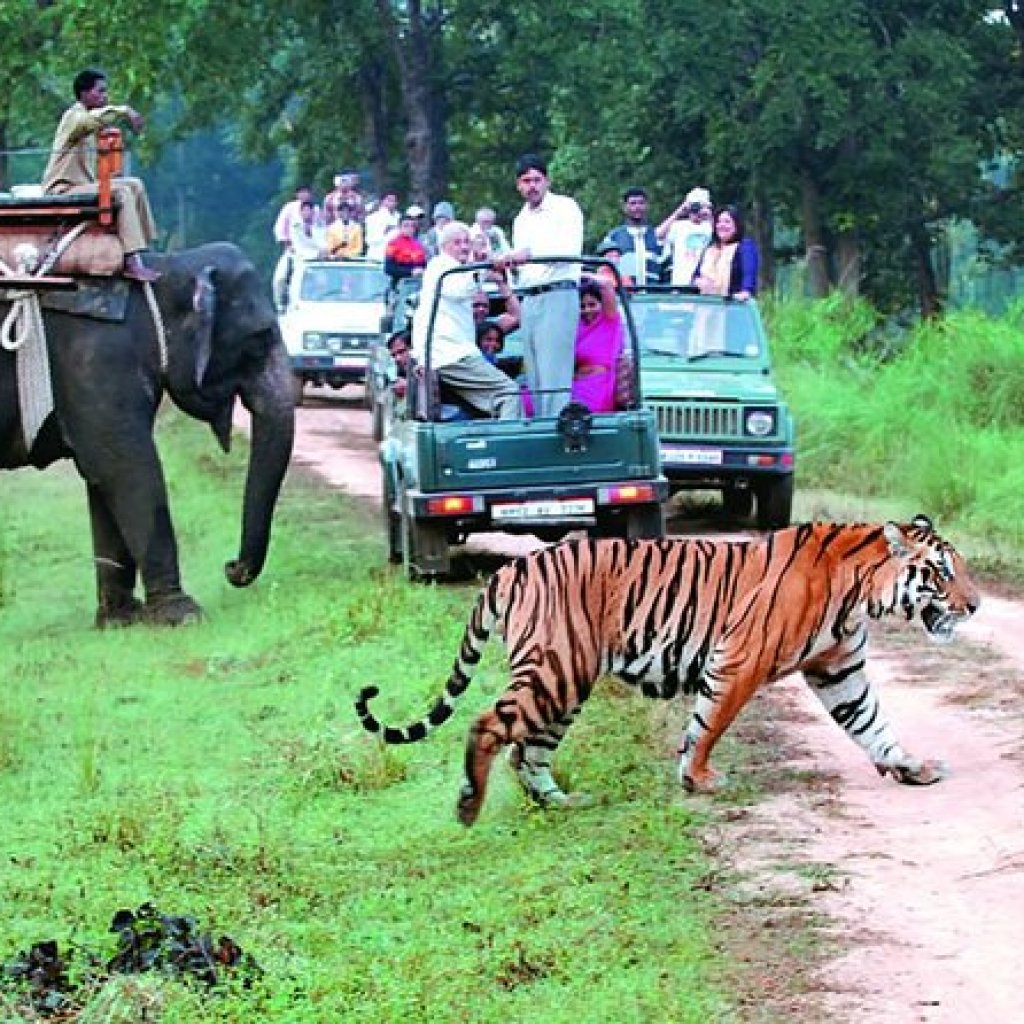
India’s forests hold something most wildlife destinations can’t promise: the tiger. Not glimpsed from a distance through a zoom lens, but close enough that you can hear it breathe before you see it move. Add in greater one-horned rhinos wading through Kaziranga’s tall grass, leopards draped over rocks in Jawai, and Asiatic lions patrolling Gir’s dry scrub — and you start to understand why India has quietly become one of the most serious wildlife destinations on the planet, not just an add-on to a Taj Mahal trip.
But here’s where most first-time visitors get stuck: which park, which season, how many days, and how to actually book something that isn’t a glorified jeep ride with a 40% chance of seeing anything. This guide answers all of that — based on how India’s safari system actually works, not how it’s marketed.
Why India Is a Serious Wildlife Destination (Not Just a Side Trip)
India holds over 50 tiger reserves under Project Tiger and is home to more than 70% of the world’s wild tiger population. That single fact changes the calculus for wildlife travelers — you’re not visiting India’s forests as a curiosity stop, you’re visiting the single best place on Earth to see a wild tiger.
But tigers are only the headline act. India’s national parks span six distinct ecosystems — the dry deciduous forests of central India, the wetlands of Assam, the Western Ghats rainforest, the Thar desert fringe, the Himalayan foothills, and the mangroves of the Sundarbans. That range means a wildlife trip here isn’t one safari repeated five times; it’s genuinely different terrain, different species, and different rhythms depending on where you go.
The trade-off: India’s safari system is permit-based, zone-restricted, and seasonal in a way that punishes unplanned trips. Show up without research and you’ll spend three days driving between parks that are closed, fully booked, or simply the wrong choice for what you wanted to see.
The National Parks That Actually Matter (And What Each One Is Best For)
Ranthambore National Park, Rajasthan — Best for Tiger Sightings
Ranthambore has the highest tiger-sighting probability of any park in India, largely because its tigers are unusually comfortable around vehicles and the terrain — dry forest with open lake beds and ruined fortifications — offers long sightlines. Zones 1, 2, 3, and 10 are consistently the strongest for sightings, though zone allocation is randomized at booking, so you can’t always choose.
Best for: first-time tiger seekers, travelers combining wildlife with the Golden Triangle (it’s a comfortable add-on from Jaipur or Delhi).
Bandhavgarh National Park, Madhya Pradesh — Highest Tiger Density in India
Bandhavgarh has the highest density of tigers per square kilometer of any reserve in the country. The park is smaller and more compact than Ranthambore, which paradoxically makes sightings more frequent — there’s simply less ground for a tiger to disappear into.
Best for: travelers who want the strongest statistical odds of a tiger sighting in the shortest trip.
Kaziranga National Park, Assam — The Rhino Capital of the World
Kaziranga holds roughly two-thirds of the world’s greater one-horned rhinoceros population. The park also hosts wild water buffalo, swamp deer, and a healthy tiger population, but the rhino is the reason people fly across the country to get here. Elephant-back safaris through the tall grasslands here remain one of India’s most distinctive wildlife experiences, alongside the standard jeep safari.
Best for: travelers prioritizing rhino sightings and grassland/wetland ecosystems over forest terrain.
Jim Corbett National Park, Uttarakhand — India’s Oldest and Most Scenic
Corbett was India’s first national park, established in 1936, and it remains the most visually dramatic — set against the Himalayan foothills with the Ramganga River running through it. Tiger sightings here are less predictable than Ranthambore or Bandhavgarh, but the landscape and birdlife (over 600 species recorded) make it worthwhile even on quieter game-drive days.
Best for: travelers who want scenery and biodiversity alongside tiger potential, and anyone combining wildlife with a Himalayan foothill stay.
Gir National Park, Gujarat — The Only Place to See Wild Asiatic Lions
Gir is the world’s last natural habitat for the Asiatic lion. Unlike the African lion, Asiatic lions are smaller, more solitary, and found nowhere else on Earth in the wild. If lions matter more to you than tigers, this is a non-negotiable stop, and there’s no substitute park.
Best for: lion sightings specifically — this isn’t optional if it’s on your list, since Gir has a true wildlife monopoly here.
Periyar National Park, Kerala — Best for a Different Pace
Periyar swaps jeep safaris for boat rides across Periyar Lake, with sightings of elephants, gaur (Indian bison), and occasional tigers along the shoreline. It’s a gentler, more atmospheric experience than the central Indian parks, set in Western Ghats rainforest.
Best for: travelers combining wildlife with Kerala’s backwaters, or anyone wanting a lower-intensity safari pace.
Best Time to Visit for Wildlife: A Month-by-Month Reality Check
Most general “best time to visit India” advice is written for monument tourism, not wildlife — and the two don’t always align.
November to February is comfortable weather across most parks but not peak sighting season. Vegetation is still dense from the monsoon, giving animals more cover. Good for first visits and combining wildlife with sightseeing, but expect more patience required for sightings.
March to mid-June is genuinely the best window for tiger and wildlife sightings, despite the heat. As temperatures climb past 40°C in central India, water sources shrink to a handful of visible points, and animals — tigers especially — are forced into the open near waterholes to drink and cool off. April and May are peak sighting months in Ranthambore and Bandhavgarh specifically, at the cost of serious heat that not every traveler can handle comfortably.
Mid-June to September is monsoon season, and most central Indian parks (Ranthambore, Bandhavgarh, Kanha) close entirely for this period — typically July 1st through September 30th. Kaziranga also closes for monsoon flooding. This is the one window where you genuinely cannot plan a central India tiger safari at all, so check park-specific closure dates before booking anything in this window.
October is when parks reopen post-monsoon — lush, green, fewer crowds, but vegetation density means lower sighting odds than the March-June peak.
The honest framing: if maximizing tiger sightings is your single priority, target April-May and accept the heat. If comfort matters more than odds, go November-February and manage expectations on sightings.
How Many Days You Actually Need
A single-park safari trip needs a minimum of 3 days at that park to get 4-5 game drives in — enough to meaningfully improve your odds without depending on a single lucky drive. Anything shorter and you’re gambling on one or two attempts.
A multi-park itinerary (commonly Ranthambore + Bandhavgarh, or a central India circuit covering Bandhavgarh, Kanha, and Pench) typically runs 7-10 days including travel between parks, since most parks aren’t connected by direct flights and require 4-6 hour drives or train transfers.
A combination trip — Golden Triangle plus one wildlife park — adds comfortably onto an existing Delhi-Agra-Jaipur itinerary, since Ranthambore sits roughly 5-6 hours from Jaipur by road or a short train ride, making it the easiest wildlife add-on for first-time India visitors who don’t want to build an entirely separate trip around it.
What a Safari Actually Involves (So You’re Not Surprised)
Indian national parks operate on a permit and zone system — each park is divided into multiple zones, and most parks allocate a specific zone to your vehicle for that drive rather than letting you roam freely. Permits for popular zones in Ranthambore and Bandhavgarh often sell out weeks in advance during peak season, which is the single most common planning mistake first-time visitors make: booking accommodation first and safari permits as an afterthought.
Game drives typically run twice daily — early morning (roughly 6-9:30am, timing shifts seasonally) and late afternoon (roughly 2:30-6pm) — in open-top jeeps (Gypsies) seating 5-6 people, or larger canter vehicles in some zones. Mornings tend to offer better activity and cooler temperatures; afternoon drives in summer can be brutally hot but occasionally yield strong waterhole sightings.
A naturalist or forest department guide accompanies every safari by law — a good naturalist is genuinely the difference between a forgettable drive and a trip-defining one, since they read pugmarks, alarm calls, and animal behavior in ways a self-guided visit simply can’t replicate.
Planning Your Own India Wildlife Trip: The Practical Checklist
- Book safari permits 60-90 days ahead for peak season (March-May) parks like Ranthambore and Bandhavgarh — popular zones sell out fast.
- Check park closure dates before locking any itinerary — central India parks close completely for monsoon (roughly July-September).
- Match the park to what you actually want to see — tigers (Ranthambore, Bandhavgarh, Corbett), rhinos (Kaziranga), lions (Gir only), or a gentler pace (Periyar).
- Budget 3+ days per park minimum — single-drive visits dramatically underperform on sightings.
- Decide heat tolerance vs sighting odds honestly — April-May maximizes sightings but means serious heat; November-February is comfortable but quieter on sightings.
- Use a local operator for permit booking — forest department permit systems are notoriously clunky for international bookings, and a local operator with standing relationships gets better zone allocations than a same-day online booking.
Final Thought
A good India wildlife trip isn’t about cramming in every park — it’s about picking one or two that match what you actually want to see, timing it against the season that gives you real odds, and not under-budgeting the number of drives it takes to get a genuine sighting. Tigers, rhinos, and lions in the wild are not guaranteed on any single trip anywhere in the world — but India gives you better odds than almost anywhere else, if the trip is built around the animal you came for instead of around a generic itinerary template.

Comment (1)