

They call it the Princess of Hill Stations — and once you’ve stood on Coaker’s Walk watching the morning mist roll through the valleys 7,000 feet below, or cycled around the star-shaped lake as pine trees brush the silver sky, you’ll understand why Kodaikanal has held that title for over a century.
Tucked into the Palani Hills of Tamil Nadu, Kodaikanal sits at 2,133 metres above sea level — a world away from the plains below. The air is cool and clean. The roads are lined with eucalyptus and pine. Waterfalls appear around unexpected corners. And the viewpoints, one after another, deliver the kind of panoramic drama that makes you stop mid-sentence and simply stare.
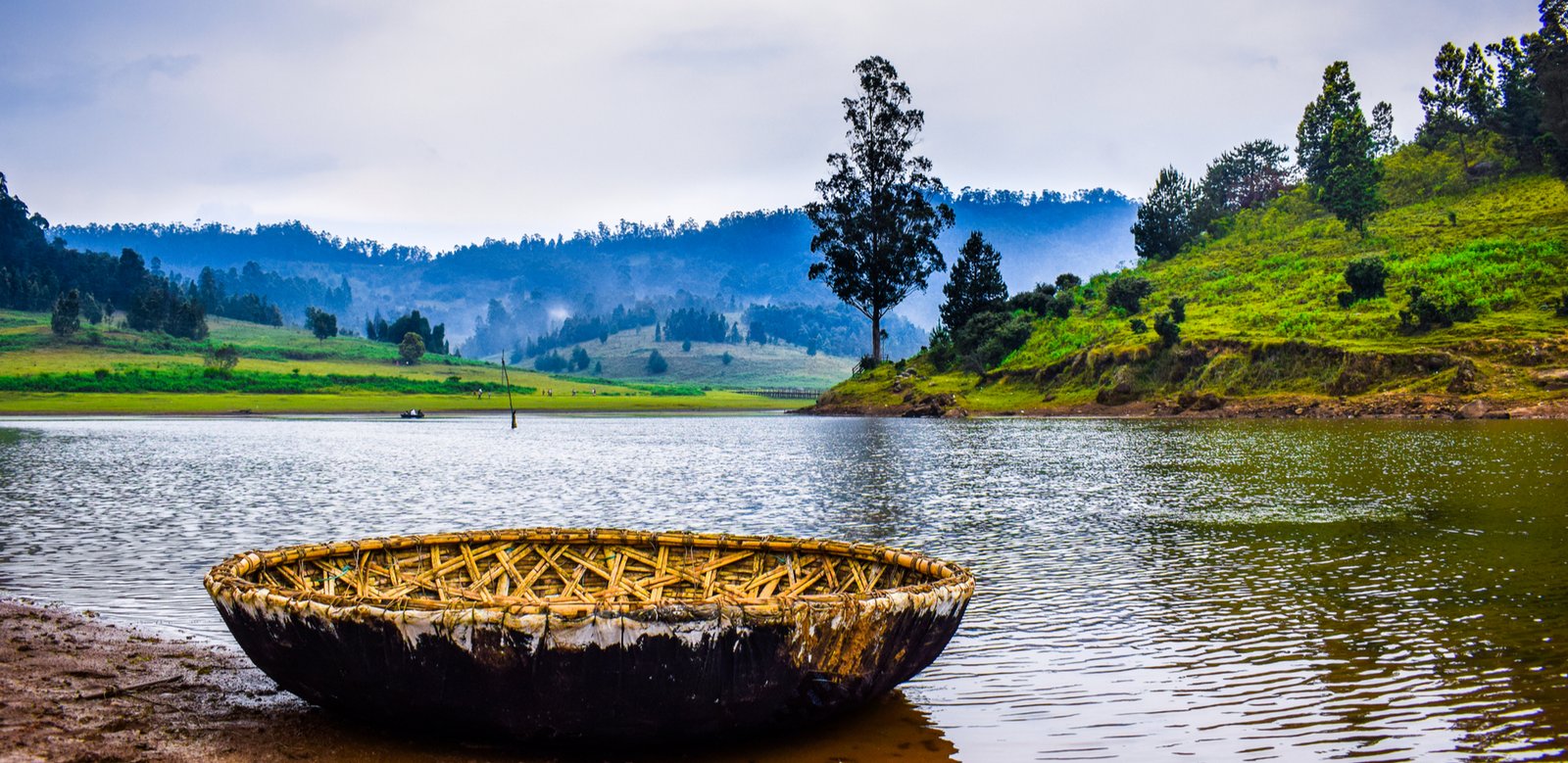
This is your complete 2026 guide to the best places to visit in Kodaikanal — every attraction, every viewpoint, every hidden gem, with timings, entry fees, and honest tips for making the most of every hour you’re here.
Quick Facts: Kodaikanal at a Glance
| Location | Palani Hills, Dindigul District, Tamil Nadu |
| Altitude | 2,133 metres (6,998 feet) above sea level |
| Nicknamed | Princess of Hill Stations |
| Best time to visit | October to June (avoid July–August monsoon peak) |
| Ideal trip length | 2–4 days |
| Nearest airport | Madurai (120 km, approximately 3.5 hours) |
| Nearest railway station | Kodai Road (80 km, then bus or taxi) |
| Language | Tamil (English widely understood in tourist areas) |
| Temperature range | 8°C–20°C (October–February), 15°C–25°C (March–June) |
1. Kodaikanal Lake — The Heart of the Hill Station
Every Kodaikanal visit begins and ends at the lake. Kodaikanal Lake — locally called Kodai Lake — is a star-shaped man-made reservoir covering approximately 60 acres, built during British rule in 1863 and surrounded by a 5-kilometre paved path that makes for one of the finest lakeside walks in South India.
The lake is the soul of Kodaikanal. In the early morning, mist drifts across the water as the hills emerge from cloud. By mid-morning, the surface sparkles and boatmen push off from the jetty in colourful pedal boats and rowboats. By afternoon, the path buzzes with cyclists, couples on hired horses, and vendors selling roasted corn and home-made chocolate — Kodaikanal’s famous contribution to Indian confectionery.
What to do at Kodaikanal Lake:
- Boating — pedal boats, rowboats, and kayaks available for hire. Cost: approximately ₹100–200 per person for 30 minutes
- Cycling — bicycles available for hire at multiple points around the lake. The 5-km lakeside circuit takes about 45 minutes at a gentle pace
- Horse riding — horses and ponies available for riding on the lakeside path
- Walking — simply walking the full circuit, especially in the early morning or at sunset, is one of Kodaikanal’s finest experiences at no cost
Practical details:
- Best time: Early morning (7:00–9:00 AM) for mist and fewer crowds. Sunset (5:30–7:00 PM) for golden light on the water
- Entry: Free to walk around. Boating and cycling charges apply per activity
- Location: Town centre — within walking distance of most hotels
2. Coaker’s Walk — The Most Beautiful Stroll in Kodaikanal
If Kodaikanal Lake is the heart of the hill station, Coaker’s Walk is its soul. Built in 1872 by Lieutenant Coaker, this paved kilometre-long clifftop path skirts the edge of the hills on the southern face of Kodaikanal, offering panoramic views over the valleys, plains, and distant hills of Tamil Nadu.
On clear days — typically October to February — the view from Coaker’s Walk is extraordinary. The plains of Madurai and Dindigul stretch out thousands of metres below, tiny roads and villages visible in the haze. Ancient temple gopurams catch the light. The Vaigai River glints in the distance.
On misty days — which are frequent — Coaker’s Walk is equally magical in a completely different way. The fog rolls in from the valley below, enveloping the path in white. Suddenly the world disappears. Then, as the mist shifts, a valley reveals itself for a moment before vanishing again. The rare “Brocken spectre” phenomenon — where your shadow is projected onto the mist and surrounded by a rainbow halo — can occasionally be seen here at just the right moment.
Practical details:
- Timings: 7:00 AM – 7:00 PM daily
- Entry fee: ₹5 per person (nominal)
- Telescope house: A small telescope viewpoint on the walk charges approximately ₹10 for a closer look at the valleys below
- Best time: Early morning for mist effects and the best light for photography. Late afternoon for clear views if the weather cooperates
- Location: 1 km from Kodaikanal Lake, easily walkable from town
3. Pillar Rocks — Kodaikanal’s Most Dramatic Natural Landmark
Seven kilometres from the town centre along Golf Link Road, three massive granite pillars rise 400 feet vertically from the valley floor — standing together like sentinels above the misty Western Ghats. These are the Pillar Rocks, Kodaikanal’s most dramatic natural landmark and one of the finest viewpoints in Tamil Nadu.
The rocks themselves are extraordinary — sheer granite columns of geological antiquity standing at the edge of a deep valley. Surrounded by mist on most mornings, they appear and disappear from view as the fog shifts, making the experience entirely different depending on the time you visit. Photographers find the conditions here exceptional — the drama of the rocks against moody monsoon clouds or clear blue winter skies makes for genuinely compelling images.
Adjacent to the Pillar Rocks viewpoint is a beautifully maintained garden — ideal for a picnic and a rest after the drive from town. The gap between the rocks leads to the entrance of Guna Caves nearby.
Practical details:
- Timings: 9:00 AM – 5:00 PM daily
- Entry fee: ₹30 per person (garden entry)
- Best time: Early morning for mist drama; late morning for clearer views
- Photography tip: Arrive at 9:00 AM opening for the best mist conditions before the fog lifts
4. Guna Caves (Devil’s Kitchen) — The Most Mysterious Spot in Kodaikanal
Adjacent to Pillar Rocks and reached through the gap between the granite columns, Guna Caves are a series of caverns and passages formed by three massive boulders that have come to rest against each other — creating natural chambers of considerable depth and darkness.
Made famous by the 1991 Tamil film “Guna” starring Kamal Haasan, the caves are locally called Devil’s Kitchen after an earlier designation, and are now officially named Guna Caves after the film that brought them national attention. The caves are genuinely atmospheric — damp, dark, and mysterious, with passages that descend into shadow and chambers where the sound of dripping water echoes.
Important note: The caves are currently partially restricted for safety reasons — some of the deeper passages are closed to visitors. Entry is permitted to the outer cave areas with a guide. Always follow safety instructions from the forest department guides stationed at the entrance.
Practical details:
- Timings: 9:30 AM – 4:30 PM (check locally as timings can vary)
- Entry fee: ₹15–30 per person
- Important: Do not enter without a guide. Do not venture into restricted sections
- Getting there: Reached through the Pillar Rocks viewpoint area, approximately 7 km from town
5. Bryant Park — A Botanical Garden Worth the Visit
Spread across 20 acres on the eastern shore of Kodaikanal Lake, Bryant Park is a beautifully maintained botanical garden established in 1908 and named after H.D. Bryant, a forest officer who developed the original garden. Today it contains an extensive collection of roses, ferns, orchids, bonsai, and rare Himalayan and exotic plants — more than 700 species in total.
The park is particularly stunning during the Kodaikanal Flower Show, held annually in May, when the gardens are at their most elaborate and competitive — flower arrangements, vegetable sculptures, and horticultural displays that draw visitors from across South India.
For walkers, the meandering paths through Bryant Park provide one of Kodaikanal’s most peaceful morning experiences. The garden slopes down to the lake shore, offering water views through the trees and a genuinely tranquil environment even when the town itself is busy.
Practical details:
- Timings: 9:00 AM – 6:30 PM daily
- Entry fee: ₹15 for adults, ₹5 for children
- Best time: Morning (9:00–11:00 AM) when the flowers are freshest and the garden is least crowded
- Flower Show: Held every May — check exact dates for 2026
6. Green Valley View (formerly Suicide Point) — The Most Dramatic Viewpoint
Located approximately 5.5 km from the town centre near Pillar Rocks, Green Valley View — renamed from its old designation “Suicide Point” — is one of the most dramatic viewpoints in Kodaikanal. Perched at an altitude of approximately 2,200 metres, the viewpoint looks out over a sheer 5,000-foot drop into the valley below — a genuinely vertiginous experience.
On clear days, the Vaigai Dam is visible in the distance, surrounded by the lush green Palani Hills rolling away in every direction. The safety fencing installed in recent years makes the viewpoint comfortable for all visitors, though the sense of height and depth remains extraordinary.
The valley earned the green in its new name from the intensely lush vegetation visible on the slopes below — particularly dramatic in the post-monsoon months when every hillside is vivid green.
Practical details:
- Entry fee: ₹5 (nominal)
- Best time: Early morning or late afternoon for the best light
- Combined visit: Easily combined with Pillar Rocks and Guna Caves in a single half-day excursion
7. Silver Cascade Falls — The Gateway Waterfall
For most visitors arriving in Kodaikanal from Madurai or Dindigul by road, Silver Cascade Falls is the first dramatic landmark on the approach. Located approximately 8 km below Kodaikanal town on the main road up the hill, this 180-foot waterfall is fed by the outflow from Kodaikanal Lake — which is why it flows consistently throughout the year rather than only during monsoon.
The falls are accessible directly from the roadside — a viewing area allows you to see the water cascade down the rocky hillside into a pool below. Local vendors selling fresh fruit, homemade chocolate, and handicrafts cluster around the viewing area, giving it a lively, festive atmosphere.
Silver Cascade is best visited during or immediately after monsoon (September–November) when the water volume is at its greatest. In the dry season the flow reduces but remains present due to the lake outflow.
Practical details:
- Timings: Open throughout the day
- Entry fee: Free
- Best time: Post-monsoon (September–November) for maximum water flow
- Location: On the main Kodaikanal–Palani Road, 8 km below town
8. Bear Shola Falls — The Hidden Forest Waterfall
Just 2 kilometres from Kodaikanal Lake, Bear Shola Falls is one of those places that rewards visitors who make a small effort to find it. Named for the bears that were historically sighted drinking here — shola means forest in the local context — these falls cascade into a small pool within dense forest that provides welcome shade even on warmer days.
Unlike the accessible Silver Cascade Falls on the main road, Bear Shola requires a short forest walk through eucalyptus and native shola forest. The path is well-maintained and the forest environment is genuinely lovely. The falls are most impressive during and after monsoon season (July–October) when water volume is high. In drier months (February–May) the flow reduces significantly.
The forest surrounding Bear Shola Falls is home to a variety of birds and occasionally Nilgiri langurs — one of the endemic primates of the Western Ghats. Birdwatchers should bring binoculars.
Practical details:
- Entry fee: ₹10–20 per person (nominal forest department charge)
- Getting there: 2 km from Kodaikanal Lake — reachable on foot or by bicycle
- Best time: Morning, and post-monsoon months for the best water flow
9. Berijam Lake — Kodaikanal’s Most Pristine Hidden Gem
For visitors who want to escape the tourist circuit entirely, Berijam Lake is the destination that most Kodaikanal visitors never reach — and the one that leaves the deepest impression on those who do.
Located 21 kilometres from Kodaikanal town at the end of a winding forest road, Berijam Lake is a reservoir surrounded by dense shola forest within the Kodaikanal Wildlife Sanctuary. The forest around Berijam is genuinely wild — leopards, gaur (Indian bison), spotted deer, giant squirrels, and over 200 species of birds are resident or migratory here.
The lake itself is serene to a degree that town-centre Kodaikanal simply cannot match. No crowds. No vendors. No noise. Just the lake, the forest, and the remarkable biodiversity of the Western Ghats.
Important: Access to Berijam Lake requires prior permission from the Forest Department in Kodaikanal town. Only a limited number of vehicles are permitted per day. The entry process involves registering at the Forest Department office and paying entry fees.
Practical details:
- Permission required: Forest Department, Kodaikanal (apply in person at their office)
- Vehicle limit: Limited permits per day — apply early (ideally the day before)
- Entry fee: Approximately ₹150 per person + vehicle charges
- Timings: 7:30 AM – 3:30 PM (must leave the forest before sunset)
- Best time: November to May for the best wildlife sighting conditions
10. Pine Forest — Walking Beneath the Trees
The Pine Forests of Kodaikanal are among the hill station’s most atmospheric and easily accessible natural environments. There are two main pine forest areas — Pine Forest 1 near the Solar Observatory on the Berijam Road, and Pine Forest 2 near Moir Point — both offering the distinctive experience of walking beneath towering Pinus patula trees whose long, soft needles create a carpet on the forest floor and a cathedral-like canopy overhead.
The pine forests of Kodaikanal have served as filming locations for numerous Tamil and Hindi films, giving them a certain cinematic familiarity. But in person, they are something different again — quiet, fragrant, and extraordinarily peaceful. Morning mist filtering through the tall trunks creates an otherworldly quality.
Cycling through the pine forest roads is one of Kodaikanal’s finest simple pleasures. The roads are quiet, the gradient gentle in most sections, and the environment completely unlike anything found in the plains below.
Practical details:
- Entry: Generally free for walking. Forest roads accessible by bicycle or on foot
- Best time: Early morning for mist in the trees
- Combined activity: Cycle from town through the pine forest roads — bicycles available for hire near Kodaikanal Lake
11. Dolphin’s Nose — The Unmissable Trek Viewpoint
Approximately 8 km from Kodaikanal town near the village of Vattakanal, Dolphin’s Nose is a distinctive rock formation that juts out over the valley — its shape resembling the nose of a dolphin from certain angles. The viewpoint offers a dramatic view of Echo Valley and the sheer cliffs of the surrounding Palani Hills.
The trek to Dolphin’s Nose from Vattakanal village is one of the most popular short treks in Kodaikanal — approximately 2.5 km one-way through forest and grassland, with the final approach along a narrow ridge above the valley. The views on the approach and at the viewpoint are exceptional.
The area around Vattakanal is known for its waterfalls — particularly La Saleth Falls (also called Vattakanal Falls or Fairy Falls) — which are accessible on the trek route.
Practical details:
- Trek difficulty: Easy to moderate — suitable for most fitness levels
- Trek distance: Approximately 5 km return from Vattakanal
- Getting there: Auto-rickshaw or taxi from Kodaikanal town to Vattakanal (approximately 8 km)
- Best time: Morning — clouds often obscure the view from early afternoon
- Guide recommended: For first-time visitors unfamiliar with the trails
12. Mannavanur Lake — The Secret Worth the Drive
34 kilometres from Kodaikanal town, Mannavanur is a small village in the Palani Hills that surrounds a freshwater lake of extraordinary serenity. Set between rolling green hills of the Nilgiris, Mannavanur Lake is everything Kodaikanal Lake aspires to be in terms of raw natural beauty — with none of the crowds.
The shores of the lake are home to a variety of waterbirds. The surrounding hills are covered with grasslands grazed by sheep and goats from the local pastoral community — giving the landscape a quality more reminiscent of Scotland or New Zealand than Tamil Nadu. Boat rides are available on the lake.
Because of its distance from town, Mannavanur sees relatively few visitors. The drive itself — winding through high-altitude shola forests and grasslands — is spectacular. This is a full half-day or full-day excursion from Kodaikanal and should be planned accordingly.
Practical details:
- Distance: 34 km from Kodaikanal town (approximately 1.5 hours by road)
- Getting there: Hire a private taxi or auto-rickshaw for the day — public transport options are limited
- Entry fee: Small fee for boating
- Best time: Morning for the clearest views and calmest water
13. Solar Observatory — A Unique Scientific Attraction
The Kodaikanal Solar Observatory, established in 1899 and still operational, is one of the oldest and most respected astronomical research institutions in Asia. Managed by the Indian Institute of Astrophysics, the observatory occupies a prime hilltop location and has been recording solar activity continuously for over 120 years — generating a dataset of extraordinary scientific value.
The observatory opens its telescope and archival facilities for guided public tours. Visitors can view solar phenomena through the observatory’s instruments and see the historical records of sun spot activity that stretch back over a century. For anyone with an interest in astronomy or science history, this is a genuinely fascinating visit.
Practical details:
- Public visiting hours: Typically 10:00 AM – 12:00 PM and 2:00 PM – 4:00 PM (confirm timings locally as they change periodically)
- Entry fee: Small fee for public tours
- Location: Near Pine Forest 1, approximately 3 km from town centre
14. Perumal Peak Trek — For Serious Hikers
For trekkers who want to go beyond Dolphin’s Nose, Perumal Peak offers the most challenging and rewarding trekking experience in the Kodaikanal area. The peak stands at 2,440 metres — the highest point in the Perumalai Hills — approximately 18 km from Kodaikanal town, and involves a full-day trek through dense shola forest and grassland.
The views from the summit on a clear day encompass the entire Palani Hills range, the plains of Tamil Nadu stretching to the horizon, and on exceptionally clear days, the distant peaks of the Western Ghats. The biodiversity en route is exceptional — Nilgiri martens, giant squirrels, endemic birds, and rare orchids all inhabit the forest through which the trail passes.
Practical details:
- Difficulty: Challenging — suitable for fit trekkers with previous hill trekking experience
- Duration: Full day (7–8 hours return)
- Distance: Approximately 18 km from Kodaikanal
- Guide: Essential — do not attempt without a local guide
- Best season: November to April (avoid monsoon months)
15. Kodaikanal Market — Chocolate, Honey & Local Crafts
No visit to Kodaikanal is complete without exploring the town’s distinctive market — a compact area near the bus stand and lake road where vendors sell the products that Kodaikanal is uniquely famous for.
Home-made chocolate is Kodaikanal’s most distinctive food product — the hill station has a long tradition of artisanal chocolate-making and the variety available in the market is extraordinary. Dark chocolate, fruit and nut, spiced chocolate, chocolate fudge — the quality is genuinely excellent and the prices reasonable. Buy more than you think you need.
Natural honey from the Palani Hills is among the finest in South India — multifloral, eucalyptus, and shola forest honey varieties are all available. Local honey sellers will let you taste before buying.
Eucalyptus and essential oils — the forests around Kodaikanal produce excellent eucalyptus oil, used medicinally and as an insect repellent. Available in the market in small bottles.
Home-made jam and preserves — using the plums, pears, and exotic fruits grown in the hill station’s gardens. Particularly good in October–December when the fruit harvest season peaks.
Handmade shawls and woollens — the cool climate means local weavers produce excellent woollen products, often in the colourful Palani Hills tribal patterns.
Practical tips for the market:
- Bargain respectfully — prices are fair but negotiable
- Buy chocolate early in your trip so it doesn’t melt (Kodaikanal is cool enough that this isn’t usually a problem)
- The best honey sellers are typically slightly off the main tourist strip — ask your accommodation host for recommendations
Best Time to Visit Kodaikanal
October to February — Peak Season (Highly Recommended)
The finest weather Kodaikanal offers. Temperatures range from 8°C to 20°C. Clear mornings and crisp air make viewpoints and trekking excellent. Coaker’s Walk offers its clearest valley views. Bryant Park is colourful with winter blooms. This is the best time for photography and outdoor activities.
March to May — Shoulder Season (Also Good)
Temperatures rise slightly (15°C–25°C) but remain comfortable by plains standards. This is the peak Indian domestic tourist season with holiday crowds arriving from Tamil Nadu and neighbouring states. The Flower Show in May is a highlight. Book accommodation well in advance.
June to September — Monsoon (With Caveats)
Heavy rainfall through July and August with misty, dramatically atmospheric conditions. Silver Cascade Falls and Bear Shola Falls are at their most impressive. The forests are intensely green. Waterfalls appear everywhere. Road conditions can be challenging and some viewpoints are mist-obscured for days at a time. Best for travelers who embrace rain. Not recommended for trekking.
How to Reach Kodaikanal
By Air: The nearest airport is Madurai International Airport, approximately 120 km (3.5 hours by road). Taxis and buses are available from the airport.
By Train: Kodai Road railway station, 80 km from Kodaikanal, connects to major Tamil Nadu cities. From Kodai Road, taxis and shared buses run to the hill station. The drive from Kodai Road is approximately 2 hours on winding mountain roads.
By Road: Kodaikanal is well-connected by road to Madurai (120 km), Coimbatore (175 km), and Chennai (450 km). Tamil Nadu State Transport buses operate regular services. Private taxis and self-drive options are available from all major nearby cities.
Where to Stay in Kodaikanal
Budget: Multiple guesthouses and homestays around the lake road offer simple, clean accommodation from ₹800–1,500 per night.
Mid-range: Several well-regarded hotels within walking distance of the lake offer comfortable rooms with valley or lake views at ₹2,500–6,000 per night.
Luxury: A small number of heritage bungalows and boutique properties offer the finest Kodaikanal accommodation experience, including properties with private gardens and hill views, at ₹8,000–20,000 per night.
Plan Your South India Tour with Squid Travel India
Kodaikanal makes an excellent addition to a South India tour combining the cultural heritage of Madurai (home of the spectacular Meenakshi Amman Temple), the backwaters of Kerala, and the colonial charm of Kochi.
At Squid Travel India, we organise customised South India tours combining Kodaikanal with Madurai, Ooty, Munnar, and the Kerala backwaters. Our packages include private AC transport, hand-picked accommodation, local expert guides, and 24/7 on-trip support.
📞 WhatsApp: +91 9818489607 📧 Email: squidtravelindia@gmail.com 🌐 Browse packages: squidtravelindia.com 🏆 TripAdvisor Travelers’ Choice Award Winner 2024–25
We reply to all enquiries within 24 hours. Free quote, no obligation.
Frequently Asked Questions
How many days are enough for Kodaikanal? 2 to 3 days is ideal for covering the main attractions comfortably. With 4 days you can include Berijam Lake, Mannavanur, and a day trek to Dolphin’s Nose or Perumal Peak.
Is Kodaikanal better than Ooty? Both are excellent hill stations with different characters. Kodaikanal is generally considered less crowded and more natural in atmosphere. Ooty has better connectivity and more established infrastructure. Kodaikanal suits those who prefer quieter, more intimate hill experiences. Ooty suits those who want easier access and more amenities.
What is Kodaikanal famous for? Kodaikanal is famous for its star-shaped lake, the viewpoints of Coaker’s Walk and Pillar Rocks, the dramatic Guna Caves, Bear Shola Falls, the Pine Forests, and its unique home-made chocolate and natural honey products.
Is Kodaikanal safe for solo female travelers? Yes — Kodaikanal is considered one of Tamil Nadu’s safest tourist destinations. Standard precautions apply, particularly on isolated forest trails after dark. Trekking with a guide is recommended for all solo visitors in forest areas.
What is the best month to visit Kodaikanal? November to February is the finest period for weather, views, and trekking. October and March are excellent shoulder months. May is ideal for the Flower Show. Avoid July and August for the best outdoor experience.
Can you visit Kodaikanal in summer (April–May)? Yes — Kodaikanal is a popular summer retreat for South Indians precisely because its altitude keeps temperatures between 15°C and 25°C even when the plains below are at 40°C+. The Flower Show in May is a highlight. Expect more crowds during April and May than in the winter months.

Comment (0)