🟢
Sep – Oct
Shoulder / Good
The Short Answer
When Is the Best Time to Visit the Golden Triangle?
The Golden Triangle — Delhi, Agra and Jaipur — has a sharply defined travel calendar. The cool season from October through February is overwhelmingly the most popular window, and for good reason: comfortable temperatures, blue skies, superb light on the monuments and no rain. Within that window, October, November and February offer the best balance of weather, value and crowd levels. December and January are excellent too, but busier and more expensive.
If you are planning a 2027 trip and wondering when to go, the answer for most travellers from the UK, USA, Australia and Canada is straightforward: November 2026 through February 2027 is your window. Book early — hotel availability in this window is tighter than you think, and the best private driver and guide combinations fill up months ahead.
✅ February 2027 is arguably the single best month. Warm, sunny afternoons, minimal fog, low crowds compared to December and January, no major heat, no monsoon. If you have flexibility in your dates, February is the hidden sweet spot most travellers overlook in favour of the more famous December–January peak.
The Four Seasons
Golden Triangle Seasons at a Glance
✅ Best overall
The ideal window. Comfortable daytime temperatures (15–28°C), clear blue skies, excellent light for photography, manageable crowds. December and January are peak — expect premium hotel rates. October, November and February offer similar weather at better prices. Morning fog in Delhi and Agra is a factor in December–January but clears by mid-morning.
⚠️ Manageable in March; avoid May–June
March is pleasant — Holi festival adds colour and energy, temperatures are warming but comfortable. April becomes noticeably hot (30–38°C). May and June are genuinely difficult — 40–45°C in Delhi and Agra, relentless dry heat that makes outdoor sightseeing uncomfortable even with shade. Hotels are cheaper but the trade-off is significant.
🌧 Low crowds, lush, cheap — but humid
The monsoon brings relief from the heat — temperatures drop to 25–33°C — but high humidity and regular heavy rain make sightseeing less comfortable. The countryside is brilliantly green, hotels are cheapest of the year (40–60% off peak), and monuments are crowd-free. The Taj Mahal in monsoon mist is hauntingly beautiful. July and August see the heaviest rain; September improves significantly.
🌅 Underrated shoulder window
Late September and October are an underrated sweet spot. The rains have cleared, the countryside is lush green, temperatures are dropping from 33°C toward 25°C, and crowds are still thin. Diwali (October 2027: 20 October) adds festivity and atmosphere. Hotel prices are still below peak. This is the value pick for travellers who want good weather without paying December rates.
Month by Month
Every Month of the Year — What to Expect
Peak Season — Excellent with caveats
Cool, clear and atmospheric. Morning fog in Delhi and Agra (usually clearing by 10–11am). Republic Day parade on 26 January is spectacular. Delhi AQI can be poor on some days — bring N95 masks. January 2027 Fridays (Taj closed): Jan 1, 8, 15, 22, 29. Book 4–5 months ahead.
→ Full January Guide
Hidden sweet spot — arguably the best month
Warm sunny afternoons, minimal fog, lower crowds than January, no major heat yet. The light on the Taj Mahal and Amber Fort is superb. Holi approaches at the end of February / early March, bringing festive energy. Prices ease slightly from the January peak. Strongly recommended for 2027.
Good — Holi festival adds real colour
Warming but still comfortable for sightseeing. Holi 2027 falls on 1 March — a joyful, colourful festival worth planning around. Crowds thin considerably from February and prices ease. Late March afternoons can be hot (30°C+) but mornings and evenings are perfect. A solid choice for budget-conscious travellers.
Borderline — early April OK, late April hot
Early April is manageable with an early-morning sightseeing strategy. By late April, temperatures are regularly touching 38–40°C and outdoor sightseeing becomes genuinely tiring. Hotels are significantly cheaper and monuments are crowd-free. Only recommended if you are heat-tolerant and budget-focused.
Avoid — extreme heat
The hardest month on the Golden Triangle. Temperatures regularly exceed 42°C in Delhi and Agra. The Taj Mahal’s white marble absorbs and radiates heat. Hot dry winds (loo) blow through the region. Hotels are cheapest but the trade-off is severe. Not recommended for first-time visitors or anyone sensitive to heat.
Avoid — heat + early monsoon humidity
The monsoon begins in late June, adding humidity to the remaining heat — the worst of both worlds. Dust storms (aandhi) are common before the rains arrive. Only for travellers with a specific reason to visit in this window and a very high heat tolerance.
Monsoon — atmospheric, cheap, wet
The monsoon brings temperature relief — finally below 35°C — but high humidity and regular heavy downpours. Monument gardens and countryside turn brilliantly green. The Taj Mahal in monsoon mist is genuinely stunning. Some roads flood. Hotels at their cheapest. Best for adventurous travellers on a budget who do not mind getting wet.
Peak monsoon — Independence Day Aug 15
The heaviest monsoon month. Independence Day on 15 August brings celebrations across Delhi. Monuments are largely crowd-free. The humidity is high but temperatures are the most bearable of the summer season. Flooding can disrupt transport around Agra. Same value proposition as July — best for budget-focused adventurous travellers.
Late monsoon — improving rapidly
The rains ease significantly through September. The countryside is at its greenest — lush and vivid after three months of monsoon. Temperatures drop toward 33°C. Crowds remain very thin. Prices are still near monsoon-low levels. The last 10 days of September are genuinely pleasant and represent excellent value for flexible travellers.
Excellent — Diwali brings the city alive
The transition into peak season. Clear skies return, temperatures become comfortable, the rains are gone. Diwali 2027 (20 October) transforms Jaipur and Delhi — lights, fireworks, sweets and celebration. Crowds start building through October. Prices rise from monsoon lows but remain below the December peak. A strong pick for 2027.
Excellent — arguably the most balanced month
Clear blue skies, cool comfortable temperatures, manageable crowds before the Christmas rush, and prices below the December peak. No fog. Pushkar Camel Fair (usually early November) is one of India’s most extraordinary events — worth combining with a Golden Triangle trip. Book 2–3 months ahead.
Peak Season — Great, but plan carefully
The busiest and most expensive month. Excellent weather — cool, clear and atmospheric. Christmas and New Year are very popular. ⚠️ Christmas Day 2026 (25 Dec) is a Friday — Taj Mahal CLOSED. Morning fog starts building through December. Book 4–6 months ahead for December travel.
→ Full December Guide
Plan Around the Calendar
Key Festivals and Events — 2026 & 2027
India’s festivals are one of the most compelling reasons to time your Golden Triangle trip carefully. The right festival adds an entirely different layer to a trip; the wrong timing can mean closed shops, disrupted transport and overcrowded monuments. Here are the key dates for 2026 and 2027.
🪔
20 October 2027
Diwali — Festival of Lights
The biggest Hindu festival of the year. Delhi and Jaipur come alive with lights, fireworks, rangoli and sweets. Markets are packed in the days before. Jaipur is particularly atmospheric at Diwali — the old city illuminated against the Pink City’s facades is extraordinary. Plan to be in Jaipur or Delhi on Diwali evening.
🎊
31 December 2026 / 1 January 2027
New Year’s Eve — Jaipur & Delhi
New Year’s Eve in Jaipur is one of the most festive nights of the year — rooftop parties, hotel events and a city-wide celebratory atmosphere. Delhi’s major hotels run gala dinners. Remember: 1 January 2027 is a Friday — Taj Mahal closed. Do not schedule Agra for New Year’s Day.
🇮🇳
26 January 2027 — Tuesday
Republic Day — Delhi Parade
The Republic Day Parade on Kartavya Path is a genuinely spectacular event — military regiments, state floats, flypasts. Stand tickets available at aamantran.mod.gov.in. The parade route causes significant traffic disruption across central Delhi. The Beating Retreat ceremony on 29 January closes the celebrations.
🎨
1 March 2027
Holi — Festival of Colours
Holi is exhilarating and joyful — coloured powder fills the streets, music plays and boundaries dissolve. Jaipur is famous for its Holi celebrations. Practical notes: wear old clothes you can throw away, protect your camera in a waterproof bag, and expect most shops to be closed on Holi day itself. The day before is a good time to be in Jaipur.
📚
Late January 2027 (dates TBC)
Jaipur Literature Festival
One of the world’s largest literary festivals, held at Diggi Palace in Jaipur. World-class authors, free public sessions and a festival atmosphere that fills the city. Coincides with the Golden Triangle’s peak travel season. Worth planning your Jaipur day around if you are travelling late January 2027.
🐫
Early November (dates vary)
Pushkar Camel Fair
One of the most extraordinary events in India — tens of thousands of camels, horses and cattle traded at India’s largest animal fair, combined with a religious festival at the Pushkar lake. Pushkar is 2–3 hours from Jaipur and easily added to a Golden Triangle itinerary in early November.
The Most Important Planning Detail
Taj Mahal Timing — What Changes by Season
The Taj Mahal’s appearance, atmosphere and logistics all change meaningfully by season. Beyond the obvious weather, there are practical things to know before you plan your Agra day.
The Friday closure rule
The Taj Mahal is closed every Friday, all year, with no exceptions. This is the single most important planning fact for any Golden Triangle trip. Key dates to avoid for Agra in 2026–2027:
⚠️ Christmas Day 2026 (25 December) is a Friday — Taj CLOSED. January 2027 Fridays: 1, 8, 15, 22, 29 January — Taj CLOSED on all five. Always confirm your Agra day falls Monday–Thursday, Saturday or Sunday before booking your itinerary.
Best season for Taj Mahal photography
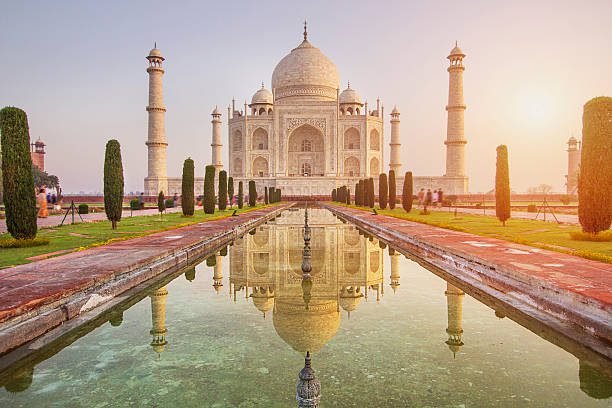
October – February produces the finest Taj photographs. The low winter sun creates raking light across the marble surface from late morning through early afternoon. The sky is typically a deep, clear blue — the perfect contrast to the white marble. Sunrise visits are spectacular when the fog is light; in January, consider a 9:30–10am arrival instead to avoid fog uncertainty.
July – September (monsoon) offers a completely different and unexpectedly beautiful Taj experience — the monument emerging from cloud and mist, the gardens intensely green. It is the least visited time of year and there is something powerful about having the Taj nearly to yourself in dramatic monsoon light. Bring waterproofs.
Oct–Feb (Cool)
⭐ Best light
Jul–Sep (Monsoon)
🌧 Atmospheric
2027 Booking Timeline
When to Book for 2027 — Don’t Leave It Too Late
The Golden Triangle’s peak season is not just busy — it is a period where the right hotels, the best private drivers and the most experienced guides genuinely sell out months in advance. International visitors from the UK, USA and Australia booking 2027 trips are already enquiring now. Here is what to book and when:
If you travel
December 2026
Book now — peak Christmas period. Hotels at Rambagh Palace, Oberoi Amarvilas and ITC Mughal require 4–6 months notice at busy times.
Book immediately
If you travel
January 2027
Book now. Republic Day week (21–28 Jan) is especially in demand. 4–5 months minimum lead time for good options.
Book immediately
If you travel
February 2027
Book 2–3 months ahead. Less pressure than December/January but good properties still fill early. The smart window to target.
Book soon
If you travel
October–November 2027
Book 2–3 months ahead. Diwali 2027 (20 Oct) creates a hotel rush around that date — book earlier if Diwali week is your target.
Plan now
Deep Dives by Month and Origin
Golden Triangle Planning Guides
Common Questions
When to Visit — FAQ
What is the best month to visit the Golden Triangle?
October, November and February are widely considered the best months. October has lush post-monsoon greenery and comfortable temperatures. November offers clear skies and pleasant weather. February is arguably the single best month — warm, sunny, low fog, low crowds and no major heat. December and January are excellent but busier and more expensive. March is good but warming. Avoid May and June (extreme heat) and July–August (monsoon).
Which months should I avoid on the Golden Triangle?
May and June are the hardest months to visit — temperatures in Delhi and Agra regularly reach 42–45°C. July and August bring the monsoon — high humidity and regular heavy rain. These four months are not impossible to visit but demand significantly more planning. April is borderline — early April is manageable, late April is very hot.
Is December a good time for the Golden Triangle?
December is popular and generally excellent — cool, clear and atmospheric. The main considerations are peak-season crowds and prices around Christmas and New Year, and morning fog. Important for 2026: Christmas Day (25 December 2026) falls on a Friday — the Taj Mahal is closed every Friday. Plan Agra for a different day if you are travelling at Christmas.
When is the cheapest time to visit the Golden Triangle?
July, August and September are cheapest — hotel rates drop 40–60% from peak season and flights to India are often less expensive. The trade-off is monsoon rain. October and early November offer a shoulder window — prices reasonable, heat gone, countryside green. Mid-April to mid-May is also cheaper but very hot.
What is the best time to see the Taj Mahal?
The Taj Mahal is at its most spectacular between October and February — cool temperatures, clear skies and excellent winter light. Early morning visits give the best photography and fewest crowds. The Taj is closed every Friday. In December 2026 that includes Christmas Day (25 Dec). In January 2027, Fridays fall on Jan 1, 8, 15, 22 and 29. Always confirm your Agra day falls on a non-Friday.
Should I visit during Holi or Diwali?
Both are worth considering. Diwali (October–November) transforms Delhi and Jaipur with lights and celebration. Holi (1 March 2027) is a joyful, colourful festival — wear old clothes, protect your camera, and expect most shops to be closed on Holi day. The days around both festivals are ideal — the atmosphere is in the air without the full intensity.
How far in advance should I book a 2027 Golden Triangle tour?
For peak season (October–February), book at least 3–4 months in advance. For Republic Day week (around 26 January 2027), book 5–6 months ahead. For shoulder season (March, September, October), 6–8 weeks is usually sufficient. Good hotels and experienced private drivers fill up faster than most travellers expect.
Tell Us Your Dates — We’ll Do the Rest
Send us your travel month and group size and we’ll reply within 24 hours with a fully-priced itinerary, the right hotels for your budget and all the Friday-closure dates checked for your Agra day.
+91 99908 12499 · Squidtravelindia@gmail.com