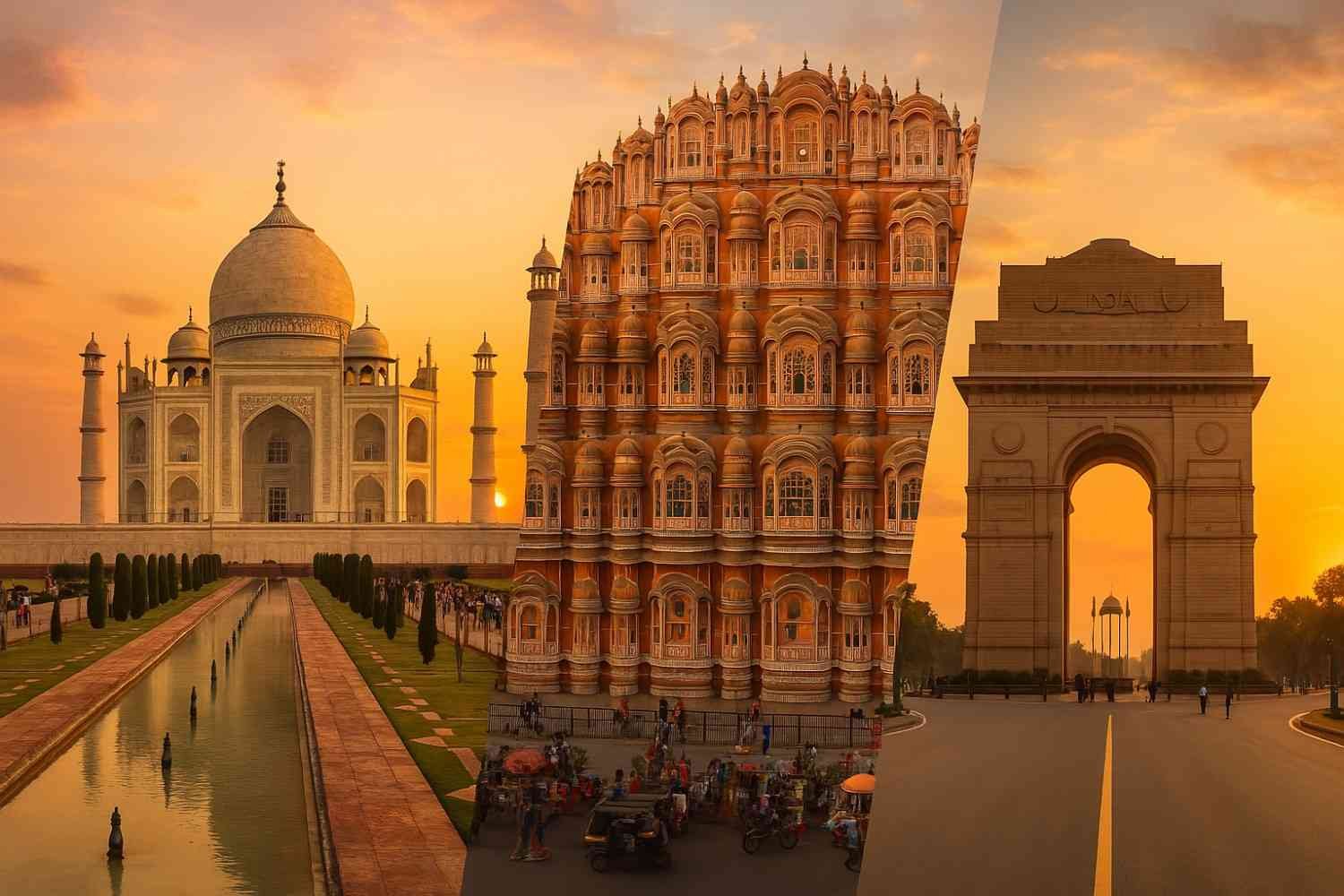
January is the single best month to visit India's Golden Triangle
Cool days, clear blue skies, and perfect sightseeing conditions across Delhi, Agra, and Jaipur. With daytime temperatures between 15–25°C and no rain, January is peak season for a reason — but book well ahead, as hotels fill fast.
January Weather Across the Golden Triangle
January sits right in the heart of India's cool, dry winter season. For international visitors from the UK, US, Australia, or Canada, the temperatures will feel mild to warm during the day — a pleasant change from winter back home — with genuinely cold evenings that call for a warm layer.
The good news: there is essentially zero chance of rain in January across all three cities. The skies are typically a deep, clear blue that makes monument photography outstanding. Jaipur tends to get the best of it — warmer and sunnier than Delhi or Agra, which occasionally see the thick morning fog that characterises the North Indian winter.
The January Fog — What Travellers Need to Know
Fog is the one variable that can trip up a January Golden Triangle trip, and it's worth understanding before you go. Dense fog (locally called dense fog in weather reports) forms overnight in the Indo-Gangetic Plain — the flat geography that Delhi, Agra, and the roads between them sit on. It typically clears by mid-morning, often by 9 or 10am, and afternoons are almost always bright and warm.
The fog is heaviest in the first two weeks of January and gradually improves toward late January and February. If you're arriving on an early-morning flight into Delhi, build in some buffer time — delays of two to four hours are not unusual during a heavy fog event. Train departures from Delhi can also be delayed, so schedule your Agra departure in the late morning where possible.
The Taj Mahal in the fog is actually a remarkable sight — the white marble seems to float in the mist, and photographers often prefer a foggy morning to a clear one. That said, if you had your heart set on a perfectly crisp sunrise view, you're at the mercy of the weather. Most visitors find the fog adds atmosphere rather than disappointment.
Taj Mahal in January
January is one of the finest months to visit the Taj Mahal. With comfortable temperatures and no sweat-soaked crowds (that's the summer problem), you can take your time exploring the complex, walk barefoot on the marble without burning your feet, and spend a couple of hours without feeling rushed. The sunrise visit — arriving just as the gates open, watching the sky turn gold behind the white marble — is unforgettable in January's clear winter air.
Sunrise in Agra falls around 7:00–7:10 AM in January. The Taj Mahal opens at sunrise. Plan to arrive at the East or West gate no later than 6:40 AM to join the opening queue — the first 30 minutes after sunrise offer the most magical light and the smallest crowds.
Taj Mahal Fridays — Closed Every Week
The Taj Mahal closes every Friday without exception — it is a living mosque and the Jumu'ah (Friday) prayers close the complex to tourists for the full day. If your Golden Triangle trip falls across a Friday, plan your Agra visit on any other day of the week.
January 2027 Fridays — Taj Mahal closed these dates:
If you're extending your New Year's holiday into a Golden Triangle trip, note that the Taj Mahal is closed on January 1, 2027 — it falls on a Friday. Plan your Agra visit for January 2 or any other weekday.
Delhi in January
Delhi in January is alive with energy. The city sheds its summer haze and the heat, and the cooler air makes wandering through the lanes of Old Delhi, climbing the Qutub Minar, and exploring Humayun's Tomb genuinely enjoyable. Street food is at its best — vendors roasting corn, selling hot chai, and serving fresh-fried kachori all along the bazaar streets.
The India International Trade Fair wraps up in November, but January brings its own wave of exhibitions and cultural events. The national capital feels particularly festive in the run-up to Republic Day on the 26th. The streets around Kartavya Path (the grand ceremonial boulevard that runs from India Gate to the Presidential Palace) are decorated, and you can feel the build-up to one of India's biggest national celebrations.
Sightseeing highlights for January in Delhi include the Red Fort, Humayun's Tomb, Qutub Minar, Lodhi Garden (stunning in the cool morning), the Jama Masjid, and Chandni Chowk. Budget at least a full day for Old Delhi alone.
Agra in January
Agra's entire identity is built around the Taj Mahal, but January rewards visitors who go beyond the main monument. The Agra Fort, a UNESCO World Heritage site just a few kilometres from the Taj, is often overlooked and absolutely worth two to three hours. The Fatehpur Sikri — the abandoned Mughal capital an hour's drive from Agra — is spectacular in the clear winter light, and its relative quiet compared to the Taj makes it one of the trip's most contemplative experiences.
The drive between Delhi and Agra (the Yamuna Expressway, about 2.5 hours) passes through flat farmland that turns golden in the January sun. Many visitors do this route as a day trip, but spending a night in Agra is strongly recommended — the Taj Mahal in the early morning and at sunset are two completely different experiences, and both are worth having.
Jaipur in January
The Pink City is arguably at its finest in January. The temperatures are perfect for walking through the bazaars, the Amber Fort is not punishing in the mid-day heat as it is in summer, and the whole city has a post-Diwali, festive calm that makes sightseeing unhurried and enjoyable.
The Jaipur Literature Festival — one of the world's largest literary gatherings — typically takes place in late January at Diggi Palace, drawing writers, thinkers, and readers from across the world. If you're visiting in the last week of January, this coincidence is worth taking advantage of; entry to most sessions is free.
Jaipur's main sights — the Amber Fort, City Palace, Jantar Mantar, Hawa Mahal, and the bazaars of Johari Bazaar and Bapu Bazaar — are all manageable in two full days. The markets are full of winter stock: wool shawls, block-printed quilts, and embroidered textiles that make excellent souvenirs for visitors heading back to colder climates.
Republic Day — January 26
Republic Day — 26 January
Republic Day is one of India's most celebrated national holidays, marking the date in 1950 when the Indian Constitution came into force. The centrepiece is the grand Republic Day Parade along Kartavya Path in New Delhi — a spectacular display of military might, cultural tableaux from every Indian state, and folk performers.
For visitors already in Delhi on the 26th, the parade is an extraordinary cultural experience. Tickets are available through the official government portal, though they sell out well in advance. Even watching from the surrounding areas along the boulevard is memorable.
Taj Mahal on Republic Day 2027 (Tuesday, 26 Jan): Open as normal — the 26th is a Tuesday in 2027, so no conflict with the Friday closure.
Republic Day does create one practical consideration: Delhi hotels fill up completely in the week before and after the 26th, and prices spike significantly. If your trip overlaps this date, book your Delhi accommodation as early as possible — ideally three to four months in advance for good hotels at normal rates.
Planning a January Golden Triangle Trip?
We specialise in private Golden Triangle tours for visitors from the UK, USA, Australia, and Canada. Get a personalised quote — usually within a few hours.
January Travel Tips for the Golden Triangle
- Book the Taj Mahal sunrise visit. This is non-negotiable in January. Arrive at the gate no later than 6:40 AM. The first hour after opening is extraordinary — far fewer visitors, golden light, and the cool air makes it comfortable.
- Pack warm layers for evenings. Temperatures in Delhi and Agra drop to 5–8°C after dark. A warm jacket is essential, especially for January 1–15 when nights are coldest.
- Build in buffer time for fog-related delays. If flying into Delhi in early January, an early-morning arrival has a meaningful chance of delay. Prefer afternoon arrivals or build a buffer night in Delhi before starting the tour.
- Book hotels 3–4 months ahead. January is peak season. Good hotels in all three cities — especially Agra — fill fast. The week around Republic Day (January 26) is particularly tight in Delhi.
- Never schedule the Taj on a Friday. The Taj Mahal is closed every Friday. Plan Agra on any other day of the week, and note that January 1, 2027 is a Friday — the Taj is closed on New Year's Day.
- Buy Taj Mahal tickets online in advance. The Archaeological Survey of India allows online booking through ticketedmonuments.com. Buy at least 1–2 days ahead to avoid queuing at the gate on your visit morning.
- Use a private driver for the full circuit. The most comfortable and flexible way to cover Delhi–Agra–Jaipur in January is by private car with a driver. Trains are a good option on certain routes, but a private driver gives you freedom to stop, adjust timings, and avoid fog-related train delays.
- Afternoons in Jaipur are warm — plan accordingly. While Delhi and Agra are cooler, Jaipur can reach 25°C by mid-afternoon in January. The Amber Fort is best visited at opening time (8 AM) to avoid the warmth and the crowds.
What to Pack for January
January calls for a layering approach — warm enough to be comfortable in the evening but not so heavy that you're overheating on a sunny Jaipur afternoon. Here's what experienced Golden Triangle visitors pack for a January trip:
Clothing
- Warm jacket or fleece (essential)
- Light cardigans or jumpers × 2–3
- T-shirts and long-sleeved tops
- Comfortable walking trousers
- Warm socks — evenings are cold
- Scarf (doubles as temple cover)
- Comfortable flat shoes
- Slip-on shoes for Taj Mahal
Practical Items
- Sunscreen — UV is stronger than it feels
- Sunglasses
- Small daypack
- Reusable water bottle
- Hand sanitiser
- Small first-aid kit
- Lip balm (air is very dry)
- Power bank for long days out
How Many Days for a January Golden Triangle Trip?
The minimum comfortable Golden Triangle trip — covering Delhi, Agra, and Jaipur without feeling rushed — is 6 nights and 7 days. This gives you two full days in Delhi (including any arrival-day fog delays), a full day at the Taj Mahal and Agra Fort, a day for Fatehpur Sikri en route to Jaipur, and two days in Jaipur. Many visitors from the UK, USA, and Australia extend to 9–10 days to include a day trip from Jaipur or a slower pace overall.
A 5-day trip is possible if you are short on time, but you'll feel the pace — especially if any fog delays eat into your Delhi day. If you're combining the Golden Triangle with a Varanasi visit or a Rajasthan extension, plan for 10–14 days minimum.
Is January Really the Best Time for the Golden Triangle?
In a word: yes. February gives comparable weather and is marginally less crowded, but January has the slight edge in festivity and cultural events (Republic Day, Jaipur Lit Fest). October and November are excellent shoulder-season alternatives with fewer crowds and lower hotel prices. The monsoon months (July–September) are uncomfortable for sightseeing, and the summer (April–June) is genuinely brutal — temperatures regularly exceed 40°C in Agra.
If you have complete flexibility and your main priority is seeing the Golden Triangle at its best, January — particularly the second and third weeks when fog has mostly cleared — is your target.
Ready to Book Your January Golden Triangle Tour?
We build private itineraries for international visitors — fully tailored, all logistics handled. WhatsApp us for a quote, usually within a few hours.