

There is no festival on earth quite like Diwali.
For five nights in November, one billion people light oil lamps, burst firecrackers, share sweets with neighbours, and celebrate the ancient story of light overcoming darkness. Entire cities transform — streets that were unremarkable the day before are suddenly strung with thousands of diyas, bazaars glow golden from a hundred lanterns, and the night sky above India lights up with fireworks from horizon to horizon.
If you’ve ever considered timing a trip to India around a festival, Diwali is the one. It’s India at its most joyful, most open, and most visually spectacular — and 2026 offers one of the most accessible Diwali dates in years for international visitors.
This guide covers everything you need: the exact dates, what the five days mean, the best cities to celebrate in, and how to plan a Diwali trip that goes beyond watching from the sidelines.
Diwali 2026 — Dates and Five-Day Calendar
Diwali 2026 is celebrated across five days, from Friday, November 6 through Tuesday, November 10. The main day, Lakshmi Puja, is Sunday, November 8, 2026.
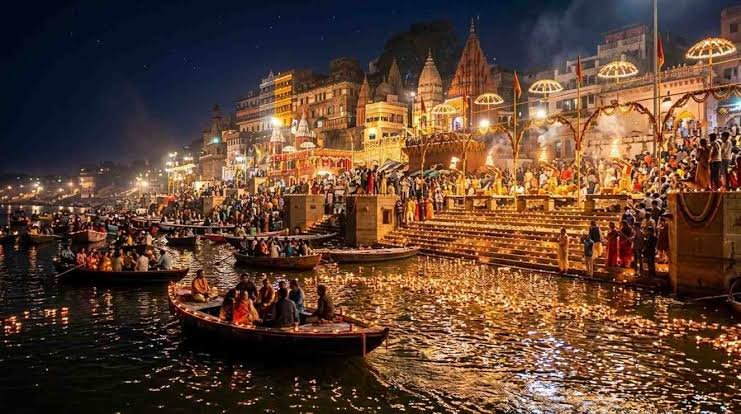
The full festival is a five-day event, with each day carrying different significance: Dhanteras, Choti Diwali (Naraka Chaturdashi), Diwali / Lakshmi Puja, Govardhan Puja (Padwa), and Bhai Dooj.
Here’s what each day means and what you’ll see:
Day 1 — Dhanteras (Friday, November 6)
The opening day is for cleaning, decluttering, and clearing space in the home for the light and prosperity to come. Many families also shop for gold or silver on Dhanteras, a tradition tied to honoring Lakshmi and Lord Dhanvantari, the god of health and well-being. A new metal coin or piece of jewelry brought home on this day is a good-luck anchor for the year.
Markets erupt into life on Dhanteras. Gold and silver shops are packed from morning to midnight. The bazaars in Jaipur, Delhi’s Chandni Chowk, and Varanasi’s Vishwanath lane are extraordinary to walk through — the energy is electric and the purchasing is very real.
Day 2 — Choti Diwali / Naraka Chaturdashi (Saturday, November 7)
Day two, sometimes called Choti Diwali (“little Diwali”) or Naraka Chaturdashi, is given to decoration. The clay diyas are lit and placed in rows or clusters to drive out every shadow: along entrances, in corners, on windowsills, and around the household shrine.
The diyas begin appearing in earnest on this evening. By dusk, neighbourhoods that were merely decorated with lights during the day come alive with the warm, flickering glow of hundreds of clay lamps. This is the first night to be out on the streets after dark — the scale of the illuminations is extraordinary.
Day 3 — Diwali / Lakshmi Puja (Sunday, November 8) — The Main Night
The centrepiece of the festival. Lakshmi Puja — the worship of the goddess of prosperity — happens at dusk in homes across the country. Families gather, prayers are offered, and then the firecrackers begin.
This is the night that defines Diwali for most people: the fireworks, the light, the noise, the sweetness in the air, the sense of an entire country celebrating simultaneously. Every city in India is transformed after dark on November 8, 2026.
Day 4 — Govardhan Puja / Padwa (Monday, November 9)
A day of family gatherings and feasting, marking Lord Krishna’s lifting of the Govardhan mountain to shelter his village from Indra’s rain. In Mathura and Vrindavan — the heartland of Krishna devotion, 50 kilometres from Agra — this day sees some of the most vivid and joyful celebrations of the entire festival period.
Day 5 — Bhai Dooj (Tuesday, November 10)
The final day celebrates the bond between brothers and sisters — a ritual of blessing and shared sweets that brings the family festival to a quiet, warm close.
Diwali 2026 vs Previous Years — Why This Year Is Special for Travellers
November dates like 2026 are ideal for exploring Southern regions or the desert states, as the winter cooling makes outdoor festivities and temple visits much more comfortable.
November 8 is a Sunday — the main Diwali night falls on the weekend. This matters for international visitors because it maximises the festival experience: you arrive for Dhanteras (Friday), experience the build-up through Saturday, witness the main night on Sunday when celebrations are at their peak, and can extend through Dev Deepawali in Varanasi on November 24.
The November timing also means temperatures across North India are ideal. Diwali in Udaipur or Jaipur is widely recommended for first-time visitors — the visual spectacle is extraordinary, cities are safe and tourist-friendly, and the celebrations are easy to participate in without prior cultural knowledge.
The Best Places to Celebrate Diwali 2026 in India
1. Jaipur — The Pink City Turns Gold
Jaipur is, for many experienced India travellers, the single best city in India to experience Diwali. The reason is visual: Jaipur is already one of India’s most beautiful cities, and Diwali transforms it into something almost impossible to believe.
Jaipur is one of the best places to enjoy the Diwali festive atmosphere. The houses and bazaars of Jaipur are decorated with lanterns and beautiful decorations. You can enjoy the beauty of the whole city during the light festival from Jaipur’s famous scenic spot, Nahargarh Fort.
Jaipur offers a visual feast for all travelers. You can capture the best pictures of Diwali’s light-filled streets especially in the old parts from Bapu Bazar to the City Palace, or have a bird’s-eye view of Jaipur from Nahargarh Fort at night. To soak up the festive atmosphere, take a tuk-tuk ride through the bustling Diwali market and try henna painting.
Jaipur is famous for its market decorations, which become part of a competitive, city-wide light display. Johari Bazaar — the jewellery market — and Bapu Bazaar compete to outdo each other with their illuminations each year. The result is a kilometre-long stretch of golden light that locals and visitors walk through in slow, awed processions.
Nahargarh Fort at night. Jaipur’s hilltop fort, overlooking the entire city, offers one of India’s great Diwali viewpoints. As the city below fills with fireworks and lamplight after dark, the view from Nahargarh is extraordinary — the Pink City spread out below, glittering in all directions.
Jal Mahal. Capture the reflections of the glittering Jal Mahal and pyrotechnics in the stunning Man Sagar Lake. The water palace, surrounded by the illuminated lake and fireworks reflected in its surface, is one of Jaipur’s most dramatic Diwali images.
Jaipur’s Diwali works beautifully as part of a Golden Triangle tour. Arrive in Delhi (November 4–5), visit Agra (November 6), and reach Jaipur in time for Dhanteras evening (November 6) through the main Diwali night (November 8).
Book accommodation: 4–5 months in advance. Heritage hotels — Samode Haveli, Alsisar Haveli, Dera Mandawa — host private Diwali dinners and terrace celebrations. These sell out by July.
2. Varanasi — The Spiritual Capital, Twice Illuminated
Varanasi during Diwali is one of the most moving experiences India offers — and if you extend your stay by 16 days, you get something even more extraordinary.
On the main Diwali night (November 8), Varanasi’s ancient ghats — the great stone steps descending to the Ganges — are lined with thousands of clay diyas. The evening Ganga Aarti at Dashashwamedh Ghat, already one of India’s most powerful nightly rituals, becomes something at a completely different scale on Diwali night. Boats on the river offer the full sweep of the illuminated ghats — an image that stays in the memory for a lifetime.
But the deeper reason to come to Varanasi in November 2026 is what follows sixteen days after Diwali.
Dev Deepawali — November 24, 2026.
Dev Deepawali is celebrated to mark the victory of Lord Shiva over the demon Tripurasura. On Dev Deepawali, devotees take a holy dip in the Ganges on the auspicious day of Kartik Purnima and light earthen lamps or diyas in the evening. When the dusk sets, the steps of all the ghats on the riverfront of the Ganges are lit with millions of earthen lamps. Not only the ghats of Ganges but also all temples of Varanasi are lit with millions of diyas.
Dev Deepavali — literally “the Diwali of the Gods” — falls on the full moon of the Hindu month of Kartika, 15 days after Diwali. 2026 date: November 24.
Dev Deepawali is Varanasi’s own, amplified version of Diwali — a million lamps on the ghats, the full moon reflected in the Ganges, the Ganga Aarti performed at maximum scale, and the extraordinary belief that on this night the gods themselves descend to bathe in the river. Taking a cruise is the best way to appreciate this picturesque view.
Many experienced India travellers rank Dev Deepawali higher than the main Diwali night for sheer visual and spiritual impact. If your schedule allows, the Varanasi Diwali + Dev Deepawali combination — arriving November 6, staying through November 24 — is one of the most extraordinary India experiences possible.
For visitors combining Varanasi with the Golden Triangle, read our Golden Triangle with Varanasi itinerary.
Book boats in advance. The best Dev Deepawali experience is from a private boat on the Ganges. Boats sell out completely for November 24. Book 3–4 months ahead.
3. Udaipur — Diwali on the Lake
Udaipur brings a different quality to Diwali — less frenetic than Jaipur, more intimate, and set against one of India’s most beautiful urban landscapes.
The City of Lakes in November is at its most pleasant — cool evenings, low humidity, the lake waters calm and reflective. On Diwali night, the palaces and havelis around Lake Pichola are illuminated, their light reflecting across the water. The famous Lake Palace hotel, floating in the middle of Pichola, is entirely lit. The ghats around the Gangaur Ghat area fill with diyas and families.
Diwali in Udaipur or Jaipur is widely recommended for first-time visitors — the visual spectacle is extraordinary, cities are safe and tourist-friendly, and the celebrations are easy to participate in without prior cultural knowledge.
Udaipur’s rooftop restaurants overlooking Pichola are among India’s finest settings at any time of year. On Diwali night, with the illuminated City Palace and Lake Palace visible across the water and fireworks breaking over the hills, they become something else entirely. Book rooftop dinner reservations in October — they sell out.
4. Delhi — Classic North Indian Diwali at Scale
Delhi’s Diwali is the largest urban Diwali celebration in India — the full weight of a 20-million-person city given over to the festival simultaneously.
To experience the atmosphere of the Festival of Light and feel the real Indian culture, visiting Delhi is an ideal choice. With bustling Mela bazaars, carnivals, fireworks displays, a series of theatrical productions, concerts, and dances, all will draw you into a vibrant vibe and atmosphere. Besides, you can experience the Diwali activities and prayer rituals up close by meeting real Indian families and tasting the special food on offer during the lights festival.
Chandni Chowk in Old Delhi on Dhanteras and the main Diwali night is extraordinary — one of Asia’s great bazaar streets, already packed and atmospheric, transformed by Diwali into something that overwhelms the senses. Gold shops, sweet stalls, firework vendors, families dressed in their finest clothes, the smell of incense and gunpowder mixing in the air — it’s everything India at once.
Connaught Place in New Delhi offers a more organised illumination — the Georgian colonnaded shopping district is strung with lights and hosts large-scale public celebrations.
Lodi Garden on Diwali morning is a contrast worth experiencing — Delhi’s most beautiful park in the cool November air, before the evening chaos begins.
A practical note: Delhi’s air quality deteriorates significantly around Diwali due to fireworks and agricultural burning. Delhi offers a more traditional North Indian Diwali with elaborately lit markets like Chandni Chowk and Connaught Place. If air quality is a concern for you, base yourself in Jaipur or Udaipur for the main night and visit Delhi on non-Diwali days of your trip.
5. Amritsar — Diwali and the Golden Temple
In Amritsar, Diwali is celebrated as Bandi Chhor Divas. The Golden Temple is the most picturesque spot, illuminated by thousands of lights and diyas. There, you could sample the special langar (communal meal) and volunteer to help serve the food. On the night of Diwali, you could enjoy the magnificent fireworks display, light candles for the festival just like the pilgrims, and join in with deep meditation at the holy tank.
Bandi Chhor Divas — the Sikh festival that coincides with Diwali — commemorates the release of Guru Hargobind and 52 other prisoners from Gwalior Fort. At the Golden Temple in Amritsar, this is celebrated with the temple illuminated by thousands of diyas reflected in the holy sarovar (the pool surrounding the temple). The combination of the gold-plated temple, its water reflection, and the diya illuminations on the marble surroundings is one of India’s most purely beautiful festival sights.
The Golden Temple is illuminated in a spectacular display, and special fireworks light up the sky.
The langar — the Sikh community kitchen that feeds 100,000 people daily regardless of faith — operates at maximum scale on Diwali night. Volunteering to serve food, or simply sitting in the communal dining hall sharing a meal with pilgrims from across India, is one of the most humbling and joyful festival experiences available.
Amritsar is 450 kilometres from Delhi — a comfortable overnight train or short flight. It works as a 2-day extension from Delhi on either side of the main Diwali period.
6. Ayodhya — Where Diwali Was Born
Ayodhya is the birthplace of Lord Ram, with Saryu River aarti and city-wide lamp lighting. It is growing as a major Diwali destination especially after the Ram Mandir inauguration.
Ayodhya — Lord Rama’s birthplace and the setting of the Ramayana story that Diwali commemorates — has emerged as one of India’s most significant Diwali destinations following the 2024 consecration of the Ram Mandir. The city celebrates Diwali with special intensity: the Saryu River aarti, the newly built temple complex illuminated at scale, and the city-wide lamp lighting that honours Rama’s legendary return from exile.
For visitors who want to experience Diwali at its source — in the city where the story that inspired the festival actually took place — Ayodhya in 2026 offers something that no other destination matches.
Ayodhya is 130 kilometres from Varanasi and 750 kilometres from Delhi — most visitors combine it with a Varanasi itinerary.
7. Mathura and Vrindavan — Krishna’s Diwali
50 kilometres from Agra, Mathura and Vrindavan — the twin cities of Lord Krishna — celebrate Diwali with their own distinct character. Day 4 (Govardhan Puja, November 9) is particularly significant here, marking the day Krishna lifted the Govardhan mountain to protect his community. The celebrations in Vrindavan’s hundreds of temples, with the Yamuna riverfront illuminated and the streets full of bhajan singers and devotees, are among the most joyful of the entire festival period.
For travellers visiting the Taj Mahal in Agra, Mathura and Vrindavan make an easy and rewarding day-trip addition — 50 kilometres north on the same Yamuna corridor.
Diwali City Comparison — Choose Your Experience
| City | Best For | Crowd Level | Air Quality | Book Ahead |
|---|---|---|---|---|
| Jaipur | Visual spectacle, first-timers | High | Good | 4–5 months |
| Varanasi | Spiritual depth, Dev Deepawali | Very high (Nov 24) | Good | 4–5 months |
| Udaipur | Romance, lake setting, quiet | Moderate | Excellent | 3–4 months |
| Amritsar | Golden Temple, Sikh culture | High | Good | 3–4 months |
| Delhi | Scale, Old City, full immersion | Extreme | Poor (fireworks) | 4–5 months |
| Ayodhya | Spiritual significance, Ram Mandir | Very high | Moderate | 4+ months |
| Mathura/Vrindavan | Krishna devotion, Govardhan Puja | High | Good | 3 months |
What to Expect — Diwali as a Visitor
The Sweets
Diwali without mithai is not Diwali. Across India, sweets are the currency of the festival — exchanged between neighbours, given as gifts to business contacts, offered at temples, and consumed in spectacular quantities by everyone. You may expect Indians to create a special, colorful painting called Rangoli on the grounds of streets and public spaces. The paintings are fantastically made of flowers, chalk, and flour in different geometric patterns.
As a visitor, you’ll be offered sweets constantly — by hotel staff, by shopkeepers, by strangers on the street. Accept them with both hands and a genuine smile. This is how Diwali works.
The classic Diwali sweets: kaju katli (cashew fudge), gulab jamun (milk dumplings in syrup), besan ladoo (chickpea flour balls), and — particularly in Agra — the famous petha. In Rajasthan, ghewar (a disc-shaped fried sweet soaked in sugar syrup) appears in every sweet shop from October onwards.
The Noise
Be prepared: Diwali is loud. The fireworks and firecrackers that begin on the evening of November 7 and peak on November 8 are genuinely loud in a way that surprises first-time visitors. In cities like Delhi and Jaipur, the noise on the main night is continuous from dusk until midnight or beyond.
This is the festival as it has been celebrated for centuries. Ear protection is available if you need it, and most luxury hotels provide rooms away from street-level noise. Rooftop celebrations — elevated above the street level — give you the visual spectacle with slightly less acoustic intensity.
The Crowds
If you are planning to travel to India during the Festival of Light, please make reservations several months in advance, as many tourists from worldwide will be rushing into India.
India’s domestic travel peaks around Diwali. Trains, flights, and hotels fill up months in advance. This applies not just to accommodation but to transport between cities — don’t assume you can buy a last-minute train ticket from Delhi to Jaipur on November 6. Book everything in advance.
The Air Quality
Fireworks smoke affects air quality in major North Indian cities — particularly Delhi — for 2–3 days around Diwali. If you have respiratory sensitivities, Udaipur, Amritsar, or Varanasi (where prevailing winds off the Ganges help) are better choices than Delhi for the main night.
Participating Respectfully
Diwali is genuinely open and welcoming to visitors of all backgrounds. Diwali is widely celebrated by Hindus, Sikhs, and Jains, and by some Newar Buddhists in Nepal. The celebration is open to anyone who wants to mark the Festival of Lights.
A few simple acts of participation go a long way: wear festive clothing (bright colours, traditional Indian dress if you have it — shops sell kurtas everywhere and locals are thrilled to see visitors making the effort), accept sweets offered to you, light a diya if invited to, and watch the fireworks with genuine enthusiasm. Nobody is unwelcome at Diwali.
Diwali 2026 Travel Tips
Book Everything in September
What gets booked out: Hotels in Varanasi (Dev Deepawali weekend), transportation for long weekends, flight prices spike 2–3x.
For Diwali travel in 2026, September is not too early to book. Heritage hotels in Jaipur, lake-view properties in Udaipur, and boats on the Varanasi Ganges for Dev Deepawali are all sold by October. Domestic flights from Delhi to Jaipur, Amritsar, and Varanasi around November 6–10 fill fast and prices double or triple as the date approaches.
Build in Travel Buffer Days
The days around Diwali — particularly November 6 (Dhanteras) and November 10 (Bhai Dooj) — see enormous movement across the country. Trains are delayed. Roads are congested. Budget extra time for inter-city travel and don’t schedule tight connections on these dates.
Bring a Torch and Comfortable Shoes
Diwali nights are for walking. Cities are at their most alive on foot — the experience of moving through an illuminated bazaar, stopping at sweet shops, watching rangoli competitions and firework displays, is what the festival is made for. Wear comfortable shoes suitable for hours of walking on uneven surfaces.
What to Wear
Diwali is a dress-up occasion. Bright colours — deep red, royal blue, emerald green, saffron — are welcomed and fitting. Indian festive dress (salwar kameez, kurta pyjama, or saree) can be purchased at any city’s textile market for very reasonable prices. Dressing for the festival signals respect and earns you immediate warmth from locals.
Diwali Itinerary Ideas
5 Days — Classic Diwali Golden Triangle
The most popular Diwali itinerary for international visitors.
- Day 1 (Nov 4): Arrive Delhi. Old Delhi exploration, Chandni Chowk
- Day 2 (Nov 5): Delhi — Humayun’s Tomb, Qutub Minar, markets
- Day 3 (Nov 6 — Dhanteras): Drive to Agra — Taj Mahal, Agra Fort. Evening in Agra for Dhanteras market
- Day 4 (Nov 7): Drive to Jaipur — Amber Fort. Evening Choti Diwali illuminations
- Day 5 (Nov 8 — Main Diwali): Jaipur — City Palace, Johari Bazaar by day. Nahargarh Fort viewpoint at dusk. Full Diwali night on the streets
See how this combines with our Golden Triangle tour packages.
8 Days — Golden Triangle + Varanasi Diwali
- Days 1–5: Golden Triangle as above
- Day 6 (Nov 9): Fly Jaipur to Varanasi
- Day 7 (Nov 10 — Bhai Dooj): Varanasi ghats, sunrise boat ride, Kashi Vishwanath Temple
- Day 8 (Nov 11): Varanasi — Sarnath, evening Ganga Aarti, fly to Delhi/home
For the full Varanasi extension, see our Golden Triangle with Varanasi itinerary.
12 Days — Full Diwali + Dev Deepawali
The ultimate Diwali itinerary — for travellers who want both the main festival and Varanasi’s extraordinary Dev Deepawali.
- Days 1–2: Delhi
- Day 3: Agra — Taj Mahal
- Days 4–6 (Nov 6–8): Jaipur — Dhanteras, Choti Diwali, Main Diwali night
- Day 7: Fly to Varanasi
- Days 8–12: Varanasi — ghats, temples, morning boat rides, Sarnath, building toward Dev Deepawali on November 24
This itinerary requires 18 days total if you include transit time — but those who have done it consistently describe the November 24 night in Varanasi as the single most extraordinary thing they’ve ever seen in India.
Why Diwali 2026 Is the Year to Go
November dates like 2026 are ideal for exploring Southern regions or the desert states, as the winter cooling makes outdoor festivities and temple visits much more comfortable.
The November 8 date means the main Diwali night falls on a Sunday — the most accessible night of the week for international travellers whose flights typically operate on weekend schedules. The weather across North India in early November is near-perfect: 18–28°C days, cool evenings, clear skies.
The post-monsoon November timing also means India’s monuments are at their most pristine. The Taj Mahal in early November — after the monsoon has washed the marble clean, with sharp winter skies replacing the August haze — is as beautiful as it gets. Combining Diwali in Jaipur with a Taj Mahal visit in Agra on the same trip gives you two of India’s greatest experiences, both at their seasonal peak, in the same week.
Plan Your Diwali 2026 Trip with Squid Travel India
Squid Travel India runs Golden Triangle tours, Rajasthan packages, and Varanasi extensions timed specifically around Diwali. Our Diwali itineraries are designed to put you in the right city on the right night — with pre-booked accommodation, private transport, and experienced guides who know exactly where to be as the lights come on.
We’ve completed over 1,800 tours with a 98% satisfaction rate and TripAdvisor Travelers’ Choice recognition for 2024–25. Diwali trips require more advance planning than any other India visit — let us handle the logistics.
Book by September 2026 for confirmed accommodation and transport.
Plan your Diwali 2026 trip with Squid Travel India → Call us: +91 9990812499
Diwali 2026 — Quick Reference
| Details | |
|---|---|
| Diwali main night | Sunday, November 8, 2026 |
| Five-day festival | November 6–10, 2026 |
| Dev Deepawali (Varanasi) | Tuesday, November 24, 2026 |
| Best city — first timers | Jaipur |
| Best city — spiritual | Varanasi |
| Best city — romantic | Udaipur |
| Best city — Sikh culture | Amritsar |
| Best city — scale | Delhi |
| Weather | 18–28°C days, cool evenings, clear skies |
| Book accommodation by | September 2026 |
| Book domestic flights by | August–September 2026 |
| What to wear | Bright colours, festive Indian clothing |
| What to bring | Comfortable walking shoes, camera, open heart |
Squid Travel India is a New Delhi-based, award-winning tour operator specialising in Golden Triangle tours, Rajasthan packages, South India and Kerala tours, and wildlife safaris. Our festival travel expertise covers Diwali, Holi, Pushkar Camel Fair, and all major Indian cultural events.

Comments (4)