

If you have ever Googled “India travel”, there is a good chance the Golden Triangle Tour came up within the first three results.
And for good reason.
The Golden Triangle Tour is the single most popular travel itinerary in India. It has been for decades. Every year, hundreds of thousands of international tourists — from the UK, USA, Australia, Europe, and beyond — arrive in India and follow this same iconic route.
But what exactly is it? Where does it go? How long does it take? And is it still worth doing in 2026?
This guide answers every one of those questions — with honest, up-to-date information that reflects how India and travel itself has changed.
What Is the Golden Triangle Tour India?
The Golden Triangle Tour India is a classic travel circuit connecting three of India’s most historically and culturally significant cities:
- Delhi — the capital of India
- Agra — home of the Taj Mahal
- Jaipur — the Pink City and capital of Rajasthan
When you draw a line connecting these three cities on a map, they form a rough triangle — hence the name. The total driving distance around the circuit is approximately 720 kilometres, with each leg taking between 3 to 5 hours by road.
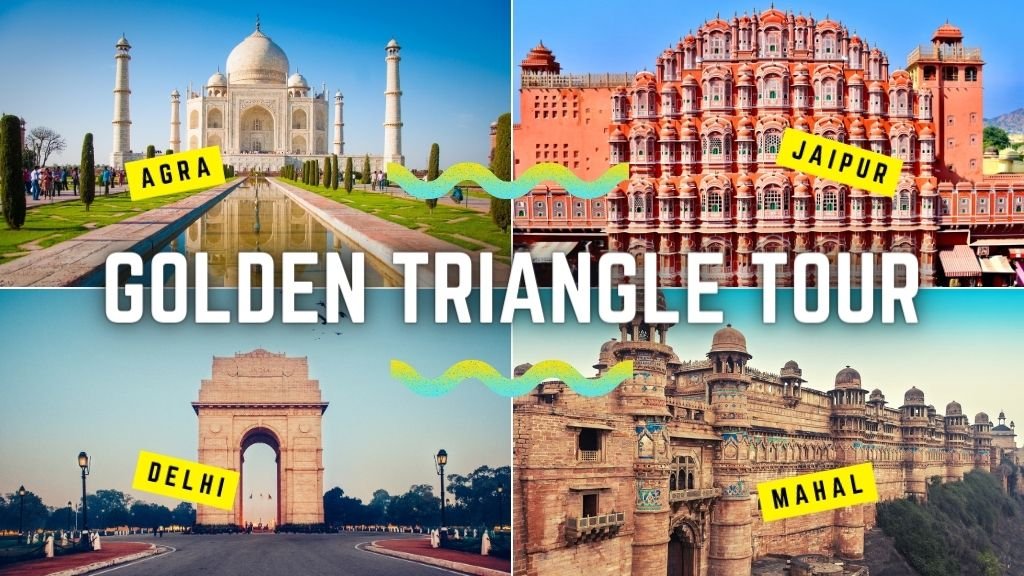
It is called the “Golden” Triangle, not because of gold, but because of the richness of what you experience: centuries of Mughal and Rajput history, UNESCO World Heritage Sites, royal palaces, living bazaars, extraordinary food, and some of the most photographed monuments on Earth.
The Three Cities of the Golden Triangle
Delhi — Ancient Capital, Modern Metropolis
Delhi is where the Golden Triangle almost always begins. As India’s capital, it is the gateway for most international visitors arriving by air.
Delhi is not one city — it is many cities layered atop one another over thousands of years. Old Delhi, built by the Mughal Emperor Shah Jahan in the 17th century, is a dense warren of narrow lanes, spice markets, mosques, and street food stalls. New Delhi, designed by the British architect Edwin Lutyens in the early 20th century, is broad, tree-lined, and built around government institutions.
Key sights in Delhi on the Golden Triangle Tour include:
- Humayun’s Tomb — a UNESCO World Heritage Site and the architectural forerunner of the Taj Mahal
- Qutub Minar — a 73-metre-tall sandstone minaret built in 1193 and a UNESCO World Heritage Site
- Red Fort — the great red sandstone fortress of the Mughal emperors, another UNESCO site
- India Gate — the 42-metre war memorial arch at the heart of New Delhi
- Jama Masjid — one of the largest mosques in India, built by Shah Jahan
- Chandni Chowk — Old Delhi’s legendary bazaar, best explored by rickshaw
Most Golden Triangle itineraries spend one to two nights in Delhi.
Agra — City of the Taj Mahal
From Delhi, the route heads south along the Yamuna Expressway to Agra — a drive of roughly 200 kilometres that takes about 3 to 4 hours.
Agra is, for most visitors, the emotional centrepiece of the entire tour. It is home to the Taj Mahal — the white marble mausoleum built by Emperor Shah Jahan between 1631 and 1648 in memory of his wife Mumtaz Mahal. The Taj Mahal is consistently rated one of the most beautiful buildings ever constructed by human hands. It is a UNESCO World Heritage Site, one of the Seven Wonders of the World, and the single most visited monument in India.
No photograph fully prepares you for seeing it in person.
Beyond the Taj Mahal, Agra offers:
- Agra Fort — the enormous red sandstone fortress from which Shah Jahan was imprisoned and could only gaze upon the Taj Mahal in the distance, a UNESCO World Heritage Site
- Itmad-ud-Daulah (Baby Taj) — a delicate marble tomb often described as the prototype for the Taj Mahal
- Mehtab Bagh — a garden across the Yamuna River offering a stunning rear view of the Taj at sunset
- Fatehpur Sikri — a perfectly preserved abandoned Mughal city 40 kilometres from Agra, another UNESCO World Heritage Site, visited en route to Jaipur
Most Golden Triangle itineraries spend one night in Agra.
Jaipur — The Pink City of Rajasthan
From Agra, the route heads west to Jaipur — a drive of approximately 240 kilometres, usually passing through Fatehpur Sikri on the way.
Jaipur is the capital of Rajasthan and one of India’s most visually spectacular cities. It was founded in 1727 by Maharaja Jai Singh II, who had the old city painted terracotta-pink in 1876 to welcome the Prince of Wales — a tradition that has been maintained ever since.
The result is a city unlike any other in India. Pink sandstone forts and palaces line the horizon. The old walled city teems with gemstone merchants, textile sellers, and street food vendors. And everywhere you look, there is evidence of a royal Rajput heritage that stretches back centuries.
Key sights in Jaipur on the Golden Triangle Tour include:
- Amber Fort — the majestic hilltop fort of the Maharajas of Jaipur, reached by elephant or jeep
- City Palace — a vast complex of palaces, courtyards, and museums still partly inhabited by the royal family
- Jantar Mantar — a UNESCO-listed 18th-century open-air astronomical observatory built by Maharaja Jai Singh II
- Hawa Mahal (Palace of Winds) — the iconic five-storey pink sandstone facade that is Jaipur’s most recognisable landmark
- Jal Mahal — the Water Palace, a romantic Rajput structure rising from the middle of Man Sagar Lake
Most Golden Triangle itineraries spend one to two nights in Jaipur.
How Many Days Is the Golden Triangle Tour?
The Golden Triangle Tour can be completed in as few as 3 days, but most experienced travellers and tour operators recommend 4 to 6 days for a comfortable, unhurried experience.
Here is a quick breakdown:
3 Days — Very rushed. Only possible if you are extremely fit, have no interest in shopping or leisurely meals, and are comfortable skipping smaller sights. Not recommended for first-time visitors.
4 Days — The most popular short version. Covers the main highlights of all three cities without feeling too hurried. Ideal for travellers with limited time.
5 Days — The sweet spot for most international visitors. Gives you time for a sunrise Taj Mahal visit, a proper explore of Jaipur’s bazaars, and an afternoon free for shopping or relaxing.
6 Days and beyond — Recommended for those who want to include extensions such as Ranthambore National Park for tiger safaris, Varanasi for Ganga Aarti, Udaipur for lake palaces, or Rishikesh for spiritual experiences.
The Best Golden Triangle Tour Itinerary (5 Days)
Here is the most recommended 5-day itinerary used by experienced India tour operators:
Day 1 — Arrive Delhi
Arrive at Indira Gandhi International Airport. Transfer to your hotel. Afternoon sightseeing in New Delhi — India Gate, Humayun’s Tomb, Qutub Minar, and Lotus Temple.
Day 2 — Delhi to Agra
Drive to Agra via the Yamuna Expressway (approx. 4 hours). Afternoon visit to the Taj Mahal and Agra Fort. Sunset view of the Taj from Mehtab Bagh. Overnight in Agra.
Day 3 — Agra to Jaipur via Fatehpur Sikri
Early morning sunrise visit to the Taj Mahal. After breakfast, drive to Jaipur via Fatehpur Sikri (approx. 5 hours with stop). Check in to your Jaipur hotel. Evening free to explore the local markets.
Day 4 — Jaipur Sightseeing
Full day in Jaipur. Morning visit to Amber Fort. Afternoon: City Palace, Jantar Mantar, Jal Mahal, and Hawa Mahal. Evening shopping in Bapu Bazaar or Johari Bazaar.
Day 5 — Jaipur to Delhi Departure
Drive back to Delhi (approx. 5 hours). Transfer to Delhi Airport or Railway Station for onward travel.
How Much Does the Golden Triangle Tour Cost?
The cost of a Golden Triangle Tour varies significantly depending on the level of accommodation, the type of vehicle, and whether you travel with a private guide or join a group.
Here is a general guide for 2026:
Budget (3-star hotels, shared transport): $150 to $250 per person for 4–5 days
Mid-range (4-star hotels, private AC vehicle): $300 to $600 per person for 4–5 days
Luxury (5-star hotels like Oberoi or Taj group, private vehicle): $1,000 to $3,000+ per person for 4–5 days
Note: These figures typically include accommodation with breakfast, private vehicle and driver, and local guides. International flights, monument entrance fees, lunches, dinners, and personal expenses are usually extra.
The Best Time to Do the Golden Triangle Tour
India has three main seasons, and the Golden Triangle Tour is possible year-round — but some times are significantly better than others.
October to March (Best Season)
This is the peak tourist season and the best time to visit. Temperatures are comfortable, ranging from around 10°C to 25°C. Skies are clear, visibility is excellent for photography, and the Taj Mahal looks its most pristine against crisp blue winter skies. December and January can be cold at night in Delhi and Jaipur, so bring a layer.
April to June (Hot Season)
Temperatures rise sharply, reaching 40°C to 45°C across Delhi, Agra, and Jaipur in May and June. Sightseeing is challenging and tiring in the heat. Not recommended unless you have no other option — though early mornings are manageable and hotel rates are lower.
July to September (Monsoon Season)
The monsoon brings heavy rainfall, high humidity, and lush green landscapes. The Taj Mahal can look remarkably dramatic against dark monsoon skies. Flooding can occasionally disrupt travel, but for adventurous visitors this is a uniquely beautiful time to visit. Ranthambore National Park is closed from July 1 to September 30 if you are considering an extension.
Why Is the Golden Triangle Tour So Popular?
The Golden Triangle Tour has been the foundation of India tourism for decades, and its popularity only grows. Here is why:
It is perfectly structured. The three cities form a logical, efficient route — you are never doubling back or wasting time on long cross-country journeys. Everything flows naturally.
It covers India’s greatest hits. The Taj Mahal, UNESCO Heritage sites, Mughal architecture, Rajput palaces, living bazaars, street food — the Golden Triangle delivers all of it.
It works for every type of traveller. Whether you are a history enthusiast, a photographer, a foodie, a honeymooner, or a family with children, the Golden Triangle has something for you.
It is endlessly extendable. The core circuit is just the beginning. Add Ranthambore for wildlife. Add Varanasi for spirituality. Add Udaipur for romance. Add Rishikesh for adventure. The Golden Triangle is a launch pad into the rest of India.
It is well-served by the travel industry. Because the route is so well established, the quality of hotels, guides, roads, and services along the Golden Triangle is extremely high. Even first-time visitors to India feel safe, well-supported, and well looked-after.
Popular Golden Triangle Tour Extensions in 2026
The basic Delhi-Agra-Jaipur circuit is just the start. Here are the most popular extensions:
Golden Triangle with Ranthambore — Add a 2-day tiger safari at Ranthambore National Park. One of the best places in the world to spot Royal Bengal Tigers in the wild. Total: 6–8 days.
Golden Triangle with Varanasi — Add 2 nights in Varanasi, one of the oldest living cities in the world, for the Ganga Aarti ceremony, sunrise boat rides on the Ganges, and Sarnath Buddhist ruins. Total: 7–8 days.
Golden Triangle with Udaipur — Add Udaipur, Rajasthan’s City of Lakes, for romantic lake palaces, the City Palace, and Lake Pichola boat rides. Total: 8 days.
Golden Triangle with Rishikesh — Add Rishikesh for white-water river rafting, ashram visits, Ganga Aarti at Haridwar, and the spiritual energy of the Himalayan foothills. Total: 8–9 days.
Golden Triangle with Khajuraho and Varanasi — A deep cultural circuit adding the UNESCO-listed erotic temples of Khajuraho and the sacred ghats of Varanasi. Total: 10 days.
Luxury Golden Triangle — Travel the same circuit but stay in Oberoi or Taj Group properties throughout — Oberoi Amarvilas in Agra with its direct Taj Mahal views, Oberoi Rajvilas in Jaipur, and The Oberoi or Taj Palace in Delhi. Total: 5–6 days in world-class comfort.
What Google’s 2026 Algorithm Update Means for Golden Triangle Travel Content
Google’s 2026 algorithm updates have continued the trajectory set by the Helpful Content Update and the E-E-A-T (Experience, Expertise, Authoritativeness, Trustworthiness) framework. Here is what it means for travel content like this:
Information Gain is now the most critical ranking factor for informational content. Google actively measures whether your content says something genuinely new, specific, or useful that other pages do not already cover. Generic descriptions of the Taj Mahal that every site publishes will no longer rank. Pages that offer real-world insight, specific practical details, honest advice, and first-hand context win.
Thin AI-generated content is being actively penalised. Pages that use AI to bulk-generate generic travel descriptions — particularly ones that read as padded, repetitive, or lacking specific factual detail — are being down-ranked. Quality, depth, and genuine usefulness matter more than ever.
User signals matter more than ever. Google tracks how long visitors stay on your page, whether they click back to search results quickly (a sign the page did not satisfy their intent), and whether they engage with content. Pages that genuinely help users make decisions about their trip will perform better than pages that simply describe destinations.
Structured data and semantic HTML accelerate ranking. Pages with properly implemented Schema.org TouristTrip markup, FAQ schema, and correct heading hierarchy rank faster and earn rich snippets in search results. If you have not yet added schema to your tour package pages, doing so in 2026 is a high-priority task.
Page experience signals are a baseline, not a differentiator. Core Web Vitals (load speed, layout stability, interactivity) are now table stakes. If your pages are slow or visually unstable on mobile, you simply will not rank — regardless of content quality.
Frequently Asked Questions
Is the Golden Triangle Tour worth it?
Yes, without question. The Taj Mahal alone is worth travelling to India for. Combined with Delhi’s Mughal history and Jaipur’s royal Rajput culture, the Golden Triangle is the most rewarding short itinerary available in India.
Is the Golden Triangle Tour safe for solo travellers?
Yes. All three cities are extremely well set up for international tourists. Solo travellers — including solo women — travel the Golden Triangle frequently. Using a reputable tour operator with a private vehicle and guides significantly reduces the challenges of navigating independently.
Do I need a visa to visit India?
Most international visitors need an e-Visa, which can be applied for online before travel. The Indian e-Visa is quick to obtain and covers tourism purposes. Check the official Indian government visa portal for the requirements applicable to your nationality.
What is the best way to travel between the three cities?
A private air-conditioned vehicle with a professional driver is by far the most comfortable, flexible, and recommended option for international tourists. It allows you to stop at Fatehpur Sikri, Mehtab Bagh, and other points of interest on the way. Trains are available and popular but require advance booking, and the logistics can be complex for first-time visitors.
Can I do the Golden Triangle Tour independently?
Yes, but it requires significantly more planning. Booking a reputable local tour operator gives you a seamless, stress-free experience with private transport, pre-booked hotels, and local guides who bring the history to life — for a relatively modest additional cost.
Final Thoughts
The Golden Triangle Tour India is iconic for a reason. In three cities, across roughly 720 kilometres and 4 to 6 days, you experience more than 1,000 years of Indian history — Mughal emperors, Rajput kings, British colonialism, and the living culture of modern India all in one seamless journey.
Whether you are visiting India for the first time or returning for the tenth, the Golden Triangle remains the single best introduction to this extraordinary country.
And the Taj Mahal, every single time, takes your breath away.


Comment (0)