

There are trips. And then there are transformations.
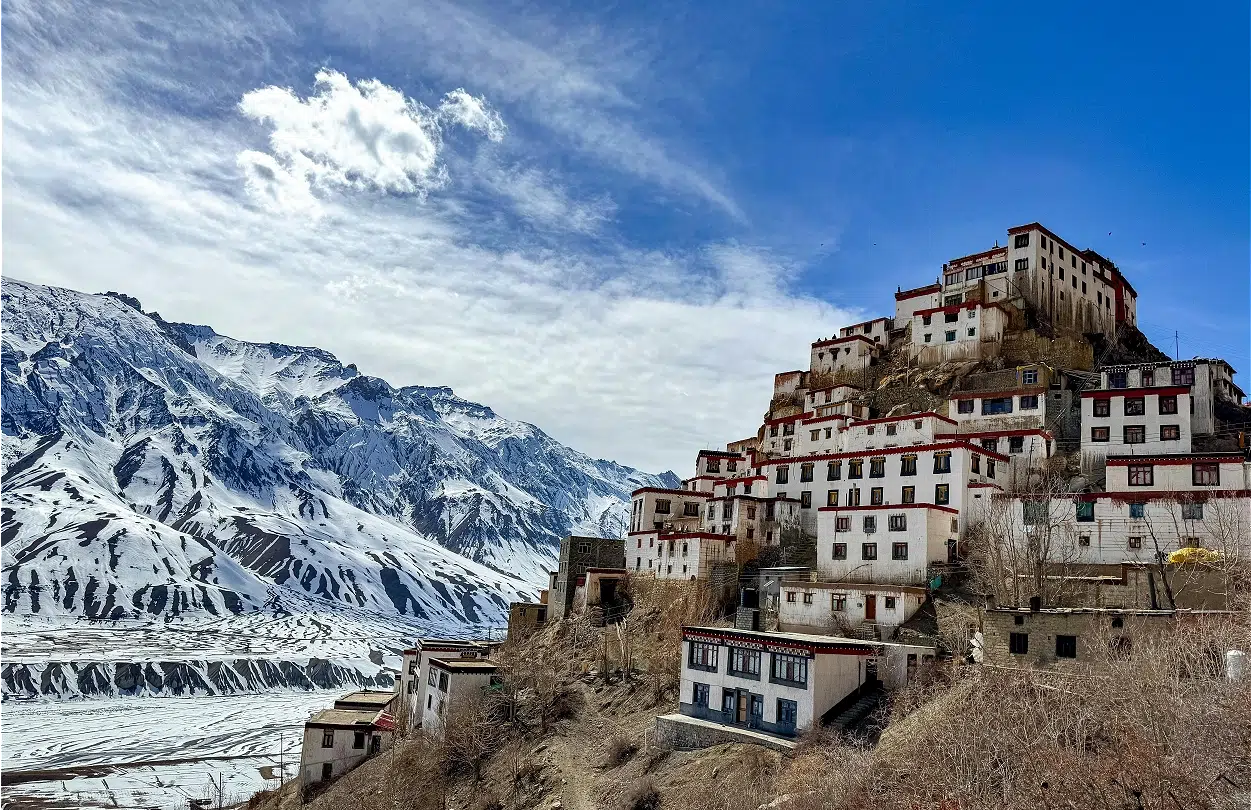
A Spiti Valley trip from Delhi is not just a road journey — it’s a passage into one of the last truly raw, untouched corners of the Himalayas. A cold desert sitting at over 12,500 feet above sea level, Spiti is a land of crumbling monasteries perched on impossible cliffs, turquoise rivers cutting through moonlike valleys, and villages so high up that the stars feel close enough to touch.
If you’ve been dreaming of a trip that strips away the noise of daily life and replaces it with something ancient and real — Spiti is calling your name.
This guide covers everything you need to know for a Spiti Valley trip from Delhi in 2026: routes, itinerary, budget, best time to visit, places to see, permits, and practical tips that will make your journey smooth and unforgettable.
Why Spiti Valley Should Be on Every Traveller’s Bucket List
Spiti isn’t for everyone — and that’s exactly what makes it special.
Unlike Shimla or Manali, Spiti hasn’t been polished for mass tourism. There are no shopping malls, no crowded food streets, no luxury resorts on every corner. What you get instead is a valley that has remained virtually unchanged for centuries — Buddhist monasteries that are over a thousand years old, fossils embedded in roadside rocks, and locals who still live by the rhythms of the Himalayan seasons.
Here’s what makes Spiti unforgettable:
- The world’s highest post office at Hikkim (4,400 metres) — yes, you can send a postcard from there
- Key Monastery, a 1,000-year-old fortress monastery overlooking the Spiti river
- Chandratal Lake, a crescent-shaped glacial lake that looks straight out of a dream
- Komic Village, one of the highest motorable villages on earth at 4,587 metres
- Langza Village, where you can pick up marine fossils from the ground — proof that this was once an ancient seabed
- Pin Valley National Park, home to the elusive Snow Leopard
Best Time to Visit Spiti Valley from Delhi
Getting the timing right is everything for a Spiti trip.
June to September is the ideal window. Both the Shimla route and the Manali route are open, the weather is pleasant during the day (10°C to 25°C), and all homestays, guesthouses and cafes are fully operational. This is the sweet spot — and 2026 is no different.
May offers a quieter, more rugged experience. The Manali-Kaza route via Kunzum Pass typically opens in the last week of May or the first week of June, depending on snow clearance by the Border Roads Organisation (BRO). If you can handle rougher conditions and fewer facilities, May rewards you with almost no crowds.
October is spectacular for photography — crystal clear skies, golden landscapes, and the famous Ladarcha Fair — but temperatures drop sharply, especially at night. Come prepared with serious cold-weather gear.
November to April — Spiti transforms into a frozen, almost entirely cut-off wonderland. Only the most experienced and well-equipped winter adventurers should attempt this.
Delhi to Spiti Valley: The Two Routes Explained
There are two main routes from Delhi to Spiti Valley, and choosing the right one can shape your entire experience.
Route 1: Delhi → Shimla → Kinnaur → Kaza (via Shimla)
Distance: Approximately 700 km Time: 2 days of driving (with an overnight halt in Shimla or Reckong Peo) Open: Year-round (though winters are tough)
This is the safer, more gradual route. You travel along the scenic Hindustan-Tibet Highway (NH5), passing through Kinnaur’s apple orchards and the dramatic Sutlej river gorge before climbing into Spiti. Because the altitude gain is slower, the risk of altitude sickness (AMS) is significantly lower — making this the recommended route for first-timers.
The road passes through Narkanda, Rampur, Reckong Peo, Nako, Tabo, and finally into Kaza. While some stretches are rough, especially between Kinnaur and Tabo, the scenery more than compensates.
Pro tip: Enter via Shimla and exit via Manali to do the full Spiti circuit — you’ll see entirely different landscapes on both legs.
Route 2: Delhi → Manali → Rohtang Pass → Kunzum Pass → Kaza (via Manali)
Distance: Approximately 750 km Time: 2 days of driving Open: June to October only
This is the dramatic, adrenaline-charged route. You’ll cross Rohtang Pass (3,978 metres), drive through the high-altitude plains of Gramphu, and then tackle the legendary Kunzum Pass (4,551 metres) before dropping into Kaza. The ascent is steep and fast, and the roads on the Kunzum stretch are unpaved and demanding.
This route is for experienced drivers or those travelling with a professional mountain driver. The views on this route — massive glaciers, barren plateaus, and passes that stretch into the clouds — are among the most dramatic in all of India.
Always verify road status on the HRTC website before taking the Manali route.
10-Day Spiti Valley Itinerary from Delhi (Circuit Route)
This is the most popular and recommended circuit — enter via Shimla, exit via Manali.
Day 1: Delhi to Shimla (350 km | 7-8 hours)
Leave Delhi early morning. Drive up to Shimla via NH48 and then NH5. Shimla sits at 2,200 metres — spending the first night here helps your body begin adjusting to higher altitude. Explore the Mall Road in the evening. Stay overnight in Shimla.
Day 2: Shimla to Reckong Peo (200 km | 6-7 hours)
This drive along the Sutlej river gorge is one of the most scenic stretches in Himachal Pradesh. The road hugs the cliffside with the river roaring far below. Reckong Peo (2,670 metres) is the last major town before Spiti — stock up on cash here. It’s the last reliable ATM before Kaza. Carry ₹15,000–20,000 in cash. Apply for your Inner Line Permit (ILP) here if needed.
Day 3: Reckong Peo to Tabo (165 km | 5-6 hours)
The landscape shifts dramatically as you enter Spiti. The lush greenery of Kinnaur gives way to stark, layered rock formations in shades of brown, ochre, and rust. Visit the ancient Tabo Monastery — over 1,000 years old and often called the “Ajanta of the Himalayas.” Stay in Tabo (3,050 metres).
Day 4: Tabo to Kaza via Dhankar and Pin Valley (65 km | 4-5 hours)
A short drive today, but packed with highlights. Stop at Dhankar Monastery, dramatically perched on a cliff with jaw-dropping views of the Spiti River valley below. If time permits, make a detour into Pin Valley — the gateway to the Snow Leopard’s territory. Arrive in Kaza (3,800 metres), the main town and base camp of Spiti. Acclimatise.
Day 5: Kaza Acclimatisation Day — Key, Kibber, Komic, Hikkim, Langza
This is the classic “village loop” day around Kaza.
- Key Monastery — Spiti’s most iconic monastery. 1,000 years old. Resident monks. Stunning valley views.
- Kibber Village — At 4,200 metres, once claimed to be the highest motorable village in the world.
- Komic Village — At 4,587 metres, one of the highest villages on earth. The monastery here is tiny and beautiful.
- Hikkim — Home to the world’s highest post office. Send a postcard to someone you love.
- Langza — Pick up marine fossils from the ground. The giant Buddha statue here against the snow peaks is iconic.
Day 6: Kaza to Chandratal Lake (80 km | 4-5 hours)
Drive from Kaza towards Batal, then turn off to the road leading to Chandratal. The last 14 km are on a rough jeep track — 4×4 mandatory. Chandratal (4,300 metres) is a crescent-shaped glacial lake with water that shifts from turquoise to deep blue depending on the light and time of day. Camp overnight by the lake under one of the most extraordinary star-filled skies you will ever see in your life.
Day 7: Chandratal to Manali (120 km | 5-6 hours)
This is the most dramatic drive of the entire trip. You cross Kunzum Pass (4,551 metres), navigate high-altitude plains, and descend dramatically through the Rohtang Pass into the lush green Kullu Valley. By the time you reach Manali, the contrast with where you’ve been will be overwhelming. Hot shower. Proper food. Rest.
Day 8: Manali Rest Day
Explore Manali. Visit the Hadimba Devi Temple, stroll through Old Manali, try the cafes. Let your body and mind decompress.
Day 9: Manali to Delhi (540 km | 10-12 hours)
An early start is essential. Drive back to Delhi via Chandigarh. You can also take an overnight Volvo bus from Manali to Delhi if you don’t want to drive.
Day 10: Buffer Day
Always keep a buffer day. Mountains work on their own schedule. Landslides, road blockages, and weather delays are part of the adventure — plan for them.
Spiti Valley Trip Cost & Budget Breakdown (2026)
Here’s an honest, realistic budget breakdown:
Budget Backpacker (Public transport + Homestays)
- Total for 9-10 days: ₹13,000 to ₹18,000 per person
- Accommodation: ₹500–₹1,200 per night in homestays
- Food: ₹800–₹1,200 per day at local dhabas and cafes
- Transport: Under ₹3,000 total using HRTC buses and shared taxis
Mid-Range Traveller (Shared group tour or private cab, guesthouses)
- Total for 7-9 days: ₹18,000 to ₹28,000 per person
- Accommodation: ₹800–₹2,000 per night
- Private/shared SUV: ₹15,000–₹25,000 total split among group
Comfortable Self-Drive (Private SUV, decent stays)
- Total for 9-10 days: ₹30,000 to ₹55,000 per person
- SUV hire from Delhi: ₹65,000–₹80,000 for the full circuit (split among 4-5 passengers)
- Accommodation: ₹2,000–₹5,000 per night
Always carry an emergency buffer of ₹5,000 for unexpected repairs, extra buffer days, or roadside surprises.
Permits Required for Spiti Valley
Indian Citizens: An Inner Line Permit (ILP) is required for restricted areas near the Indo-Tibet border, particularly Sumdo checkpoint on the Kinnaur-Spiti border. You can get this at the Sub-Divisional Magistrate (SDM) office in Reckong Peo or Kaza. It’s a simple, low-cost process.
Foreign Nationals: A Protected Area Permit (PAP) is required. This must be obtained in advance and requires travelling in a group of at least two people with a registered tour operator. If you’re a foreign national travelling to Spiti, make sure your tour operator handles this documentation.
Vehicles: What You Need to Know
This is non-negotiable: do not attempt Spiti in a sedan.
The roads beyond Nako on the Shimla route, and certainly the Kunzum Pass stretch, involve river crossings, broken mountain tracks, and steep gradients that require a high-clearance vehicle. Recommended vehicles include the Toyota Innova Crysta, Mahindra Thar, Mahindra Scorpio, Toyota Fortuner, Maruti Jimny, and Ertiga.
If you’re self-driving, make sure your driver is experienced with mountain terrain. If you’re booking a tour, ensure the operator provides a mountain-trained driver.
Last fuel station before Spiti: Reckong Peo. The next reliable fuel is in Kaza — and stock levels there can be unpredictable. Carry extra fuel cans.
Network coverage: BSNL has the best coverage in Spiti — available in Kaza, Tabo, and some villages. Airtel and Jio have very limited or no coverage. Inform your family and friends in advance that you will be unreachable for stretches of the trip.
Top Experiences Not to Miss in Spiti Valley
1. Camping at Chandratal Lake Sleeping under a sky blazing with stars at 4,300 metres is a once-in-a-lifetime experience. Book an organised camp in advance during peak season (July–August).
2. Sending a Postcard from Hikkim Post Office The world’s highest post office at 4,400 metres. A postcard sent from here is a story in itself.
3. Fossil Hunting in Langza Marine fossils embedded in rocks, at 4,400 metres above sea level. A humbling reminder of the ocean that once covered this valley millions of years ago.
4. Morning Prayer at Key Monastery Arrive at Key Monastery at dawn, sit with the monks during morning prayer, and watch the sun light up the valley below. No words do it justice.
5. Yak Safari in the Valley A slow, peaceful ride through the high-altitude meadows on a yak. Quintessentially Spiti.
6. Stargazing at Kibber With zero light pollution and altitude working in your favour, Kibber offers some of the best stargazing in all of India.
7. Trekking in Pin Valley Pin Valley National Park is a trekker’s paradise and the last known habitat of the Snow Leopard in this region. The Pin-Parvati Pass trek is legendary.
What to Pack for Spiti Valley
- Warm layers: Even in summer, nights drop below 5°C. Pack fleeces, a down jacket, and thermal innerwear.
- Waterproof jacket and pants: Rain can surprise you, especially on the Manali side.
- Sturdy trekking shoes: Essential for monastery walks and any side treks.
- Sunscreen (SPF 50+) and UV sunglasses: UV radiation at high altitude is intense.
- Water purification tablets or filter bottle: Clean drinking water can be scarce in remote spots.
- Personal medications and a basic first aid kit
- Altitude sickness tablets (Diamox): Consult your doctor before the trip. Diamox helps manage Acute Mountain Sickness (AMS).
- Cash: Carry enough for the full trip from Reckong Peo onwards. Minimum ₹15,000–20,000.
- Power bank: Electricity supply in remote villages is intermittent.
- Offline maps: Download Google Maps or Maps.me for offline use before you leave Shimla.
Altitude Sickness: What to Know and How to Avoid It
Acute Mountain Sickness (AMS) is real and should not be taken lightly. The Shimla route is gentler and allows your body to acclimatise gradually — which is why it’s recommended for first-timers and those who haven’t been to high altitude before.
Key rules:
- Drink 3–4 litres of water every day
- Avoid alcohol above 3,000 metres
- Don’t rush — always ascend slowly
- Rest on your first day in Kaza before doing any strenuous activity
- If symptoms (headache, nausea, dizziness, shortness of breath) worsen, descend immediately
Accommodation in Spiti Valley
Homestays are the soul of a Spiti trip. Local families open their homes and serve traditional Spitian meals — thukpa, tsampa, butter tea, momos. Expect to pay ₹500–₹1,200 per night, usually including meals. Staying with a local family gives you access to conversations, stories, and perspectives that no hotel can offer.
Guesthouses are available in Kaza, Tabo, Kibber, and Langza. Clean, simple rooms at ₹800–₹2,000 per night.
Glamping tents near Chandratal cost ₹4,000+ per night but include meals and a magical lakeside setting.
Hotels in Kaza have improved in recent years, with a few decent options at ₹2,000–₹5,000 per night.
Food in Spiti Valley
Spiti’s food is a fascinating mix of Tibetan, North Indian, and surprisingly, Israeli influences (budget backpackers have long found their way here, and the local cafes adapted accordingly).
Must-try foods:
- Thukpa — hearty Tibetan noodle soup, perfect after a long cold drive
- Momos — steamed or fried dumplings, the universal Himalayan comfort food
- Tsampa — roasted barley flour, a traditional Spitian staple
- Butter Tea (Po Cha) — salted, yak-butter tea. An acquired taste, but try it at least once
- Siddu — Himachali bread stuffed with poppy seeds and walnuts
In Kaza, you’ll find small cafes serving everything from pizza to shakshuka alongside local dishes. Prices are higher than the plains due to the cost of transporting supplies up the mountain — budget ₹800–₹1,200 per day for food.
Is Spiti Valley Worth It?
Unequivocally, yes.
Spiti Valley is not a comfortable trip. The roads will test you. The altitude will humble you. There will be moments when the Wi-Fi doesn’t work, the hot water doesn’t come, and the road ahead looks like it was designed by someone who had never heard of road design.
But then you’ll sit at the edge of Chandratal Lake at sunrise. Or watch butter lamps flicker inside a monastery that has stood for a thousand years. Or look up at a sky so full of stars it almost doesn’t seem real.
And you’ll understand immediately why people who go to Spiti come back changed.
Plan Your Spiti Valley Trip with Squid Travel India
At Squid Travel India, we specialise in crafting personalised India tour experiences for travellers from around the world. While Spiti Valley is a Himachal Pradesh gem that sits close to our heart, we’re equally passionate about India’s other incredible destinations — from the royal heritage of Rajasthan and the iconic Golden Triangle circuit of Delhi, Agra, and Jaipur, to the backwaters of Kerala and the wildlife reserves of Ranthambore.
If you’re visiting India and want to combine your Spiti adventure with a Golden Triangle tour, a Rajasthan heritage experience, or a Kerala escape — we’d love to help you build the perfect itinerary.
📞 Call us: +91 9990812499 📧 Email: Squidtravelindia@gmail.com 🌐 Visit: squidtravelindia.com
1,800+ trips completed. 98% happy clients. TripAdvisor Travelers’ Choice 2024–2025.
Disclaimer: Road conditions, permit requirements, and pass opening dates in Spiti Valley can change seasonally. Always verify current status with local authorities or your tour operator before travel.

Comments (3)