

Why the Pushkar Camel Fair Belongs on Your India Itinerary
Few things on earth look like the Pushkar Camel Fair at dawn.
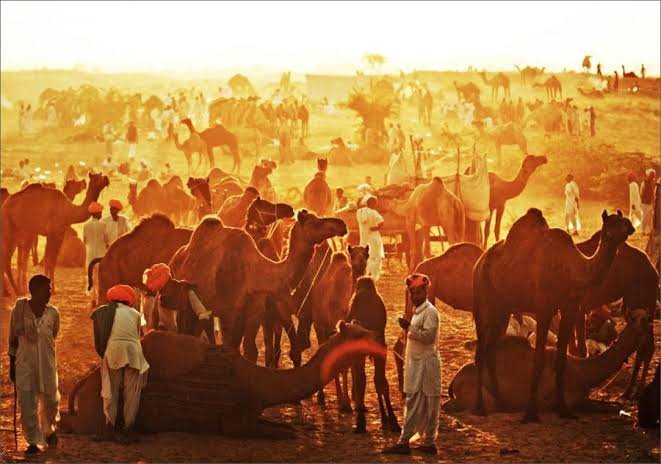
Fifty thousand camels standing in silhouette against a pink desert sky. Handlers in saffron turbans calling out to buyers across the sand. Temple bells echoing from the ghats of Pushkar Lake. Hot air balloons drifting overhead in the early light. Folk musicians playing in the dust.
For one week every November, a small, sacred town in the heart of Rajasthan becomes the most extraordinary spectacle in India. The Pushkar Camel Fair — also known as Pushkar Mela — is the world’s largest camel trading fair. It is also one of India’s most important Hindu pilgrimages. And it draws over 400,000 visitors a year, including more than 80,000 international travellers, for very good reason.
If you are planning an India trip between October and December 2026, building your itinerary around the Pushkar Camel Fair is one of the best decisions you can make.
This guide covers everything: the 2026 dates, what happens each day, the events not to miss, how to get there, where to stay, what to eat, what to buy, and the practical tips that make the difference between a memorable visit and a wasted one.
Pushkar Camel Fair 2026: Dates
The Pushkar Camel Fair 2026 runs from November 17 to November 24, 2026.
The fair is timed to the Hindu lunar calendar and reaches its spiritual climax on Kartik Purnima — the full moon of the month of Kartik — which falls on approximately November 24, 2026.
Here is how the week breaks down:
| Days | What Happens |
|---|---|
| Nov 17–18 | Camels arrive. Livestock trading begins. Setup of stalls and tent cities. Quietest days for photography. |
| Nov 19–20 | Camel competitions begin. Cultural performances in full swing. Hot air balloon festival launches. |
| Nov 21–22 | Peak fair days. Camel races, moustache contest, tug-of-war, folk music. Bazaars at their most vivid. |
| Nov 23 | Final major cultural events. Evening Maha Aarti at the lake ghats. |
| Nov 24 | Kartik Purnima — the spiritual climax. Dawn ritual bathing at Pushkar Lake. Over 200,000 pilgrims. The most powerful and photographed moment of the entire fair. |
Best days to visit: November 19 to 23 — the cultural events are in full flow, but Kartik Purnima crowds haven’t yet peaked. If you can stay for Kartik Purnima (Nov 24), plan for a very early start and stay close to the lake.
Combining Pushkar with Rajasthan? Read our Rajasthan Honeymoon Guide 2026 or our Golden Triangle in October 2026 guide to plan your full itinerary.
What is the Pushkar Camel Fair? A Brief History
The Pushkar Camel Fair has been held for over 600 years. It began as a practical livestock trading event — a gathering where Rajasthan’s nomadic Rabari, Raika, and Banjara communities brought their camels, horses, and cattle to trade.
Over centuries it evolved. The religious significance of Pushkar — one of only five Hindu sites where Lord Brahma is worshipped — drew pilgrims. The pilgrims drew traders. The traders drew entertainers. And the entertainers drew travellers from across the world.
Today the fair has two distinct personalities happening simultaneously.
The first is commercial. The sprawling fairgrounds outside town — kilometres of sand covered in camels, horses, and cattle — are a genuine working livestock market. Deals worth crores of rupees are struck here. The Raika camel herders who walk hundreds of kilometres to attend are not performing for tourists. This is their livelihood.
The second is festive and sacred. The cultural programme — folk music, camel races, competitions, bazaars — runs parallel to the trading. And as Kartik Purnima approaches, the sacred dimension takes over completely, with hundreds of thousands of pilgrims bathing in the holy waters of Pushkar Lake.
Visitors are welcome in both worlds. That is what makes the fair unique.
Top Events and Experiences at Pushkar Camel Fair 2026
1. The Camel Grounds at Dawn
Arrive at the fairgrounds before sunrise. This is non-negotiable if you are serious about experiencing the fair at its best.
In the early morning light, the scale of the event becomes clear. Camels as far as you can see — elaborately decorated with embroidered saddles, mirrored bridles, and pom-pom ornaments. Their owners cook breakfast over open fires. The air smells of dust, incense, and wood smoke.
By 8 AM the crowds build. By 10 AM the midday heat makes the experience significantly less enjoyable. The first 90 minutes after sunrise is the magic window.
2. Camel Beauty Contest
One of the most photographed events of the entire fair. Camel owners groom and decorate their animals for weeks in advance. Judges assess the camel’s build, coat, decoration, and the elaborateness of its saddle. The winning camel’s owner earns significant prestige. It is competitive and completely absorbing to watch.
3. Camel and Horse Races
The fairgrounds come alive with racing events across the middle days of the fair. Camel racing is exactly as chaotic and joyful as it sounds. The horses are equally impressive — Rajasthan has a long tradition of horse breeding and the animal quality at Pushkar is genuinely outstanding.
4. Longest Moustache Competition
A beloved, completely joyful event. Rajasthani men are famous for their extraordinary moustaches. Contestants from across the region compete for the longest, most elaborate facial hair. The atmosphere is festive and good-humoured, with significant local pride at stake.
5. Tug of War: India vs The World
A crowd-pleasing event that turns into one of the most energetic moments of the fair. Teams of Indian men face off against teams of international tourists. It is rowdy, competitive, and a genuine crowd favourite. Participants are welcomed regardless of fitness level.
6. Hot Air Balloon Festival
Running November 21 to 24, the Pushkar Hot Air Balloon Festival is one of the most spectacular elements of the 2026 fair. Dawn lift-offs begin at 5:30 AM. From above, the scale of the fair — the camels, the tents, the lake, the desert, the Aravalli hills — is breathtaking in a way that ground-level photographs simply cannot capture. Tickets range approximately ₹12,000 to ₹18,000 per person. Book months in advance — this sells out early.
7. Kalbelia Folk Performances
The Kalbelia are a nomadic Rajasthani community known for their extraordinary snake-charmer dance tradition, which UNESCO has recognised as an Intangible Cultural Heritage. Kalbelia women in swirling black skirts perform to haunting bansuri flute and dholak drum music at the fairgrounds each evening. Do not miss this.
8. Kartik Purnima — The Sacred Full Moon Bath
The spiritual climax of the entire event. On the full moon morning of November 24, the 52 ghats of Pushkar Lake fill before dawn with pilgrims taking the ritual bath believed to wash away a lifetime of karma. The lake is lit with oil lamps. The air fills with chanting and temple bells. Dawn aarti is held simultaneously at the ghats.
Arrive at the ghats before 4:30 AM for any meaningful vantage point. By sunrise the crowds are enormous. Witnessing Kartik Purnima at Pushkar Lake is one of the most profound experiences available to any traveller in India. Photograph respectfully and participate in the aarti if invited to do so.
9. Pushkar Bazaars
The lanes around the fair transform into one of Rajasthan’s greatest shopping experiences. Look for:
- Silver jewellery — chunky Rajasthani bangles, anklets, necklaces
- Bandhani textiles — traditional tie-dye fabrics in vivid reds and yellows
- Embroidered ghagras — the colourful Rajasthani skirts worn by local women
- Camel leather goods — bags, sandals, wallets
- Camel decorations — embroidered saddles and pom-pom ornaments (excellent unusual gifts)
- Miniature paintings — Rajasthani folk art
Bargain confidently. Start at roughly half the asking price and settle somewhere in the middle. Prices are higher during fair week than at any other time of year — but the selection is unmatched.
10. Sunset Camel Safari
At the end of a fair day, a camel safari into the dunes beyond the fairgrounds is the perfect way to decompress. Away from the crowd, moving slowly through the desert as the light turns gold and the sound of folk music drifts from the fairground behind you — this is the quieter, more meditative side of Pushkar that stays with you long after the fair is over.
How to Reach Pushkar
Pushkar is a small town in the Ajmer district of Rajasthan, approximately 140 km from Jaipur. There is no direct railway station or airport in Pushkar itself.
From Jaipur (Recommended Base)
By road: 140 km, approximately 2.5 to 3 hours by private car. This is the most convenient route. Jaipur is well-connected by air from Delhi and Mumbai, making it the natural gateway.
From Delhi: Drive or fly to Jaipur first, then road transfer to Pushkar. Delhi to Pushkar direct by road is approximately 400 km — 6 to 7 hours. Many travellers choose the overnight drive or a Jaipur stopover.
Nearest Railway Station: Ajmer (14 km)
Ajmer Junction is the closest railway station. It is well-connected to Delhi (5 to 6 hours on the Ajmer Shatabdi), Jaipur (2 hours), and other major cities. From Ajmer, take an auto-rickshaw or taxi to Pushkar — approximately 30 to 40 minutes and ₹300 to ₹600 depending on your bargaining.
Nearest Airport: Jaipur (140 km)
Jaipur International Airport connects to Delhi, Mumbai, Bengaluru, Hyderabad, and other major Indian cities. International travellers typically fly into Delhi and connect to Jaipur by air or by the Vande Bharat Express train.
Planning your Rajasthan journey? See our Golden Triangle Tour from Delhi page — we can extend any Golden Triangle itinerary to include Pushkar for the Camel Fair.
Where to Stay in Pushkar During the Fair
Book immediately. This is not an exaggeration.
Accommodation in Pushkar during the Camel Fair sells out months in advance. Premium tent camps sell out by mid-September. Good hotels within walking distance of the lake sell out by October. If you are reading this in August — book today.
Luxury Desert Camps (Glamping)
The most iconic Pushkar Camel Fair accommodation experience. Luxury tented camps are set up on the fairgrounds and in the desert nearby, offering furnished tents with proper beds, en-suite bathrooms, cultural performances, and all meals. This is not rough camping — it is a comfortable, immersive experience that puts you in the heart of the action.
Expect to pay ₹8,000 to ₹25,000 per night during fair week. Royal Heritage Camps and similar operators offer the full experience. Book 3 to 4 months in advance.
Mid-Range Hotels
Good mid-range hotels in Pushkar proper — within walking distance of Pushkar Lake and the bazaars — range from ₹3,000 to ₹8,000 per night during fair week. Prices are three to four times higher than normal Pushkar rates. Hotel Brahma Horizon and Heritage properties near the lake are solid options. Book at least two months in advance.
Budget Guesthouses and Hostels
Zostel Pushkar and smaller family guesthouses offer dormitory and private room options from ₹800 to ₹2,500 per night. These book out quickly during fair week. Staying slightly further from the lake — 10 to 15 minutes on foot — can mean better availability and lower prices.
Our strongest recommendation: Stay in Pushkar itself, not Ajmer. The fair’s magic happens at dawn and dusk. Commuting from Ajmer by auto-rickshaw means missing the best hours. The extra cost of Pushkar accommodation is worth it entirely.
Food and Drink at Pushkar Camel Fair
Pushkar is a sacred Hindu town. This means it is strictly vegetarian and alcohol-free throughout — not just during the fair, but year-round. This applies to all restaurants and guesthouses within the town limits.
Do not attempt to bring meat or alcohol into Pushkar. It is disrespectful and unnecessary — the vegetarian food in Pushkar is genuinely excellent.
Must-eat at the fair:
- Dal baati churma — Rajasthan’s signature dish. Lentil curry, baked wheat balls, and a sweet crushed wheat dessert. Rich, hearty, and completely unmissable.
- Malpua — sweet fried pancakes soaked in sugar syrup. A fair staple.
- Kachori — spiced lentil-stuffed fried pastry. Eaten for breakfast with chai.
- Lassi — thick, creamy yoghurt drink. The Pushkar lakeside lassi shops are legendary among travellers.
- Rabri — sweet thickened milk dessert. Served at stalls around the fairgrounds.
The fairground itself has numerous food stalls serving a mix of Rajasthani, North Indian, and Israeli-influenced dishes (Pushkar has long attracted backpackers, and the cafe culture reflects this). The Sunset Cafe near the lake is a classic traveller landmark.
Practical Tips for Visiting Pushkar Camel Fair
Dress modestly. Pushkar is a pilgrimage town. Cover shoulders and knees when visiting the lake, ghats, and temples. A light cotton scarf is essential.
Remove shoes at the ghats. Before approaching the lake ghats, shoes must be removed. There are designated shoe storage areas near each ghat.
Respect the pilgrims. The Kartik Purnima bath is a deeply sacred act for hundreds of thousands of devotees. Photograph respectfully. Do not wade into the lake yourself unless specifically invited by a priest. Keep voices low near the ghats.
Carry cash. ATMs in Pushkar are limited and run out of cash during fair week. Withdraw enough cash in Jaipur or Ajmer before arriving. Most fair stalls and smaller guesthouses do not accept cards.
Protect yourself from the sun. November in Rajasthan is pleasant — daytime temperatures around 25°C to 30°C — but the desert sun is intense, especially on the open fairgrounds. Sunscreen, sunglasses, and a hat are essential.
Hire a local guide for the first morning. The camel trading grounds cover a vast area. A knowledgeable local guide will take you to the best viewpoints before dawn, introduce you to traders, and help you understand what you are witnessing. The difference it makes to the experience is significant.
Photography etiquette: Ask before photographing individuals, especially the Raika camel traders and pilgrims at the lake. Most people are happy to be photographed. Offering a small tip (₹20 to ₹50) to someone who has allowed an extended portrait session is courteous.
Do not do Pushkar as a day trip from Jaipur during fair week. You will leave Jaipur at 5 AM, arrive at 8 AM after missing the dawn magic entirely, spend 4 hours at the fair in peak heat and crowds, and return exhausted. The fair rewards overnight stays. Give yourself a minimum of 2 nights, ideally 3 to 4.
Suggested 4-Day Pushkar Camel Fair Itinerary
Day 1: Arrive in Pushkar (November 19)
Arrive by midday to settle in and orientate. Walk the lake ghats in the afternoon. Visit the Brahma Temple — one of the very few Lord Brahma temples in the world — in the late afternoon when it is less crowded. Watch the evening aarti ceremony at the lake from the ghats. The floating diyas at dusk are beautiful.
Day 2: The Fair at Dawn (November 20)
Rise at 5:00 AM. Walk to the fairgrounds before sunrise. Watch the camels, the traders, the early morning rhythm of the livestock market. Photography golden hour lasts until about 7:30 AM. Return to your accommodation for breakfast. Afternoon: camel races and competitions at the fairgrounds. Evening: Kalbelia folk performance.
Day 3: Hot Air Balloon + Bazaars (November 21)
Pre-dawn balloon flight if booked (5:30 AM lift-off). Return for breakfast. Spend the mid-morning exploring the bazaars — silver jewellery, textiles, and handicrafts. Afternoon: moustache contest and tug-of-war events at the fairgrounds. Sunset camel safari into the dunes. Evening: live folk music at the camp or town centre.
Day 4: Kartik Purnima Dawn (November 24)
The most important morning. Arrive at Pushkar Lake ghats by 4:30 AM. Watch the pre-dawn pilgrims. Witness the mass bathing ritual as the sun rises over the lake. Participate in the aarti ceremony. Late morning: final walk through the bazaars. Begin your onward journey to Jaipur by early afternoon.
Combining Pushkar with a Wider India Itinerary
Pushkar sits perfectly within a Rajasthan or Golden Triangle itinerary. Here are the most popular combinations:
Golden Triangle + Pushkar: Delhi → Agra → Jaipur → Pushkar → back to Jaipur/Delhi. A 7 to 9 day itinerary that gives you the Taj Mahal, Jaipur’s heritage, and the Pushkar Fair. This is the most popular combination for international visitors.
Rajasthan Heritage Circuit + Pushkar: Jaipur → Pushkar → Jodhpur → Jaisalmer → Udaipur. A 10 to 14 day deep dive into Rajasthan’s royal heritage and desert culture. The Pushkar Fair adds the festival dimension that transforms this from a sightseeing trip into a cultural immersion.
Golden Triangle + Rajasthan + Pushkar: For travellers with 12 to 14 days, combining the Golden Triangle with a full Rajasthan circuit that includes Pushkar is the definitive North India experience.
See our packages:
- Golden Triangle Tour from Delhi
- Golden Triangle Tour with Varanasi
- 4-Day Golden Triangle with Ranthambore
- Make Your Own Tour — custom itinerary including Pushkar
Is Pushkar Camel Fair Worth It?
Unequivocally, yes.
The Pushkar Camel Fair is one of those rare travel experiences that actually exceeds its reputation. It is not a staged tourist event. It is not a performance put on for cameras. It is a centuries-old gathering of real communities — camel traders, pilgrims, musicians, craftspeople — that happens to be open to the world.
You can spend a morning with a Raika trader who has walked 300 kilometres through the desert to sell three camels. You can watch the sacred full moon bath at the ghats and feel the ancient weight of the ritual. You can hear Kalbelia music played by people whose great-great-grandparents played the same songs at this same fair.
In a world where most “authentic” experiences are manufactured for tourists, Pushkar is genuinely, stubbornly, beautifully real.
Book early. Go for at least three nights. Arrive before dawn on day one. You will not regret a single moment of it.
Plan Your Pushkar Camel Fair Visit with Squid Travel India
At Squid Travel India, we specialise in building personalised India itineraries that include the Pushkar Camel Fair as a centrepiece — combined with the Golden Triangle, Rajasthan heritage cities, or a longer India circuit.
We handle accommodation booking (essential, given how quickly it sells out), private transfers from Delhi or Jaipur, licensed local guides at the fair, hot air balloon bookings, and everything else that makes the experience smooth.
📞 Call / WhatsApp: +91 9990812499 📧 Email: Squidtravelindia@gmail.com 🌐 Visit: squidtravelindia.com
1,800+ trips completed | 98% happy clients | TripAdvisor Travelers’ Choice 2024–2025
Last updated: August 2026. Fair dates are based on the Hindu lunar calendar and subject to official confirmation. Always verify the exact 2026 dates closer to the event.
Comment (0)