

If you’re planning your first trip to India — or even your second — the Golden Triangle is where most travellers begin, and for very good reason. Three iconic cities. Three completely different personalities. One seamless route that packs centuries of history, Mughal grandeur, and Rajput royalty into a single unforgettable journey.
At Squid Travel India, we’ve completed over 1,800 Golden Triangle tours with a 98% client satisfaction rate. In this guide, we’re sharing everything we’ve learned — the planning steps, the timing secrets, the transport hacks, the money-saving tips, and the honest mistakes to avoid. This isn’t a copy-paste itinerary. This is the real guide.
What Is the Golden Triangle Tour?
The Golden Triangle is India’s most iconic travel circuit, connecting three cities in North India in a near-perfect triangular route on the map — Delhi, Agra, and Jaipur. Each city sits approximately 200–250 km from the others, covering a total circuit of around 720 kilometres.
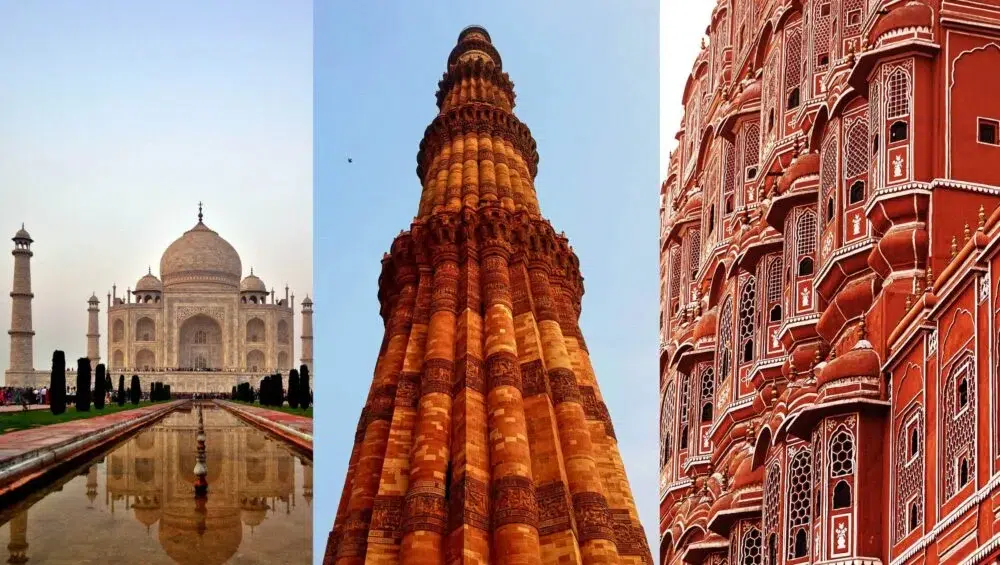
What makes this route so perfect for first-time visitors is the sheer variety. You get Mughal history in Agra, Rajput architecture in Jaipur, ancient bazaars in Old Delhi, royal palaces, street food, and living culture — all within one manageable loop that you can complete in as few as 4 days or stretch into a leisurely 8-day journey.
Step 1: Decide How Many Days You Need
This is the question we get asked most. The honest answer depends entirely on your travel pace.
4 days is the absolute minimum. You’ll cover the major highlights of all three cities, but it’s fast-paced and you’ll wish you had more time. This works if you’re adding the Golden Triangle as an extension to a business trip or have very limited leave.
6 days is the sweet spot. Most of our clients at Squid Travel India do a 6-day itinerary and leave feeling satisfied rather than rushed. You get breathing room in each city to explore beyond the monuments — the markets, the food lanes, the sunset spots.
8 to 10 days is ideal if you want to add extensions like Ranthambore National Park for a tiger safari, Pushkar for its famous camel fair and ghats, or Fatehpur Sikri as a full day rather than a quick stopover.
Our recommendation: book at least 6 days. India rewards slow travellers.
Step 2: Choose the Best Time to Visit
Timing your Golden Triangle tour correctly can make or break the experience.
October to March is the best time to visit the Golden Triangle. Daytime temperatures stay between 10°C and 27°C, making outdoor sightseeing at the Taj Mahal, Amber Fort, and Delhi’s monuments genuinely comfortable. November and February are the absolute peak months for pleasant weather, while December and January bring cooler nights — carry a light jacket.
April to June is brutally hot. Temperatures regularly cross 40°C in all three cities, and Agra in May feels like standing inside a tandoor. We do not recommend this period unless you have a very specific reason to travel then.
July to September is the monsoon season. Crowds thin out significantly and prices drop, which some budget travellers love. The Taj Mahal looks stunning against a dramatic monsoon sky. However, occasional heavy rains can disrupt outdoor plans, so pack a compact umbrella and stay flexible.
For festivals, October to November brings Diwali — one of the most magical times to be in Delhi and Jaipur. March brings Holi, with colourful celebrations across all three cities. January sees Republic Day parades in Delhi that are genuinely worth witnessing.
Step 3: Plan Your Route and Itinerary
The classic Golden Triangle route flows like this: Delhi → Agra → Jaipur → back to Delhi. This direction is recommended because it lets you do a sunrise visit to the Taj Mahal on your second or third morning — the single best experience on the entire circuit.
Here is a practical 6-day itinerary we use with our clients:
Day 1 — Arrive in Delhi. Settle in, recover from your flight, and do a gentle evening exploration of India Gate and Connaught Place. Try the chaat at any roadside stall near Khan Market.
Day 2 — Old Delhi and New Delhi. Start early with a cycle rickshaw ride through Chandni Chowk, visit Jama Masjid and Red Fort in the morning. In the afternoon, switch to New Delhi — Humayun’s Tomb, Qutub Minar, and the Lotus Temple. End with street food at Karim’s near the old city.
Day 3 — Delhi to Agra. Take the Gatimaan Express from Hazrat Nizamuddin station at 8:10 AM and arrive in Agra by 9:50 AM with breakfast served on board. Head straight to the Taj Mahal while the light is still soft. Spend the afternoon at Agra Fort. In the evening, cross the river to Mehtab Bagh for a sunset view of the Taj from the north bank — far fewer tourists, completely different perspective.
Day 4 — Agra to Jaipur via Fatehpur Sikri. Check out early and drive toward Jaipur by private car. Stop at Fatehpur Sikri, the abandoned Mughal capital built by Emperor Akbar in the 16th century. It’s a UNESCO World Heritage Site and one of the most underrated stops on the entire circuit. Allow 2 to 3 hours here. Continue to Jaipur and arrive by early evening.
Day 5 — Jaipur Sightseeing. Start at Amber Fort early morning before the crowds and the heat build up. Then Hawa Mahal for photographs, City Palace, and Jantar Mantar — the world’s largest stone astronomical observatory. In the evening, explore Johari Bazaar for jewellery and Bapu Bazaar for textiles. Book a traditional Rajasthani dinner with folk dance at one of the heritage havelis.
Day 6 — Jaipur to Delhi. Morning is free for any last shopping or a visit to Patrika Gate for photographs. Drive back to Delhi — approximately 4.5 to 5 hours on the expressway. Evening flight or onward journey.
Step 4: Sort Your Transport Between Cities
Getting between Delhi, Agra, and Jaipur is straightforward, but your choice of transport significantly affects your comfort and schedule.
For Delhi to Agra, the Gatimaan Express is the best option — it covers the route in just 1 hour 40 minutes, runs six days a week (not Saturdays), and departs from Hazrat Nizamuddin station. The Vande Bharat Express is another good option at around 1 hour 40 minutes. Tickets range from ₹750 to ₹1,500 per person. If you prefer driving, the Yamuna Expressway takes around 3 to 4 hours and is perfectly comfortable in a private car.
For Agra to Jaipur, we strongly recommend a private car rather than a train. The drive takes 4 to 5 hours and allows you to stop at Fatehpur Sikri and, if you wish, the stunning Chand Baori stepwell at Abhaneri — both off-the-beaten-path stops that train travellers miss entirely. A private taxi for this leg costs between ₹4,000 and ₹5,500.
For Jaipur to Delhi, the Shatabdi Express takes approximately 4.5 hours and is very comfortable. By road, the journey takes 4.5 to 5.5 hours depending on traffic near Delhi. Volvo buses are a budget option at ₹800 to ₹1,200.
Our advice: combine train for Delhi–Agra (speed and comfort) and private car for Agra–Jaipur (flexibility for stops). This is the combination we use for almost all our clients.
Step 5: Book Your Monuments in Advance
This step is non-negotiable, especially during peak season from October to March.
The Taj Mahal entry fee in 2026 is ₹1,300 for foreign tourists (₹1,100 base entry plus ₹200 for the main mausoleum access) and ₹250 for Indian citizens. The Taj is closed every Friday. Book your tickets online at least 24 hours in advance from the ASI website — walk-up queues during peak season can cost you 45 minutes to an hour of your precious morning light.
The best time to visit the Taj Mahal is at sunrise. The marble glows pink and gold in the early light, the crowds are thinner, and the reflections in the central pool are at their most photogenic. Arrive before the gates open and be the first ones in.
For Agra Fort, entry is ₹550 for foreign tourists and ₹35 for Indians. For Fatehpur Sikri, entry is ₹610 for foreign tourists. In Jaipur, composite tickets covering Amber Fort, City Palace, Hawa Mahal, and Jantar Mantar offer modest savings and are available at the City Palace ticket counter.
As of May 2026, all foreign nationals including OCI cardholders must complete the mandatory e-Arrival Card online within 72 hours before their inbound flight to India. Don’t leave this until you’re on the plane.
Step 6: Choose the Right Accommodation
Where you stay on the Golden Triangle matters more than people realise, because proximity to monuments saves you significant travel time each day.
In Delhi, stay in South Delhi or Connaught Place for access to both Old and New Delhi. Central Delhi hotels put you within 20 minutes of most sights.
In Agra, try to stay within viewing distance of the Taj Mahal — hotels like the Oberoi Amarvilas or Trident Agra put the monument literally in your window. Heritage properties along Fatehabad Road are a good mid-range option. Book 4 to 8 months in advance for peak season if you want the iconic Taj-view rooms.
In Jaipur, stay within or near the Old City walls for the most atmospheric experience. Heritage havelis and boutique hotels in the walled city area are worth the slight premium.
Budget travellers should expect to spend ₹6,500 to ₹8,000 per person per day covering accommodation, food, entry fees, and transport. Mid-range travellers budget ₹9,000 to ₹12,000 per day. Luxury experiences — Rambagh Palace in Jaipur, Oberoi Amarvilas in Agra — are in a different league entirely and require early planning.
Step 7: Know What to Eat in Each City
Food is one of the best parts of the Golden Triangle, and most travel guides skip over it completely. Don’t make that mistake.
In Delhi, go straight to Chandni Chowk for chaat, parathas, and jalebi. Karim’s near Jama Masjid has been serving Mughal-style kebabs and curries since 1913. In the evenings, Connaught Place has excellent restaurants covering every budget.
In Agra, try the famous petha — a translucent sweet made from white pumpkin that Agra has been making for centuries. Pinch of Spices near Fatehabad Road is consistently well-reviewed for North Indian food. Avoid the tourist-trap restaurants directly facing the Taj Mahal gates — they charge double for mediocre food.
In Jaipur, do not leave without eating dal baati churma — the signature Rajasthani dish of lentils, baked wheat balls, and a sweetened gram flour preparation. Laxmi Mishtan Bhandar in the Pink City is a Jaipur institution. The rooftop restaurants near Hawa Mahal offer great views with their meals.
Step 8: Practical Tips Before You Go
Carry cash in Indian Rupees. Cards are widely accepted at hotels and larger restaurants, but local markets, street food vendors, auto rickshaws, and small shops work on cash. ATMs are plentiful in all three cities.
Download the Google Maps offline map for all three cities before you land. Also download the Indian Railways IRCTC app for train bookings — it’s the official booking platform and much more reliable than third-party sites.
From October to February, carry an N95 mask for Delhi sightseeing. Air quality in Delhi during the winter months can be poor and premium hotels now routinely provide air purifiers in rooms.
Negotiate auto rickshaw and cycle rickshaw fares before you get in. The standard tourist quote is always 2 to 3 times the fair price — ask your hotel reception what a reasonable fare is for your destination before stepping outside.
Dress modestly when visiting mosques, temples, and heritage sites. Cover your shoulders and knees. Jama Masjid in Delhi and the Dargah sites in Ajmer require women to cover their heads — carry a light scarf.
Avoid the “free tour” touts near monuments who offer to guide you in and then take you to shops for commission. Book guides through your hotel or a registered tour operator like Squid Travel India.
Common Mistakes First-Time Visitors Make
Trying to do the Golden Triangle in 3 days. It’s technically possible but you’ll spend more time in transit than at the actual sites and leave feeling like you barely scratched the surface.
Skipping Fatehpur Sikri. Most people cut this to save time, then regret it later. It’s an entire abandoned Mughal city frozen in the 16th century and often has fewer tourists than the main monument sites.
Visiting the Taj Mahal at midday. The midday light is harsh, the heat is brutal, and the crowds are at their peak. Always go at sunrise.
Booking the cheapest accommodation far from the city centre. The money you save on the hotel you’ll spend on extra transport and time wasted sitting in traffic.
Not building in buffer time. India is wonderful but rarely runs on schedule. Trains get delayed, traffic happens, and sometimes you just want to sit in a chai shop and watch the world go by. Build one buffer half-day into your itinerary.
Extend Your Golden Triangle: Popular Add-Ons
Once you’ve done the core circuit, several extensions make the trip even richer.
Ranthambore National Park sits about 4 hours from Jaipur and is one of India’s best places to see wild tigers. Add 2 nights here for a wildlife experience that contrasts beautifully with the urban monument trail.
Pushkar, just 2.5 hours from Jaipur, is a small holy city around a sacred lake. Its famous camel fair in November is one of the most photographed events in Asia. The town itself has an almost otherworldly calm.
Udaipur, the City of Lakes, is a natural extension for those wanting the full Rajasthan experience — white marble palaces reflected in shimmering lakes, sunset boat rides, and one of the most romantic hotel settings in the world at the Lake Palace.
Varanasi, though further away, pairs powerfully with the Golden Triangle for those who want to see a different face of India entirely — ancient ghats, dawn boat rides on the Ganges, and a spiritual intensity unlike anywhere else on earth.
Why Book Your Golden Triangle Tour With Squid Travel India?
We’re not a booking portal. We’re a dedicated India tour operator with real guides on the ground in Delhi, Agra, and Jaipur. When you travel with us, you get a private car, a knowledgeable English-speaking guide at each city, hand-picked hotels that balance character and comfort, and genuine 24/7 support — not a call centre.
Our clients come back to us not because we’re the cheapest (we’re not), but because every detail is handled before they land. Monument tickets pre-booked. Driver confirmed. Restaurants shortlisted. No surprises.
Over 1,800 trips. 98% happy clients. Multiple industry awards. And a love for India that comes through in every itinerary we build.
Ready to plan your Golden Triangle tour? Get in touch with our team today for a free, no-obligation quote tailored to your dates, group size, and budget.
Visit: squidtravelindia.com | Call/WhatsApp: +91 9990812499 | Email: squidtravelindia@gmail.com
Frequently Asked Questions
How many days is ideal for the Golden Triangle tour? Six days is our recommended minimum for a comfortable experience covering Delhi, Agra, and Jaipur without feeling rushed. Four days is possible but fast-paced.
What is the best time to visit the Golden Triangle? October to March offers the most pleasant weather, with daytime temperatures between 10°C and 27°C. November and February are particularly ideal.
Is the Golden Triangle safe for solo female travellers? Yes. It is one of the most tourist-friendly circuits in India with strong infrastructure and regular tourist police presence at major monuments. Standard precautions apply.
What is the Taj Mahal entry fee in 2026? ₹1,300 for foreign tourists (₹1,100 entry + ₹200 for mausoleum access) and ₹250 for Indian citizens. The Taj Mahal is closed on Fridays.
Do I need a visa to visit India? Most nationalities require a visa. Apply for an e-Visa at indianvisaonline.gov.in at least 4 days before travel. OCI cardholders do not need a visa but must complete the mandatory e-Arrival Card within 72 hours of their inbound flight.
Can I do the Golden Triangle by train? Yes. The Gatimaan Express covers Delhi to Agra in 1 hour 40 minutes. The Shatabdi covers Delhi to Jaipur in 4.5 hours. For Agra to Jaipur, a private car is recommended so you can stop at Fatehpur Sikri en route.
About Squid Travel India: We are an award-winning India tour operator specialising in Golden Triangle, Rajasthan, Kerala, South India, and Wildlife tour packages. With 1,800+ trips completed and a 98% client satisfaction rate, we bring genuine expertise and on-ground knowledge to every journey we plan.
Comment (0)