

By Squid Travel India | Updated: July 2026 | 14 min read
Written by the travel experts at Squid Travel India — a New Delhi-based tour operator with years of experience organising Spiti Valley trips across every season. TripAdvisor Travellers’ Choice Award, 2024–2025.
Quick Answer: Best Time to Visit Spiti Valley
| Travel Goal | Best Time |
|---|---|
| First-time visitors | Late June to September |
| Full Spiti circuit (both routes) | Mid-June to mid-October |
| Photography and autumn colours | September |
| Snow leopard sightings | December to February |
| Budget travel | July to August (40% cheaper) |
| Bike trip | July to September |
| Avoid crowds | May or late September |
| Avoid entirely | December to February (unless very experienced) |
Why Timing Matters More in Spiti Than Anywhere Else
Spiti Valley is not a typical hill station. It is a high-altitude cold desert in Himachal Pradesh, sitting at elevations between 3,800 and 4,500 metres in the Trans-Himalayas — drier, higher, more remote, and more extreme than Shimla, Manali, or Mussoorie ever gets.
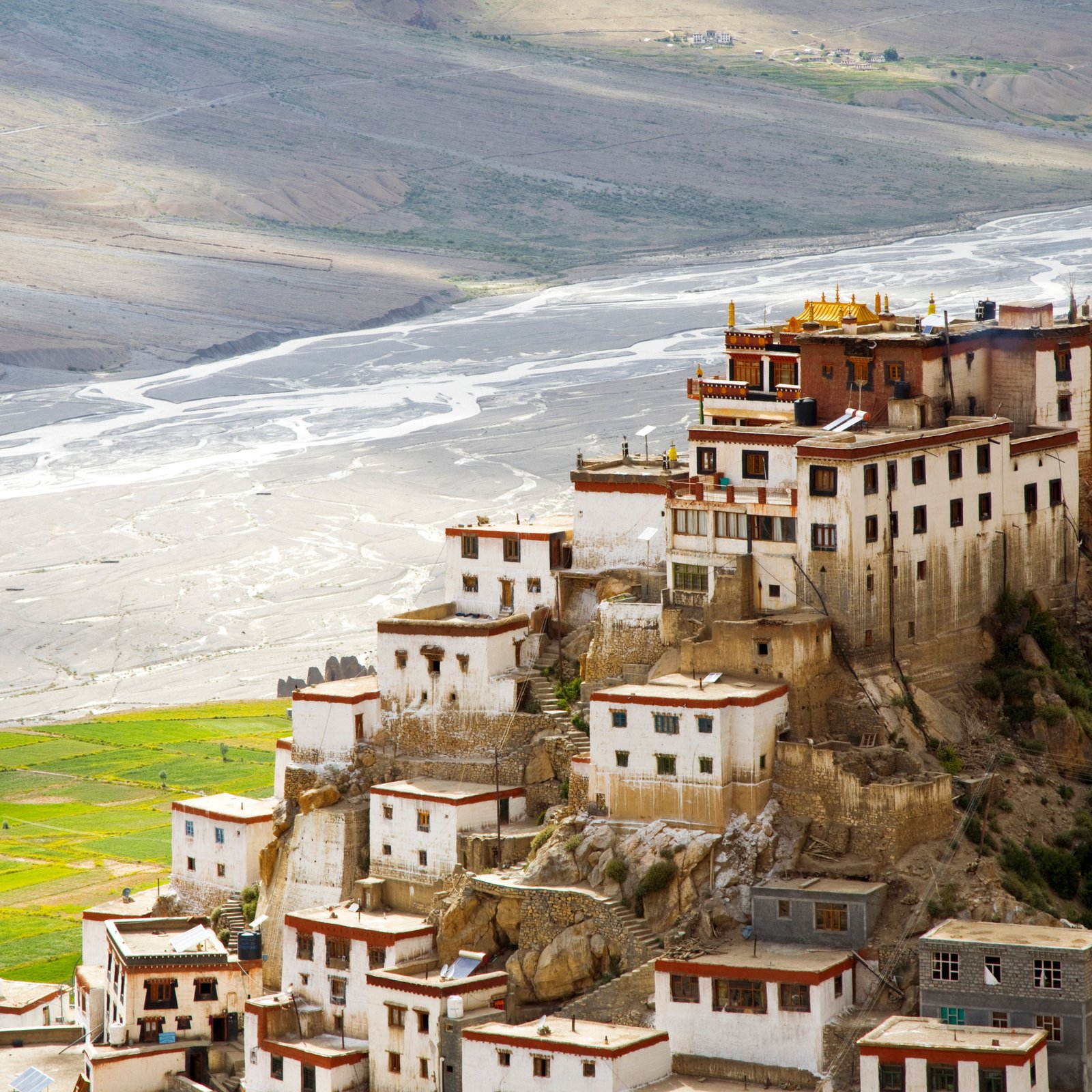
Two facts must shape your planning before anything else:
Two routes in — and they are not both open at the same time.
The Shimla–Kinnaur route via NH5 is the more reliable road and stays open for longer through the year. The Manali–Kaza route via Kunzum Pass is shorter and more dramatic but opens only around mid-June, depending on snowfall at Rohtang and Kunzum passes.
If you want to do the complete Spiti circuit — Delhi to Shimla to Kinnaur to Kaza to Kunzum Pass to Manali and back to Delhi — your window is roughly mid-June to mid-October 2026. Outside this window, you either use only the Shimla route or do not go at all.
Altitude sickness is a real risk regardless of season.
Kaza — Spiti’s main town — sits at 3,800 metres. Several villages and passes go significantly higher. Spend your first 24–48 hours in Kaza acclimatising before heading to higher elevations. This is non-negotiable in summer, winter, and every month in between.
Season by Season: What to Expect
Spring: March to May — For the Patient and Adventurous
Temperature: 0°C to 15°C (day) / -10°C to 0°C (night)
Route availability: Shimla–Kinnaur only. Manali route closed.
Crowd level: Very low
Recommended for: Experienced travellers, solitude seekers, photography of snow-covered landscapes
March and April in Spiti are not spring in the way the word suggests for most hill stations. The snow is still deep, nights are genuinely cold, and the Manali route remains firmly shut. The Shimla–Kinnaur road is partially open but road conditions are unpredictable — ice on the higher stretches, occasional closures after snowfall.
What spring does offer: extraordinary solitude, snow-covered monasteries with no other visitors, and a raw quality to the landscape that disappears once summer tourism begins. Key Monastery and Dhankar Monastery in March and April look exactly as they have for centuries — perched on their clifftops above a silent white valley.
By May, things start to move. Temperatures rise during the day, Kaza’s guesthouses begin reopening, and the snow on the valley floor starts to melt. The Shimla–Kinnaur route is generally reliable by mid-May. The Manali route remains closed.
Important: May travellers should cross water streams and river crossings before 10:00 AM — snowmelt in the afternoon raises water levels fast and turns crossings that were manageable at 7:00 AM into genuine hazards by noon.
Who should go in spring: Travellers who have been to Spiti before and specifically want the winter-into-spring atmosphere, solitude, and snow-covered landscape photography. Not recommended for first-time visitors.
Early Summer: June — The Full Circuit Window Opens
Temperature: 10°C to 22°C (day) / 0°C to 8°C (night)
Route availability: Shimla–Kinnaur open. Manali route opens mid-June.
Crowd level: Low to moderate — building through the month
Recommended for: First-time visitors, road trippers, complete circuit travellers
June is when Spiti properly wakes up. The Manali–Kaza highway typically opens around mid-June, though the exact date shifts year to year depending on snowfall at Kunzum Pass. When both routes open, the complete Spiti circuit becomes possible and this is the window most serious road trip and bike trip planners aim for.
The weather in June is outstanding — daytime temperatures of 15–22°C in Kaza, clear blue skies for most of the day, and the landscape transitioning from brown-and-white winter into the sharp desert colours of summer. The passes — Kunzum La at 4,551 metres, Rohtang at 3,978 metres — are dramatic and accessible.
June is also when all of Spiti’s key attractions fully reopen. Monasteries resume their full schedules, the Pin Valley National Park is accessible, the high-altitude villages of Langza, Hikkim, and Komic are reachable by road.
Road condition note for June: Even after the Manali route opens, early June roads are rough. The post-winter surface has taken a beating from freeze-thaw cycles. A high-clearance vehicle — SUV or 4×4 — is strongly recommended. Sedans can manage the Shimla–Kinnaur route in good conditions but will struggle on the interior roads and water crossings of the Manali side.
Who should go in June: Road trippers and bike travellers who specifically want to do the complete circuit at the start of the season, and first-time visitors who want the full open-route experience with moderate rather than peak crowds.
Peak Summer: July to August — The Most Accessible (and Most Budget-Friendly) Window
Temperature: 15°C to 25°C (day) / 5°C to 12°C (night)
Route availability: Both routes open. Interior roads fully accessible.
Crowd level: Highest of the year — but still manageable compared to Manali or Shimla
Recommended for: First-time visitors, families, trekkers, budget travellers
July and August are the warmest months in Spiti and the most accessible for all types of travellers. Both routes are fully open. All guesthouses and hotels are operational. The interior roads to Langza, Hikkim, Komik, Demul, and the Pin Valley are in their best condition of the year. Spiti’s famous fossil-rich landscapes, its ancient monasteries, and its high-altitude lakes are all fully accessible.
The warmest months are June and July, with daytime temperatures in Kaza reaching up to 22–25°C. This is genuinely warm by Spiti standards — pleasant for outdoor sightseeing and trekking without the brutal cold of winter or the unpredictability of spring.
The monsoon question: One of the most common concerns about July–August travel is the monsoon. Here is the honest answer: Spiti Valley itself receives very little rainfall. It sits in a Himalayan rain shadow and the cold desert geography means the southwest monsoon delivers only 60–90mm of rain across the entire July–September period — less than Mumbai gets in a single day of heavy rain.
The risk is not rain inside Spiti. The risk is landslides on the approach roads — particularly the Shimla–Kinnaur NH5, which runs through steep gorges where the NH5 Hindustan-Tibet Highway can experience landslides triggered by rainfall in adjacent wetter zones. Build buffer days into any July–August Spiti itinerary. If a landslide blocks the road, you may wait one day or three — flexibility is non-negotiable in monsoon.
Budget advantage: Accommodation rates in July–August are 30–40% lower than peak season pricing. A guesthouse that costs ₹3,200–3,500 per night in September drops to ₹1,800–2,100 per night in July–August. For budget-conscious travellers, these months offer the best value of the accessible season.
Trekking in July–August: The main trekking routes — Pin Parvati Pass, Kanamo Peak, the Spiti Valley cycling circuit, and the Chandra Tal lake trek — are at their most accessible. Snow on the passes has melted, streams are full, the valleys are as green as they ever get, and the dramatic landscape that makes Spiti famous is fully on display.
Who should go in July–August: First-time visitors who prioritise accessibility and maximum sightseeing over perfect weather. Budget travellers. Trekkers. Families with older children. Anyone who does not have the flexibility to wait for September.
Autumn: September — The Best Month in Spiti
Temperature: 10°C to 20°C (day) / 0°C to 8°C (night)
Route availability: Both routes fully open until mid-October
Crowd level: Moderate and declining through the month
Recommended for: Everyone — especially photographers, first-time visitors, and those who want the complete experience
September is, by most experienced Spiti travellers’ judgement, the finest month to visit the valley. The reasons stack up:
The summer crowds have thinned. The monsoon-season road hazard risk on the approach routes has largely passed. The sky is a deeper, cleaner blue than any other month. The landscape begins its transition from the greens of summer into the extraordinary autumn colours — brown, amber, rust, and gold — that make Spiti’s villages and valleys look like paintings.
The temperature balance in September is perfect. Days are warm enough for full outdoor sightseeing (15–20°C in Kaza), evenings are cool and refreshing, and the overnight cold — while real — is entirely manageable with the right sleeping bag and warm layers. The first hint of coming winter gives the air a clarity and sharpness that June and July, with their summer softness, cannot match.
The Spiti Valley autumn colours peak in late September and early October. The poplars around Kaza, Tabo, and Nako turn golden. The barley fields are harvested and the terraces turn from green to gold. Against the backdrop of grey-brown Himalayan desert mountains and deep blue sky, the effect is extraordinary.
September also gives you the full circuit. Both routes are open and will remain so until mid-October — giving you the flexibility to enter from Shimla and exit via Manali, or vice versa.
Who should go in September: Anyone. It is Spiti’s best month and the easiest recommendation to make regardless of travel style, experience level, or primary interest.
October — The Closing Window
Temperature: 5°C to 15°C (day) / -5°C to 2°C (night)
Route availability: Shimla–Kinnaur route open. Manali route closes mid-October.
Crowd level: Very low — most tourists have left
Recommended for: Experienced travellers, photographers, those who specifically want solitude
Early October is essentially an extension of September’s best conditions — clear skies, autumn colours, low crowds, and cool but manageable temperatures. The Manali route typically closes between the first and third week of October depending on the year’s first major snowfall. Once it closes, you are back to the Shimla–Kinnaur route only.
By late October, Kaza temperatures are dropping sharply overnight, several guesthouses have closed for the season, and the valley is taking on the quiet pre-winter character that only the hardiest travellers come specifically to experience.
Who should go in October: Experienced travellers who know Spiti already and want the autumn landscape in near-complete solitude. Not for first-timers.
Winter: November to February — Extreme Spiti
Temperature: -10°C to 5°C (day) / -15°C to -25°C (night)
Route availability: Manali route completely closed. Shimla–Kinnaur route partially open, ice-dependent, requires experienced 4×4 driver.
Crowd level: Almost none
Recommended for: Experienced mountaineers, snow leopard seekers, cultural travellers
Winter in Spiti is one of India’s most extreme travel experiences. The Manali route is buried under snow and completely impassable. The Shimla–Kinnaur road — the only lifeline in — requires an experienced 4×4 driver navigating black ice on some of the most exposed mountain roads in India. Accommodation options reduce to a handful of homestays. Several villages become effectively cut off.
Temperatures at night drop to -15°C to -25°C. Water pipes freeze. Village life in winter Spiti revolves entirely around survival and the community warmth of the homestay culture.
So why go?
Snow leopard sightings. December to February is the only time of year when snow leopards descend from their high glacial habitats to lower elevations in search of prey. Spiti’s Pin Valley is one of the best places in India to see the snow leopard in the wild — and winter is the only viable season. For wildlife photographers, this is not a compromise — it is the entire point.
The Losar Festival. February brings Losar — Tibetan New Year — to Spiti’s monasteries. Key Monastery, Tabo Monastery, and Kaza celebrate with masked dance performances (Cham), butter lamp offerings, and traditional Spitian hospitality extended to the handful of visitors present. It is one of the most authentic cultural experiences available anywhere in Himachal Pradesh, precisely because so few outsiders witness it.
Absolute solitude. In winter, Spiti belongs to its people. The handful of travellers who make it in winter describe an experience of stillness, community connection, and raw landscape beauty that summer tourism — for all its accessibility — cannot replicate.
Who should go in winter: Only experienced, well-equipped travellers with proper cold-weather gear, high-altitude experience, and complete flexibility on schedule. Not suitable for first-timers, families, or anyone with fixed return dates.
Month-by-Month Summary Table
| Month | Temp (Day/Night) | Routes Open | Crowd Level | Best For | Rating |
|---|---|---|---|---|---|
| January | -5°C / -20°C | Shimla only (ice-dependent) | Almost zero | Snow leopard, extreme adventure | ⭐⭐ |
| February | -3°C / -18°C | Shimla only | Almost zero | Snow leopard, Losar Festival | ⭐⭐ |
| March | 5°C / -10°C | Shimla only | Very low | Solitude, snow photography | ⭐⭐⭐ |
| April | 10°C / -5°C | Shimla only | Very low | Spring landscapes, solitude | ⭐⭐⭐ |
| May | 15°C / 0°C | Shimla open, Manali closed | Low | First-timers via Shimla only | ⭐⭐⭐ |
| June | 20°C / 5°C | Both routes (Manali from mid-June) | Moderate | Full circuit, road trips | ⭐⭐⭐⭐ |
| July | 23°C / 8°C | Both routes fully open | High | Trekking, budget travel | ⭐⭐⭐⭐ |
| August | 22°C / 7°C | Both routes open | High | First-timers, budget, families | ⭐⭐⭐⭐ |
| September | 18°C / 3°C | Both routes fully open | Moderate | Everyone — best overall month | ⭐⭐⭐⭐⭐ |
| October | 12°C / -3°C | Shimla open, Manali closes mid-Oct | Very low | Photography, autumn colours | ⭐⭐⭐⭐ |
| November | 2°C / -12°C | Shimla only (risky) | Almost zero | Not recommended | ⭐ |
| December | -5°C / -20°C | Shimla only (ice-dependent) | Almost zero | Snow leopard expeditions only | ⭐⭐ |
The Two Routes to Spiti: Which to Take and When
Shimla–Kinnaur Route (NH5)
Distance from Delhi: Approximately 450 km to Kaza
Journey time: 14–16 hours (typically broken into 2 days)
Open: Year-round (with winter caveats — ice and occasional closures)
Road quality: Generally better than the Manali route, but subject to landslides in monsoon
This is the standard entry route for most Spiti visitors and the only option outside the June–October window. The route passes through Shimla, Narkanda, Rampur, Sarahan, and the Kinnaur Valley — itself spectacular — before entering Spiti via Nako and Tabo. The Tabo Monastery, one of the oldest surviving monasteries in the Himalayas at over 1,000 years old, sits on this approach and is worth a full half-day stop.
In monsoon (July–September), the gorge sections of the NH5 through Kinnaur are the most landslide-prone stretch of either route. Always check current road conditions before departing and carry at least 2 buffer days in your schedule.
Manali–Kaza Route via Kunzum Pass
Distance from Delhi: Approximately 570 km to Kaza via Manali
Journey time: 10–12 hours from Manali to Kaza (in good conditions)
Open: Mid-June to mid-October approximately
Road quality: Rougher and more dramatic than the Shimla route — includes water crossings, high passes, and some genuinely challenging terrain
The Manali route is the more dramatic and adventurous approach — crossing Rohtang Pass (3,978 metres) and Kunzum Pass (4,551 metres), passing the brilliant blue crescent of Chandratal Lake, and descending through the Lahaul Valley into Spiti. For bike travellers and road trip enthusiasts, this approach is Spiti at its most cinematic.
The Manali route requires a high-clearance vehicle. Water crossings between Batal and Gramphoo can be impassable after heavy rain — always cross before 10:00 AM when snowmelt is lowest.
Complete Circuit: The Best Option
If your timing allows (mid-June to mid-October), do the complete circuit: enter via Shimla, drive the Kinnaur–Tabo–Kaza–Pin Valley route, explore Spiti thoroughly, and exit via Kunzum Pass to Manali. Each route is spectacular in a different way and the circuit avoids backtracking on the same road.
Key Attractions and Their Best Season
Key Monastery (Ki Gompa)
The most famous monastery in Spiti, perched dramatically above the Spiti River at 4,166 metres. Open year-round — but accessible most comfortably from June to October. In winter, the monastery continues its rituals with far fewer visitors. September provides the finest combination of clear light, open road, and low crowds.
Chandratal Lake
The crescent-shaped high-altitude lake at 4,300 metres is Spiti’s most photographed natural landmark. Accessible only from June to October — the road is closed by snow outside this window. September is the best month: the lake surface is at its clearest, the surrounding peaks are beginning to dust with early snow, and the colours at sunset are extraordinary.
Pin Valley National Park
Home to the snow leopard, the ibex, and over 100 species of birds. The park is open year-round but the wildlife experience changes dramatically by season. Summer (June–September) offers Himalayan ibex and bird sightings. Winter (December–February) is the only time for snow leopard. The park road is accessible by vehicle only from June to October.
Tabo Monastery
Known as the “Ajanta of the Himalayas” for its extraordinary 10th-century murals — the oldest surviving example of Buddhist art in India. Open year-round. Accessible by both routes. The murals can be seen at any time of year but the monastery is most comfortable to visit between May and October.
Langza, Hikkim, and Komic Villages
Three of the highest motorable villages in the world, sitting above 4,500 metres. Langza’s giant Buddha statue overlooking the valley is one of Spiti’s most iconic images. Hikkim has the world’s highest post office. Komic has the world’s highest motorable road leading to it. All three are best visited from June to September, with September offering the finest light and lowest crowds.
Dhankar Monastery and Lake
A fort-monastery perched precariously on a cliffside above the confluence of the Pin and Spiti rivers — one of the most dramatic monastery settings in the entire Himalayas. The small lake above Dhankar requires a 45-minute uphill walk. Best visited from June to September.
How to Get to Spiti Valley from Delhi
By Road
Via Shimla–Kinnaur (recommended for first-timers and year-round access):
Delhi to Shimla (370 km, 7–8 hours) → Shimla to Narkanda to Rampur to Sarahan to Nako (Day 2, approximately 10–12 hours) → Nako to Tabo to Kaza (Day 3, approximately 6–7 hours). Total: 3 days of driving with two overnight halts en route.
Via Manali–Kunzum Pass (open mid-June to mid-October):
Delhi to Manali (570 km, 12–14 hours) → Manali to Kaza via Kunzum Pass (10–12 hours, one long day). Total: 2 driving days with one overnight halt in Manali.
By Air and Road Combination
The nearest airports to Spiti are Shimla (232 km from Kaza) and Kullu–Bhuntar (235 km from Kaza via Manali). Flying to Shimla or Kullu and renting a vehicle saves significant driving time from Delhi but does not eliminate the mountain road sections that are genuinely challenging.
Vehicle Recommendation
A high-clearance SUV or 4×4 is strongly recommended for both routes — particularly the Manali approach, the interior roads of Spiti, and any travel in early or late season. Sedans can manage the Shimla–Kinnaur route in good weather conditions but will struggle on the rough interior roads, water crossings, and the Manali side’s unpaved sections.
Essential Packing List for Spiti Valley
Year-round essentials:
- Down jacket or heavy insulated jacket — even in July, mornings and evenings are cold at 4,000 metres
- Thermal base layers — essential from October onwards, recommended from May
- Warm hat, gloves, and neck gaiter
- Waterproof jacket and trousers
- Sunscreen SPF 50+ — the UV at high altitude is extreme, even on overcast days
- Sunglasses with UV protection
- Altitude medication (Diamox — consult your doctor before travel)
- Personal first aid kit
- Enough cash for the entire trip — ATMs in Kaza exist but are unreliable, and smaller villages have nothing
- Offline maps downloaded before entry — phone signal is patchy outside Kaza
For winter travel (November–March) additionally:
- Expedition-grade sleeping bag (rated to -20°C)
- Hand warmers in quantity
- Insulated boots rated to -20°C
- Emergency satellite communicator
For trekking additionally:
- Trekking poles
- Waterproof trekking boots
- Lightweight tent if camping
- Water purification tablets
Accommodation in Spiti Valley: What to Expect
Spiti’s accommodation landscape is basic but genuine. Do not expect hotel-standard facilities even in the best properties in Kaza. Do expect extraordinarily warm hospitality, home-cooked Spitian food, and an authenticity that luxury mountain resorts simply cannot manufacture.
In Kaza (main town):
Budget guesthouses from ₹800–1,500 per night. Mid-range properties from ₹2,000–4,000 per night. A handful of better-appointed boutique homestays at ₹4,000–7,000 per night. Most offer basic attached bathrooms in peak season; shared facilities in winter.
In villages (Langza, Hikkim, Tabo, Nako):
Homestays are the only option and are often the highlight of any Spiti trip. Staying with a local family — eating what they eat, sleeping under wool blankets in a mud-brick house at 4,000 metres, and waking to views that no hotel can replicate — is the experience that makes repeat visitors return year after year. Budget ₹600–1,500 per night including meals.
Booking: Book accommodation in advance for June–September, particularly weekends. For the peak months of July and August, book at least 3–4 weeks ahead. In winter, call ahead before travelling — not all guesthouses remain open.
Practical Tips for Every Season
Acclimatise before going higher. Spend at least 2 nights in Kaza before heading to Langza, Hikkim, or Chandratal. Altitude sickness at 4,500 metres is dangerous, not just uncomfortable. If you feel a persistent headache, nausea, or loss of appetite — descend immediately rather than pushing on.
Cross water streams before 10:00 AM. Snowmelt raises water levels through the day. A crossing that was knee-deep at 7:00 AM can be waist-deep and fast-flowing by 1:00 PM.
Check road conditions before departing. The Border Roads Organisation (BRO) handles Spiti’s roads and provides condition updates. Your guesthouse owner in Kaza will also know better than any app or website what is actually passable today.
Carry cash from Delhi. There is one ATM in Kaza. It frequently runs out of cash and connectivity issues mean it does not always function. Carry enough rupees for your entire Spiti stay before leaving Shimla or Manali.
Respect the culture and the monasteries. Spiti’s Buddhist culture is living and active, not a museum exhibit. Remove shoes before entering monasteries. Do not photograph monks or rituals without asking. Dress modestly — no shorts inside monastery premises.
Do not litter. Spiti’s landscape is extraordinary partly because it has not been destroyed by the kind of tourist waste that mars other Himalayan destinations. Use the dustbins. Carry a bag for your own rubbish on treks. The locals will appreciate it and the valley will remain what it is.
Spiti Valley vs Ladakh: Which to Visit and When
Many travellers consider both Ladakh and Spiti Valley — they share the same high-altitude cold desert character and are both at their best in summer. The comparison is worth making clearly:
| Factor | Spiti Valley | Ladakh |
|---|---|---|
| Accessibility | More remote, rougher roads | Better roads, direct flights to Leh |
| Best season | June to September | July to September |
| Crowds | Significantly lower | Higher, more developed tourism |
| Cost | Lower overall | Higher (flights, hotels) |
| Monasteries | Key, Tabo, Dhankar — less visited | Hemis, Thiksey — more famous |
| Snow leopard | December to February (Pin Valley) | December to February (Hemis) |
| First-timer | Spiti is harder logistically | Ladakh is easier |
For first-time visitors to the high Himalayan cold desert: Ladakh is the more accessible starting point. Spiti rewards those who have already done Ladakh and want something more remote, more raw, and less touristically developed.
For a full guide to Spiti Valley from Delhi including the complete itinerary options, read our Spiti Valley Trip from Delhi guide.
Frequently Asked Questions: Best Time to Visit Spiti Valley
Q: What is the best month to visit Spiti Valley?
A: September is the single best month for most travellers — perfect temperatures, clear blue skies, autumn colours beginning, both routes open, and crowds at their lowest since June. For the complete open season with both routes accessible, the window is mid-June to mid-October.
Q: Can I visit Spiti Valley in winter?
A: Yes — but only if you are an experienced cold-weather traveller with proper gear, a flexible schedule, and a specific reason to go (snow leopard sightings, the Losar festival, or the specific experience of Spiti in its most extreme state). Night temperatures of -15°C to -25°C, 60% road closures, and very limited facilities make winter Spiti genuinely dangerous for the unprepared.
Q: Which route is better — Shimla or Manali?
A: Both are spectacular and different. The Shimla–Kinnaur route is more reliable year-round, more gradual in its ascent, and passes through the beautiful Kinnaur Valley. The Manali route via Kunzum Pass is shorter, more dramatic, and the approach most bike and road trip travellers prefer. The best option is the complete circuit — enter via one and exit via the other — which is only possible from mid-June to mid-October.
Q: How many days do I need for Spiti Valley?
A: Minimum 7 days from Delhi for a meaningful visit including travel days. 10 to 12 days is the ideal window to cover the main monasteries (Key, Tabo, Dhankar), the high-altitude villages (Langza, Hikkim, Komic), Chandratal Lake, and the Pin Valley, without feeling constantly rushed.
Q: Is Spiti Valley safe for solo female travellers?
A: Yes. Spiti Valley has a strong reputation for safety and the local Buddhist Spitian community is generally very welcoming to solo travellers of all backgrounds. The main practical challenges are altitude, remote roads, and limited phone connectivity — all of which apply equally to all solo travellers regardless of gender.
Q: Do I need a permit for Spiti Valley?
A: Indian nationals do not need any special permit for the main Spiti Valley. Foreign nationals require an Inner Line Permit (ILP) for certain restricted areas including Kaza and most of Spiti — this is easily obtained online or at the Sub-Divisional Magistrate office in Rekong Peo (on the Shimla route) or in Manali. Your Squid Travel India tour manager handles permit arrangements for all international visitors as part of our Spiti packages.
Q: What vehicle do I need for Spiti Valley?
A: A high-clearance SUV or 4×4 is strongly recommended for any route to Spiti. Sedans can manage the Shimla–Kinnaur route in good road conditions but will struggle significantly on the interior roads and the Manali approach. For bike travellers, a Royal Enfield Himalayan or equivalent adventure motorcycle is the standard choice.
Q: Is the Spiti Valley trip from Delhi worth it?
A: Without question — for the right traveller. Spiti Valley offers a combination of high-altitude desert landscape, ancient Buddhist culture, extraordinary monasteries, and genuine remoteness that nothing else in India replicates. The journey is long and the road is demanding. The reward is proportionate.
Plan Your Spiti Valley Trip with Squid Travel India
Spiti Valley rewards those who plan it properly — and punishes those who don’t.
At Squid Travel India, every Spiti Valley itinerary is built around current road conditions, accurate seasonal timing, proper acclimatisation schedules, and accommodation pre-booked in properties we have personally vetted. We handle permits for international visitors, vehicle selection, and the real-time logistics that make the difference between a smooth Spiti trip and a stressful one.
Whether you are planning a first-time June circuit, a September photography trip, or a specialist winter snow leopard expedition — contact us to start building your Spiti Valley itinerary.

Comment (1)