

November is the month Rajasthan has been waiting for. The furnace heat of summer is gone, the monsoon has packed up and left the desert scrubland washed a surprising green, and the air carries that specific dry-cool crispness that makes every sunrise over a sandstone fort feel like a scene from a film. For foreign travelers, November is not just a good time to visit Rajasthan — it is arguably the single best month of the entire year. The crowds that descend in December and January have not yet arrived, prices are still reasonable, and the light — particularly in the first three weeks of the month — is painterly in a way that only photographers who have been here will try to describe to people who have not.
This guide covers everything you need to plan a Rajasthan trip in November 2026: the weather across different cities, the festivals that make this month extraordinary, which places deserve your time, how long to spend, and the practical details that turn a good trip into a memorable one.
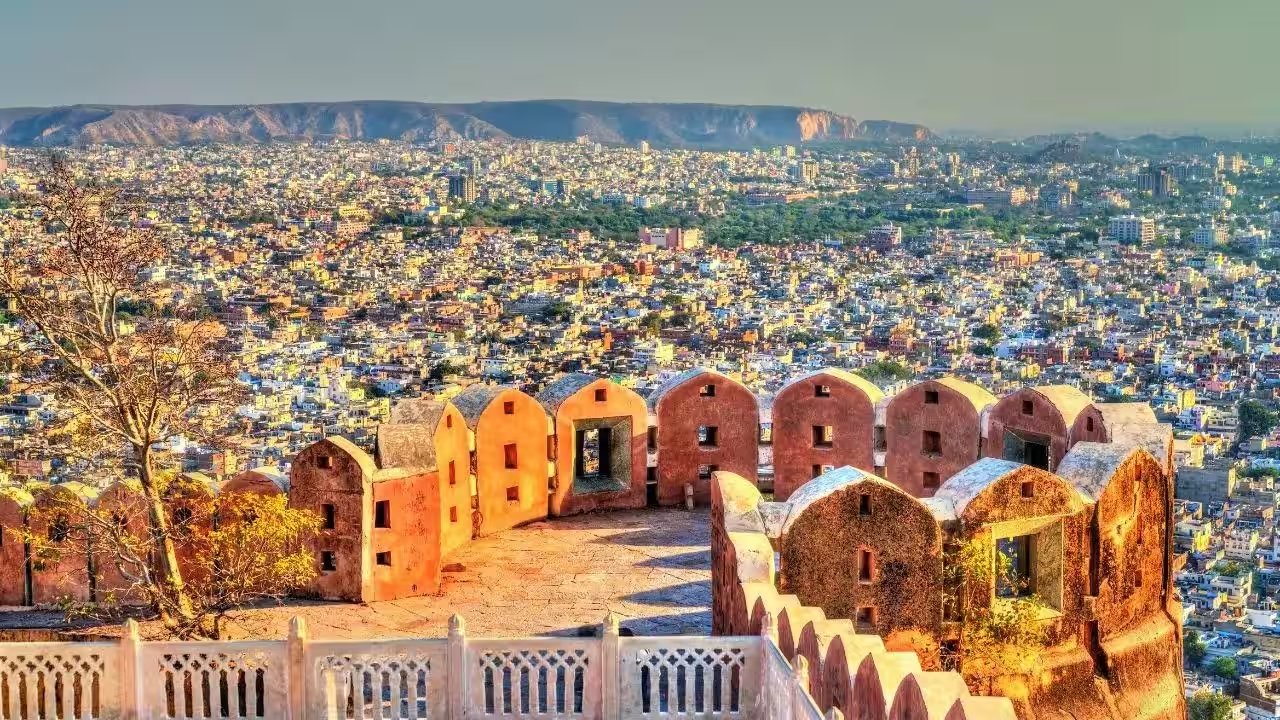
Why November Is Rajasthan’s Peak Tourist Month
Rajasthan is a desert state, and desert climates are unforgiving at the extremes. From April through June the mercury regularly climbs past 40°C (104°F) in Jaipur and Jodhpur, and the idea of wandering through open-air forts and bazaars in that heat is something most travelers rule out quickly. July through September brings the monsoon — not as dramatic in Rajasthan as in Kerala or the northeast, but still unpredictable enough to disrupt outdoor plans.
October marks the turning point. The rains ease, temperatures drop from punishing into merely warm, and the landscape takes on an unexpected lushness. By November, the conditions tip into something close to perfect. Days are warm and sunny, typically between 18°C and 30°C (64–86°F) across most of the state, with lower humidity than anywhere in South or East India at this time of year. Evenings cool quickly — Jaisalmer and Jodhpur can drop to around 12–14°C (53–57°F) after dark — which means the famous Rajasthani rooftop dinners become genuinely pleasant rather than an exercise in sweating through your dinner.
The other thing November has going for it is the quality of natural light. The sun sits lower in the sky than it does in summer, casting long golden shadows across the fluted sandstone of Mehrangarh Fort, the white marble of the City Palace in Udaipur, and the terracotta lanes of the old cities. If you have any interest in photography, November mornings and late afternoons produce images that you will not replicate at any other time of year.
November Weather City by City
Jaipur opens November at around 28–30°C during the day and closes it around 22–24°C, with nights cooling to 13–15°C by month’s end. There is almost no chance of rain. The Pink City is at its most atmospheric in this window — the light on Hawa Mahal and Amber Fort in the early morning is extraordinary, and the bazaars around Johari Bazaar and Bapu Bazaar feel energetic without the December crush.
Jodhpur runs slightly warmer in the first half of November, with daytime highs around 30–32°C, settling to the mid-20s by the final week. Nights here cool faster than in Jaipur, and sitting on a rooftop with a view of the blue city and the floodlit walls of Mehrangarh after sunset is one of those experiences that earns Rajasthan its reputation. The city’s blue-washed lanes — a tradition associated with the Brahmin community who painted their homes to mark their caste identity, though now maintained largely for aesthetics and tourism — photograph best in November’s softer light.
Udaipur sits at a slightly higher elevation and is surrounded by the Aravalli hills and its famous lakes, which give it a more temperate feel than the desert cities to the west. November days hover around 26–28°C, evenings drop to 14–16°C, and the lakes — Pichola, Fateh Sagar — are full from the monsoon runoff, making the water-palace views that Udaipur is famous for appear at their most cinematic. If you arrive in November expecting a half-empty lake with a stranded Jag Niwas palace, you will be pleasantly surprised.
Jaisalmer, the golden fortress city on the edge of the Thar Desert, is perhaps the biggest beneficiary of November travel. Summer temperatures here hit 42–45°C, making the idea of exploring the medieval fort, the havelis of the merchant families, or sleeping under the stars in the Sam Sand Dunes essentially impossible for anyone not specifically acclimated to extreme heat. In November, daytime highs sit around 28–30°C and nights in the dunes drop to 10–12°C — chilly enough that your camp will provide blankets, dramatic enough that the stars above the Thar are unlike anything most visitors have seen. The early morning camel or jeep ride to watch the sunrise over the dunes is a November highlight that is simply not possible in a comfortable way during most of the year.
Pushkar, the small pilgrimage town north of Ajmer, deserves its own mention because November 2026 brings it one of India’s most extraordinary festivals.
The Pushkar Camel Fair 2026
No single event in Rajasthan generates as much international attention as the Pushkar Camel Fair, and in November 2026, it falls across roughly November 1–9, with the main trading days in the first half and the full moon (Kartik Purnima) culminating the festival on November 5. Exact dates shift slightly each year based on the Hindu lunar calendar, so confirm the 2026 schedule as you approach your travel planning.
The Pushkar Camel Fair is many things at once. At its core it is a livestock fair — one of the world’s largest — where herders from across Rajasthan and neighbouring states bring camels, horses, and cattle to trade. The ground outside the small desert town fills with tens of thousands of animals and the families who have traveled with them, setting up camps in a way that has not changed fundamentally in centuries. There are camel races, best-decorated-camel competitions, folk music performances, and the kind of impromptu cultural energy that no ticketed event or staged show can replicate.
Around this core, an enormous international traveler community gathers every November. The Pushkar fair has been on the foreign travel circuit for decades, and the town swells with a mix of Indian pilgrims (Pushkar’s Brahma temple is one of very few in the world), Rajasthani traders, and visitors from Europe, the Americas, Australia, and Japan. The ghat area along Pushkar Lake fills for the full moon bathing ritual, which is one of the most visually and spiritually intense scenes in Indian travel.
Accommodation books out very early for Pushkar during fair week — often months in advance. If you plan to include it, building your Rajasthan itinerary around the fair dates is strongly advisable, and booking well ahead is not optional.
Diwali in Rajasthan — Early November
In November 2026, Diwali falls on October 20, which means the festival’s afterglow — the lights still strung on old havelis, the firework residue still hanging in the cool air, the sweet shops still heaped with mithai — carries into the first days of the month. If you arrive in Rajasthan in the first week of November 2026, you catch this Diwali hangover, when the festive spirit is still present but the intensity has eased.
In Jaipur, Jodhpur, and Udaipur, the old city areas are still lit up in the first days of November. Udaipur in particular, with its lakeside ghats and hilly old quarter, holds Diwali light beautifully — walking through the lanes of the old city with diyas still flickering on doorsteps is a sensory experience that makes a November 1–3 arrival in Udaipur well worth planning around.
Where to Go: Rajasthan’s Essential Stops in November
Jaipur — The Pink City
Rajasthan’s capital and most visited city earns its place at the start of most itineraries not from convenience alone but from the sheer density of things worth seeing. Amber Fort, the hilltop Mughal-Rajput complex above the city, is best visited at dawn when the light hits the sandstone and the tour groups have not yet arrived. The City Palace complex in the old city — still partially home to the royal family of Jaipur — rewards slow exploration. Hawa Mahal, the five-storey honeycomb façade that faces the main bazaar, is most photographed from the road outside but makes more sense when you go inside and understand that it was built so the women of the royal household could watch street life without being seen.
Beyond the main monuments, Jaipur’s bazaars are among the best in India for textiles, gemstones, blue pottery, and block-printed fabrics. The city is also a strong base for day trips — Abhaneri, with its extraordinary stepwell Chand Baori, is about 95 kilometres east and makes for a half-day excursion that few visitors regret.
Jodhpur — The Blue City
Mehrangarh Fort is, in many people’s opinion, the single most impressive fort in all of India. It rises 120 metres above the city on a sheer rock outcrop, its massive walls emerging from the stone as though the hill itself grew them. The interior museum is unusually well curated — the palanquin collection, the armoury, and the elephant howdah gallery are worth the time most visitors do not give them. The view from the battlements over the blue city below is the photograph that sends most visitors to Jodhpur in the first place.
The old city’s blue lanes are best explored on foot, following the loose grid between Mehrangarh and the Sardar Market clock tower. November mornings, with the cool air and the light coming horizontal across the rooftops, are ideal for this kind of wandering.
Udaipur — The City of Lakes
Udaipur is often called the most romantic city in India, a reputation it has spent considerable effort cultivating, and in November it lives up to it. The City Palace, built over three centuries and now partly a hotel, partly a museum, rises from the eastern shore of Lake Pichola in a sequence of domes, cupolas, and balconied galleries that are visually overwhelming when seen from a boat on the lake. The Jag Niwas water palace — now the famous Lake Palace Hotel — sits in the middle of Pichola and is best appreciated from the eastern shore at sunset.
Beyond the famous lake views, Udaipur has a genuinely walkable old city — the Jagdish Temple area, the lanes behind the palace, and the Bagore Ki Haveli ghats reward aimless exploration. The Sajjangarh Monsoon Palace, perched on a hill above the city, offers a panorama that extends over the lakes and the Aravalli hills, particularly beautiful at sunset.
Jaisalmer — The Golden City
The most remote of Rajasthan’s major destinations, Jaisalmer sits 300 kilometres west of Jodhpur — an overnight sleeper train or a morning flight from Jodhpur’s small airport. The effort is justified. The medieval fort that gives the city its name is unlike most Indian forts in that it is not a ruin or a museum: people still live inside, and the lanes of the fort contain guesthouses, restaurants, and Jain temples that date to the twelfth century. The Patwon Ki Haveli, a sequence of five connected merchant mansions from the eighteenth and nineteenth centuries, is one of the most elaborate examples of the carved sandstone craftsmanship that made Jaisalmer’s merchants wealthy.
The Sam Sand Dunes, about 40 kilometres west of the city, are the point of the overnight dune camp experience that most visitors include. In November, the nights are cool enough for blankets and clear enough for exceptional stargazing. A camel ride at sunrise over the dunes — when the long shadows of the camels stretch across the orange sand and the air is still cold — is the kind of morning that becomes a reference point for years afterward.
Ranthambore — Tigers in November
Ranthambore National Park, about three hours by road or train from Jaipur, reopens after the monsoon closure on October 1 and hits its stride in November. The park’s tigers are active in the cooler mornings, and the vegetation — which fills in dramatically during the rains — has thinned just enough by November to make sightings possible without the extreme thicket of the early post-monsoon weeks. Ranthambore is known for tigers that have become habituated to safari vehicles, making sightings here more likely than in many other Indian reserves. Adding two to three nights at Ranthambore to a Rajasthan itinerary works naturally as either a beginning or end point, given its position between Delhi and Jaipur on the main road and rail corridor.
How Long to Spend in Rajasthan in November
A week gives you enough time to cover two to three cities meaningfully. Ten to twelve days allows a deeper circuit: Jaipur, Ranthambore, Pushkar, Jodhpur, Udaipur, with Jaisalmer added for anyone with two weeks or more. The classic Rajasthan circuit for foreign visitors runs Jaipur – Jodhpur – Jaisalmer – Udaipur, returning to either Jaipur or Delhi to fly home.
If you are combining Rajasthan with the Golden Triangle — Delhi, Agra, Jaipur — then Jaipur serves as the natural bridge point, and a ten-day itinerary can comfortably include Delhi, Agra, Jaipur, Jodhpur, and Udaipur with private road transfers between each.
Getting Around Rajasthan
Private car hire with a driver is the most flexible and comfortable way to move between Rajasthan’s cities. The roads between Jaipur and Jodhpur (340 km), Jodhpur and Jaisalmer (290 km), Jodhpur and Udaipur (250 km), and Jaipur and Udaipur (400 km) are all manageable in a single day’s driving with an early start. A private driver allows you to stop at roadside dhaba restaurants, small temples, or dusty village markets that are invisible from a train window and do not appear on any app.
Overnight trains are the preferred option for the Jodhpur–Jaisalmer leg among budget-conscious travelers — the Jodhpur–Jaisalmer Express runs overnight and deposits you in Jaisalmer in the early morning. For Jaipur–Jodhpur and Jodhpur–Udaipur, trains are fast and comfortable during the day.
What to Pack for November in Rajasthan
Days are warm enough for light layers — a cotton shirt and linen trousers or a light dress are fine from mid-morning through late afternoon. Evenings and early mornings are a different matter. Particularly in Jaisalmer and the dune camps, temperatures drop sharply after sunset, and November nights in the desert can catch people who packed for Indian heat entirely off guard. A light fleece or softshell jacket, a warm layer for dune camp nights, and comfortable walking shoes are the essentials.
Sunscreen, sunglasses, and a hat remain important even in November — the Rajasthan sun is still strong at midday, particularly outdoors at forts and gardens. A small daypack, a reusable water bottle (filtered water is available at most hotels), and a respectful set of clothes for temple visits (shoulders and knees covered) round out the packing list.
Practical Information for Foreign Visitors
Visa: Most foreign nationals, including those from the US, UK, EU, Canada, and Australia, can apply for an Indian e-visa online through the official government portal. Processing typically takes 72 hours and the fee is approximately $25 USD / £20 GBP / €23 EUR. The tourist e-visa is valid for 90 days from the date of arrival and covers multiple entry.
Currency: The Indian rupee (INR) is the local currency. ATMs in Jaipur, Jodhpur, Udaipur, and Jaisalmer accept international cards, though Jaisalmer has fewer options than the larger cities. Carrying some cash is advisable, particularly for smaller restaurants, auto-rickshaws, and market purchases. Most hotels and larger restaurants accept cards.
Flights: International flights into Rajasthan connect through Delhi (DEL) or Mumbai (BOM). Jaipur (JAI) has international connections from the Gulf, and domestic flights from Delhi reach Jodhpur, Udaipur, and Jaisalmer. The fastest and most common approach for foreign visitors is to fly into Delhi and take a morning domestic flight to Jaipur to begin the circuit.
Health: Drink bottled or filtered water throughout. Travel insurance with medical coverage is strongly advisable. Standard food hygiene awareness — eating at reputable restaurants, avoiding raw salads or street food that has been sitting out — keeps most travelers healthy throughout Rajasthan.
Time zone: India Standard Time (IST) is UTC+5:30, which puts it 5.5 hours ahead of GMT, 10.5 hours ahead of US Eastern Time, and 3.5 hours ahead of Central European Time.
Rajasthan as Part of a Longer India Itinerary
November is also the month when the classic long-format India circuit — Rajasthan plus Kerala, or Rajasthan plus Varanasi plus Agra — works best, because the weather across multiple regions cooperates simultaneously. Kerala’s backwaters and hill stations are post-monsoon perfect in November, and Varanasi’s ghats are at their most vivid without the summer heat or monsoon rain.
A common two-week circuit for foreign visitors in November runs Delhi – Agra – Jaipur – Jodhpur – Udaipur – fly to Kochi – Kerala backwaters – fly home from Kochi or Trivandrum. This covers the Golden Triangle, the best of Rajasthan, and Kerala’s waterways in a single November trip.
For those who want to keep it purely Rajasthan, the state alone is large and varied enough to fill three weeks without repetition.
Frequently Asked Questions
Is November the best time to visit Rajasthan?
For most foreign visitors, yes. October and November both offer excellent weather, but November adds the Pushkar Camel Fair (usually early November), the post-Diwali festive atmosphere in the cities, and fully replenished lakes in Udaipur. February also has good weather but the light is not quite as golden and the crowds are higher. November sits in a sweet spot where conditions are near-perfect and the peak December–January rush has not yet arrived.
Is Rajasthan safe for foreign travelers in November?
Rajasthan is one of India’s most visited states and has a well-developed tourism infrastructure. Petty theft exists in crowded market areas as it does in tourist centres anywhere in the world. Using registered taxis or pre-arranged transfers rather than unmarked vehicles, keeping your hotel’s contact number accessible, and exercising normal urban awareness covers most situations. Women traveling solo or in pairs find Rajasthan manageable, though hiring a reputable private guide or joining a small group tour adds a layer of comfort and logistical ease.
What is the Pushkar Camel Fair and should I visit?
The Pushkar Camel Fair is a five-to-seven-day livestock and cultural festival held on the outskirts of the small pilgrimage town of Pushkar, about 150 kilometres from Jaipur. It culminates on the full moon of Kartik Purnima, which in 2026 falls in early November. It is one of India’s most extraordinary events — a genuine working livestock fair that has become an international cultural gathering. If your travel dates align, it is worth rearranging your itinerary to include even a day or two. Book accommodation months in advance.
What should I not miss in Rajasthan in November?
Mehrangarh Fort in Jodhpur at sunrise, a boat ride on Lake Pichola in Udaipur at sunset, the medieval lanes of Jaisalmer Fort, an overnight dune camp at Sam Sand Dunes, and Amber Fort in Jaipur on a clear November morning are the experiences most visitors remember longest. If your dates align, the Pushkar Camel Fair belongs at the top of this list.
Can I combine Rajasthan with the Golden Triangle in November?
Absolutely. Delhi, Agra, and Jaipur form the Golden Triangle, and Jaipur is the gateway to Rajasthan. A ten-day itinerary covering Delhi, Agra, Jaipur, Jodhpur, and Udaipur is a natural and popular combination. Adding Jaisalmer or Varanasi works well if you have twelve to fourteen days.
How far in advance should I book for Rajasthan in November?
For Pushkar Camel Fair dates (roughly the first ten days of November), book three to four months in advance — accommodation around Pushkar fills completely. For the rest of November, booking one to two months ahead secures good hotels without the extreme advance planning that Pushkar requires. Ranthambore jeep safaris should also be booked well in advance as permit numbers are limited.
What budget do I need for Rajasthan in November?
Rajasthan covers a wide range. Budget guesthouses in the old city areas of Jaipur and Jodhpur run from $25–$50 per night. Mid-range heritage hotels — converted havelis, old merchant mansions — typically run $80–$150 per night. The top end includes India’s most famous palace hotels: the Taj Lake Palace in Udaipur, RAAS Jodhpur, and the Sujan Sher Bagh camp near Ranthambore, which run from $400 to $1,000+ per night. Private tours covering Rajasthan with accommodation, road transfers, and a guide typically start from around $1,500–$2,000 per person for ten days at mid-range hotels.
Do I need a guide in Rajasthan?
You can navigate Rajasthan independently, and many experienced India travelers do. A private guide, however, makes a significant difference at the major monuments — at Amber Fort, Mehrangarh, and the City Palace in Udaipur, the layers of history, architecture, and royal lineage that give these places meaning are largely invisible without someone to explain them. Most tour operators include an English-speaking guide at each major site, which is the format most first-time visitors find most rewarding.
Rajasthan in November is the destination at its finest — the weather, the light, the festivals, and the relative calm before the December peak combine into something that the state earns its global reputation on. If you are planning a trip to India, this is the month to build around.
Squid Travel India arranges private tours across Rajasthan and the Golden Triangle for foreign visitors. Contact us to plan your November 2026 itinerary.

Comment (0)