

There is no festival on earth quite like Holi.
For one extraordinary day — and the week of celebrations that builds toward it — India erupts in colour. Strangers drench each other in gulal powder. Streets turn pink and red and yellow and green. Temple courtyards fill with singing and colour and the specific joy of a festival that has no dress code, no ticket, no gate — just open arms and a handful of colour offered to anyone who arrives.
Holi 2027 falls on Monday, March 22. Holika Dahan — the sacred bonfire that marks the festival’s eve — is the night before, Sunday, March 21. And in the sacred Braj region of Uttar Pradesh, the celebrations begin a full week earlier, building day by day through a series of events that are among the most extraordinary cultural spectacles India produces.
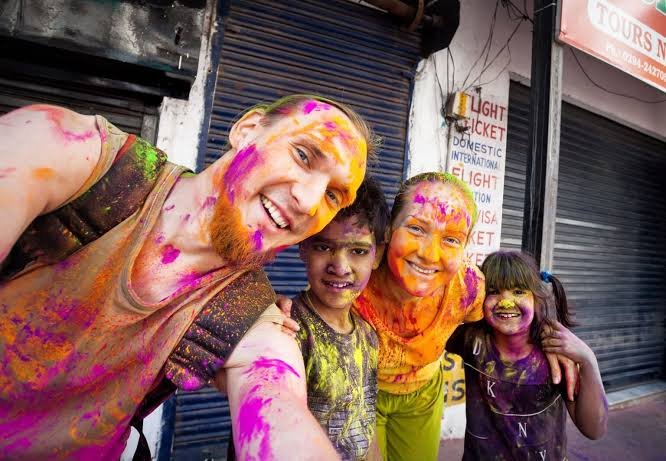
If you have ever considered timing a trip to India around a festival, Holi is the answer. It is India at its most uninhibited, most inclusive, and most visually spectacular — and March 2027 is an excellent time to be there.
Holi 2027 — Complete Date Calendar
Understanding the Holi calendar matters enormously for planning. The main day (March 22) is just one event in a week-long sequence, and some of the most extraordinary celebrations happen in the days before it.
| Date | Day | Event | Location |
|---|---|---|---|
| March 15 | Sunday | Laddoo Holi | Barsana — Radha Rani Temple |
| March 16 | Monday | Lathmar Holi — Day 1 | Barsana |
| March 17 | Tuesday | Lathmar Holi — Day 2 | Nandgaon |
| March 18 | Wednesday | Phoolon ki Holi (Flower Holi) | Vrindavan — Banke Bihari Temple |
| March 19–20 | Thu–Fri | Rangbhari Ekadashi celebrations | Mathura & Vrindavan |
| March 21 | Saturday | Holika Dahan (sacred bonfire night) | Nationwide |
| March 22 | Sunday | Rangwali Holi — Main Day | Nationwide |
For travellers who can only attend one day, March 22 is the main event. For those who can stay for 3–7 days in the Braj region, the full week from March 15–22 is one of the most extraordinary festival experiences available anywhere in the world.
The Best Places to Celebrate Holi in India 2027
1. Mathura and Vrindavan — Where Holi Was Born
No other destination on earth celebrates Holi the way Mathura and Vrindavan do. These are the twin cities of Lord Krishna — Mathura his birthplace, Vrindavan the forest where he grew up — and Holi here is not a secular colour party but a devotional act that has been performed in these temples for centuries.
Why here: The Holi of Mathura and Vrindavan is rooted in the Radha-Krishna love story. According to tradition, Krishna — dark-skinned and self-conscious about his complexion — playfully coloured the fair-skinned Radha’s face so they would look alike. The festival’s origin is here. The celebrations here honour that story rather than simply enacting it.
Lathmar Holi — the most famous of the Braj events — takes place in Barsana and Nandgaon (the respective homes of Radha and Krishna, now villages near Mathura) on March 16–17. In this ritual, women beat men with long decorated sticks (lathis) while the men shield themselves with padded shields, laughing and singing throughout. The event is both theatrical and genuinely participatory — enormous crowds, professional singers performing devotional music, and a festive atmosphere that is simultaneously chaotic and deeply rooted.
Phoolon ki Holi at the Banke Bihari Temple in Vrindavan (March 18) — flower Holi — is something entirely different. Rather than coloured powder, the priests shower the gathered devotees with flower petals from the upper gallery of the temple. The air fills with marigolds and roses. The singing is constant. This is the most visually spectacular single event in the entire Holi calendar.
Rangwali Holi (March 22) in Mathura and Vrindavan — the main day — takes place both in the temples and on the streets. By this day, every surface in both cities has turned some shade of pink. The Dwarkadheesh Temple in Mathura and the ISKCON temple in Vrindavan host large organised celebrations accessible to international visitors.
Practical notes for Mathura/Vrindavan:
- Book accommodation 3–4 months in advance — every hotel in the region fills completely during Holi week
- Photography is strictly prohibited at Banke Bihari Temple and restricted at many others — respect this without exception
- Wear old white cotton clothing — it will be permanently coloured. White shows all colours best
- Mathura is 50 kilometres from Agra — an easy and natural combination
2. Jaipur — Royal Holi in the Pink City
Jaipur brings a completely different character to Holi. Where Mathura is devotional and rooted in Krishna mythology, Jaipur is celebratory, organised, and spectacularly photogenic against the backdrop of the Pink City’s forts and palaces.
Holika Dahan in Jaipur (March 21) — the sacred bonfire on the eve of Holi — is widely observed throughout the city, with neighbourhood bonfires and cultural performances running into the night. The old city area around the City Palace is particularly atmospheric.
Holi at Nahargarh Fort (March 22) — Jaipur’s most celebrated Holi event takes place at this hilltop fort above the city. Organised celebrations with traditional Rajasthani folk music and dance, colour, and spectacular views of the illuminated Pink City below make this one of the most photographed Holi experiences in India.
Holi in Jaipur’s streets — the old city’s markets and lanes are transformed on March 22. Johari Bazaar and Bapu Bazaar fill with colour. The Elephant Festival (historically celebrated on Holi in Jaipur, though in a modified form in recent years) brings a Rajasthani royal dimension that no other city produces.
Heritage hotels in Jaipur host private rooftop Holi celebrations — particularly Samode Haveli and Alsisar Haveli — which give international visitors a curated, immersive festival experience with traditional music, regional food, and colour in a courtyard setting. These events book months in advance.
Jaipur’s Holi works perfectly as part of a Golden Triangle tour — the natural circuit continues from Delhi and Agra into Jaipur for the main festival.
3. Delhi — Urban Holi at Scale
Delhi celebrates Holi with the full energy of 20 million people doing it simultaneously. The scale is different from any other city — every neighbourhood, every housing colony, every park becomes a colour battlefield on the morning of March 22.
The most iconic Delhi Holi experience is in the older neighbourhoods — Lajpat Nagar, Chandni Chowk, and the residential colonies of South Delhi — where the festival is still celebrated in the traditional way: morning colour play with neighbours, followed by sweets and lunch with family.
For organised Holi experiences, several Delhi event organisers run ticketed celebrations at venues across the city — DJ music, colour, food, and a more managed environment for first-time visitors who want the experience without the intensity of street Holi.
Delhi also serves as the gateway to Mathura and Vrindavan — just 2.5 hours by road — making it the natural base for the full Braj Holi experience.
4. Varanasi — Holi on the Ghats
Varanasi brings its own sacred dimension to Holi. The ancient ghats of the Ganges fill with colour on March 22, with celebrations running from the riverside up through the narrow lanes of the old city. The combination of Holi’s exuberant colour and Varanasi’s profound spiritual atmosphere creates something unlike any other festival experience in India.
The evenings of Holika Dahan (March 21) and Holi itself (March 22) see the Ganga Aarti at Dashashwamedh Ghat performed in a festive register — the priests in colour-stained robes, the crowd singing with particular energy, the river reflecting firelight and the colours of the evening.
Varanasi’s Holi is less organised and more raw than Jaipur’s — this is street celebration in one of India’s oldest and most intensely alive cities. For travellers combining Varanasi with the Golden Triangle, this can be timed as a Holi extension — Delhi and Agra first, then fly or train to Varanasi for the festival and the extraordinary Dev Deepawali follow-up in November.
5. Barsana and Nandgaon — Lathmar Holi’s Home
50 kilometres from Mathura, these two villages are where the most extraordinary pre-Holi events take place. Barsana is Radha’s village; Nandgaon is Krishna’s. The Lathmar Holi tradition — women of Barsana beating men of Nandgaon with sticks while bhajan singers perform devotional music — draws thousands of visitors.
These events are on specific dates: Barsana on March 16 and Nandgaon on March 17. They are not tourist performances — they are genuine religious and cultural events that have been practiced here for generations. Visitors attend as guests of the celebration. Arrive early (by 9 AM), dress appropriately, and follow the guidance of your guide or local host.
Getting here from Delhi takes 3–3.5 hours. Most visitors base themselves in Mathura or Agra and take a day excursion to Barsana.
What to Wear, Bring & Know
Clothing: Wear old white cotton clothes. White shows all colours most vividly and creates the best photographs. Natural fibre — cotton or linen — is easiest to wash. You will not wear these clothes again in their original state. Accept this going in.
Protect your camera: Use a waterproof phone pouch. Standard camera bags are inadequate — colour powder and water balloons penetrate everything. Bring a simple waterproof phone case and leave the DSLR in the hotel unless you have professional-grade weather sealing.
Skin and hair: Apply a thick layer of coconut oil or body lotion before going out. It creates a barrier that makes colour significantly easier to remove from skin and hair. Without it, colours can take 2–3 days to fully wash out.
Glasses wearers: Wear old glasses or consider contacts. Prescription glasses covered in colour powder are genuinely difficult to clean and the frames may be permanently stained.
Eyes and mouth: Keep your mouth closed in crowds. Keep your eyes down when powder is being thrown. The natural colours used in traditional celebrations are harmless; cheap synthetic colours sold by street vendors can irritate eyes and skin. When possible, stick to celebrations using organic/natural colours.
Safety: Stick to organised or guided events, particularly in the first year you experience Holi. Large street celebrations can become overwhelming in their intensity. Heritage hotel courtyard events, temple celebrations, and organised Nahargarh-type events offer the Holi experience in a more controlled environment.
The morning is best. Holi celebrations run from approximately 9 AM to 1 PM on the main day. By early afternoon the intensity begins to ease. The best colour and energy is in the first three hours.
Holi Food — What to Eat
Holi has its own culinary tradition as distinctive as the festival itself.
Gujiya — the festival’s signature sweet. A half-moon shaped pastry stuffed with khoya (reduced milk solids), coconut, and dried fruits, then deep-fried and sometimes coated in sugar syrup or chocolate. Every household makes them; every sweet shop sells them. They are seasonal and temporary — available only in the weeks around Holi.
Thandai — a chilled milk drink made with almonds, spices (cardamom, fennel, rose petals), and saffron. The traditional drink of Holi. In some versions it contains bhang (cannabis) — the bhang thandai of Varanasi and Mathura is famous and legal, though it produces effects that should be approached with appropriate caution by first-time visitors.
Malpua — sweet pancakes soaked in sugar syrup and garnished with rabri (thickened sweetened milk). A festival staple across North India.
Dahi Vada — lentil dumplings in spiced yoghurt. Light, cooling, and widely available at Holi celebrations.
Holi 2027 Travel Tips
Book 3–4 months ahead. Holi is the most demand-heavy booking period in the Mathura–Vrindavan region. Good hotels fill by December for March celebrations. In Jaipur, the heritage haveli events sell out equally fast.
Stay at least 3 nights in the Braj region. One day is enough to see Holi in one location. Three nights lets you experience Lathmar Holi in Barsana (March 16), Flower Holi in Vrindavan (March 18), and Rangwali Holi in Mathura (March 22) — the full arc of the world’s greatest festival.
Hire a local guide. The Braj Holi events — Barsana, Nandgaon, the specific temples — are not easy to navigate independently. A local guide who knows the event timings, the temple protocols, and the best positions for photographs transforms the experience from chaotic to extraordinary.
March weather is perfect. Holi falls in the last week of March — the best travel weather of the year across North India. Days are warm (28–32°C), evenings are pleasant (15–18°C), and the air is clear. There is no better month for the Golden Triangle circuit.
Plan Your Holi 2027 Trip with Squid Travel India
Squid Travel India runs Holi-timed tours across the Golden Triangle, Braj region, and Rajasthan — combining the festival with the Taj Mahal, Jaipur’s heritage hotels, and the Mathura-Vrindavan Holi experience into complete, seamless itineraries.
Every Holi booking includes pre-arranged event access, accommodation near celebration centres, a private guide who knows the Braj event calendar, and the full Golden Triangle monuments at their most beautiful March conditions.
Plan your Holi 2027 trip with Squid Travel India → Call us: +91 9990812499
Holi 2027 — Quick Reference
| Details | |
|---|---|
| Main Holi date | Monday, March 22, 2027 |
| Holika Dahan | Sunday, March 21, 2027 |
| Laddoo Holi, Barsana | March 15 |
| Lathmar Holi, Barsana | March 16 |
| Lathmar Holi, Nandgaon | March 17 |
| Flower Holi, Vrindavan | March 18 |
| Best city for tradition | Mathura & Vrindavan |
| Best city for royalty | Jaipur |
| Best city for ghats | Varanasi |
| What to wear | Old white cotton |
| Book accommodation by | December 2026 |
| Weather | 28–32°C days, 15–18°C evenings |
| Best base for Braj Holi | Mathura or Agra |
Squid Travel India is a New Delhi-based, award-winning tour operator specialising in Golden Triangle tours, Rajasthan packages, and festival travel across India including Holi, Diwali, and Pushkar.
Comment (0)