

Every year, tens of thousands of Australians visit India — and the vast majority of them start in exactly the same place: Delhi, Agra, and Jaipur. The Golden Triangle.
There is a reason for that. In three cities and seven to ten days, you see the Taj Mahal at sunrise, the Red Fort of Old Delhi, the hilltop palaces of Jaipur, and three UNESCO World Heritage Sites. It is India at its most concentrated and its most rewarding — and from Australia, the whole thing is closer than most Australians realise.
But the Golden Triangle from Australia has its own specific planning requirements. The flight routes from Sydney, Melbourne, Perth, and Brisbane to Delhi are different from London or New York. The visa process for Australian passport holders has its own quirks. The best timing aligns with Australian school holidays and university breaks differently from the European calendar. And the costs translate into Australian dollars at a rate that makes India genuinely extraordinary value.
This guide covers all of it — written specifically for Australians planning the Golden Triangle in 2026.
Step 1: Flights from Australia to Delhi — What Australians Actually Need to Know
All Golden Triangle tours begin and end at Indira Gandhi International Airport in Delhi (airport code: DEL). Here is the realistic picture by Australian departure city.
Sydney (SYD) to Delhi (DEL)
Flying time is approximately 11 to 12 hours on a direct service. This is one of the most competitive routes from Australia to India. Air India operates direct flights from Sydney to Delhi, and Singapore Airlines, Emirates, Qatar Airways, Etihad, and Malaysia Airlines all offer one-stop connections via their respective hubs.
The Air India direct from Sydney is typically the fastest and often the most price-competitive. Return economy fares from Sydney to Delhi range from approximately AUD 900 to AUD 1,600 booked 2 to 3 months in advance, depending on season. Qantas code-shares on some routes via partner carriers.
For Australians who want premium cabin: Singapore Airlines via Singapore (SIN) is the most popular choice for business class to India — the product is excellent, the SIN connection is smooth, and the total journey time from Sydney via Singapore is around 13 to 14 hours.
Melbourne (MEL) to Delhi (DEL)
No regular direct service. Melbourne connects to Delhi via Singapore, Dubai, Kuala Lumpur, or Doha — with Singapore and Dubai being the most popular hubs. Total journey time from Melbourne is approximately 13 to 15 hours. Economy return fares: AUD 900 to AUD 1,700. Qantas flies Melbourne to Singapore, connecting to Air India or Singapore Airlines onward to Delhi.
Perth (PER) to Delhi (DEL)
Perth is geographically the closest Australian city to India and has excellent connections. Air India has operated seasonal direct Perth–Delhi service. IndiGo and other carriers connect via Singapore or Kuala Lumpur. Total journey time from Perth is approximately 9 to 11 hours via the direct service — making Perth the fastest Australian gateway to Delhi. Economy return fares from Perth: AUD 800 to AUD 1,400.
Brisbane (BNE) to Delhi (DEL)
Via Singapore, Dubai, or Kuala Lumpur. Total journey time approximately 13 to 15 hours. Economy return fares: AUD 950 to AUD 1,650.
Adelaide (ADL) and Other Cities
Connect through Sydney, Melbourne, or Perth for the onward international flight. Budget an extra 1 to 2 hours for the domestic connection.
The Open-Jaw Option
Consider flying into Delhi and out of Mumbai, Kochi, or Goa if you plan to extend the trip south. This is often the same price as a return to Delhi and eliminates backtracking. Many Australian travellers combine the Golden Triangle in the north with Goa or Kerala beaches in the south — a perfect combination that works well with the open-jaw routing.
When to Book
For Australian school holiday periods — January (summer holidays), April (Easter), July (winter break), and September to October (spring break) — book international flights at least 3 to 4 months in advance. Indian peak season (October to March) overlaps with some of the busiest Australian travel windows. January is the most popular month for Australians to visit India.
Step 2: India eVisa for Australian Passport Holders
Every Australian citizen requires a visa to enter India. The process is entirely online and straightforward.
Apply at: indianvisaonline.gov.in — the official Government of India portal. Do not use third-party agencies that charge significantly more for the same result.
Which visa to choose: For most Australians doing a 10 to 14-day Golden Triangle holiday, the 30-day single-entry e-Tourist Visa is sufficient. It costs approximately AUD 30 to AUD 35 and is processed within 72 hours — occasionally faster. If you plan to return to India within the same year, the 1-year multiple-entry eVisa is better value.
Passport requirements: Your Australian passport must be valid for at least 6 months beyond your intended departure date from India. Check your expiry date now. Australian Passport Office processing times vary — allow at least 6 weeks for a standard application and 2 weeks for urgent processing. Do not leave this to the last month before travel.
2026 Mandatory Requirement — Su-Swagatam Digital Arrival Card: All international visitors including Australian citizens must now complete a mandatory digital arrival card within 72 hours before landing in India. This replaced the old paper arrival card handed out on the aircraft. As of 2026, the paper version no longer exists. Complete it at indianvisaonline.gov.in/earrival — it takes about 5 minutes and requires your passport details, flight number, and hotel address for your first night. Save the confirmation on your phone and carry a printed copy as backup. Failing to complete this before arrival causes delays at Delhi immigration.
Your pre-India checklist:
- eVisa approved and saved (digital + printed copy)
- Su-Swagatam digital arrival card completed within 72 hours of departure
- Australian passport valid for 6+ months beyond your India departure date
- Two passport-size photos (needed for the visa application)
- Hotel address for your first night in Delhi (required for Su-Swagatam)
Step 3: Best Time to Visit India from Australia — Aligned to the Australian Calendar
The Golden Triangle is best visited between October and March. Here is how that maps to the Australian calendar specifically.
January (Australian Summer Holidays)
January is peak season for both India and Australia simultaneously — meaning this is Australia’s most popular window for India, and also India’s busiest tourist month. The Taj Mahal in January is extraordinary: deep blue winter sky, no heat haze, vivid white marble. Temperatures in Delhi, Agra, and Jaipur are 10°C to 22°C — perfectly comfortable for Australians used to summer heat. The one caveat is morning fog in Agra and Delhi in January — book two nights in Agra to give yourself two sunrise attempts at the Taj Mahal.
Book flights and hotels by September or October for January travel. This is the busiest window and prices and availability reflect it.
Easter (April)
Temperatures are warming in North India — 28°C to 38°C by early April, rising toward summer. Manageable with morning-focused sightseeing and good hotel air conditioning. Ranthambore tiger sighting rates are at their annual best in April. Easter is viable but not the most comfortable window, particularly for families with young children. Book 3 to 4 months in advance.
July (Australian Winter Break)
The Indian monsoon runs June through September. July in Delhi, Agra, and Jaipur brings rain, humidity, and heat. Ranthambore is closed. Not recommended for a first India trip during the monsoon. However — Ladakh in July is spectacular: high-altitude, rain-shadow desert with clear skies and dramatic Himalayan scenery. July is Ladakh’s peak season and is an excellent option for adventurous Australian travellers who have the flexibility to choose a northern mountain itinerary over the Golden Triangle.
September to October (Australian Spring Break)
Late September and October is arguably the finest window for the Golden Triangle from Australia. The monsoon is retreating. Temperatures are dropping toward comfortable levels — 25°C to 32°C. Ranthambore reopens October 1. Diwali in 2026 falls on November 8 — a trip in late October to early November puts you in India for the most spectacular festival of the year. This is our top recommendation for Australians who have flexibility in their timing.
October Half-Term / Early November
Diwali 2026 on November 8 is one of the finest reasons to visit India from Australia. Jaipur on Diwali night — the Pink City outlined in lights, fireworks over the Aravalli Hills, the markets ablaze with colour — is a travel experience that competes with anything on earth. If your school or university break allows it, an October to early November trip including Diwali is the combination we recommend most strongly to Australian clients.
November to December
Excellent conditions across the Golden Triangle. Peak season pricing begins from mid-November. December is beautiful — cool, clear, the Taj Mahal under winter blue sky — but Christmas week is the most expensive and crowded period of the year. Book all December accommodation by August.
Step 4: How Many Days You Need
7 days minimum for the classic Golden Triangle. This gives you 2 nights Delhi, 1 to 2 nights Agra, 2 nights Jaipur. From Australia, however, the flight time means you lose at least a day each direction — so a 7-day trip from Australia feels short on the ground.
10 days is the sweet spot for Australians. The flight from Sydney or Melbourne to Delhi is 11 to 15 hours — a significant journey. Ten days on the ground gives you time to recover from the flight, do the Golden Triangle properly (2 nights Delhi, 2 nights Agra, 2 nights Jaipur), and add one extension. The most popular extension for Australians is Ranthambore National Park — two nights and two jeep safaris between Jaipur and the return to Delhi.
14 days is the trip most Australians wish they had done. Two weeks allows the full Golden Triangle, Ranthambore, and either Varanasi (the spiritual Ganges city) or a southern extension to Goa or Kerala. Many Australians fly into Delhi and out of Goa or Kochi — the open-jaw route — finishing the trip with beaches or backwaters before flying home.
Jet lag from Australia to India: India Standard Time (IST) is 4.5 hours behind Eastern Australia (AEDT) in Australian summer — so when it is noon in Sydney, it is 7:30 AM in Delhi. The time adjustment from Australia to India is relatively gentle compared to Australia-Europe or Australia-USA. Most travellers adjust within a day. Do not plan intensive sightseeing for your arrival day.
Step 5: What It Costs — Honest AUD Numbers
Australians benefit from an excellent exchange rate when travelling in India. As of 2026, AUD 1 buys approximately ₹55 to ₹58 Indian Rupees — making India exceptional value compared to Bali, Japan, or European destinations.
Ground Package (Hotels, Transport, Guides, Monument Fees)
The ground package covers 4-star hotels, your own private air-conditioned vehicle throughout, licensed English-speaking guides in each city, all monument entry fees, and daily breakfast. It does not include international flights, personal meals beyond breakfast, or tips.
A standard private 7-day Golden Triangle ground package for two adults travelling together costs approximately AUD 1,400 to AUD 2,200 per person. This covers quality 4-star hotels, not budget guesthouses.
Heritage hotel upgrades — palace havelis, boutique Rajasthani properties — run AUD 2,200 to AUD 4,000 per person on the ground package.
Full luxury — Oberoi Amarvilas in Agra (arguably the world’s finest hotel view, directly facing the Taj Mahal), Rambagh Palace in Jaipur (the former royal residence), The Leela Palace in Delhi — runs AUD 6,000 to AUD 14,000+ per person on the ground.
All-In Numbers Australians Actually Want
A comfortable 10-day Golden Triangle plus Ranthambore holiday from Australia — economy flights from Sydney, 4-star hotels, private guided tour, all monument entries: Approximately AUD 4,500 to AUD 7,000 per person for two adults travelling together.
A 14-day open-jaw trip (fly in Delhi, out of Goa) covering the Golden Triangle, Ranthambore, and 4 nights in Goa: Approximately AUD 5,500 to AUD 9,000 per person.
A full luxury 10-day trip — business class from Sydney, Oberoi and Rambagh Palace: AUD 18,000 to AUD 30,000 per person.
Monument Entry Fees for Australian Nationals
Entry fees at Indian monuments are tiered by nationality. For foreign nationals including Australians:
- Taj Mahal: ₹1,300 (approximately AUD 24) for the garden and mausoleum access, plus ₹200 (AUD 3.60) for the inner chamber
- Agra Fort: ₹650 (approximately AUD 12)
- Fatehpur Sikri: ₹610 (approximately AUD 11)
- Red Fort, Delhi: ₹600 (approximately AUD 11)
- Qutub Minar, Delhi: ₹600 (approximately AUD 11)
- Humayun’s Tomb, Delhi: ₹600 (approximately AUD 11)
- Amber Fort, Jaipur: ₹550 (approximately AUD 10)
Important: Children under 15 years of age enter all ASI-protected monuments free of charge regardless of nationality. A significant saving for Australian families.
Total monument entry costs for a comprehensive Golden Triangle tour: approximately AUD 200 to AUD 280 per adult.
Step 6: Private Tour vs Package Holiday — The Decision Australian Travellers Often Get Wrong
Many Australians book India through large flight-and-hotel package deals from Australian travel agencies. The convenience is real. The experience is often disappointing.
Group India tours typically involve shared coaches with 20 to 40 other people, fixed timetables that don’t account for your interests, mid-range chain hotels with no local character, and guides splitting attention across multiple nationalities simultaneously. The Taj Mahal at 9 AM in a group of 35 people is a fundamentally different experience from the Taj Mahal at 5:30 AM with your own private guide and no one else on the marble platform.
A private tour — your own vehicle throughout, your own licensed expert guide at each monument, your own schedule — is available at comparable cost to many Australian package deals when you book the international flight separately and the ground package directly with a specialist India operator.
At Squid Travel India, every tour we operate for Australian clients is entirely private. Your own vehicle throughout. Your own guide in each city. No shared coaches, no group timetables. Our ground packages are priced competitively against what Australian travel agencies charge for the ground portion of their group tours — often less, with significantly better hotels and a private experience.
Step 7: The Day-by-Day Golden Triangle Itinerary for Australians
Here is the 10-day Golden Triangle plus Ranthambore itinerary that works best for Australian visitors — built around the typical Sydney or Melbourne departure pattern.
Day 1 — Depart Australia
Evening or overnight flight from Sydney, Melbourne, or Perth. Australians typically fly overnight and arrive the next day.
Day 2 — Arrive Delhi
Arrive Delhi morning or afternoon depending on routing. Private transfer to hotel. Rest. Adjust to the time difference. Do not attempt sightseeing on arrival day — the flight is long and Delhi is intense. A gentle first evening walk through Connaught Place or a rooftop dinner is enough.
Day 3 — Delhi: Old and New
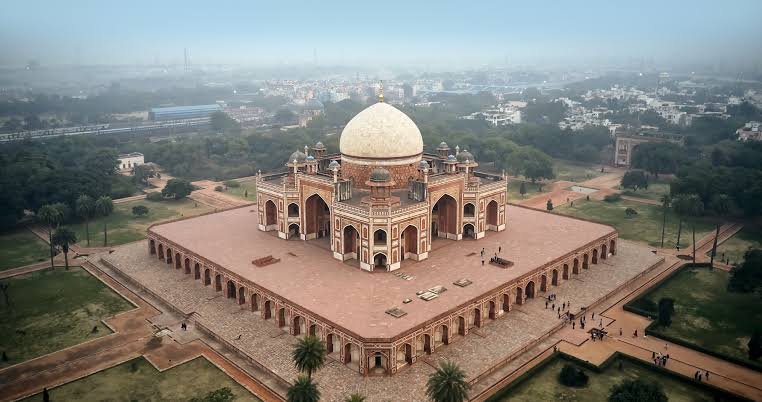
Full day Delhi with your licensed local guide. Morning in Old Delhi — cycle rickshaw through the lanes of Chandni Chowk, the spice markets, and Jama Masjid (India’s largest mosque), followed by the magnificent Red Fort. Afternoon in New Delhi — Humayun’s Tomb (the architectural predecessor to the Taj Mahal and far less crowded), the towering Qutub Minar, and a drive past India Gate, Parliament House, and Rashtrapati Bhavan. Delhi’s layered history — the Delhi Sultanate, the Mughal Empire, and the British Raj — is all visible within a single day.
Day 4 — Delhi to Agra
Drive to Agra — approximately 3.5 hours on the Yamuna Expressway, or take the Gatimaan Express train (1 hour 40 minutes, the fastest connection). En route or upon arrival, visit Agra Fort in the afternoon — the massive Mughal fortress from which the imprisoned Shah Jahan could see the Taj Mahal across the river. Late afternoon at Mehtab Bagh — the garden across the Yamuna from the Taj Mahal, the finest external viewpoint, almost completely unknown to casual tourists. As the sun sets, the Taj turns from white to gold to pink. This is your preview.
Day 5 — Taj Mahal at Sunrise
Wake at 4:30 AM. Transfer to the Taj Mahal East Gate by 5:30 AM. Walk through the main gateway. Stop. The Taj Mahal in the first light of dawn — the white marble shifting from grey to gold, the central pool still and glassy, the minarets framing the dome in perfect symmetry — is genuinely unlike anything you have seen before or will see again. Enter the mausoleum before 8 AM before the crowds arrive. After breakfast, drive to Jaipur via Fatehpur Sikri — the abandoned Mughal capital built by Emperor Akbar in the 16th century, 40 km from Agra. Worth 90 minutes of anyone’s time.
Day 6 — Jaipur: Amber Fort and the Pink City
Amber Fort at dawn — the jeep ride up to the entrance, the Sheesh Mahal (Hall of Mirrors), views over Maota Lake and the surrounding Aravalli Hills. City Palace, still partly home to Jaipur’s royal family. Jantar Mantar, the world’s largest stone sundial. Hawa Mahal (Palace of Winds) photographed from the street opposite. Afternoon in the bazaars — Johari Bazaar for gemstones and gold, Bapu Bazaar for block-print textiles and Rajasthani handicrafts. Heritage hotel rooftop dinner.
Day 7 — Jaipur to Ranthambore
Drive from Jaipur to Ranthambore National Park — approximately 3 hours. Check into your safari lodge. Evening jeep safari in the forest — your first look at one of India’s finest tiger reserves. The naturalist will brief you on current tiger territories and recent sightings.
Day 8 — Ranthambore Safaris
Dawn safari at 6 AM — jeep into the forest as the park wakes up. Return for breakfast. Afternoon safari at 2:30 PM. Two full safari sessions across one day gives you the best coverage of the park’s zones. From an experienced operator with good zone allocation, tiger sighting probability across two sessions is estimated at 65 to 80%.
Day 9 — Ranthambore to Delhi
Drive from Ranthambore to Jaipur (3 hours) and fly to Delhi (1 hour), or drive the full journey (5 to 6 hours). Final evening in Delhi — last dinner, shopping at Connaught Place or at Dilli Haat for handicrafts, or simply a good night’s rest before the flight home.
Day 10 — Fly Home to Australia
Transfer to Indira Gandhi International Airport. Flight back to Sydney, Melbourne, or Perth. You arrive home with memories of the Taj Mahal at sunrise, a Bengal tiger in the wild, and the bazaars of Rajasthan.
Step 8: Practical Information Australians Specifically Need
Australian Department of Foreign Affairs and Trade (DFAT) Travel Advice
The Australian Government’s travel advice for India is available at smartraveller.gov.au/destinations/asia/india. Check this before travel and register your trip on the Smartraveller website. The broad advice for tourist destinations including Delhi, Agra, Jaipur, and Rajasthan is to exercise normal safety precautions. Specific border areas have higher advisory levels — none of which affect the Golden Triangle circuit.
Travel Insurance
Australian travel insurance is generally excellent but read your policy carefully. Standard policies cover medical emergencies, flight cancellations, and lost luggage. Check that your policy specifically covers the activities you plan to do — jeep safari, trekking, adventure activities. Medical evacuation from India to Australia is expensive — ensure your policy has adequate coverage for medical evacuation. Compare policies from Australian providers including Cover-More, Allianz, and NIB Travel Insurance.
Note: Medicare does not cover medical treatment outside Australia. Comprehensive travel insurance with medical coverage is essential in India.
Currency
Indian Rupees (INR). As of 2026, approximately AUD 1 = ₹55 to ₹58. Your Australian Visa or Mastercard debit or credit card works at ATMs across all three cities. Withdraw cash on arrival at Delhi airport — carry ₹5,000 to ₹10,000 cash at any time for markets, auto-rickshaws, and street vendors who are cash-only. Commonwealth Bank, ANZ, and NAB cards all work at Indian ATMs — check your international transaction fees in advance.
Mobile Phones
Your Australian SIM will work in India on international roaming but rates are typically expensive. A local Indian SIM — Airtel or Jio prepaid — costs approximately AUD 8 to AUD 15 for 28 days of unlimited data. Available at Delhi airport arrivals and in any phone shop. Australian phones on unlocked networks accept Indian SIMs with no issue.
Electricity
India uses Type C and Type D plugs at 230V / 50Hz. Australia uses Type I plugs at 230V / 50Hz — the voltage is identical, which means your Australian appliances work in India with only an adapter for the plug shape. A universal travel adapter covers this completely.
Water and Food Safety
Drink only bottled water throughout — never tap water, including for brushing teeth in budget accommodation. Quality restaurants and hotels in tourist areas are safe. Carry a small medical kit: oral rehydration sachets, ibuprofen, an anti-diarrhoeal tablet such as Imodium, and antiseptic hand gel. The first two to three days are the most common period for digestive adjustment — the food is not dangerous but it is different from what your system is used to.
Tipping
Tipping is not mandatory in India but is genuinely appreciated. A rough guide: ₹300 to ₹500 per day for your driver, ₹300 to ₹500 for a half-day guide, ₹100 per bag for hotel porters, 10% at restaurants where service charge is not included.
Step 9: Extending Beyond the Golden Triangle
Ranthambore Tiger Safari (2 to 3 extra nights)
The most popular extension for Australians. Three to four jeep safaris over two days gives 65 to 80% tiger sighting probability. The combination of the Taj Mahal and a wild Bengal tiger is what most Australian travellers describe as the highlight of their India trip. October to February is the best window — book safari permits months in advance.
Varanasi (2 extra nights, fly from Delhi or Jaipur)
India’s oldest living city. The dawn boat ride on the Ganges as pilgrims bathe and pray. The Ganga Aarti fire ceremony each evening at Dashashwamedh Ghat. Sarnath where the Buddha gave his first sermon. For Australian travellers who want the spiritual dimension of India alongside the monuments, Varanasi is irreplaceable.
Goa (3 to 5 extra nights, fly from Delhi)
Complete contrast with North India. Warm beaches, Portuguese colonial architecture, beach shacks, and Goan seafood. October to February is peak Goa season — warm, sunny, calm sea. Fly Delhi to Goa (approximately 2.5 hours on IndiGo or Air India) and fly home from Goa via Mumbai. The open-jaw Delhi-in, Goa-out routing works perfectly for this combination.
Kerala (3 to 5 extra nights, fly from Delhi to Kochi)
Houseboat on the Alleppey backwaters. Tea gardens at Munnar. Ayurvedic treatments. Beaches at Varkala or Kovalam. Kerala in October to February is perfect — cool hills, warm coast, clear skies. A deeply restful contrast to the pace of the Golden Triangle. Fly home from Kochi (COK) via Singapore or Kuala Lumpur.
Rajasthan Extension (3 to 5 extra nights)
After Jaipur, continue south to Udaipur — the Lake City, widely considered the most romantic destination in India. Lake Pichola and the City Palace reflected in the water. The Lake Palace Hotel floating in the centre of the lake. Then perhaps Jodhpur’s Blue City and its towering Mehrangarh Fort, or the golden sand dunes of Jaisalmer for a desert camp under the stars.
Frequently Asked Questions from Australian Travellers
Do Australians need a visa for India?
Yes. Every Australian citizen requires a visa to enter India. Apply online at indianvisaonline.gov.in for the e-Tourist Visa — the 30-day single-entry option costs approximately AUD 30 to AUD 35 and is processed within 72 hours. You must also complete the mandatory Su-Swagatam digital arrival card within 72 hours before landing. Your passport must be valid for at least 6 months beyond your India departure date.
How long is the flight from Australia to India?
From Sydney: approximately 11 to 12 hours direct on Air India, or 13 to 14 hours via Singapore. From Melbourne: 13 to 15 hours via Singapore or Dubai. From Perth: 9 to 11 hours — Perth is the closest Australian city to India geographically.
What is the best time to visit India from Australia?
October to March is the recommended window — pleasant weather across the Golden Triangle, Ranthambore open, and the finest photography conditions. January aligns with Australian summer holidays and is popular but also India’s peak season. Late September to October is excellent value — the monsoon is retreating, prices are lower, and Diwali in early November is one of the world’s great travel experiences.
How much does a Golden Triangle tour cost from Australia in AUD?
A comfortable 10-day private Golden Triangle plus Ranthambore holiday from Australia — economy flights from Sydney, 4-star hotels, private guided tour — costs approximately AUD 4,500 to AUD 7,000 per person for two adults travelling together. Budget from AUD 3,000. Full luxury from AUD 18,000.
Is India safe for Australian tourists?
Yes. The Australian Government (DFAT / Smartraveller) rates Delhi, Agra, Jaipur, and the main tourist areas of Rajasthan at the standard “exercise normal safety precautions” level. Hundreds of thousands of Australians visit India each year without incident. Booking with a reputable private tour operator substantially improves both safety and logistics.
Is the Taj Mahal open for Australians to visit?
Yes. The Taj Mahal is open every day except Friday (closed for prayers). It opens approximately 30 minutes before sunrise and closes 30 minutes before sunset. Tickets for Australian nationals cost ₹1,300 (approximately AUD 24) for the garden and mausoleum, plus ₹200 (AUD 3.60) for the inner chamber. Book tickets online in advance at asi.payumoney.com.
How many days do I need for the Golden Triangle from Australia?
Given the flight time from Australia, 10 days minimum on the ground is recommended. Seven days is tight when you lose travel days each direction. Ten days allows the full Golden Triangle plus Ranthambore. Fourteen days allows the Golden Triangle plus a southern extension to Goa or Kerala — the most popular complete India itinerary for Australian travellers.
Plan Your Golden Triangle Tour from Australia with Squid Travel India
At Squid Travel India, we have operated private Golden Triangle tours for Australian clients for over 15 years. We understand the Australian travel calendar, quote in Australian dollars on request, respond within 24 hours, and provide 24/7 WhatsApp support throughout your trip.
Every tour is entirely private. Your own vehicle throughout. Your own licensed expert guide at each monument — not a group guide splitting attention across 30 people. No shared coaches. No fixed group timetables.
Tell us your travel dates, departure city, group size, and budget range. We will build your perfect Golden Triangle itinerary and send a full AUD cost breakdown within 24 hours — no obligation, no hard sell.
Also worth reading:
- Golden Triangle Tour from Delhi
- Golden Triangle Tour Cost 2026
- Ranthambore Zone Guide
- India in November 2026
- Diwali 2026 in Jaipur
- Best Time to Visit Agra and the Taj Mahal 2026
- Golden Triangle Tour from the UK
📞 Call / WhatsApp: +91 9990812499 📧 Email: Squidtravelindia@gmail.com 🌐 Visit: squidtravelindia.com
1,800+ trips completed | 98% happy clients | TripAdvisor Travelers’ Choice 2024–2025
Last updated: September 2026. Visa fees, flight prices, and entry fees are current as of September 2026. Su-Swagatam digital arrival card requirement confirmed mandatory as of April 2026.

Comments (2)