November is when Delhi comes alive. Cool mornings, golden afternoons, post-monsoon clarity and a city buzzing with festival energy. Here's everything you need to know.
Delhi has a complicated relationship with its own weather. Summers are brutal — the capital regularly hits 45°C in May and June, reducing serious sightseeing to a miserable early-morning window before the heat becomes dangerous. The monsoon from July through September brings relief from the heat but also flooding, humidity, and the kind of air quality that makes outdoor exploration unrewarding. And while December through February is technically "winter," Delhi winters can turn sharply cold in January, with early mornings dropping below 5°C and the entire city disappearing into a dense fog that cancels flights, reduces visibility on highways, and occasionally prevents visitors from seeing the Taj Mahal in Agra at all.
November sits perfectly between these extremes. The monsoon has cleared. The post-rain air has that rare clarity that makes Delhi's wide Lutyens boulevards glow in the afternoon light. Daytime temperatures hover between 22–28°C — warm enough for comfortable sightseeing without sunscreen anxiety, cool enough for walking. Evenings cool pleasantly to 12–16°C, creating the kind of outdoor dining weather that makes rooftop restaurants in Connaught Place and Khan Market genuinely enjoyable rather than merely aspirational.
Beyond the weather, November carries a cultural energy that no other month quite matches. Diwali — the Festival of Lights, India's most widely celebrated holiday — typically falls in late October or early November, and the city carries its warm afterglow well into the month. The markets are bright with marigolds and clay lamps. The food is rich with seasonal sweets. And as international tourist traffic builds toward December's peak, November still feels relatively uncrowded — the queues at the Red Fort and Qutab Minar are manageable, the hotels are easier to book, and the city's better restaurants have tables without a two-week advance reservation.
Bottom line: If you're planning a trip to Delhi and you have any flexibility in your dates, choose November. It is consistently the month that delivers the best combination of comfortable weather, cultural richness, and practical ease for international visitors.
November marks the official transition from autumn to early winter in Delhi, and the shift happens gradually and pleasantly. Early November carries the warmth of October's tail — bright, clear days reaching 28–30°C, with cool evenings around 16–18°C. By mid-November the daytime high settles into the mid-20s, and late November starts to feel genuinely cool after dark, with temperatures dropping to 12–14°C overnight. This is the moment when Delhi's famous fog begins to form — thin in November, but worth being aware of for early morning flights and highway driving.
Rainfall in November is negligible — less than 5mm on average for the entire month, typically a single brief shower if anything at all. The skies in early November are as clear as Delhi gets, and the light quality in the late afternoon — the golden hour that photographers call magic hour — is exceptionally beautiful on Delhi's monuments and tree-lined avenues. Humayun's Tomb at 4:30pm on a November afternoon, with the low angled sunlight catching the red sandstone and white marble, is one of those travel experiences that stays with you.
What to pack for Delhi in November: light layers are the answer. T-shirts and light trousers or dresses work comfortably during the day; a light jacket or cardigan is essential for evenings and early mornings from mid-November onwards. If you're visiting late November, a proper jacket becomes genuinely useful after dark. Comfortable walking shoes are non-negotiable — Delhi's major sites involve substantial walking on uneven stone surfaces, and the monuments are poorly suited to sandals or formal footwear.
Air quality note: Delhi's air quality begins to deteriorate in November as agricultural burning in surrounding states (stubble burning post-harvest) coincides with falling winter temperatures that trap pollutants near the ground. On certain days — particularly in the second half of November — AQI can spike to unhealthy levels. Check the AQI on arrival and consider limiting outdoor time on high-pollution days. The situation has improved with regulation in recent years but remains a genuine consideration for visitors with respiratory sensitivities.
November 2026 is a particularly rich month for events in Delhi. The tail of the Diwali season flows into several significant festivals, and the city's cultural calendar reaches one of its annual peaks.
The days immediately after Diwali (which falls 20 Oct 2026) keep the city lit. Connaught Place and Khan Market continue their light installations through early November. The city's sweet shops overflow with mithai — the best time of year to eat your way through Delhi's legendary sugar confectionery.
The birthday of the founder of Sikhism is a national public holiday and a deeply meaningful occasion in Delhi, which has one of India's largest Sikh communities. The Gurudwara Bangla Sahib — Delhi's most visited Sikh temple — hosts continuous kirtan (devotional music) and serves langar (free community meals) to thousands of visitors of all faiths throughout the day. Witnessing the langar service is one of the genuinely moving Delhi experiences available to any visitor.
India's Children's Day, celebrated on the birthday of first Prime Minister Jawaharlal Nehru, brings school events and cultural programmes to parks and public spaces across the city. A charming and very Indian occasion that gives a glimpse of everyday Delhi life beyond the monument circuit.
One of India's premier performing arts festivals brings classical and contemporary music, dance, theatre, and visual art to venues across the capital through November and December. The performances at the India Habitat Centre and Kamani Auditorium are world-class and offer a cultural dimension to Delhi that purely monument-focused itineraries miss entirely.
One of Asia's largest running events takes over Central Delhi's streets in late November. Even if you're not running, the morning atmosphere along the course — which passes India Gate and the Rajpath — is festive and energetic. The city feels particularly alive on race morning.
Delhi rewards the visitor who approaches it as a layered city rather than a checklist of monuments. The monuments are extraordinary, but the city's real personality lives in its bazaars, its food, its residential neighbourhoods, and the conversations you have in a chai stall in Nizamuddin or a bookshop in Daryaganj. November's weather makes all of this possible in a way that no other Delhi season quite matches. The following are the experiences most consistently described by international visitors as the highlights of a Delhi November trip.
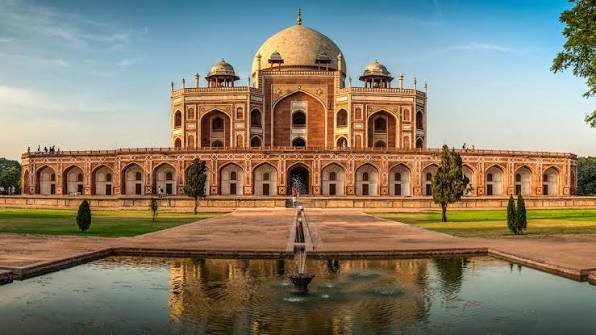
The 16th-century Mughal garden mausoleum that directly inspired the Taj Mahal. November afternoon light on the red sandstone and white marble is extraordinary. Arrive at 3:30pm and stay until closing.
Mughal Heritage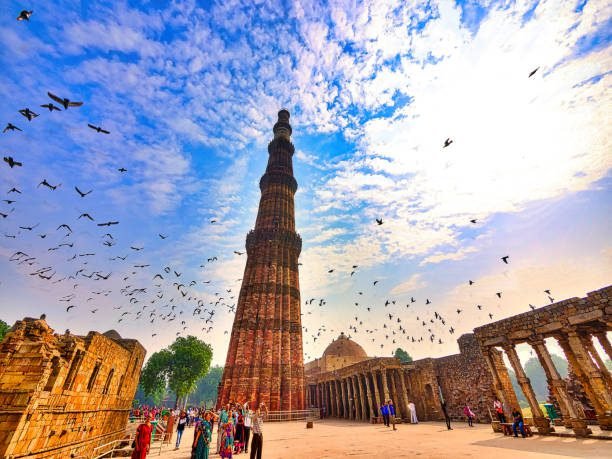
The world's tallest brick minaret, built in 1193. The surrounding complex holds the mysterious Gupta-era Iron Pillar — 1,600 years old and still rust-free. Give it two hours, not forty minutes.
UNESCO World Heritage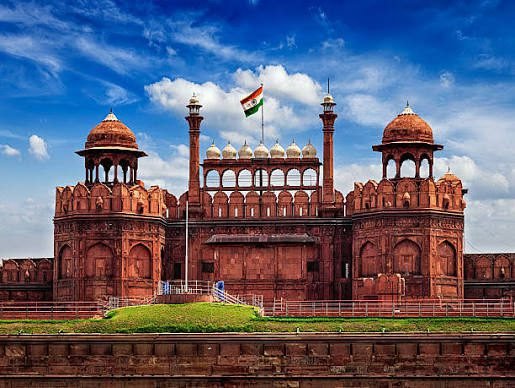
Shah Jahan's great sandstone palace, built in 1639. Go in the morning when the light hits the main gate, then walk into the lanes of Old Delhi for spices, street food, and the Jama Masjid.
Mughal Heritage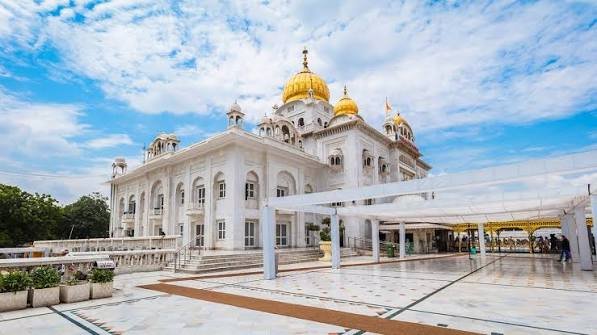
Delhi's most visited Sikh temple, open to all faiths. The golden dome reflecting in the sarovar (sacred pool), the sound of kirtan, and the langar community kitchen serving thousands — one of the most genuinely moving Delhi experiences.
Spiritual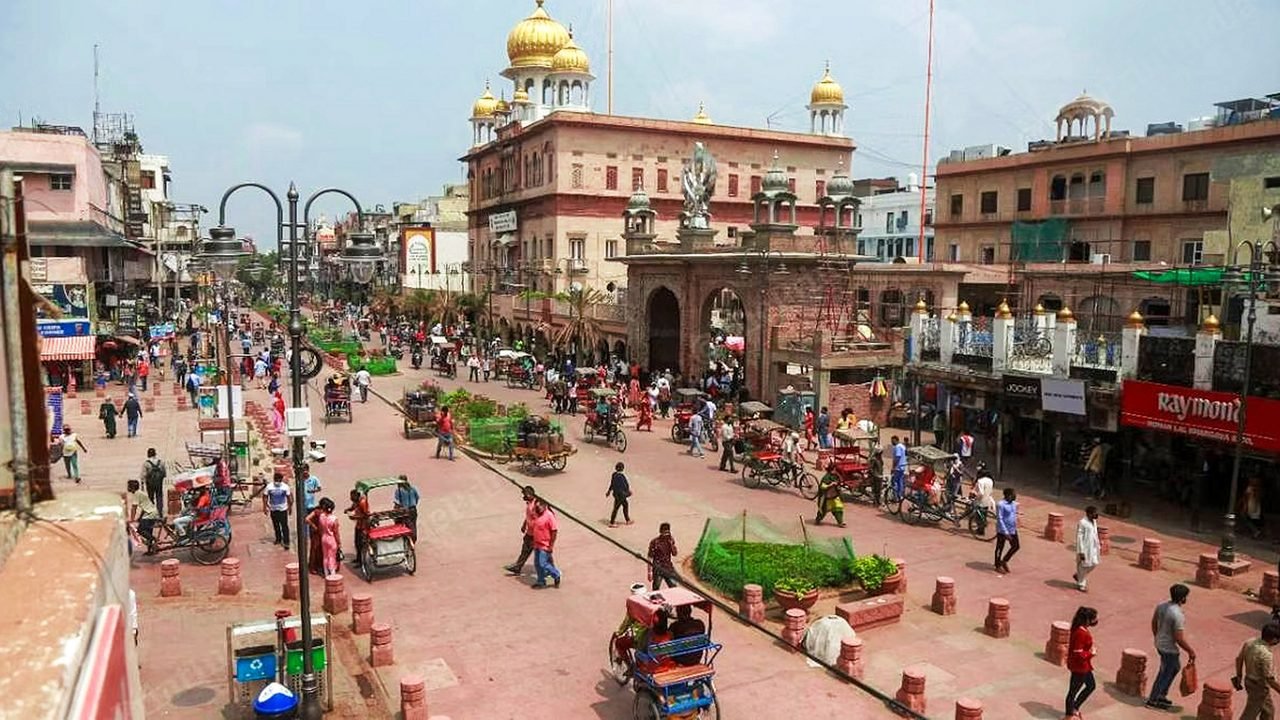
The old Mughal market is one of the great food experiences of Asia. Paranthe Wali Gali for stuffed flatbreads, Natraj's dahi bhalle, Ghantewala for sweets (since 1790), and the legendary nihari at Karim's restaurant near Jama Masjid.
Food & Market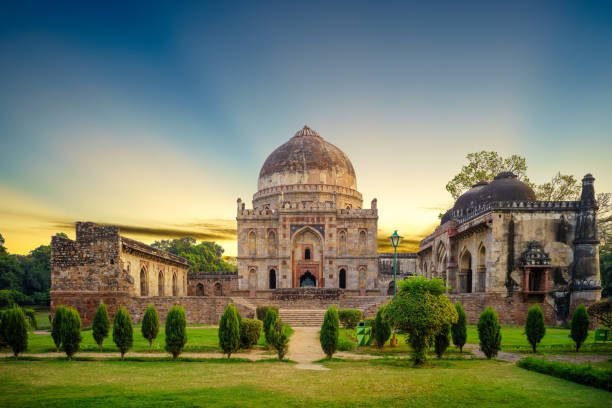
90 acres of landscaped park containing 15th-century Lodi dynasty tombs. At 7am in November, the park fills with Delhi's morning walkers, yoga practitioners, and birds — a remarkably peaceful window into local life, with medieval architecture as a backdrop.
Parks & NatureOld Delhi — Shahjahanabad, as it was named when Shah Jahan moved his capital here from Agra in 1638 — is one of the most densely layered urban environments anywhere in Asia. Within a few square kilometres, 17th-century Mughal street patterns coexist with Victorian-era arcades, wholesale spice markets that have operated continuously for 300 years, the largest mosque in India, and lane after lane of specialist traders whose businesses have been in their families for generations.
November is an excellent month to explore Old Delhi on foot. The heat that makes Chandni Chowk genuinely challenging in April and May has gone; the monsoon humidity has cleared; and the post-Diwali energy gives the old city a warmth and festivity it carries well into the month. The mornings are particularly good — the spice traders arrive early, the Jama Masjid fills with morning prayers, and the chai stalls that line the lanes near Darya Ganj are doing their best business of the day by 8am.
A good Old Delhi walk with a knowledgeable guide takes three to four hours and covers far more than the monuments. The real texture of Old Delhi — the sound of a wedding band rehearsing in a side lane, the smell of attar (rose perfume) from the shops near the Jama Masjid, the sight of a century-old haveli being used as a print workshop — is something no amount of advance reading can substitute for. This is why a food-focused walking tour of Old Delhi consistently ranks among the highest-rated Delhi experiences for international visitors.
New Delhi — the capital designed by Edwin Lutyens and Herbert Baker and constructed between 1911 and 1931 as Britain's imperial showpiece — wears November particularly well. The broad tree-lined avenues of the Lutyens zone, the Rajpath ceremonial boulevard connecting Rashtrapati Bhavan (the Presidential Palace) to India Gate, and the great roundabouts planted with bougainvillea and jasmine all look their finest in November, when the air is clear and the trees are turning from monsoon green to autumn gold.
India Gate — the 42-metre sandstone war memorial at the eastern end of Rajpath — is at its most beautiful at sunset in November, when the low western light catches the inscription panels and the grass around the monument is full of families with picnics, balloon sellers, and the sounds of an Indian evening. It is one of the few great memorial monuments in the world that also functions as a beloved civic gathering space, and experiencing it in that mode — not as a tourist site but as a living part of the city — is one of the quietly memorable Delhi moments.
The National Museum on Janpath, a short walk from India Gate, holds the finest collection of Indian art and archaeology in the country — Harappan civilisation artefacts from 2500 BCE, Gandharan Buddhist sculptures, Mughal miniature paintings, and a South Indian bronze collection that would be the centrepiece of any major Western museum. Allow two hours minimum, and consider hiring a guide at the entrance — the collection is vast enough to be disorienting without contextual direction.
Delhi's food scene is one of the great unsung pleasures of Indian travel. The capital draws culinary traditions from every corner of the subcontinent — Mughal kebab culture from Lucknow and Hyderabad, Punjabi dairy-rich dal and butter chicken, Rajasthani dal baati, South Indian dosas and idlis at Saravana Bhavan, Bengali sweets at Bengali Market, and a contemporary restaurant scene that competes seriously with Mumbai and Bangalore. November's cooler weather makes eating across the full range of the city — street food, rooftop restaurants, dhaba lunches — genuinely comfortable in a way that Delhi's hotter months cannot match.
Connaught Place (CP) is Delhi's most international dining district — the circular colonial-era commercial hub at the heart of New Delhi holds everything from classic Punjabi restaurants like Kwality to contemporary Indian cuisine at Indian Accent, widely considered one of the finest restaurants in the country. Khan Market, a five-minute auto ride from CP, is a leafier, more neighbourhood-feeling cluster of restaurants, cafes, and bookshops that draws Delhi's diplomatic and media community — the terraces at Perch and Cafe Lota are excellent on November evenings. Hauz Khas Village, the 14th-century reservoir complex repurposed as a design and dining neighbourhood, has quieted somewhat from its peak years but still offers some of the city's best rooftop dining with views over the medieval ruins.
For the best of Old Delhi's food, the walk through Chandni Chowk remains essential. Karim's restaurant near the Jama Masjid has been serving Mughal-style nihari (slow-cooked beef stew) and seekh kebabs since 1913, and its courtyard at lunch is one of the great Delhi food experiences. Paranthe Wali Gali — the Lane of Stuffed Flatbreads, a 200-year-old street of shops selling deep-fried paranthas with fillings from potato to rabri — is one of those only-in-Delhi experiences that no amount of food photography can adequately convey until you're eating one at a shared bench surrounded by locals.
November is peak season in Delhi, and the best hotels fill up. Booking 6–8 weeks in advance is strongly recommended for properties in the mid-range and premium categories. The city's accommodation is spread across several distinct neighbourhoods, each with different characters and practical advantages for travellers.
The most central location for sightseeing and dining. Walking distance to India Gate, National Museum, and multiple metro lines. Business hotels and boutique options available.
Delhi's leafiest residential area — heritage bungalows, diplomatic mission roads, and some of the city's finest boutique hotels. Quieter than CP, excellent for leisure travellers.
Adjacent to Indira Gandhi International Airport. Practical for late arrivals or early departures. Good selection of international chain hotels. 15-minute metro to CP.
Residential neighbourhood feel, close to Qutab Minar and Humayun's Tomb. Growing boutique hotel scene. Less convenient for Old Delhi but better for Lodi Garden and south attractions.
At the luxury end, the Taj Mahal Hotel on Mansingh Road and The Imperial on Janpath represent the classic Delhi luxury hotel tradition — grand colonial architecture, immaculate service, and dining rooms that have fed generations of Delhi's political and diplomatic class. The Lodhi, a newer luxury property set in manicured gardens in the Lutyens zone, is widely considered Delhi's finest contemporary hotel. All three should be booked at least two months ahead for November stays.
Delhi's position as the gateway to northern India makes it an excellent base for day trips, and November's comfortable weather makes the road and rail journeys genuinely enjoyable. Agra is the most obvious: the Yamuna Expressway from Delhi to Agra takes 3.5 hours, making a there-and-back day trip possible, though spending a night in Agra to catch the Taj Mahal at both sunset and sunrise is considerably more rewarding. Remember that the Taj Mahal is closed every Friday — check your day-trip date carefully.
Mathura and Vrindavan, 145 kilometres south of Delhi on the Agra road, are the twin holy cities of Lord Krishna's birth and childhood respectively. In November, the ghats and temples of Vrindavan carry a post-Diwali festivity that makes them particularly worth visiting. The early morning parikrama (circumambulation) of Vrindavan's temples at dawn is one of those experiences that stays with travellers long after the monuments have blurred together.
Sariska Tiger Reserve, 200 kilometres from Delhi in Rajasthan, is an undervisited alternative to the more famous Ranthambore for a wildlife day trip. November is the start of the safari season and tiger sightings, while never guaranteed, are reasonably frequent. The drive through the Aravalli Hills on the Jaipur highway is itself scenic in November's clear weather.
For the majority of international visitors, Delhi in November is not just a standalone destination but the starting point for a Golden Triangle circuit — continuing from Delhi to Agra and the Taj Mahal, then to the pink city of Jaipur, before returning to Delhi for the international flight home. November is the single best month to do this circuit. The weather across all three cities is ideal, the light is exceptional for photography, and the combination of Delhi's Mughal heritage, Agra's incomparable monument, and Jaipur's Rajput palaces creates an itinerary that consistently delivers more than the sum of its parts.
A standard Golden Triangle tour from Delhi in November covers the circuit in 7–9 nights, with 2 nights in Delhi at the start, 1–2 nights in Agra, and 2–3 nights in Jaipur, before returning to Delhi for the departure flight. Extending the circuit into Rajasthan — adding Ranthambore for a tiger safari, Jodhpur for the Blue City, or Udaipur for the lakes — is most rewarding when the base Golden Triangle is already comfortably paced rather than rushed.
Read our complete Golden Triangle tour guide for full itineraries, costs, and practical planning advice for international visitors.
Delhi's metro is clean, air-conditioned, reliable, and covers most tourist areas. The Yellow Line connects the airport (via Aerocity station) to Central Secretariat (near India Gate and CP), and the Purple Line covers areas including Jangpura near Humayun's Tomb. For Old Delhi, Chandni Chowk station on the Yellow Line puts you directly in front of the Red Fort. Ola and Uber app-based taxis are safe, metered, and significantly cheaper than hotel-arranged cars for independent movement around the city — a cross-city journey that would cost $25 in a hotel car costs $4–$6 on Ola.
Delhi has a significant number of actively functioning temples, mosques, gurudwaras, and churches that are open to visitors. At all of them, covered shoulders and knees are required. At the Jama Masjid and most gurudwaras, shoes must be removed at the entrance and head covering is required — scarves are available at the entrance. November's cooler temperatures make modest dressing more comfortable than in summer; keeping a light scarf or pashmina to hand covers the dress code at any religious site you encounter.
Photography is permitted at all major Delhi monuments, including inside the Red Fort complex and Humayun's Tomb. Video cameras and tripods require a separate permit at some sites. The Archaeological Survey of India (ASI), which manages most major monuments, prohibits drone flights without prior permission — a rule that is actively enforced at popular sites. November's light quality makes early morning (7–9am) and late afternoon (3:30–5:30pm) the prime photography windows; midday light is flat and harsh even in November.
Major hotels, restaurants, and tourist-facing shops accept credit cards, but cash remains essential for street food, auto-rickshaws, small shops, and most temple donation boxes. ATMs are widely available throughout Delhi and accept international Visa and Mastercard cards; inform your bank before travel to prevent fraud holds. The Indian rupee cannot be imported or exported legally in significant quantities — exchange money on arrival at the airport (rates are reasonable at Delhi airport) or use ATMs in the city.
Squid Travel India designs private Golden Triangle and India tours for international visitors. Tell us your dates and we'll build the itinerary around your interests.
Talk to Our Team →We design private India tours for international visitors from the US, UK, Australia and beyond. Tell us your dates and we'll take care of everything.