

Here is the most important thing to understand about Ranthambore’s zones — and almost no travel website tells you this honestly.
You cannot guarantee your zone.
The Rajasthan Forest Department allocates zones through a permit system designed to distribute vehicles evenly across the park. You can state a preference. A good operator will pass that preference on. But the final allocation is made by the system, not by you or your tour operator.
So why does this zone guide exist?
Because understanding the zones still matters enormously — for setting realistic expectations, for knowing what terrain you’re entering, for understanding which resident tigers call which zone home, and for knowing what to do when you get your allocation.
This is the honest, current guide to all 10 Ranthambore zones in 2026. No false promises. No “Zone X guarantees a sighting.” Just the real picture — terrain, resident tigers, 2026 sighting reports, and a smart strategy for whatever zone you end up in.
Quick Reference: Ranthambore Zone Overview
| Zone | Type | Landscape | Tiger Probability | Best For |
|---|---|---|---|---|
| Zone 1 | Core/Buffer | Dense forest, hills | Moderate | Photographers, birders |
| Zone 2 | Core | Water holes, varied | High | Wildlife diversity |
| Zone 3 | Core | Lakes, ruins | Very High | First-timers, photography |
| Zone 4 | Core | Hilly, dense | High | Dominant males, cubs |
| Zone 5 | Core | Rocky, water bodies | High | Scenic landscapes |
| Zone 6 | Buffer | Open grassland | Moderate–High | Peaceful, less crowded |
| Zone 7 | Buffer | Rocky, forest | Moderate | Leopards, sloth bears |
| Zone 8 | Buffer | Dense jungle | Moderate | Raw jungle feel |
| Zone 9 | Buffer | Open landscape | Moderate | Birdwatching |
| Zone 10 | Buffer | Mixed, open | Moderate–High ↑ | Fateh (T-42) sightings |
The Truth About Zone Allocation
Before diving into the zones, this needs to be clear.
The Rajasthan Forest Department’s online booking system randomly allocates zones to manage vehicle load across the park. When demand is high — which it almost always is from October to April — you will typically be assigned a zone, not choose one.
Here is what you can do:
State a preference when booking. Some operators have relationships that allow them to make strong preference requests. This is not a guarantee but it is better than nothing.
Book multiple safaris. This is the single smartest thing any serious wildlife visitor can do. Book a morning safari and an afternoon safari — or two full days of safaris. Different zones, different times of day, different chances. Most tiger sightings happen to people on their second or third safari, not their first.
Trust your guide over your zone. An experienced local naturalist guide knows where the tigers were yesterday, which waterhole they’ve been visiting, and what the ground signs are saying right now. A great guide in Zone 7 will outperform a mediocre guide in Zone 3 every single time.
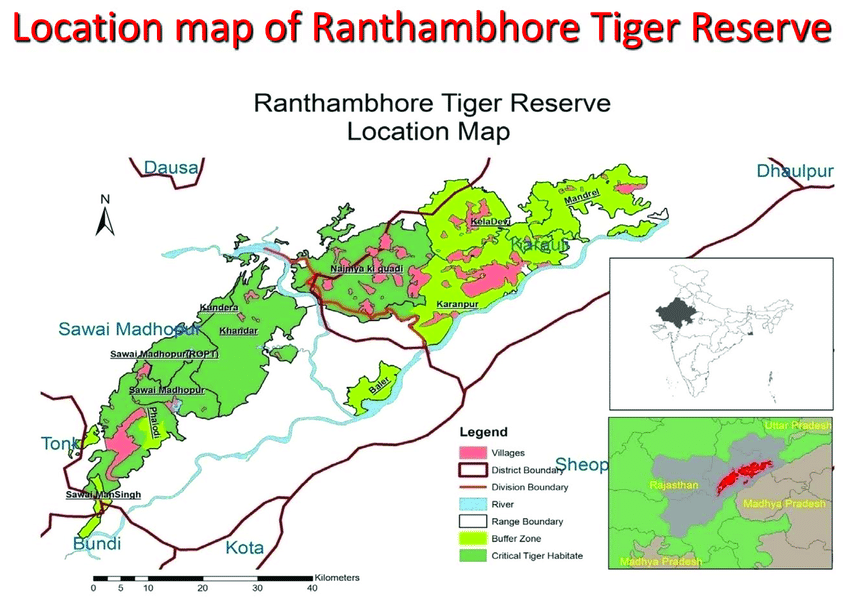
With that said — here is exactly what each zone offers.
Zone 1 — Singh Dwar Gate
Type: Core/Buffer boundary Entry gate: Singh Dwar Landscape: Mixed — dense forest sections, open areas, hilly terrain, seasonal streams
Zone 1 is the transition zone between the core park and the outer reserve. It covers diverse terrain that ranges from dense forested hillsides to more open areas, and it shares boundaries with Zone 6 in the buffer area — which means tigers frequently move between the two.
Resident tigers in 2026:
- T-39 (Noor) — one of Ranthambore’s most famous and most photographed tigresses, still active in 2026
- T-57
- T-101, T-105 Noori and cubs
- T-107 (Sultana)
Key sighting spots: Tuti ka Nalla, Amreshwar Dang, Sultanpur, Peela Pani, Gada Dub
Honest assessment: Zone 1 is not the first choice for tiger sightings — the terrain is more challenging than the open lake-side zones. But with Noor and her cubs as regular residents, it delivers some of Ranthambore’s most intimate tigress sightings when conditions are right. Do not dismiss it.
Best for: Visitors interested in the full forest experience and birders — Zone 1 has excellent bird diversity.
Zone 2 — Jogi Mahal Area
Type: Core Entry gate: Near Ranthambore Road Landscape: Multiple water holes, varied terrain, some open sections
Zone 2 is widely considered one of the most important zones in the park. The key word is “water holes” — Zone 2 has more water sources than most other zones, and in the animal kingdom, water means congregation.
Resident tigers in 2026:
- T-19, T-22, T-72 (Sultan), T-28, T-60
- T-39 (Noor) also moves through this zone
What makes it special: The multiple water holes create reliable sighting opportunities, particularly in the morning when tigers visit water after a night of activity. Leopards are also regularly sighted in Zone 2 — more reliably than in most other zones.
Key sighting spots: Jogi Mahal area, the water holes scattered across the zone
Honest assessment: Zone 2 delivers consistent wildlife diversity and solid tiger sighting rates. Not the most visually dramatic zone — the landscape is less photogenic than Zone 3 — but in terms of actual sighting probability, it performs strongly.
Best for: Serious wildlife watchers who want diversity. Photographers who want consistent action rather than dramatic scenery.
Zone 3 — Padam Talao (The Famous One)
Type: Core Entry gate: Near Ranthambore Fort Landscape: Three lakes (Padam Talao, Raj Bagh, Milak Talao), ancient ruins, open grassland strips
Zone 3 is the most famous safari zone in Ranthambore — and for good reason. It contains Padam Talao, the largest lake in the park. It contains Jogi Mahal, the old forest rest house beside the lake. It contains the ancient ruins of Ranthambore Fort rising from the forest edge. And it contains the water, the prey, and the terrain that tigers prefer.
The most famous tiger photographs you have seen from Ranthambore almost certainly came from Zone 3.
Resident tigers in 2026:
- Multiple resident tigers move through this prime territory
- Tigresses with cubs are frequently documented at the lake shores
What makes it exceptional:
The lakes are the key. In the dry season (March–June), when water sources across the park dry up, every tiger in the surrounding area converges on Padam Talao. The result is what wildlife photographers call a “sitting safari” — your jeep parks near the lake shore, and the tigers come to you.
Even in the cooler months (October–February), the lakes attract tigers regularly for drinking and bathing, particularly in the early morning.
The Ranthambore Fort ruins add a visual drama unique among tiger reserves in the world. Watching a tigress walk along a 10th-century stone wall is an image available nowhere else on earth.
Honest assessment: Zone 3 earns its reputation. It is the highest probability zone for tiger sightings in most seasons. It is also the most popular zone with tourists — which means more vehicles sharing any sighting. If you get Zone 3, you are in the best position. If you don’t, your safari can still be exceptional.
Best for: First-time visitors, tiger photographers, anyone who wants the highest probability sighting.
Zone 4 — Ranthambore Fort Approach
Type: Core Entry gate: Near Ranthambore Fort (shared approach with Zone 3) Landscape: Hilly terrain, dense forest, some open sections, shares boundaries with Zones 3 and 6
Zone 4 is the rugged complement to Zone 3’s lakeside drama. Where Zone 3 is open and lake-dominated, Zone 4 is hilly and forested — the kind of jungle that feels genuinely dense and wild. Tigers here are often spotted in movement rather than at water.
What makes it notable:
Zone 4 is particularly associated with dominant male tigers and tigresses with young cubs. The hilly, covered terrain provides the kind of privacy that tigresses seek for raising cubs in their first months. Sightings here often mean watching a tiger move through the forest rather than sitting at a waterhole — which many experienced wildlife watchers actually prefer for its naturalness.
The zone shares a border with Zone 6, meaning tigers regularly cross between the two. A tiger that was in Zone 6 yesterday might be in Zone 4 today.
Honest assessment: Slightly less tourist pressure than Zone 3, with comparable sighting rates in the right conditions. The forested terrain means sightings require more patience — you are searching through trees rather than scanning an open lake. The reward when it happens is genuinely spectacular.
Best for: Return visitors who want a different experience from the lake zones. Anyone who wants less vehicular company at a sighting.
Zone 5 — Rocky Terrain and Water Bodies
Type: Core Entry gate: Near Ranthambore main area Landscape: Rocky terrain, water bodies, mixed forest
Zone 5 occupies a geographically interesting position — rocky hillsides combined with water sources, creating habitat that supports both tiger movement and excellent birdlife. The combination of water bodies (attracting tigers) and rocky outcrops (providing leopard habitat) makes Zone 5 one of the most ecologically diverse zones in the park.
What makes it notable:
Zone 5 is particularly good for leopard sightings — the rocky terrain is classic leopard country, and in Ranthambore (where leopards are less frequently seen than tigers) Zone 5 gives you the best chance of spotting one. Sloth bears are also commonly encountered in the rocky sections.
The zone shares its border with Zone 4 and Zone 6, meaning cross-movement is frequent. Tiger sighting rates are solid, particularly near the water bodies.
Honest assessment: Underrated by first-timers who focus exclusively on the famous lake zones. Zone 5 delivers excellent overall wildlife diversity and solid tiger sightings. The rocky landscape also makes for very photogenic backdrops.
Best for: Photography (dramatic rocky backgrounds), leopard seekers, return visitors.
Zones 6–10: The Buffer Zones — What Changed in 2026
Here is the most important 2026 update in this guide.
The buffer zones — Zones 6 through 10 — have been significantly outperforming their historical reputation this year. This is not a marketing claim. It is the direct result of Ranthambore’s growing tiger population.
Ranthambore currently supports 75+ tigers across approximately 1,334 square kilometres. As the tiger population has grown, territories have expanded. Young tigers disputing for territory in the core zones have pushed some adults into the buffer zones. And those tigers have settled, established territories, and are now producing regular sightings.
The practical consequence: a safari in Zone 6 or Zone 10 in 2026 can produce a tiger sighting that rivals anything available in Zone 3.
Zone 6 — Kundal (Best Performing Buffer Zone)
Type: Buffer Landscape: Open grassland, shares boundary with Zones 1 and 4
Zone 6 is the standout performer among the buffer zones in 2026. Its open grassland terrain — different from any of the core zones — creates a completely different visual safari experience. And the shared boundary with Zones 1 and 4 means tigers move freely through the area.
Notable in 2026: T-39 (Noor) has been documented regularly in Zone 6 with cubs. The open landscape means that when a tiger is present, visibility is often better than in the denser core zone forest.
What makes it worth considering:
Significantly fewer tourists than Zones 3 or 4. When a tiger is encountered in Zone 6, you are much more likely to have the sighting to a smaller number of vehicles. The quality of the encounter is often higher precisely because of the lower crowd pressure.
The grassland landscape also supports exceptionally good birdwatching — including the endangered Red-Headed Vulture, rarely seen elsewhere in the park.
Honest assessment: In 2026, Zone 6 is genuinely comparable to the core zones for tiger probability. If you are assigned Zone 6, do not be disappointed. You are in increasingly productive ground.
Zone 7 — Rocky Hills and Dense Forest
Type: Buffer Landscape: Rocky hills, dense forest, similar character to Zone 8
Zone 7 is the quietest of the buffer zones that receives regular tourism. The dense forest and rocky terrain make it excellent leopard country — if a leopard sighting is on your bucket list, Zone 7 gives you a realistic chance. Sloth bears are also active here.
Tiger sightings happen in Zone 7 — the zone has resident tigers whose territories extend from the core areas — but they are less frequent than in Zones 2–6.
Best for: Leopard seekers, visitors wanting a genuinely peaceful safari without other vehicles, sloth bear enthusiasts.
Zone 8 — Deep Jungle
Type: Buffer Landscape: Dense jungle, low visitor pressure
Zone 8 gives you the deepest, most raw jungle feel of any Ranthambore zone. If your goal is the sensation of being genuinely immersed in wild forest — rather than parked at a lake waiting for a tiger — Zone 8 delivers that experience better than any other zone.
Tiger sightings occur here but are less predictable than in the core zones. The upside is that when you do have a sighting, you are almost certainly the only vehicle there.
Best for: Experienced wildlife watchers who value the forest experience over tiger probability. Visitors on multiple safaris who want diversity of experience.
Zone 9 — Open Landscapes and Birdwatching
Type: Buffer Landscape: More open terrain, good visibility
Zone 9 is Ranthambore’s premier birdwatching zone. The more open landscape and lower tree density make it easier to spot the park’s extraordinary avifauna — painted storks, sarus cranes, Indian rollers, bee-eaters, and raptors are all regularly seen.
Tiger sightings happen in Zone 9, but this is not the primary draw. If you have a dedicated interest in birds, Zone 9 delivers a genuinely exceptional experience that the dense core zones cannot match.
Best for: Birdwatchers, wildlife diversifiers, visitors who are on multiple safaris and want the complete Ranthambore experience.
Zone 10 — Aantri (The 2026 Surprise)
Type: Buffer Landscape: Mixed terrain, open areas
Zone 10 is the story of 2026.
Previously dismissed by most guides as too peripheral for reliable sightings, Zone 10 has emerged this year as a genuine hotspot — primarily because of one tiger.
Fateh (T-42) — a dominant male with a large territory — has been regularly documented in Zone 10 in 2026. When Fateh is active in Zone 10, sighting rates have been exceptional. Key locations: Aantri, Kushalipura, Bodal, Halonda, and Banskhori.
The lesson from Zone 10 in 2026 is the most important lesson in this entire guide: tiger territories are dynamic. The zone rankings that were written three years ago are increasingly irrelevant. What matters is where the tigers actually are this week.
Honest assessment: If current sighting reports show Fateh active in Zone 10, this is among the best zones to be in for a 2026 safari. Check recent sighting data before your trip.
Safari Vehicles: Gypsy vs Canter
You have two vehicle options for a Ranthambore safari, and this choice matters as much as your zone.
Gypsy (Open Jeep — Recommended)
A 6-seater open jeep that accommodates a maximum of 6 tourists plus the driver and naturalist guide. Gypsies are faster, more manoeuvrable, quieter (relatively), and can access narrower forest tracks that canters cannot use.
When a tiger is sighted, a gypsy can often reposition more quickly than a canter. For photography, the lower sightline of a gypsy often produces better images than the elevated canter position.
Cost: Higher than canter per person, but the experience difference justifies it.
Booking: More competitive — book as far ahead as possible.
Canter (Large Vehicle)
A 20-seater open truck vehicle. Canters are cheaper per person, accessible for those with mobility limitations, and — counterintuitively — their greater height can sometimes be an advantage when another vehicle is parked between you and a sighting.
The main limitations: more passengers create more noise, which disturbs wildlife more readily; canters cannot access all areas a gypsy can; and the safari experience with 20 strangers is simply less intimate.
Our recommendation: Always book a gypsy if it is available. If the only option is a canter in Zone 3, that is still better than a gypsy in Zone 8 for tiger probability.
Safari Timings: Morning vs Afternoon
Ranthambore safaris run in two daily shifts:
Morning Safari
October–February: 6:30 AM – 10:00 AM March–April: 6:00 AM – 9:30 AM May–June: 5:30 AM – 9:00 AM
The morning safari is consistently the better option for tiger sightings. Tigers are nocturnal hunters and are typically still active in the early morning — returning from a night hunt, visiting water, or moving between territories. The morning light is also exceptional for photography.
If you can only do one safari, do the morning safari.
Afternoon Safari
October–February: 2:30 PM – 6:00 PM March–April: 3:00 PM – 6:30 PM May–June: 3:30 PM – 7:00 PM
Afternoon safaris are less productive for tiger sightings on average — the midday heat drives tigers to rest in dense cover. However, as the afternoon cools toward evening, tigers begin to move again, and the final 45 minutes of the afternoon safari can be very productive.
The golden hour light before sunset in Rajasthan is extraordinary for photography.
Smart strategy: Book a morning safari on Day 1 and an afternoon safari on Day 2. This gives you the best morning window for activity combined with the evening golden hour on a different day — and doubles your zone exposure.
How to Book Ranthambore Safari Permits in 2026
Official booking portal
All Ranthambore safari permits are booked through the official Rajasthan Forest Department portal: rajasthan.gov.in or through the dedicated park booking system.
Permits open for booking 45–60 days in advance from the safari date.
The October 1 opening rush
Ranthambore closes during monsoon (July 1 – September 30) and reopens on October 1. The first 2–3 weeks of October see intense permit demand as the new season opens. Safari permits for October 1–15 open approximately in mid-August and sell out within hours — sometimes minutes — of becoming available.
If you want an October safari: Set a reminder for mid-August. Be online at the booking portal the moment permits open. Have your party’s ID details ready. The window is narrow.
Peak season booking timeline
| Travel Dates | Book Permits By |
|---|---|
| October 1–15 | Mid-August — book the moment they open |
| October 16–31 | Book by early September |
| November–January | Book 45–60 days ahead |
| February–March | Book 45–60 days ahead |
| April–June | Book 30–45 days ahead |
What information you need to book
- Each visitor’s full name exactly as on their passport or ID
- Nationality
- ID type (passport/Aadhaar/driving licence)
- ID number
Changes to passenger details are not permitted after booking. Have this information accurate and ready before starting the booking process.
The Smartest Ranthambore Strategy for 2026
Rather than obsessing over zone selection, here is what actually maximises your tiger sighting chances:
1. Book at least two safaris The single factor most correlated with tiger sightings is simply the number of safaris. Visitors who do one safari have maybe a 60–70% chance of a sighting in peak season. Visitors who do three safaris over two days approach near-certainty.
2. Always choose morning if you can only do one Tiger activity peaks in the first two hours of daylight. A morning safari in any zone outperforms an afternoon safari in Zone 3 for sighting probability.
3. Book a gypsy, not a canter The intimate, quiet experience of a 6-person open jeep is genuinely superior for both sighting probability and experience quality.
4. Check recent sighting reports Tiger territories shift. Zone 10 has been producing extraordinary sightings in 2026 because Fateh (T-42) has moved there. Zone 6 has been excellent because of Noor’s movement. A quick check of the most recent 7-day sighting reports before your safari is worth more than any static zone ranking.
5. Trust your naturalist guide Ranthambore’s best guides — who walk the park borders and talk to colleagues in other zones daily — know where the tigers are better than any online guide can tell you. Listen to them. Follow their instincts.
6. Stay near the gate zone you’re allocated to When booking accommodation, consider which zones your permit allocation tends to favour from your chosen lodge. Lodges near the Ranthambore Road gate tend to get Zones 1–5. Properties near the buffer zone access points tend to get Zones 6–10.
Best Time to Visit Ranthambore in 2026
October–November: Park freshly opened. Forest lush and green from monsoon. Tigers active. Sighting rates good and improving through the months. Our recommended window for Golden Triangle + Ranthambore itineraries.
December–February: Prime season. Vegetation has thinned, visibility through the forest is at its best. Tiger sighting rates are consistently high. Weather is cool and comfortable. The most popular period — book well in advance.
March–April: Peak sighting period. As water sources dry up, tigers congregate around the lakes (especially Padam Talao in Zone 3). The highest sighting rates of the year. Very hot (35–40°C) but the wildlife activity is extraordinary.
May–June: Extreme heat (40°C+) but also the most reliable tiger sightings of all — the few remaining waterholes are the only water source and tigers visit them repeatedly. For hardcore wildlife enthusiasts only.
July 1 – September 30: Park closed. No safaris.
Frequently Asked Questions
Which is the best zone in Ranthambore for tiger sighting?
Zone 3 (Padam Talao) has the strongest historical record and is widely considered the best for tiger sightings due to its three lakes and established tiger territories. Zones 2, 4, and 5 are also very strong. In 2026, Zone 6 and Zone 10 have been producing exceptional sightings, showing that the buffer zones are increasingly competitive.
Can I choose my zone in Ranthambore?
You can state a preference, but the final zone allocation is made by the Rajasthan Forest Department permit system. Zone allocation is designed to distribute vehicle load evenly. No operator can guarantee a specific zone.
Is morning or afternoon safari better in Ranthambore?
Morning safari. Tigers are most active in the early morning after a night of hunting. Morning light is also better for photography. If you can only do one safari, choose the morning.
How far in advance should I book Ranthambore safari permits?
45–60 days in advance is the official window. For peak dates (October opening, Christmas–New Year, February–March), book as soon as permits open. The October 1 opening season permits open in mid-August and sell out within hours.
How many safaris should I book?
A minimum of two safaris over two days gives you a much better chance than a single safari. Three safaris across two days (morning + afternoon, morning) approaches near-certainty of a sighting in peak season.
Are the buffer zones (6–10) worth visiting?
In 2026, yes — much more than their historical reputation suggested. Zone 6 and Zone 10 in particular have been producing outstanding sightings. The added benefit of buffer zones is significantly fewer tourist vehicles at any sighting.
What is the best season for Ranthambore safaris?
October to June (park season). December to April is considered peak season for a combination of good weather, vegetation visibility, and high sighting rates. April–May offers the highest sighting probability of all as tigers congregate at the few remaining water sources.
Book Your Ranthambore Safari with Squid Travel India
At Squid Travel India, we organise Ranthambore safaris as part of Golden Triangle and Rajasthan tours. We handle all permit bookings — including the competitive October 1 opening season — and pair your safari with expert local naturalist guides who know where the tigers are based on current ground reports.
Every Ranthambore package includes permit booking, naturalist-guided jeep safari, accommodation, private transport, and 24/7 on-trip support.
Ranthambore additions to Golden Triangle tours start from $250 per person (2 safaris + 2 nights accommodation).
📞 WhatsApp: +91 9818489607 📧 Email: squidtravelindia@gmail.com 🌐 Browse packages: squidtravelindia.com/tours/golden-triangle-tours/ 🏆 TripAdvisor Travelers’ Choice Award Winner 2024–25
We reply within 24 hours. Free quote, no obligation.

Comments (4)