

Here’s something most first-time safari planners don’t realize: seeing a tiger in the wild isn’t really a matter of luck. It’s a matter of timing.
A tiger sighting in any Indian national park is earned, not given — and tiger movement through the forest follows a fairly predictable rhythm driven by three things: water, food, and territory. Understand that rhythm, and you can stack the odds dramatically in your favour. Ignore it, and you might spend two full safari drives staring at empty forest trails and come home with nothing but a nice photo of a peacock.
At Squid Travel India, we plan wildlife trips around exactly this kind of seasonal intelligence. So instead of giving you a vague “anytime is good” answer, here’s a proper, honest, month-by-month breakdown of when to go, which parks shine in which months, and why.
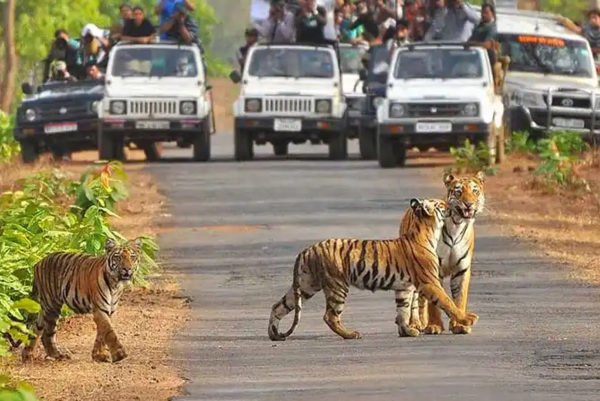
The Short Answer
If sighting a tiger is your single biggest priority, the dry summer months — March through May — give you the best odds, despite the heat. As water sources dry up across central India, tigers are forced to concentrate around the handful of remaining waterholes, making their movements far more predictable.
If you’d rather trade slightly lower odds for comfortable weather and stunning scenery, November through February is the better choice — cooler temperatures, lush post-monsoon landscapes, and still very respectable sighting chances at the right parks.
Either way: avoid July to September almost everywhere. Most major tiger reserves close their core zones for the monsoon, and the few that stay open offer poor visibility and low sighting odds.
Why Timing Affects Tiger Sightings So Much
Two factors drive almost everything:
Water availability. Tigers need large quantities of water daily. As the dry season progresses, natural water sources shrink, and tigers are forced to stay close to the handful that remain. This concentration is exactly what makes summer safaris so productive — you’re no longer searching a vast forest, you’re watching a small number of predictable locations.
Vegetation density. Right after the monsoon ends in October, forests are at their lushest and thickest — beautiful to look at, but it gives tigers excellent natural camouflage, and sightings tend to be brief and partially obscured. By February, vegetation has thinned considerably. By April and May, the landscape is often almost bare in places, and a tiger resting near a waterhole becomes visible from a significant distance.
This is why the same park can feel like a completely different experience in October versus April — same tigers, same territory, wildly different visibility.
Month-by-Month Guide to Tiger Sightings in India
January — Cold, Atmospheric, Moderate Sightings
Weather: Cold, especially in mornings — temperatures can drop near freezing at parks like Bandhavgarh, with frost forming in low-lying marshy areas.
What to expect: Tigers remain active, but thick winter vegetation can make them more elusive. Sightings are consistent rather than spectacular. Mist on cold mornings creates a beautifully atmospheric safari, even if the tiger itself stays partially hidden.
Best parks this month: Bandhavgarh and Tadoba, which maintain higher tiger density even when vegetation works against visibility.
Squid Travel Tip: Dress in proper layers — open-top jeeps in January mornings are genuinely cold, even though daytime temperatures climb to comfortable levels quickly.
February — The Sweet Spot Begins
Weather: Mild and pleasant. Mornings are crisp, afternoons are warm.
What to expect: Vegetation starts thinning out, giving you noticeably better visibility than January. Many experienced safari-goers consider February the start of the best overall window — combining comfortable weather with steadily improving sighting odds.
Best parks this month: Ranthambore, Bandhavgarh, and Kanha all begin performing well.
Squid Travel Tip: This is also peak tourist season, so book your safari permits well in advance — popular zones fill up fast.
March — Excellent Sightings, Comfortable-ish Weather
Weather: Warming up noticeably, but still manageable for most travellers.
What to expect: This is widely considered one of the best all-round months for tiger safaris. Vegetation has thinned significantly, water sources are shrinking, and tigers begin showing more predictable patterns around remaining waterholes.
Best parks this month: Ranthambore, Bandhavgarh, Tadoba, and Nagarhole (Kabini) all hit their stride.
Squid Travel Tip: Many wildlife photographers specifically target late February through early April — describing it as the perfect overlap of good sightings and still-tolerable heat.
April — Peak Sighting Season Arrives
Weather: Genuinely hot. Daytime temperatures regularly exceed 38–40°C in central India.
What to expect: This is prime time for tiger photography across most major reserves. Water dependency peaks, vegetation is sparse, and tigers spend more time near visible waterholes, sometimes resting in the open for extended stretches. Morning safaris (6–9 AM) tend to outperform afternoon drives, catching tigers before the worst of the heat sets in.
Best parks this month: Bandhavgarh, Ranthambore, and Tadoba — all considered to be at peak sighting performance.
Squid Travel Tip: If you can handle the heat, April offers some of the best sighting probability of the entire year. Just plan around it — early starts, hydration, and shaded rest periods between drives.
May — Hottest Month, Highest Odds
Weather: Scorching. Temperatures can reach 42–45°C in parts of central India.
What to expect: Despite the brutal heat, May is genuinely one of the best months for tiger sightings nationwide. Tigers — and their cubs — are frequently spotted resting near or drinking from waterholes, sometimes for extended periods, simply because they have nowhere else to go. Nighttime patrolling increases as tigers avoid the worst daytime heat, but daytime water-dependency sightings more than compensate.
Best parks this month: Bandhavgarh and Tadoba remain exceptional. Kanha is also strong, with similar water-driven dynamics.
Squid Travel Tip: If maximizing your odds of a sighting matters more than comfort, this is arguably the single best month of the year — just don’t underestimate the heat. Many parks also begin closing for the monsoon by late May or early June, so it’s a narrowing window.
June — Last Chance Before Closure
Weather: Extremely hot, with pre-monsoon humidity building.
What to expect: Most central Indian parks (Bandhavgarh, Kanha, Pench) close for the monsoon around June 30th, with some closing as early as June 1st. Corbett typically stays open until June 15th, depending on rainfall. Sighting odds remain high in the days before closure, following the same water-scarcity logic as April–May.
Best parks this month: Corbett (open longest), and any central Indian park still open in the first half of the month.
Squid Travel Tip: Check exact closure dates before booking — they shift slightly year to year based on monsoon onset.
July, August & September — Avoid (Mostly)
Weather: Heavy monsoon rains across most of India.
What to expect: The vast majority of major tiger reserves close their core zones entirely during this period. Roads flood, vegetation explodes into dense cover, and tiger sightings become genuinely difficult even where parks remain partially accessible.
Exceptions: Some buffer zones stay open in select parks — for instance, certain Jim Corbett zones (Jhirna, Dhela) and Ranthambore’s buffer areas remain accessible, though sightings are rarer. Tadoba is sometimes cited as a monsoon option for those who specifically want a lush, green, less-crowded safari experience, accepting lower odds in exchange.
Squid Travel Tip: Unless you have a specific reason — landscape photography, birding, or simply wanting to see the forest at its greenest — we recommend avoiding tiger safaris entirely during these three months.
October — Parks Reopen, Patience Required
Weather: Post-monsoon freshness, temperatures still mild-to-warm.
What to expect: Most parks reopen in October, and the forest looks spectacular — lush, green, and dramatically different from the dust of summer. However, this same lushness means vegetation is at its thickest, making tiger sightings harder to achieve and shorter when they happen.
Best parks this month: Ranthambore and Corbett, which both handle post-monsoon reopening well.
Squid Travel Tip: Come for the scenery as much as the sightings this month. If a guaranteed tiger encounter is your main goal, October isn’t the strongest choice — but the photography of the landscape itself is often spectacular.
November — Good Balance Returns
Weather: Cool, comfortable, ideal for both safaris and general travel.
What to expect: Vegetation begins thinning from October’s peak, and sighting odds improve steadily. This is also one of the most popular months for combining a tiger safari with a Golden Triangle tour, given the excellent weather across Delhi, Agra, and Jaipur simultaneously.
Best parks this month: Ranthambore, Bandhavgarh, and Corbett (Dhikala zone reopens mid-November) all perform well.
Squid Travel Tip: Avoid scheduling around major Indian holidays like Diwali if possible — domestic tourism surges and permits become harder to secure.
December — Cold, Beautiful, Slightly More Challenging
Weather: Cold mornings, sometimes near freezing in central India; pleasant afternoons.
What to expect: Sightings remain consistent, though dense winter vegetation can occasionally work against visibility, similar to January. The visual reward, however, is considerable — a tiger’s bright orange winter coat against a misty, green winter landscape is one of the most photogenic combinations of the year.
Best parks this month: Bandhavgarh and Tadoba maintain strong density even through winter vegetation.
Squid Travel Tip: December is peak season for both domestic and international tourists — book safari permits and accommodation well ahead, especially around the Christmas–New Year window.
Best Time to See Tigers — By Park
| Park | Open Season | Peak Sighting Months |
|---|---|---|
| Ranthambore | October – June | November–December, and February–April |
| Bandhavgarh | October – June | February – May (closed in monsoon) |
| Kanha | October – June | April – June |
| Jim Corbett | Mid-Nov/Oct – mid-June (zone dependent) | November – June, best Dec–March for comfort |
| Tadoba | Year-round (with closures) | February – May |
| Pench | October – June | April – June |
| Nagarhole (Kabini) | Year-round | March – May |
Sighting Probability vs. Comfort: The Real Trade-Off
Here’s the honest framing we give every client:
Want maximum sighting odds? Go March–May/June. Accept serious heat (38–45°C) in exchange for the highest probability of a memorable encounter, particularly at Bandhavgarh and Tadoba.
Want comfortable weather with strong odds? Go February–early April. This is the genuine sweet spot — vegetation has thinned enough for good visibility, temperatures are still manageable, and most parks are performing well.
Want to combine wildlife with a Golden Triangle trip? November through March is ideal — comfortable across Delhi, Agra, Jaipur, and Ranthambore simultaneously, even if peak tiger-sighting odds are marginally lower than April–May.
Want lush scenery over guaranteed sightings? October, accepting that thick post-monsoon vegetation will reduce visibility.
Practical Tips to Improve Your Odds, Any Month
Book multiple safari drives. A single drive is a gamble; four to six drives across 2-3 days dramatically improves your odds, regardless of season.
Morning vs. afternoon matters by season. In winter, afternoon safaris often outperform cold, foggy mornings when tigers are slow to become active. In summer, the opposite is true — early morning drives (6–9 AM) catch tigers before peak heat drives them into shade.
Choose high-density parks if sightings matter most. Bandhavgarh and Tadoba consistently rank among the highest-density tiger reserves in India — your odds are simply better there than in lower-density parks, regardless of timing.
Check park-specific closure days. Kanha, Bandhavgarh, and Pench close every Wednesday afternoon; Tadoba closes every Tuesday (though buffer zones often remain open). Don’t waste a planned visit on a closure day.
Work with a specialist, not a generalist. Tiger movement patterns are park-specific and season-specific — the kind of detail that genuinely benefits from local expertise rather than guesswork.
Why Plan Your Tiger Safari with Squid Travel India?
We build every wildlife itinerary around real seasonal intelligence — not just “anytime is good” — to maximize your actual chances of a meaningful sighting.
- ✅ 1,800+ trips completed
- ✅ 98% happy client rate
- ✅ TripAdvisor Travellers’ Choice 2024–2025
- ✅ Multi-safari itineraries designed to maximize sighting odds
- ✅ Seamless combination with Golden Triangle and Rajasthan tours
- ✅ 24/7 on-trip support
Ready to Plan Your Tiger Safari?
Whether you want the comfort of a November trip or the high-odds intensity of an April safari, we’ll help you choose the right park, the right season, and the right pace.
📞 Call us: +91 9990812499
📧 Email: squidtravelindia@gmail.com
🌐 Explore packages: squidtravelindia.com
[Get a Free Tiger Safari Quote →]
Comments (2)