from 0 review
3
Daily Tour
1 person
English, Espanol, Francais, Japanese, Vietnamese
Most Golden Triangle itineraries send you through Delhi, Agra, and
Jaipur and call it a day. This one adds two stops that change the entire
trip: Pushkar, during the week its centuries-old camel fair takes over
the Thar Desert, and Udaipur, Rajasthan’s lake city, as an unhurried
close to the journey. You get India’s three headline monuments — the
Red Fort, the Taj Mahal, the Amber Fort — then a short drive from
Jaipur straight into the fairgrounds to land in the middle of 50,000
camels, traders in saffron turbans, moustache contests, and a full-moon
ritual bath at a lake believed to be one of Hinduism’s five most sacred
sites, before heading south to unwind on the shores of Lake Pichola and
flying home from Udaipur.
The 2026 Pushkar Camel Fair is expected to run from 17 to 24 November
2026, building toward its spiritual peak on Kartik Purnima, the Hindu
full-moon day (final dates are confirmed by Rajasthan Tourism roughly 60
days out, so treat this window as reliable but not yet official). That
gives you a narrow, predictable travel window each year — and this
itinerary is built specifically to hit it without wasting a single day
queuing at monuments during peak heat or crowds.
This is a 10-day, 9-night circuit — Delhi, Agra, Jaipur (2 nights),
Pushkar (2 nights), and Udaipur (2 nights) — covering roughly 895 km
by road across four travel days, plus a final 1.5-hour domestic flight
from Udaipur back to Delhi. Designed for travellers who want the classic
sights, a genuinely rare cultural event, and the romance of Udaipur’s
lakes as a relaxed finish rather than a rushed detour. An extra night in
Jaipur means the Pink City gets a proper two-day visit instead of a
single rushed day squeezed between Agra and the fair.
Most “Golden Triangle + Pushkar” packages bolt Pushkar onto the end as a
rushed overnight stop and skip Udaipur entirely because it doesn’t sit
on the direct highway line back to Delhi. Four things set this one
apart:
Arrive in Delhi and clear immigration to find your driver waiting with a
name board at arrivals. The transfer into the city takes 45–60 minutes
depending on traffic. Check in and rest, especially if you have flown in
overnight. If your flight lands early and you are not too jet-lagged, a
short visit to Humayun’s Tomb or the Lotus Temple is a gentle way to
start before the more demanding sightseeing days ahead. Evening is free
— a good time for an early dinner and an early night.
Overnight: Delhi | Meals: None
Drive: Delhi–Agra, approx. 230 km / 3.5–4 hours via the Yamuna
Expressway
A full morning covering Old and New Delhi with your guide — the Red
Fort’s exterior and Lahori Gate, Jama Masjid’s courtyard, and a walk or
cycle-rickshaw ride through the narrow lanes of Chandni Chowk. In New
Delhi, pass Raj Ghat, India Gate, and the government buildings along
Rajpath including a drive-past of the President’s House. After lunch,
depart for Agra via the Yamuna Expressway. Check in, relax, and get an
early night ahead of tomorrow’s sunrise start at the Taj Mahal.
Overnight: Agra | Meals: Breakfast
Drive: Agra–Jaipur, approx. 240 km / 4.5–5 hours via NH21 (add 1
hour if detouring via Fatehpur Sikri)
Leave the hotel before dawn to reach the Taj Mahal at sunrise — the
light, the near-empty grounds, and the marble’s changing colour make
this the best 90 minutes of the entire trip. Return for breakfast, then
visit the red sandstone ramparts of Agra Fort, once the Mughal seat of
power. If time allows, a short stop at Mehtab Bagh offers a quieter,
river-facing view of the Taj from across the water. By early afternoon,
set off for Jaipur with an optional detour through the abandoned Mughal
city of Fatehpur Sikri.
Overnight: Jaipur | Meals: Breakfast
Start early at Amber Fort, ideally with a jeep ride up to the entrance
before the midday queues build. Continue to the City Palace, Jantar
Mantar’s astronomical instruments, and a photo stop outside the
pink-sandstone Hawa Mahal. In the afternoon, visit Nahargarh Fort for
panoramic views over the Pink City, especially striking at sunset.
Evening is free for the Old City bazaars — Johari Bazaar and Bapu
Bazaar — for block-printed textiles, lac bangles, and semi-precious
stones, with the second night in Jaipur giving you time to actually
enjoy them rather than rush through.
Overnight: Jaipur | Meals: Breakfast
Drive: Jaipur–Pushkar, approx. 145 km / 2.5–3 hours via NH48 and
Ajmer
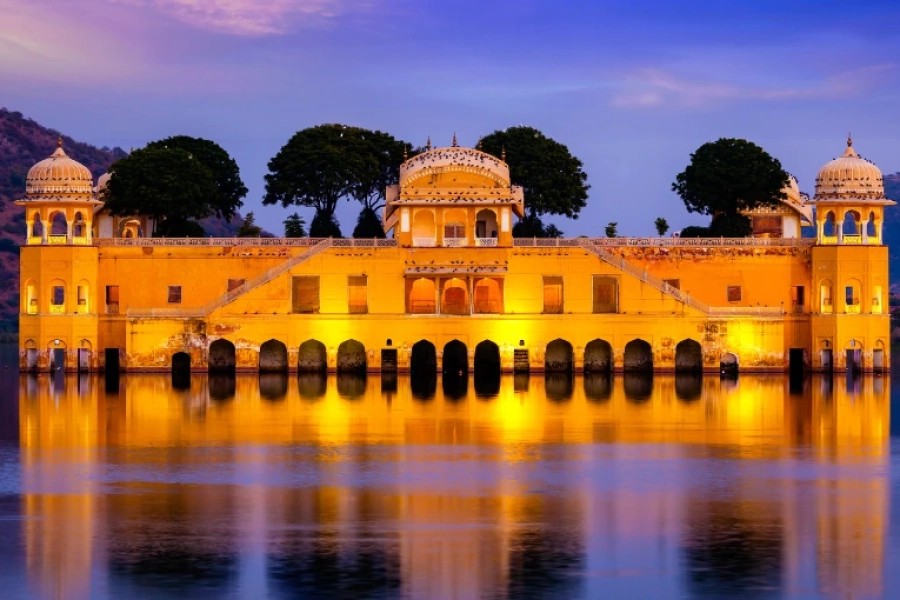
A more relaxed second morning in Jaipur — options include the Albert
Hall Museum, Jal Mahal (photo stop), or a hands-on block-printing or
gemstone workshop away from the standard souvenir circuit. By early
afternoon, depart for Pushkar via NH48 and Ajmer. As you near the Ajmer
district during fair week, expect to share the road with camel and horse
caravans heading toward Pushkar. Check in, then head straight to the
fairgrounds for an early walk through the camel trading ground before
sunset.
Overnight: Pushkar | Meals: Breakfast
A full day inside the fair. Morning at the trading grounds, when camel
and cattle dealing is at its most active and the atmosphere is at its
rawest — arrive before 7:00 AM for the best light and the least
crowded pathways through the corrals. Midday for the cultural programme
— folk music, Kalbelia dance performances, and the well-known
moustache and turban-tying competitions that draw crowds every year. In
the evening, head to Pushkar Lake for the aarti at the ghats. If your
dates align with Kartik Purnima, this is the night the fair reaches its
spiritual peak; the combination of lamplight, the full moon over the
lake, and hundreds of thousands of pilgrims gathered at the water is
unlike anything else in India’s event calendar.
Overnight: Pushkar | Meals: Breakfast
Drive: Pushkar–Udaipur, approx. 280 km / 5.5–6 hours via NH58 and
Nathdwara
Use the early morning for a last walk through the fairgrounds or a
sunrise hot-air balloon ride over the tent city and dunes
(weather-dependent, booked and paid locally). By mid-morning, depart for
Udaipur — a scenic drive south through the Aravalli hill country. En
route, stop at Nathdwara’s Shrinathji Temple, one of Rajasthan’s most
revered Krishna shrines, as the desert landscape gradually gives way to
lakes and hills. Arrive in Udaipur by evening and check in for two
nights beside Lake Pichola.
Overnight: Udaipur | Meals: Breakfast
A full day in the City of Lakes and a deliberate change of pace after
fair week. Morning at the City Palace complex overlooking Lake Pichola,
followed by Jagdish Temple and a walk through the old city’s narrow
marble-paved streets. In the afternoon, visit Saheliyon Ki Bari, the
ornamental Garden of the Maidens, before returning for the highlight of
the day: a sunset boat ride on Lake Pichola, passing close to the Lake
Palace and Jag Mandir island. Evening is free to explore rooftop cafés
overlooking the lake — Udaipur’s skyline is at its best after dark.
Overnight: Udaipur | Meals: Breakfast
Flight: Udaipur–Delhi, approx. 550 km / 1.5 hours by air
Morning free at leisure — a final stroll along the ghats, a visit to
Bagore Ki Haveli, or simply breakfast with a lake view. In the
afternoon, transfer to Udaipur’s Maharana Pratap Airport for a short
domestic flight to Delhi, avoiding a long final drive back across
Rajasthan. On arrival in Delhi, transfer to your hotel for the night.
Depending on your flight timing, the evening is free for last-minute
shopping at Khan Market or Connaught Place.
Overnight: Delhi | Meals: Breakfast
Free time depending on your flight, then transfer to the airport for
your onward journey home.
Meals: Breakfast
The dates for this itinerary are dictated by the fair, not general
Rajasthan weather patterns — which works in your favour, because
mid-to-late November is also one of the best months to be doing heavy
sightseeing in Delhi, Agra, and Jaipur.
November (fair month): Daytime temperatures in Delhi and Jaipur sit
around 22–28°C, dropping to 8–14°C at night — comfortable for full
days outdoors, but pack a jacket for Pushkar’s desert evenings, which
get noticeably colder than the cities. Fair-specific timing: Book
accommodation in Pushkar the moment your 2026 dates are confirmed.
Tent-city and hotel rates during fair week run several times higher than
off-season, and the town’s total bed capacity is small relative to
demand — rooms within walking distance of the fairgrounds sell out
months ahead. # Inclusions – 9 nights’ accommodation (Delhi, Agra,
Jaipur ×2, Pushkar ×2, Udaipur ×2) on the room category booked – Daily
breakfast at all hotels – Private, air-conditioned vehicle for the full
circuit, including all airport and inter-city transfers –
English-speaking local guides in Delhi, Agra, Jaipur, Pushkar, and
Udaipur – English-speaking driver-guide for all road journeys – One jeep
ride up to Amber Fort – Sunset boat ride on Lake Pichola, Udaipur –
Access to the Pushkar Camel Fair grounds and cultural programme – All
applicable tolls, parking, and driver allowances – All current
government taxes (GST) # Exclusions – International and domestic
airfare (including the Udaipur–Delhi flight on Day 9) – Visa fees – All
monument entry tickets as per the itinerary (Taj Mahal, Agra Fort, Amber
Fort, City Palace Jaipur, Jantar Mantar, City Palace Udaipur) – Lunches
and dinners unless specified as a package upgrade – Hot-air balloon ride
in Pushkar (booked and paid locally, weather-dependent) – Camera and
video fees at monuments where applicable – Tips for driver and guides –
Personal expenses: shopping, telephone calls, laundry, travel
insurance – Any cost arising from flight delays, weather disruptions, or
fair-date changes announced after booking – Anything not specifically
mentioned under Inclusions # Frequently Asked Questions
When exactly is the Pushkar Camel Fair in 2026? Expected to run from 17
to 24 November 2026, with the spiritual high point on Kartik Purnima
around 23–24 November. Rajasthan Tourism typically confirms exact dates
about two months prior, since the fair follows the Hindu lunar calendar
rather than a fixed Gregorian date.
Is Golden Triangle plus Pushkar suitable for first-time visitors to
India? Yes. Delhi, Agra, and Jaipur are the most tourist-equipped cities
in the country, and Pushkar during fair week is well-used to
international visitors — with English-speaking guides, marked pathways
through the fairgrounds, and infrastructure built specifically for the
event.
How much walking is involved? Expect several kilometres a day on foot
across the forts and the fairgrounds, plus uneven sand terrain in
Pushkar. Comfortable closed-toe walking shoes are essential, especially
for the fair.
Do I need to book Pushkar accommodation separately from the rest of the
trip? Not with this itinerary — it is booked as one continuous
package. If you are planning independently, book Pushkar first. Rooms
during fair week are the tightest bottleneck of the entire trip and sell
out well before Delhi or Agra hotels do.
Is the fair overwhelming or unsafe for solo or family travellers? It is
crowded — several hundred thousand visitors over the week — but it
is not a high-crime event and families and solo travellers attend in
large numbers. Keep valuables secure as you would at any large public
gathering, stay hydrated, and agree on a meeting point with your group
before entering the trading grounds, since phone signal can be patchy in
peak crowd zones.
Can I skip Pushkar and still book the rest of this itinerary? Yes. The
itinerary works as a standard 7-day Golden Triangle without Days 6–7
(the Pushkar segment), though most travellers booking around fair dates
specifically want that segment.
What should I pack that a standard Golden Triangle trip would not need?
A warm layer for Pushkar’s cold desert evenings, sunglasses and a scarf
or bandana for dust at the fairgrounds, a printed or offline map since
network congestion is common during the fair, and cash in smaller
denominations for local vendors and camel-cart rides.
Is the hot-air balloon ride worth adding? If your budget allows and
weather cooperates, yes — it is widely considered one of the best
vantage points over the fair, with the trading grounds, tent city, and
desert dunes all visible at once around sunrise. It is booked and paid
locally rather than bundled into most packages, partly because it is
weather-dependent and cancels on short notice.