Two of India's greatest travel experiences — but only one is right for your trip. Here's how to decide.
For most American tourists visiting India for the first time, the Golden Triangle is the smarter starting point. For those with two weeks or more — or returning visitors — combining both is the trip of a lifetime.

The Golden Triangle is India's most famous travel circuit — a triangular route connecting three cities: Delhi, Agra, and Jaipur. The three cities sit within roughly 250 kilometers of each other in northern India, forming a circuit that can be completed comfortably in five to seven days. It is called the Golden Triangle not because of any single landmark but because of the golden quality of the experience: concentrated history, iconic monuments, and an efficient route that packs an enormous amount of India into a short time.
Delhi is the capital — a layered, sprawling city where Mughal mosques stand beside colonial boulevards and modern shopping districts. Agra is home to the Taj Mahal, the most visited monument in India and one of the most recognizable buildings in the world. Jaipur is the Pink City — a walled old city of rose-colored buildings, the Amber Fort perched on a hillside above the town, and bazaars selling textiles, jewelry, and block-printed fabric that Americans have been shipping home for generations.
For first-time visitors to India, the Golden Triangle offers something invaluable: a coherent, manageable introduction to a country that can otherwise feel overwhelming. The logistics are well-worn, the hotels are international-standard, the guides are experienced with American travelers, and every monument has been contextualized in English-language resources for decades. You can experience a great deal of India's history and culture without the complexity of a longer, more ambitious itinerary.
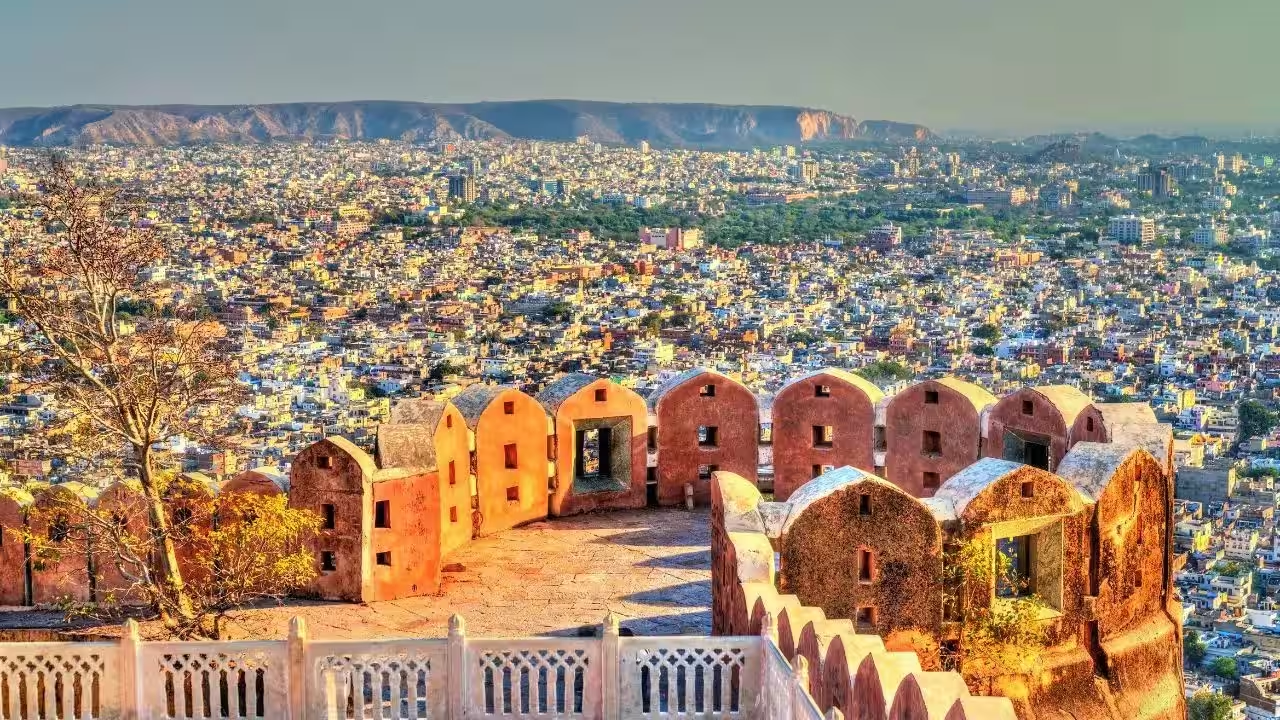
Rajasthan is India's largest state by area — a vast desert kingdom in the northwest that was ruled for centuries by Rajput warrior clans. The name means Land of Kings, and the landscape still reflects that history: massive hilltop forts above ancient cities, painted havelis (merchant mansions) with ornate facades, and palaces that have been converted into the most atmospheric hotels in India.
A Rajasthan tour typically takes in four to six cities depending on how much time you have. Jaipur is the first stop — the same Pink City that anchors the Golden Triangle. From Jaipur, most itineraries continue to Jodhpur (the Blue City, home to the towering Mehrangarh Fort), Udaipur (the Venice of the East, a city of lakes surrounded by Aravalli hills), and sometimes Jaisalmer (a golden sandstone city rising from the Thar Desert, with camel safaris into the dunes). Some tours also include Pushkar, a small sacred town around a holy lake, and Ranthambore, where India's most accessible tiger reserve sits inside a ruined Mughal fort.
Rajasthan is slower, more atmospheric, and more visually arresting than the Golden Triangle. It's the India of travel magazines — vast desert forts, rooftop dinners above lake palaces, and rural landscapes that feel unchanged by time. It is also significantly longer as an itinerary. A proper Rajasthan tour takes ten days at minimum; two weeks is better if you want to absorb it rather than rush through it.
The Golden Triangle was practically built for first-time international travelers, and American tourists in particular find it delivers on every expectation they had about India before they arrived.
The Taj Mahal is the reason most Americans first consider India as a destination. That single monument — white marble, perfectly symmetrical, reflected in a long central pool — is as extraordinary in person as the photographs suggest, which is not always the case with famous landmarks. Building an itinerary around a sunrise visit to the Taj Mahal, with the monument to yourself before the tour groups arrive, is one of the best single travel experiences available anywhere in the world.
The Golden Triangle is also efficient. Americans visiting India typically have one to two weeks before they need to be back at work. A five or seven-day Golden Triangle itinerary uses that time well: three distinct cities, each with its own character, connected by comfortable private transfers or the Gatimaan Express train. You never feel like you're wasting days in transit. You arrive back home having genuinely seen India rather than spent two weeks getting to and from one place.
The infrastructure along the Golden Triangle is the most polished in India. Delhi and Jaipur both have international airports. The hotels — from boutique heritage properties in Jaipur's old city to luxury five-stars overlooking the Taj Mahal in Agra — are the best in the country. English is widely spoken. The operators who work this circuit are experienced with American travelers in a way that more remote circuits simply aren't yet.
If the Golden Triangle is India's greatest hits album, Rajasthan is the deep cut record that changes how you think about music. American travelers who come back from a Rajasthan tour consistently describe it as the most visually spectacular thing they've ever seen — and the most emotionally affecting.
Rajasthan has a scale and grandeur that the Golden Triangle, for all its iconic sights, doesn't quite match. Mehrangarh Fort in Jodhpur rises 400 feet above the city on a sheer rock face — it looks like something from a fantasy novel, and the view from the ramparts over the blue-painted rooftops of Jodhpur below is unforgettable. Udaipur's Lake Palace, floating on Lake Pichola as though it was placed there by hand, is one of the most photographed hotels in the world. Jaisalmer's fort is not a ruin you visit but a living city inside sandstone walls, with people still going about daily life inside a medieval structure.
Rajasthan also offers American travelers a more immersive encounter with Indian rural life. Driving between cities, you pass camel carts, painted trucks, women in vivid saris carrying water jugs on their heads across a desert landscape. The Golden Triangle stays largely urban; Rajasthan takes you through a country that looks like nothing else on earth.
The trade-off is time. Rajasthan rewards travelers who can slow down. Rushing through Jodhpur in half a day to make a train to Udaipur means you've seen the fort but missed the experience. The best Rajasthan trips are built by people who can give the state at least ten days, ideally two weeks, and who are willing to sit in a rooftop restaurant watching the sun go down over the city rather than moving to the next monument.
The honest answer depends on three things: how much time you have, whether this is your first time in India, and what kind of traveler you are.
The honest truth that most tour operators won't lead with — because it complicates the sales process — is that the Golden Triangle and Rajasthan are not competing options. They are complementary halves of the same journey. The Golden Triangle covers Mughal India: the Islamic architecture, the garden tombs, the red sandstone forts built by emperors who ruled half a continent. Rajasthan covers Rajput India: the warrior kingdoms, the desert palaces, the Hindu temples, the textile culture that still defines the state's visual identity.
When you combine them, you get the full picture of northern India — not just one dynasty, one religion, one architectural tradition, but the layered complexity of a civilization that has been building for 3,000 years. Jaipur sits at the junction of the two routes, so the logical structure builds itself: start in Delhi, move to Agra for the Taj Mahal, continue to Jaipur, then push west into Rajasthan — Jodhpur, Udaipur, and as many stops as your schedule allows before flying home from Udaipur or back to Delhi.
For American travelers with two weeks, the Golden Triangle with a Rajasthan extension is the best version of an India trip that exists. You don't have to choose between the Taj Mahal and the desert fort at Jaisalmer. You can have both.
12–14 days: Delhi (2 nights) → Agra / Taj Mahal (2 nights) → Jaipur (2 nights) → Jodhpur (2 nights) → Udaipur (3 nights) → fly home from Udaipur.
This covers both circuits fully, never feels rushed, and builds to Udaipur — arguably the most beautiful city in India — as the natural finale of the trip.
Here are four itinerary structures based on how much time you have and what you're looking for.
The essential India experience for Americans with one week. Delhi's Old City and Humayun's Tomb, a sunrise Taj Mahal visit in Agra, and two days in Jaipur for the Amber Fort, City Palace, and bazaars. Everything is private, comfortable, and achievable without rushing.
The most popular itinerary upgrade for American travelers who can take ten days. After Jaipur, you drive west to Jodhpur for the fort and the blue city views, then end in Udaipur for the lake palaces and rooftop restaurants. Fly home directly from Udaipur to avoid backtracking to Delhi.
The definitive northern India trip for Americans with two weeks. Adds Jaisalmer — the golden desert fort city — between Jodhpur and Udaipur. The camel safari into the sand dunes at Jaisalmer is one of those travel experiences that stays with you for the rest of your life.
For American travelers who want wildlife alongside history. Ranthambore sits between Agra and Jaipur — a detour of two nights adds India's most accessible tiger reserve to the classic circuit. India has the world's largest wild tiger population, and Ranthambore's open terrain makes sightings more reliable than most other reserves.
The Taj Mahal is closed every Friday for prayers. No exceptions, no workarounds. Any Agra day that falls on a Friday is a wasted Agra day if the Taj Mahal is the reason you came to India.
December 25, 2026 falls on a Friday. If you're planning a holiday season trip, do not schedule your Agra night for December 24th expecting a Christmas morning Taj Mahal visit — the monument will be closed. Build your itinerary around this before you book anything else.
A good tour operator will check this automatically. If yours doesn't, ask them directly: "Is our Agra day on a Friday?" before you confirm.
India requires a visa for all US passport holders. The e-Visa is available online through the Indian government's official portal and is typically approved within 72 to 96 hours. Apply at least two weeks before departure. The e-Visa allows entry at all major international airports including Delhi and Udaipur.
October through March is the ideal window for both circuits. November and December offer cool temperatures, low humidity, and clear skies across both the Golden Triangle and Rajasthan. The desert cities — Jodhpur, Jaisalmer — are mild during the day and cold at night in December and January, so pack a layer.
Avoid May and June — both circuits are extremely hot and the Golden Triangle in peak summer is a genuinely uncomfortable experience. The monsoon (July–September) brings relief to the heat but can make Rajasthan's desert roads unpredictable.
All four itineraries above work best with private road transfers between cities — your own vehicle, your own guide, departing when you're ready. The roads between Delhi, Agra, Jaipur, Jodhpur, Udaipur, and Jaisalmer are well-maintained national highways, and a private car lets you stop at roadside sights (Fatehpur Sikri between Agra and Jaipur is not to be missed), adjust your departure time around jet lag, and travel in air-conditioned comfort without being on anyone else's schedule.
The Gatimaan Express train between Delhi and Agra is a good option if you're confident in Indian railway booking and want a more local experience. For families or first-time India visitors, private transfers remove one layer of complexity from an already logistically demanding trip.
Tell us how many days you have, who's traveling, and what you most want to experience — we'll design a custom itinerary around your trip and get back to you within 24 hours. No obligation, no generic packages.