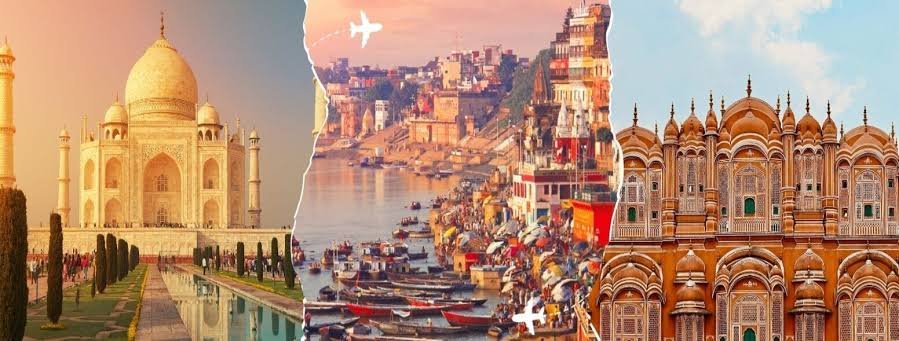
If you are planning your first trip to India and wondering where to start, the answer for most people is the same: the Golden Triangle. Delhi, Agra, and Jaipur together form the most visited travel circuit in India — and for very good reason.
In six to seven nights you can see the Taj Mahal at sunrise, walk through a Mughal emperor's personal fort, sleep in a 200-year-old haveli in Jaipur's Pink City, eat some of the best food on earth, and come home with a genuine understanding of why India captivates the people who visit it.
This guide is written specifically for first-time visitors from the US, UK, Australia, and Canada — honestly, with the practical detail that most travel guides leave out.
Why the Golden Triangle Works for First Timers
India is a vast, complex, occasionally overwhelming country. The Golden Triangle works as a first trip because it is genuinely manageable — the distances are reasonable, the tourist infrastructure is well-established, and the payoff in terms of what you see is extraordinary.
The Three Cities: What to Expect


Delhi
Delhi is one of the world's great cities — a 3,000-year-old capital that now holds 30 million people. For first-timers, it can feel overwhelming, noisy, and chaotic, especially on arrival. That first impression is not wrong. But it is also a city of extraordinary monuments, lanes that smell of spices and marigolds, and a culinary tradition that stretches back to the Mughal emperors.
Two nights in Delhi gives you time for the Red Fort and Chandni Chowk's lanes in Old Delhi, the soaring Qutub Minar, and Humayun's Tomb — the architectural forerunner to the Taj Mahal. It also gives you a day to recover from the flight and settle into India's pace before heading south toward Agra.
Agra
Agra exists, for most visitors, because of one building. The Taj Mahal is genuinely one of the most extraordinary things you will ever see — a building that manages to exceed the photographs every time, especially at sunrise when the white marble shifts through pink and gold before settling into brilliant white. Most visitors spend one night in Agra, visiting the Taj at sunrise, Agra Fort in the afternoon, and continuing to Jaipur the following morning — often with a stop at Fatehpur Sikri en route.
Jaipur
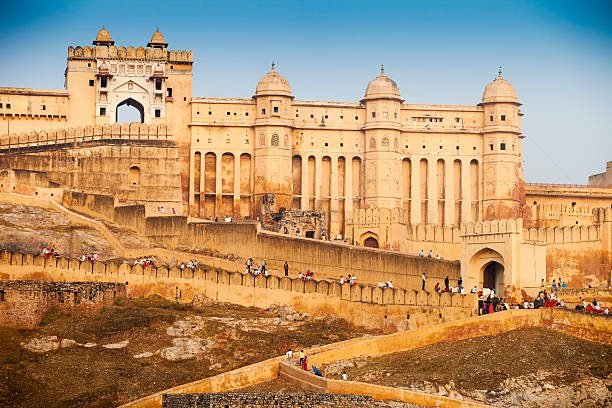
Jaipur, the Pink City, is where many first-time visitors fall most completely for India. Its old city — its sandstone havelis painted terracotta-pink, its bazaars selling textiles and gemstones and blue pottery — is one of the most visually distinctive places in the world. Amber Fort, the hilltop palace of the Rajput maharajas, is a masterpiece of defensive and ceremonial architecture. Two nights in Jaipur is the minimum; three lets you breathe.
The Honest Truth About First-Time India
Most travel content about India reads like it was written by someone trying to sell you something. This section is the honest version — what is genuinely wonderful, and what you should be prepared for.
✅ What is genuinely great
⚠️ What to be prepared for
💡 The verdict for first-timers: The Golden Triangle is India's most accessible, most rewarding first trip. Its challenges are real but manageable with good preparation. Most visitors from the US, UK and Australia who do the Golden Triangle on a private tour describe it as one of the best trips they have ever taken.
Private Tour vs. Independent Travel
This is the most practical decision a first-time visitor faces, and it is worth thinking through carefully before you book.
Independent travel on the Golden Triangle means booking your own accommodation, taking trains between cities (the Gatimaan Express Delhi–Agra and the Shatabdi Delhi–Jaipur are both excellent), hiring local guides at monument gates, and managing your own logistics. It is absolutely doable. It requires comfort navigating the Indian Railways booking system, willingness to deal with auto-rickshaw and taxi negotiations, and some flexibility when things do not go to plan — which, in India, is sometimes.
A private guided tour means an operator handles all of that: airport pickup, a private AC vehicle with a driver for the whole trip, accommodation, English-speaking guides at every monument, and the knowledge that when you arrive in Agra at 5:30am, someone knows you are coming and the Taj Mahal tickets are sorted. For most first-time visitors from the US, UK, and Australia — especially those visiting India for the first time with limited time — a private tour is the right choice. The cost difference is significant but so is the experience difference.
📌 The key thing most guides do not tell you: independent travel on the Golden Triangle is cheapest on paper but not necessarily in practice, once you factor in negotiated taxis, gate guides, and the occasional logistical misfire. For two people traveling together, a private tour often costs less per person than you would expect — because the vehicle cost splits.
A 6-Night Golden Triangle Itinerary for First Timers
This is the comfortable, well-paced version — two nights in Delhi, one night in Agra, two nights in Jaipur, plus travel days. It works for most first-time visitors and forms the basis of Squid Travel India's standard Golden Triangle package.
Arrive Delhi — settle in, recover
Arrive at Indira Gandhi International Airport. Private airport transfer to your hotel. Evening at leisure — the first day is deliberately light. A rooftop dinner in South Delhi or a quiet evening in the hotel gives you time to decompress and reset to India time.
Old Delhi + New Delhi monuments
Morning in Old Delhi: Red Fort, the spice lanes of Chandni Chowk, and the Jama Masjid — India's largest mosque. Afternoon: Qutub Minar (12th-century minaret, a UNESCO World Heritage Site) and Humayun's Tomb, which will make the Taj Mahal make more architectural sense when you see it tomorrow. Optional evening: India Gate lawns and dinner in Hauz Khas.
Taj Mahal at sunrise · Agra Fort
Early departure from Delhi (5:00–5:30am) to arrive at the Taj Mahal for sunrise — the single most important timing decision of the entire trip. Spend two to three hours at the Taj with your guide. Late morning: Agra Fort, the red sandstone complex from which Shah Jahan was imprisoned by his own son and forced to gaze at the Taj Mahal from a distance. Afternoon: check into your Agra hotel.
Fatehpur Sikri · drive to Jaipur
Morning departure toward Jaipur (240 km, approximately 4–5 hours). Stop en route at Fatehpur Sikri — the abandoned Mughal capital, built in red sandstone on a ridge overlooking a dry lake, perfectly preserved because it was occupied for only 14 years. Arrive Jaipur by early afternoon. Evening: explore the Johari Bazaar gem market or the old city at dusk.
Amber Fort · City Palace · Hawa Mahal
Morning: Amber Fort — the hilltop palace of the Rajput maharajas, reached by jeep or on foot. Your guide will walk you through its layered courtyards, mirror halls, and the story of the Rajputs who built it. Afternoon: the City Palace (still partly occupied by the royal family), Jantar Mantar astronomical observatory, and the famous Hawa Mahal (Palace of Winds). Evening: rooftop dinner overlooking the Pink City.
Old city · bazaars · shopping · departure
Morning: time in the old city lanes for shopping — block-printed textiles, blue pottery, Rajasthani miniature paintings, gemstones from Johari Bazaar. Afternoon: depart Jaipur for Delhi (approximately 4.5 hours by road) or fly direct from Jaipur International Airport. Private transfer to Delhi airport for your international flight home.
⚠️ Taj Mahal closed every Friday. The Taj Mahal closes every Friday for the weekly mosque cleaning — plan your Agra day accordingly. Christmas Day 2026 (December 25) falls on a Friday — the Taj will be closed. If your trip includes December 25, your Agra day must be December 24 or December 26.
Best Time to Visit for First Timers
The Golden Triangle has a clearly defined best season, and for a first trip it is worth getting the timing right.
- October – February (peak season): This is when the Golden Triangle is at its best — cool, dry weather, clear skies, and comfortable sightseeing temperatures between 10–25°C. November and December are particularly good months for first-time visitors from the UK and Australia. February is popular with US travelers. Accommodation prices are at their highest in this window.
- October and March (shoulder season): Nearly as good as peak season with slightly lower prices. October can have lingering post-monsoon humidity in the first two weeks. March sees temperatures starting to rise toward the end of the month.
- April – June (avoid for first timers): Extreme heat — temperatures regularly reach 42–46°C in Agra and Jaipur. Outdoor sightseeing becomes genuinely difficult and potentially dangerous. Not recommended for a first trip.
- July – September (monsoon): Heavy rain, high humidity, and reduced visibility. Some years the monsoon is mild; others bring significant flooding on approach roads. Not ideal for a first visit.
Essential Practical Tips for First-Time Visitors
Visa
Citizens of the US, UK, Australia, and Canada can apply for an Indian e-Visa online before travel. The process takes 3–4 business days and costs approximately $25 USD. Apply at least two weeks before your trip through the official Indian government visa portal. The Tourist e-Visa allows stays of up to 90 days for most nationalities and covers all tourist activities on the Golden Triangle.
Money
The Indian Rupee (INR) is the local currency. ATMs in Delhi, Agra, and Jaipur accept international Visa and Mastercard debit cards. Withdraw cash at airport ATMs on arrival — you will need Rupees for tips, street food, auto-rickshaws, and market shopping. Most hotels, better restaurants, and tour operators accept credit cards. Inform your bank before traveling.
Health and Water
Drink only bottled water — including when brushing teeth in budget hotels. Sealed bottles are available everywhere for ₹20–₹30 (about $0.30). Stomach sensitivity in the first day or two is common for most first-time visitors; carry Imodium and oral rehydration salts. Eat at clean, busy restaurants rather than roadside stalls for your first few days until you know how your stomach is adjusting.
SIM Card
A local SIM card with data is extremely useful — Google Maps works well in all three cities, and WhatsApp is how most local businesses and your driver communicate. Airtel and Jio both offer tourist SIMs at Delhi airport for approximately $5–$10 for a 30-day data plan. You will need your passport for registration.
Dress Code at Monuments
The Taj Mahal, Agra Fort, Amber Fort, and the Jama Masjid mosque all require modest dress — shoulders and knees covered. Lightweight linen or cotton trousers and a long-sleeved shirt work well and keep you cool. Disposable shoe covers are sold at the Taj Mahal gate (required to protect the marble); your guide will handle this.
What to Pack for the Golden Triangle
Common Mistakes First-Time Visitors Make
- Skipping the sunrise Taj Mahal visit. Many first-time visitors arrive in Agra mid-morning and miss the single most photogenic hour — sunrise, when the marble shifts from pink to gold to white and the crowds are thinnest. The difference between a sunrise visit and a 10am visit is significant. Your private tour should be arranged around an early Agra arrival.
- Accepting an "upgrade" on arrival in Delhi. If a driver at the airport tells you your hotel is closed, flooded, or "under renovation" and offers a better one, it is a scam. Your confirmed hotel is open. Call the hotel directly if in doubt, and use the pre-arranged pickup from your tour operator.
- Booking too few nights. Five nights on the Golden Triangle is the minimum and leaves most first-time visitors wishing they had more time. Six nights is the comfortable standard; seven gives you room to breathe, wander, and actually enjoy the pace of each city.
- Visiting Agra on a Friday. The Taj Mahal is closed every Friday. A surprisingly large number of first-time visitors discover this after booking. Always check your Agra day before confirming your itinerary.
- Skipping a guide at the monuments. The Taj Mahal, Amber Fort, and Humayun's Tomb are extraordinary with a good guide and considerably less meaningful without one. Licensed guides at these sites are worth every dollar and transform what you take away from the experience.
- Underestimating Delhi traffic. Delhi is one of the world's most traffic-congested cities. Build 60–90 minutes of buffer for airport transfers, especially for early-morning Agra departures. Your driver will know the roads; let them plan the timing.
Frequently Asked Questions
Plan Your First India Trip with Squid Travel India
We specialise in private Golden Triangle tours for first-time visitors from the US, UK, Australia and Canada. Tell us your dates, your group size, and what matters most — we'll send you a detailed, no-obligation itinerary within 24 hours.
WhatsApp: +91 99908 12499 · Squidtravelindia@gmail.com