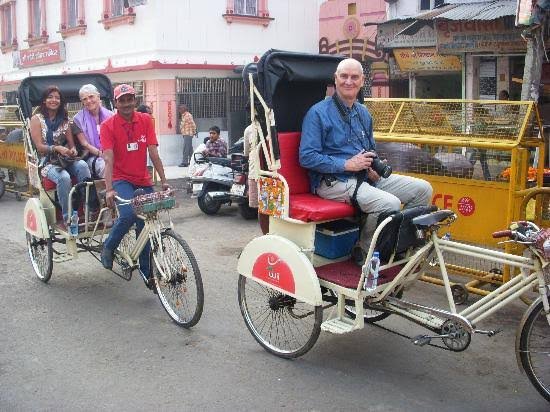
Delhi, Agra and Jaipur is one of the most rewarding trips a Canadian can make. Here is everything you need to plan it properly — flights, visa, timing, and a full itinerary built around your schedule.
The Golden Triangle is not a long-haul destination that simply checks a box. It is a circuit — Delhi, Agra, Jaipur — that covers approximately 700 kilometres of North India and three of the most historically significant cities on the subcontinent. Done properly, with a private driver and a knowledgeable guide, it delivers a week that most travellers describe as one of the most memorable of their lives. That is not marketing language. It is a consistent experience that the route has earned over decades.
For Canadians specifically, the Golden Triangle carries something that few other long-haul destinations offer: extraordinary value. India's exchange rate against the Canadian dollar means that a genuinely premium experience — private transfers, four-star heritage hotels, expert local guides, restaurant meals — costs significantly less than a comparable standard of travel in Europe or Southeast Asia. A 7-day private Golden Triangle tour that would cost C$8,000–10,000 at European-equivalent standards can be delivered at C$3,500–5,000 in India, with nothing sacrificed in quality. The flight is long. The trip, once you arrive, earns it.
Canada also has one of the world's largest South Asian diaspora communities, and for many Canadian families the Golden Triangle is not simply tourism — it is a heritage journey, a first trip to India with children born in Canada, or a return to a world that is simultaneously familiar and transformed. For those visiting India for the first time regardless of background, the Golden Triangle is the most coherent introduction available: three cities, one private car, one week, three of the most important monuments on earth.
The Golden Triangle has a clear peak season: October through March, when North India is dry, clear, and cool enough to spend full days outdoors. This is also when Canadian winters are at their worst — which makes the timing relationship between the two countries unusually convenient. India's best travel months are Canada's most uncomfortable ones, and the return flight lands you back in spring rather than deep winter.
No airline currently operates a direct nonstop flight from Canada to India, so every routing involves at least one connection. The most common and efficient options involve a single stop in a European or Middle Eastern hub city, adding between two and four hours to the journey. Total travel time from Toronto to Delhi is typically 15–17 hours; from Vancouver, the westward routing through East Asian hubs brings it to around 14–16 hours depending on the connection city.
From Toronto (YYZ), Air India and Air Canada code-shares via London, Frankfurt, or Amsterdam are the most direct options. Emirates via Dubai and Etihad via Abu Dhabi both offer strong frequencies and are frequently competitive on price — the Dubai connection is a natural hub for India routes and often the most reliable in terms of onward connectivity. Lufthansa via Frankfurt and KLM via Amsterdam are worth comparing, particularly in the shoulder season when European carrier fares drop significantly.
From Vancouver (YVR), the routing options diverge. The eastward path goes via European or Middle Eastern hubs as above; the westward path goes via Tokyo, Seoul, or Hong Kong on Air Canada, Japan Airlines, or Cathay Pacific. The westward option often has shorter elapsed times and can be significantly cheaper in peak season when European hub connections are heavily booked. It is worth checking both directions when searching from Vancouver.
From Calgary (YYC), the routing is typically via Toronto, Vancouver, or a connecting Canadian city to access the same transatlantic or transpacific options. Direct comparison search with flexible hub selection is the most efficient approach from Calgary.
For the return journey, booking the final leg from Jaipur (JAI) rather than backtracking by road to Delhi saves a full day. IndiGo and Air India both operate Jaipur–Delhi connections that connect to international departures — the domestic hop adds less than an hour and eliminates the five-hour road transfer at the end of a long trip.
Canadian passport holders require a visa to enter India. The e-Visa is the simplest and fastest route — applied for entirely online through the official Indian government portal at indianvisaonline.gov.in. There is no need to visit a consulate or submit a physical application. The tourist e-Visa for Canadians is valid for 90 days from the date of first entry and allows double entry, which is useful if the itinerary includes a brief trip to Nepal or Sri Lanka.
Processing typically takes 72 to 96 hours, though the government website advises applying at least four business days before travel. During peak periods — particularly Christmas and March break — processing times can extend slightly, so applying at least two weeks before departure is the safest approach. The e-Visa fee is approximately CAD 30–35 depending on the exchange rate at the time of application.
Canadians of Indian origin holding OCI (Overseas Citizen of India) status do not require a visa — OCI cardholders can enter India on a lifelong, multi-entry basis without a separate application. If you hold OCI status, confirm your card is current before travel.
Canadian passport (most travellers): e-Visa required. Apply at indianvisaonline.gov.in (official portal only — avoid third-party sites charging inflated fees). Processing 72–96 hours. Apply two weeks before departure.
OCI cardholders: No visa required. Enter directly on OCI card.
e-Visa cost: Approximately CAD 30–35.
Validity: 90 days from first entry, double entry permitted.
This itinerary accounts for the time shift between Canada and India — arriving in Delhi after a long overnight flight, the first day is kept light to allow acclimatisation before the proper touring begins on day two.
Delhi is the starting point and one of the most layered cities on earth. It is simultaneously the Mughal capital of the 17th century, the British colonial capital Edwin Lutyens built in the 20th century, and a modern megacity of 30 million people — all visible within a few miles of each other. Old Delhi (Shahjahanabad) is the medieval city Shah Jahan built around the Red Fort and Jama Masjid. New Delhi is the formal British Raj capital with its grand avenues and government buildings. Both are worth serious time.
Canadian travellers often find Delhi's density and intensity initially overwhelming before it becomes fascinating. Chandni Chowk — the main street of Old Delhi, unchanged in its basic structure since the 17th century — is a sensory experience unlike anything in North America. Give it a full morning and a good guide, and it rewards you with one of the most vivid days of any trip you will take. The food alone — parathas at Paranthe Wali Gali, chaat from street stalls that have been in the same family for generations — is worth the visit.
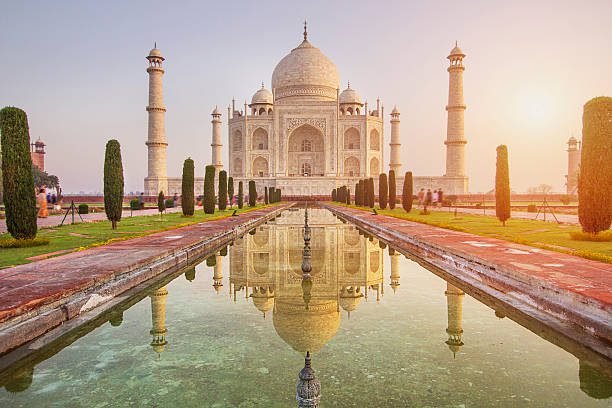
Agra is built around one monument, and it is worth saying plainly: no photograph of the Taj Mahal has ever been accurate. The scale is different in person. The white marble — inlaid with semi-precious stones in floral patterns of extraordinary intricacy — changes colour across the morning in a way that photographs simply cannot capture. Travellers who have seen the Eiffel Tower, the Colosseum, Machu Picchu and the Grand Canyon consistently report that the Taj Mahal is a different category of experience. This is not an exaggeration.
Visit in the late afternoon on day one — the golden light on the marble, with the reflecting pool in front of you and the crowds thinner than the morning. Return at sunrise on day two — the most famous visit, with the structure emerging from the morning mist and the light building across the dome. Both are worth the entry fee. Agra Fort, often rushed on group tours, is a substantial monument in its own right — the red sandstone fortress where the Mughal court ruled for generations and where Shah Jahan was later imprisoned by his own son Aurangzeb, with a view of the Taj Mahal he had built for his wife visible across the river from his prison window.
Jaipur is where the Golden Triangle reveals India at its most architecturally spectacular. The old walled city is painted terracotta-pink — a colour applied in 1876 to welcome the Prince of Wales and maintained ever since — and the sight of it against the Aravalli Hills, with Amber Fort rising on the ridge above and the bazaars in full swing below, is one of the great visual experiences of Asia. The Rajputana character of the city — warrior kings, desert palaces, gem markets, hand-block textiles — is different from Delhi's Mughal heritage and different again from anything in Agra.
Amber Fort is the crown monument — a palace-fortress built over centuries that blends Hindu and Mughal architectural styles across four extraordinary courtyards. Allow at least two and a half hours. The Johari Bazaar in the old city is one of India's great gem and jewellery markets; for Canadians interested in gemstones, the quality and variety here — emeralds, rubies, sapphires, local blue topaz — is worth at least a browsing afternoon. The Jantar Mantar observatory, often rushed, is quietly one of the most fascinating sites in the city: a working astronomical instrument at an architectural scale, built in 1734 and still accurate.
The Taj Mahal closes every Friday, without exception. This is one of the most common and avoidable mistakes on the Golden Triangle, and it still catches travellers whose operators haven't flagged it.
Any reliable tour operator will plan your Agra visit to avoid Friday automatically. If yours hasn't mentioned it, ask the direct question: "Does our Agra visit fall on a Friday?" The fix is always simple — shift the Agra day by one — but it has to be caught before you confirm, not after you arrive to find the gates closed.
Given the length of the flight from Canada, many travellers choose to add time beyond the Golden Triangle itself. India's domestic flight network is efficient and inexpensive — a Delhi or Jaipur to almost anywhere in the country is typically under two hours and costs less than CAD 100.
Tell us your travel dates, group size, and what you want most from the trip — the Taj at sunrise, Jaipur's forts, a tiger safari, or a Diwali visit. We'll put together a private 7-day itinerary so your trip runs without a single avoidable headache.