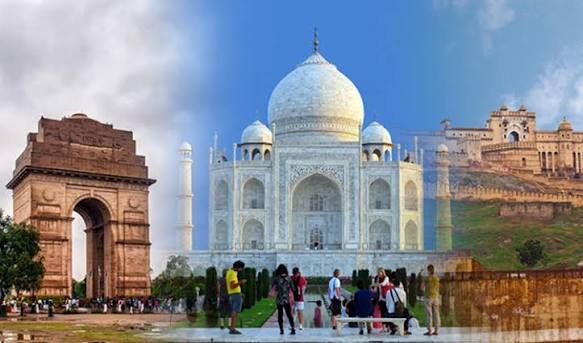
Everything Australian travelers need to know — flights, visa, school holiday windows, a 7-day itinerary, and the one thing every visitor must check before booking Agra.
India is one of the most popular long-haul destinations for Australian travelers, and the Golden Triangle — the circuit connecting Delhi, Agra, and Jaipur — is consistently the entry point that people choose for a first India trip and return to for a second. The three cities together give you the full breadth of North India's history and culture without requiring weeks of travel time, and the infrastructure along the route is set up for international visitors in a way that makes the Golden Triangle a manageable first encounter with the country.
The timing also works unusually well for Australians. India's best travel season — October through March, when the heat has broken and the skies are clear — runs directly alongside Australia's summer and Christmas school holiday period. Where British and European travelers are fleeing their winter, Australians are on their long summer break, and the Golden Triangle is at its most beautiful in exactly that window. December and January in Jaipur and Agra are genuinely cool and bright, with temperatures Australians used to summer heat find refreshingly mild rather than cold.
The flight from Sydney or Melbourne to Delhi is a long one — around thirteen hours direct — but Air India's direct services from both cities make the journey more straightforward than it used to be, and the time zone difference of four and a half hours behind AEST is easier to adjust to than a transatlantic crossing. Most Australians find themselves comfortably oriented within a day of landing.
India's travel seasons have a sharp rhythm, and they line up with the Australian calendar better than almost any other popular long-haul destination. Here is how the two calendars interact.
The Christmas to January window is the single best combination of Australian school holidays and Indian travel weather. December and January in Delhi, Agra and Jaipur are cool, dry and spectacular — book hotels early, as the best heritage properties fill from September onwards for the peak December period.
The October spring break is the quieter gem — post-monsoon India is lush, Diwali transforms cities into light festivals, and the crowds haven't yet peaked. If you can travel in late October, it rivals December for beauty and beats it for atmosphere.
Air India operates direct flights from both Sydney and Melbourne to Indira Gandhi International Airport in Delhi. The direct flight time is approximately thirteen hours from Sydney and twelve hours from Melbourne — long, but straightforward, with no connection required. Direct departures typically leave Australia in the late evening and arrive in Delhi mid-morning local time, giving you a full first day in the city.
From Perth, the routing changes considerably. Perth's time zone (AWST, UTC+8) is the closest in Australia to India's (IST, UTC+5:30), which makes the adjustment easier, but there are no direct Perth–Delhi flights. The most efficient connections run via Singapore on Singapore Airlines or via Kuala Lumpur on Malaysia Airlines — both operate clean connections with manageable total journey times of around twelve to fourteen hours. Singapore Airlines is a consistently popular choice for Australian travelers on this route for quality and reliability.
From Brisbane, Adelaide, and other cities, connecting through Sydney or Melbourne to pick up the Air India direct service is usually the cleanest option. Gulf carriers — Emirates via Dubai, Etihad via Abu Dhabi, Qatar Airways via Doha — are also popular from most Australian cities and regularly competitive on price, with total journey times of around sixteen to eighteen hours.
As with the UK guide, most Australian travelers arrive into Delhi and depart from Jaipur, making the Golden Triangle a natural one-way route. Jaipur International Airport has connections back to Australia via Delhi and via Gulf hub carriers, and routing your departure from Jaipur rather than backtracking to Delhi saves both time and a full day's road transfer.
Australian citizens require a visa to enter India. The e-Visa is the simplest route and covers tourism visits of up to 90 days — easily sufficient for a Golden Triangle trip. The application is made online through the official Indian government e-Visa portal, requires a passport-sized photograph and a scan of your passport data page, and is typically approved within 72 to 96 hours.
Apply at least two weeks before your departure date to allow for processing during peak periods. The e-Visa links electronically to your passport — there is no sticker or stamp in advance — and is verified at the airport on arrival. Print a copy of your approval email to carry with you.
Apply at: indianvisaonline.gov.in — the official portal only. Third-party sites charge significantly inflated fees for the same application.
Processing time: 72–96 hours normally. Allow two weeks around peak season (December/January).
Valid for: 90 days from date of entry, double entry.
Cost: Approximately A$25–35 depending on exchange rate at time of application.
Seven days is the right frame for the Golden Triangle from Australia. It gives each city proper time, includes Fatehpur Sikri on the Agra–Jaipur leg, and allows a half-day buffer without requiring you to rush a single morning. The overnight flight from Australia arriving mid-morning in Delhi means your first day is lighter — which is correct, since the adjustment from AEST to IST takes a day.
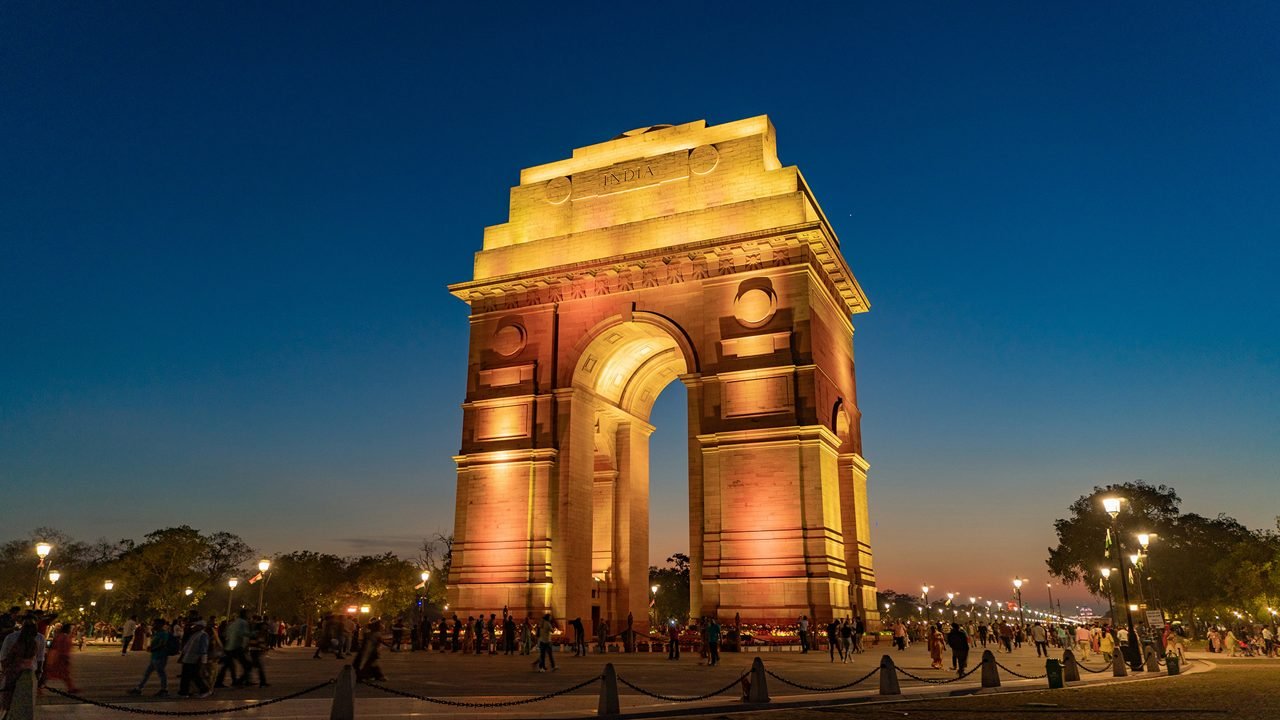
Delhi is simultaneously one of the world's oldest cities and one of its fastest-growing modern capitals, and the collision between those two identities is part of what makes it so compelling to visit. Old Delhi — the Mughal city built by Shah Jahan in the 17th century — is medieval in its density, noise, and intensity. New Delhi is the colonial capital Edwin Lutyens designed for the British Raj, wide-boulevarded and formal, with the same visual language as official Canberra or Washington DC. Both reward time.
For Australian travelers, Delhi is usually the entry point to India, and it benefits from treating it as an arrival city rather than rushing through it. The first day is lighter than it needs to be — which is intentional — and the second day, once the jet lag has settled, allows you to give Old Delhi the proper attention it deserves. Chandni Chowk by cycle-rickshaw at mid-morning, with the spice market and the lanes behind Jama Masjid, is one of the most sensory experiences in travel.
Agra is the city built around a single monument, and that monument is one of the most extraordinary things ever built. The Taj Mahal at sunrise — the white marble changing colour in the early light, the reflecting pool doubling the dome, the inlaid semi-precious stonework catching the first rays — is something photographs prepare you for and reality still surpasses. Most visitors have seen thousands of images before they arrive and are still not entirely prepared for it in person.
Beyond the Taj, Agra Fort is a substantial monument in its own right, worth two to three hours. From its towers, Shah Jahan is said to have gazed at the tomb he built for his wife from his room in the fort where his son imprisoned him. The view is still there. Plan to arrive in Agra with enough time for a late afternoon visit to the Taj on day one, and return at sunrise the following morning — the two visits show you a completely different structure.
Jaipur, the Pink City, is where the Golden Triangle becomes Rajasthan. The old walled city is painted in a distinctive terracotta-pink — applied in 1876 to welcome the Prince of Wales — and the effect against the Aravalli Hills, with the Amber Fort rising on the ridge above and the bazaars in full swing below, is unlike anywhere else in the world. Australians who have traveled widely often find Jaipur to be their highlight of the trip.
Amber Fort is the crown of the city — a Rajput palace-fortress that blends Hindu and Mughal architectural styles across four courtyards, each revealing something the previous one concealed. Allow at least two and a half hours. The City Palace in the old city still houses the Jaipur royal family in its private quarters, with the public museum sections holding extraordinary collections of textiles, weapons, and manuscripts. The Jantar Mantar observatory, built by Maharaja Jai Singh II in 1734, is one of the world's largest and most accurate pre-telescope observatories — worth more time than most tours allocate it.
The Taj Mahal closes every Friday, without exception. There is no early access, no workaround, no special arrangement. If your Agra day falls on a Friday, you cannot visit.
When planning your itinerary, make sure the Agra night does not put the Taj visit on a Friday. Any reliable operator checks this automatically before confirming dates. If yours hasn't mentioned it, ask directly: "Does our Agra visit fall on a Friday?" The fix is always simple — shift the Agra night one day — but it's worth asking before you book rather than discovering it in Agra.
Australians traveling from the other side of the world tend to extend the trip rather than return home after seven days. These are the most popular additions to the Golden Triangle base, each changing the character of the trip significantly.
Tell us your travel dates, group size, and what matters most to you — the history, the wildlife, the photography, or the food. We'll put together a custom 7 or 10-day private itinerary so your trip from Australia runs without a single avoidable headache.