An honest comparison for American travelers. What you actually get with each option, what the brochures don't tell you, and how to decide before you book.
For most Americans visiting the Golden Triangle, a private tour is the better choice — not because it is more luxurious, but because it is more flexible. India rewards travelers who can go at their own pace. That said, group tours have genuine advantages in specific situations, and this guide will help you figure out which one is actually right for you.
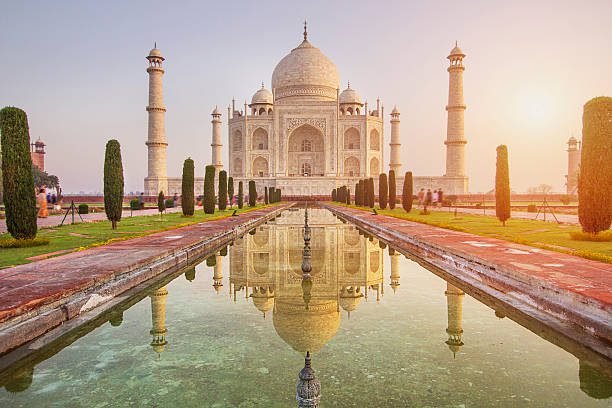
A private tour means exactly what it sounds like: a car, a driver, and a guide that belong entirely to your group — whether that is just you, a couple, a family, or a group of friends. No one else joins the car. No one else's schedule affects yours. When you want to leave a monument, you leave. When you want to stay longer at the Taj Mahal because the light just changed and your photographs are finally working, you stay.
On a practical level, this means your day starts when you want it to. If you want to arrive at the Taj Mahal at 5:45am to beat the crowds and catch the first light on the marble, your driver will be ready at 5:30am without complaint. If you want to stop at a roadside dhaba between Agra and Jaipur because the smell coming from the kitchen is extraordinary, you stop. If you are jet-lagged on Day 2 and need a slow morning before Delhi's temples, you take it. The itinerary bends around you, not the other way around.
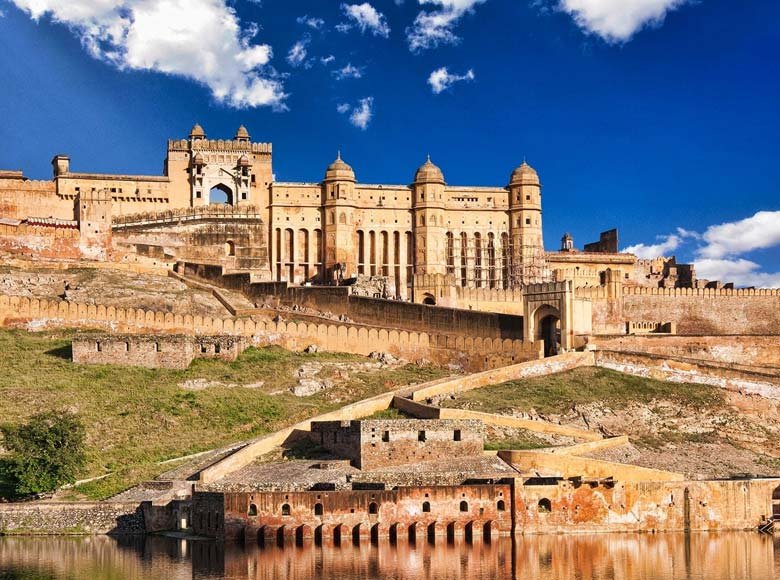
A private tour also means your guide is chosen for you, not assigned to whoever happens to be on that bus that day. A well-matched guide — someone who reads how deep you want to go into Mughal history, who notices when you are photographing rather than listening and gives you space, who knows the best corner of Amber Fort for a photograph that doesn't have forty other tourists in the frame — makes an enormous difference to how the Golden Triangle feels at the end of the trip.
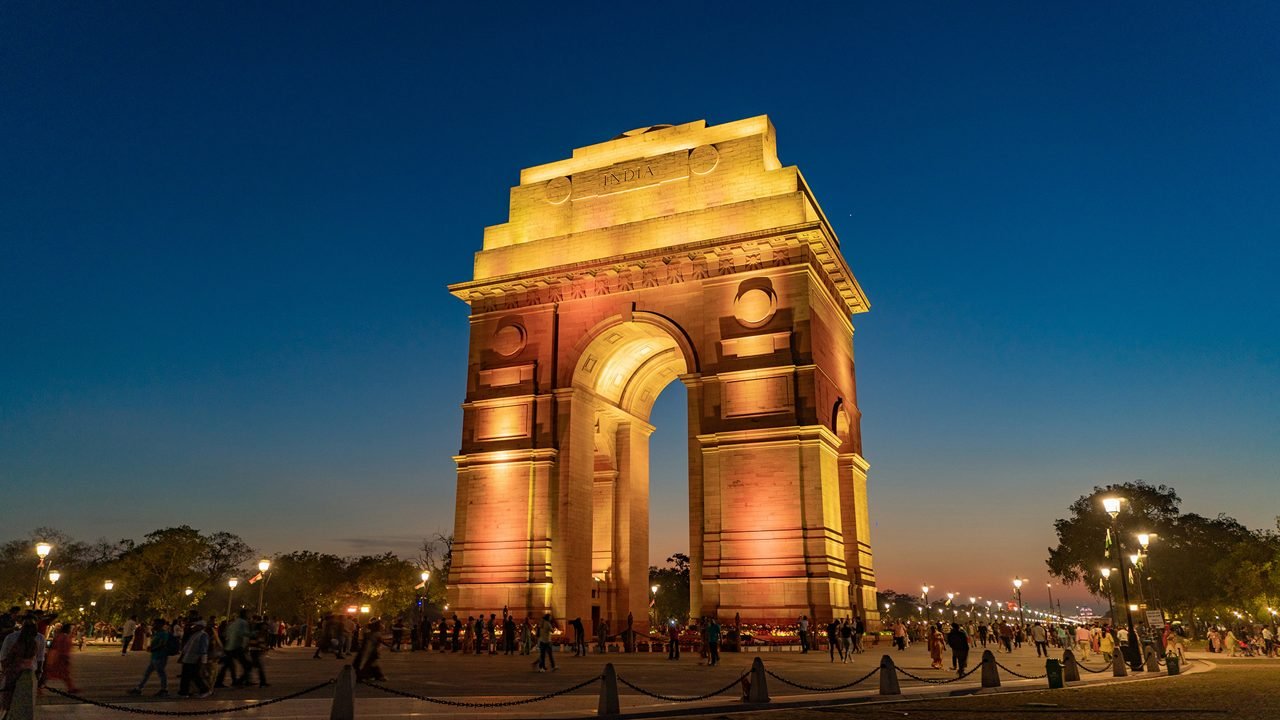
A group tour puts you on a coach or minibus with anywhere from 10 to 40 other travelers — typically a mix of nationalities, ages, and travel styles. The itinerary is fixed before you book. Departure times are set. The guide speaks to the group, not to you individually. When the schedule says it is time to leave the Taj Mahal, you leave the Taj Mahal, regardless of whether you are ready.
That is not necessarily a bad thing. For solo travelers, in particular, a group tour provides built-in social structure — you arrive at the Taj Mahal and there are already people to share the experience with, people to swap cameras with for a portrait, people to have dinner with that evening. The best group tours create a genuine shared experience that private travel cannot replicate, and some travelers find India's intensity more manageable with a cohort of people going through it alongside them.
Group tours are also typically less expensive per person than private touring, and for travelers whose primary concern is covering the Golden Triangle efficiently without the planning overhead of a private itinerary, a well-run group tour from a reputable operator is a perfectly respectable way to see Delhi, Agra, and Jaipur.
Brochures tend to focus on price. These are the five differences that experienced India travelers say actually change how the trip feels.
Americans traveling to India are almost always dealing with significant jet lag — the time difference from the East Coast is 9.5 hours, from the West Coast nearly 13 hours. The first two days in India are often physically demanding in ways that have nothing to do with the itinerary. On a private tour, your driver and guide know this and they build it in. On a group tour, the bus leaves at 7am whether your body thinks it is 9:30pm or not.
Pace also matters at the monuments themselves. The Taj Mahal rewards slow attention in a way that most tourist sites do not. The inlaid marble detail in the main chamber, the garden geometry as you approach from the south gate, the quality of light on the dome at different times of day — these are things you notice when you are not being moved along by a group schedule. A private guide can sit with you on a bench at the reflecting pool for ten minutes and say nothing, because they know when silence is the right thing. A group guide has 20 people waiting.
The Golden Triangle covers Delhi, Agra, and Jaipur — three distinct cities connected by road, each worth a full day minimum. The driving distances are comfortable for a private car (3–5 hours between each city) but long for a fully loaded coach stopping at every photo opportunity along the way. On a private tour, the journey between cities is part of the experience. Your driver knows a good chai stop, a roadside sweet shop in a town nobody has heard of, a stretch of highway where the mustard fields in winter are worth pulling over for. On a group coach, you are on a seat in row 7 watching the same view through a window.
Not all group tours are the same, and the difference between a well-run group tour and a cheap one matters enormously on a trip to India. The low-cost group tours — the ones that advertise aggressive per-person prices — often fund that price reduction through mandatory shopping stops. You will find yourself in a gem showroom in Jaipur or a marble workshop in Agra not because you expressed any interest in buying gems or marble, but because the operator receives a commission from the shop for bringing you there. These stops are built into the itinerary and are not optional.
This is a well-known practice in Indian tourism and it is not illegal — but it is worth knowing before you book, because a 7-day group tour with four mandatory shopping stops is functionally a shorter itinerary than it looks on paper. The time at the monuments gets compressed to make room for the retail visits, and you end up with less of what you came for and more of what the operator is paid to show you.
Premium group tours from reputable international operators — companies like G Adventures, Intrepid, or Abercrombie & Kent — run differently. Shopping stops are voluntary, group sizes are capped, and guides are properly qualified. The price reflects this. If you are going to do a group tour on the Golden Triangle, spending more on a reputable operator is worth it in a way that it might not be for more straightforward destinations.
How many shopping stops are included in the itinerary? A straight answer is a good sign. Evasion or "just a few optional visits" is a warning.
What is the maximum group size? Anything over 20 people on a Golden Triangle tour starts to feel like a convoy. The best small-group operators cap at 12–16.
Is the Taj Mahal visit at sunrise or mid-morning? A group tour that arrives at the Taj at 10am, when it is already busy, is giving you a materially different experience than a private tour arriving at first light.
Here is a straightforward guide based on your situation. Most Americans who have done the Golden Triangle both ways say the same thing: private touring suited them better than they expected, and group touring was more restrictive than the brochure suggested. But the right answer depends on your specific circumstances.
The gap between private and group touring on the Golden Triangle is smaller than most people assume — especially for couples and groups of three or more. When a group tour is split between two people, the per-person cost is often close to a mid-range private tour. The private option gives you significantly more in return for a relatively small additional cost per person.
For a solo traveler, the gap is real and group touring is a reasonable way to manage it. For anyone traveling with even one other person, we would almost always recommend going private.
Tell us your group size, travel dates, and budget range. We'll be straight with you about which format fits your trip — and if private is the right call, we'll show you exactly what it looks like for your specific group.