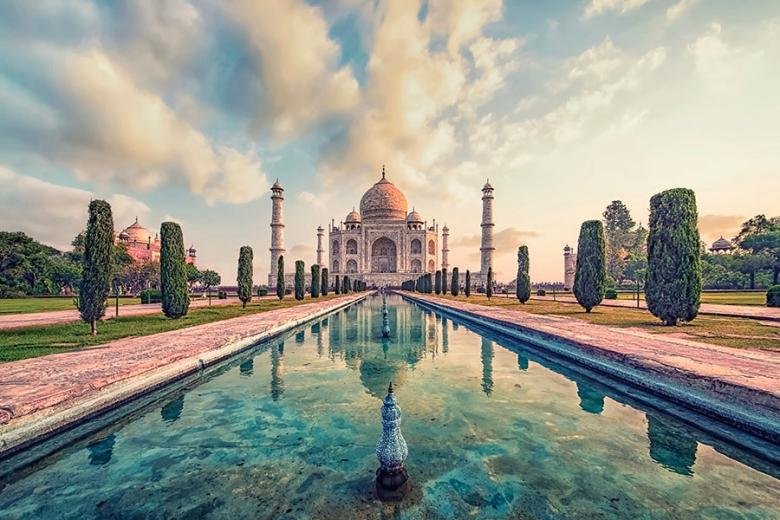
Planning a trip to India from the UK means working around two calendars at once: the Indian seasons and British school holidays. Get the timing right and you have perfect weather, manageable crowds, and fair prices. Get it wrong and you're either in 43°C heat or paying a premium for the same experience you could have had for less.
This guide is written specifically for British travellers — temperatures in °C (with °F for reference), prices in GBP, and timing mapped to UK school holiday windows across England, Wales, Scotland, and Northern Ireland. The short answer: October through February is India's prime season, and within that, October half-term and February half-term are Britain's best-value windows.
⚠️ Critical for 2026 Christmas travellers: December 25, 2026 is a Friday. The Taj Mahal closes every Friday without exception. If your Golden Triangle trip covers Christmas week, your Agra visit must be Thursday 24 December or Saturday 26 December. Confirm this when reviewing any tour itinerary.
India's Four Seasons at a Glance
❄️
Peak Season
Nov · Dec · Jan · Feb
Best for UK visitors
13–26°C (55–79°F). Clear skies, low humidity, ideal sightseeing. Aligns with Christmas, February half-term and New Year. Highest prices; book 4–6 months ahead for Christmas.
🌸
Shoulder Season
Oct · Mar · early Apr
Good value
20–32°C (68–90°F). Warm but comfortable. October half-term is excellent post-monsoon. March–April brings spring. Shoulder prices — 20–30% below Christmas peak.
🌞
Hot Season
Apr · May · Jun
Avoid
33–45°C (91–113°F). Extreme heat across Delhi, Agra and Jaipur. Overlaps with UK Easter tail and summer term. Not recommended for the Golden Triangle.
🌧
Monsoon
Jul · Aug · Sep
Not recommended
26–33°C (79–91°F) with heavy rain. High humidity, flooding. Overlaps with UK summer holidays — unfortunate timing. Hill stations are lovely; Golden Triangle is not ideal.
Month-by-Month Guide (°C · GBP context)
Peak
January
13–22°C (55–72°F)
Cold mornings in Delhi (7°C / 45°F at dawn), bright mild afternoons. Winter mist can delay Taj Mahal sunrise visits — plan a backup day in Agra if possible. Jaipur days are glorious. Feels cold to locals but mild to British visitors.
★★★★★
Peak
February
14–26°C (57–79°F)
The finest month of the year and the best school holiday window for British families. Fog has cleared, days are warm, spring flowers appear. Holi (late Feb or March) is spectacular in Jaipur. Prices slightly below Christmas peak. February half-term is ideal timing.
★★★★★
Shoulder
March
20–33°C (68–91°F)
Warming up fast but still very comfortable early March. Holi if late in the month — Jaipur and Mathura are extraordinary during Holi. UK Easter sometimes falls in March. Prices 20–25% below Christmas peak, good availability.
★★★★★
Warm
April
26–39°C (79–102°F)
Getting hot. Easter sometimes falls in April — early April is manageable; late April is pushing it. Sightseeing limited to early mornings. Prices are low, but so is comfort for most British visitors unused to 38°C heat.
★★★★★
Avoid
May
32–45°C (90–113°F)
Extreme heat. The Taj Mahal's marble radiates intense heat. Not recommended for first-time visitors. Cheapest month of the year but conditions are genuinely challenging — even many Indians avoid Delhi in May. Himachal Pradesh and Ladakh are excellent alternatives.
★★★★★
Avoid
June
32–43°C (90–109°F)
Extreme heat and monsoon arrives mid-June. Thunderstorms and dust storms. UK summer term ends — terrible timing for the Golden Triangle. If you must travel in June, head north to the Himalayan foothills where weather is lovely.
★★★★★
Monsoon
July
27–35°C (81–95°F)
Full monsoon and UK summer holidays. Heavy rain, high humidity, roads between Delhi and Agra can flood. Poorest timing overlap on the calendar for British families. Not recommended for first-time visitors to the Golden Triangle.
★★★★★
Monsoon
August
26–34°C (79–93°F)
Peak monsoon and peak UK summer holidays — the worst combination for the Golden Triangle. India's Independence Day (15 August) is electric in Delhi but rain disrupts everything else. Rajasthan forts look dramatic in the green monsoon — for the adventurous traveller only.
★★★★★
Improving
September
25–33°C (77–91°F)
Late monsoon — rain easing by mid-September. Landscapes are lush green after the rains. Schools back in the UK so no family travel. Lower prices and very few tourists. Experienced India travellers sometimes love September for the emptiness and colours.
★★★★★
Best for UK
October
22–33°C (72–91°F)
Post-monsoon freshness with October half-term landing perfectly. Everything is green, skies are gloriously clear, temperatures are comfortable for British visitors. Diwali (Festival of Lights) often falls in October or November — one of India's most spectacular experiences. Shoulder prices.
★★★★★
Peak
November
17–28°C (63–82°F)
Excellent month with no major UK school holiday — ideal for couples and adult travellers. Diwali atmosphere if early November. The Taj Mahal in soft winter light is at its most photogenic. Prices just entering peak season — good value window before Christmas premiums kick in.
★★★★★
Peak
December
13–23°C (55–73°F)
Peak season and most popular UK window. Christmas–New Year in India is magical: festive hotels, ideal weather, spectacular monument visits. Busiest and most expensive. Taj closed 25 Dec 2026 (Friday). Book 5–6 months ahead; British Airways and Air India routes fill up fast.
★★★★★
Best UK School Holiday Windows
🍂
October Half-Term — Best Value Window
Late October half-term is arguably the finest time for British families to visit India. The monsoon has just ended, the landscape is fresh and green, skies are brilliantly clear, and temperatures are a comfortable 22–30°C (72–86°F) — perfect for British visitors accustomed to mild summers. Diwali often falls within or just after half-term, making Jaipur and Delhi dazzling after dark. Prices are at shoulder level — 20–30% less than Christmas — with excellent hotel availability. Book 2–3 months ahead rather than the 5–6 months required for Christmas.
⭐ Top pick for families
❄️
February Half-Term — Hidden Gem
February half-term is the best-kept secret for British visitors. Weather is arguably the finest of the year (14–26°C / 57–79°F) — Delhi's winter mist has cleared, days are warm and bright, and Rajasthan bursts into spring colour. Holi (the Festival of Colours) sometimes falls within February half-term or just after, making Jaipur extraordinary. Prices are slightly below Christmas peak (15–20% less) and availability is very good. This is the window we recommend most for couples and adults without summer holiday constraints.
⭐ Best weather of the year
🌼
Easter Holidays (March–April)
Easter timing varies: early Easter (late March) is pleasant in the Golden Triangle — still comfortable at 22–30°C (72–86°F) with good availability. Late Easter (mid-April) is warmer, reaching 35°C+ (95°F+), and only suitable for those prepared for heat-adjusted sightseeing (early mornings only, long midday breaks). Holi sometimes falls in early Easter week, adding a bucket-list dimension to Jaipur visits. Prices are lower than peak but rising as the season ends. Early Easter is comfortably recommended; late Easter needs heat awareness.
Good if early; warm if late
🎄
Christmas & New Year (20 Dec – 5 Jan)
The most popular UK window for India travel — and for good reason. Weather is superb (13–23°C / 55–73°F), Delhi and Jaipur hotels are beautifully festive, and experiencing New Year's Eve at a heritage hotel in Jaipur or Agra is genuinely special. The trade-offs are the highest prices of the year (40–60% above October half-term) and the busiest Taj Mahal of the year. Book British Airways, Air India and connecting flights at least 5–6 months in advance. Critical 2026 note: 25 December is a Friday — the Taj Mahal is closed. Plan Agra for 24 or 26 December.
⚠ Book early — Taj closed 25 Dec 2026
☀️
Summer Holidays (July–August)
The most common UK holiday window is the worst time for the Golden Triangle. India's full monsoon arrives in late June and peaks through July and August — heavy rain, flooding, 90%+ humidity, and temperatures of 30–34°C (86–93°F) that feel far worse with the humidity. British families wanting to use summer holidays for India should seriously consider the Himalayas instead: Ladakh (June–September), Shimla and Manali (May–July) have magnificent summer weather while the plains swelter. Or consider shifting the entire trip to October half-term.
Not recommended for Golden Triangle
How Season Affects Your Budget
Timing is the single biggest lever on total trip cost. Here is how the main budget lines shift across the seasons, priced in GBP for a UK traveller:
✈️ Return flights (from London)
Christmas peak£750–£1,200
Feb half-term£550–£850
Oct half-term£480–£750
Monsoon£320–£520
🏨 Mid-range hotel (per night)
Christmas peak£85–£140
Feb half-term£65–£105
Oct half-term£50–£90
Monsoon£30–£55
🚗 Private car & driver (per day)
Christmas peak£42–£62
Feb half-term£35–£52
Oct half-term£30–£47
Monsoon£27–£42
💡 The October half-term saving: A 7-night Golden Triangle trip over October half-term can cost £500–£900 less per person than the same trip at Christmas — while delivering nearly identical weather. For a family of four, that's £2,000–£3,600 saved for the same experience.
What British Travellers Should Know Before Booking
- 🕌
The Taj Mahal is closed every Friday. No exceptions — plan your Agra day on any day except Friday. In 2026, Christmas Day (25 December) is a Friday. Always confirm your Agra day when reviewing any tour itinerary.
- ✈️
Book flights before hotels. Direct flights from London to Delhi (British Airways, Air India) are limited and fill fast — especially Christmas week. Lock in flights first. Indirect routes via Dubai, Doha or Abu Dhabi (Emirates, Qatar, Etihad) offer more flexibility and often better prices.
- 🛂
Apply for India e-Visa in advance. British passport holders need a visa for India. The India e-Visa ($25 USD, paid online at indianvisaonline.gov.in) is approved within 2–4 business days. Apply 7–10 days before travel. EHIC/GHIC does not cover India — purchase separate travel insurance that includes medical repatriation.
- 🌡
Pack layers for winter visits. Delhi in December–January drops to 7–10°C (45–50°F) at dawn — cold enough to need a proper jacket for sunrise Taj Mahal visits. By midday it's 20–22°C and you'll be in a light shirt. Pack layers rather than heavy coats. Jaipur evenings are slightly milder.
- ⏰
Time difference is IST = GMT+5:30. In UK winter (GMT) India is 5 hours 30 minutes ahead; in summer (BST) it's 4 hours 30 minutes ahead. Jet lag is real but gentle — most British travellers adapt in 1–2 days, often waking naturally at 5–6am IST, which is ideal for a sunrise Taj Mahal visit.
- 💳
Use a fee-free travel card. Monzo and Starling are popular with British India travellers — no foreign transaction fees, mid-market exchange rate, and ATM withdrawal in rupees without charges. Notify your bank before travel either way.
Frequently Asked Questions
What is the best time to visit India from the UK?
+
October through February is the best time. For British families, October half-term is the best-value school holiday window — post-monsoon freshness, ideal temperatures (22–30°C), and prices 20–30% below Christmas. February half-term offers arguably the finest weather of the year (14–26°C, no fog) at shoulder prices. Christmas is excellent weather but peak prices and crowds. Book at least 4–5 months ahead for Christmas week.
Is October half-term a good time to visit India?
+
Yes — October half-term is one of the best windows for British families. The monsoon has just ended, skies are clear, landscapes are green, and temperatures are a very comfortable 22–30°C (72–86°F). Diwali often falls around this time, adding spectacular evening light displays. Prices are 20–30% below Christmas peak, and you can book 2–3 months ahead rather than 5–6 months for Christmas. It is our top recommendation for families on a school holiday schedule.
Can I visit India over Christmas from the UK?
+
Yes — Christmas is excellent for India. Weather is ideal (13–23°C), heritage hotels in Rajasthan are beautifully festive, and the Golden Triangle is at its most photogenic. The trade-offs are the highest prices of the year and the busiest Taj Mahal conditions. Critical for 2026: Christmas Day (25 December) is a Friday — the Taj Mahal closes every Friday. Plan your Agra day for 24 or 26 December. Book flights and hotels at least 5–6 months ahead.
What is the worst time to visit India from the UK?
+
July and August are the worst months for the Golden Triangle — India's full monsoon and UK summer holidays arrive at the same time. Heavy rain, flooding between cities, 90%+ humidity, and 30–34°C heat make sightseeing exhausting. The cheapest flights and hotels of the year are a reflection of the conditions. If UK summer is your only option, consider Ladakh or Himachal Pradesh instead — they have magnificent summer weather while the plains are suffering.
What is the time difference between the UK and India?
+
India Standard Time (IST) is GMT+5:30 — 5 hours 30 minutes ahead of the UK in winter (when the UK is on GMT) and 4 hours 30 minutes ahead in summer (when the UK is on BST). Jet lag on the UK–India route is manageable: most travellers adapt within 1–2 days. The common pattern of waking at 5–6am IST is actually helpful — perfect for sunrise visits to the Taj Mahal before the crowds arrive.
Ready to Plan Your India Trip from the UK?
Tell us your school holiday window and we will build a private Golden Triangle itinerary around your dates — Taj Friday guaranteed, GBP pricing, and no hidden charges.
WhatsApp: +91 99908 12499 · Squidtravelindia@gmail.com